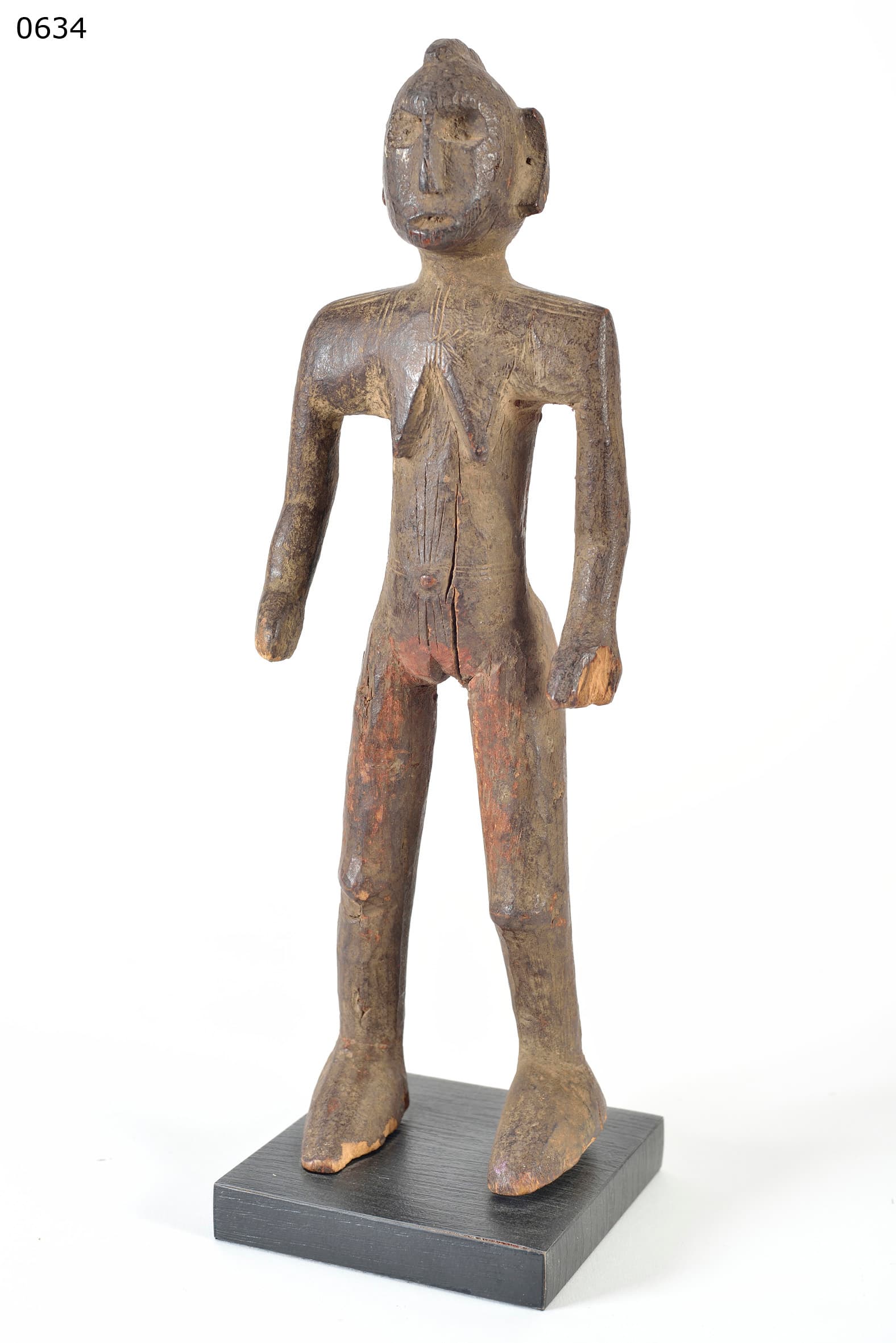
Diese große, dunkle Holzfigur hat einen stilisierten, runden Kopf, breite, kantige Schultern und gerade Arme, die parallel zu einem stark skarifizierten, säulenartigen Rumpf hängen, der in stark erodierten Beinen endet. Das dichte Holz besitzt eine reiche, dunkle, abgenutzte Patina mit lokalen irdenen Verkrustungen.
1. Ästhetischer Stil und regionale Charakteristika
Mit einer Höhe von 62 cm handelt es sich um ein monumentales Beispiel der Vere-Schnitzerei (Verre) aus der Grenzregion zwischen Nigeria und Kamerun. Die Ästhetik beruht auf der Kraft der zentralen Säule. Der Schnitzer hat die natürliche Dichte des Holzes genutzt, um eine imposante, schwerfällige Silhouette zu schaffen. Die breiten, kantigen Schultern fallen gerade nach unten in die starren Arme und lenken die Aufmerksamkeit des Betrachters ganz auf die filigranen, linearen Ritzungen, die tief über Brust und Bauch eingekerbt sind. Diese Ritzungen sind exakte Nachbildungen der rituellen Skarifikationen, die einen hohen sozialen Rang und die vollständige Initiation in die Gemeinschaft kennzeichnen.
2. Rituelle Funktion und Geheimbundkontext
Statuen dieser Größe waren keine persönlichen Glücksbringer, sondern zentrale Schutzfiguren für Gemeinschafts- oder Großfamilienschreine. Sie repräsentieren die kollektive Macht der Vorfahren oder eine bestimmte Gründungsgottheit der Erde. Da die Vere in einer rauen, anspruchsvollen Umgebung leben, liegt der religiöse Schwerpunkt ganz auf dem Überleben und der Fruchtbarkeit. Diese Statue stand im Mittelpunkt der großen landwirtschaftlichen Rituale; Trankopfer wurden über sie gegossen, um den Schutzgeist zu aktivieren, der dafür sorgt, dass der Regen kommt und die Ernte nicht ausfällt.
3. Physische Patina und Altersnachweis
Das Alter dieses Denkmals aus dem 19. bis frühen 20. Jahrhundert wird durch die extreme, örtlich begrenzte Zersetzung des Holzes nahegelegt. Die Füße und Unterschenkel sind durch Fäulnis und Insektenfraß stark erodiert und abgerundet, was darauf hindeutet, dass die schwere Statue über Generationen hinweg direkt auf der feuchten Erde eines Schreinbodens stand. Der Oberkörper und der Kopf haben jedoch eine tiefe, reichhaltige und ölige Reibungspatina behalten, was auf eine jahrzehntelange Berührung und Salbung durch traditionelle Priester hinweist.
Zusammenfassung
Diese monumentale Vere-Ahnenstatue ist eine imposante Erscheinung, die den Schnittpunkt zwischen abstrakter menschlicher Geometrie und ritueller Skarifikation anschaulich illustriert. Ihre schwere, durch die Handhabung abgenutzte Patina und die tiefgreifende organische Erosion am Sockel sprechen für ihre Authentizität als ein rituell genutztes nigerianisches Schreinobjekt.
KI-unterstützt erstellt aus Sammlungsgutachten, Objektfotografie und eigener Recherche, redaktionell geprüft. Fehler sind möglich — Hinweise darauf sind uns willkommen. Zum Verfahren →