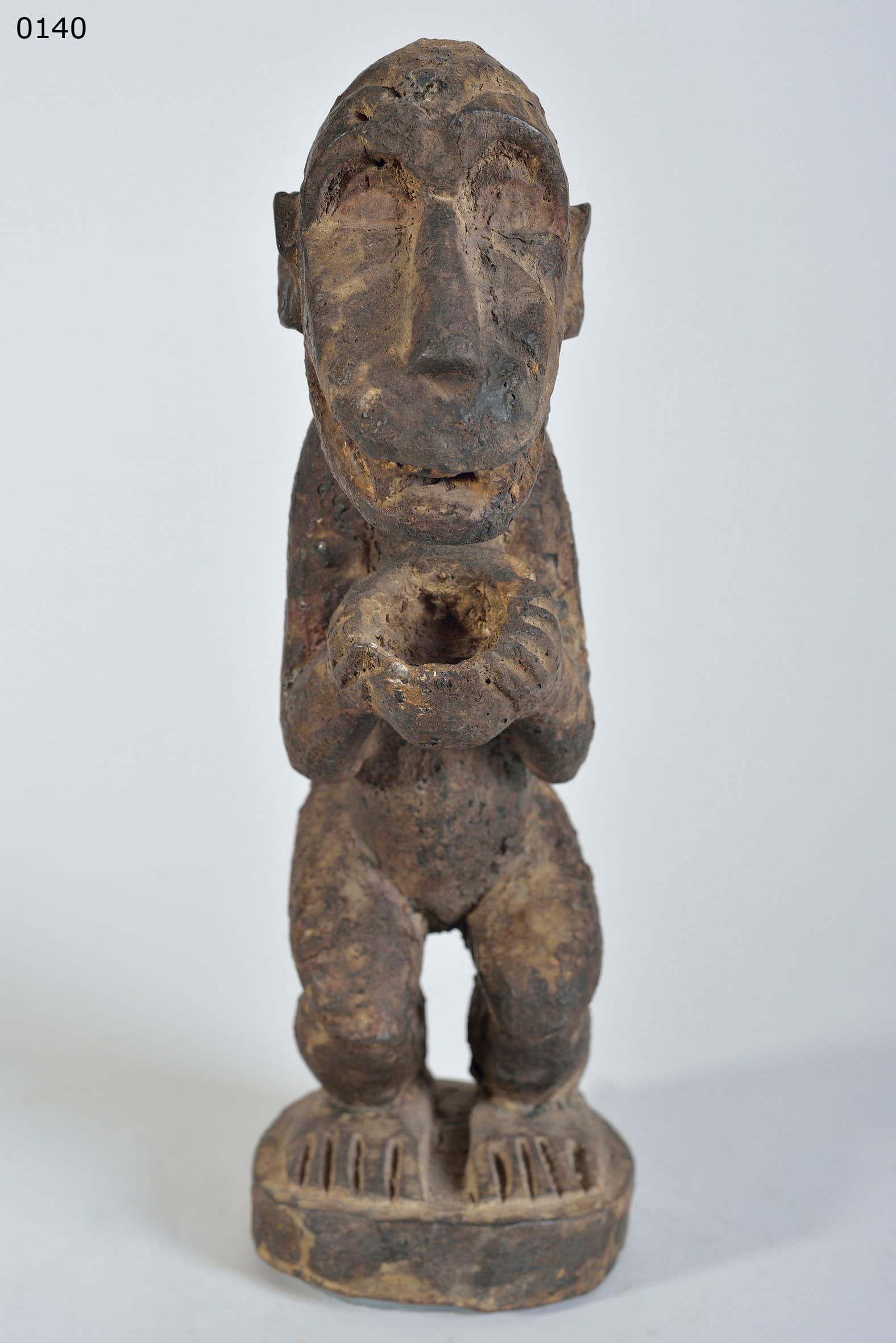
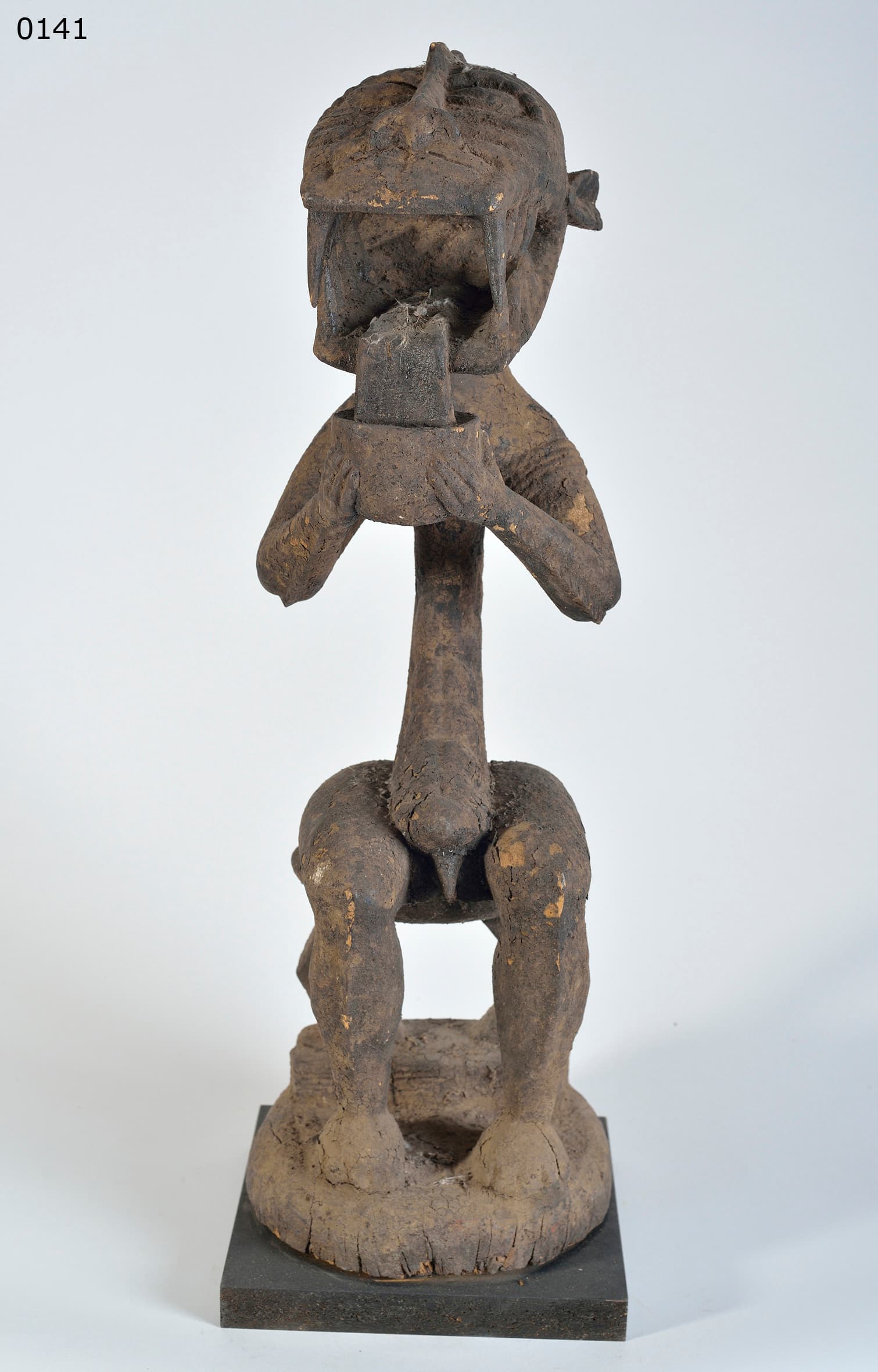
Dieses hölzerne Miniaturwerkzeug besteht aus einem funktionalen, U-förmigen Sockel, der ein geschnitztes Rad trägt, das von einem stark stilisierten, zoomorphen Kopf (wahrscheinlich ein Pavian oder Hund) mit hervorstehender Schnauze und gefletschten Zähnen überragt wird. Das außergewöhnlich dichte Holz weist eine reichhaltige, ölige und hochglanzpolierte Reibungspatina auf.
1. Ästhetischer Stil und regionale Merkmale
Die Baule von der Elfenbeinküste sind dafür bekannt, dass sie Gebrauchsgegenstände in exquisite Miniaturkunstwerke verwandeln. Diese Heckenrolle veranschaulicht diese Meisterschaft in der intimen, kleinformatigen Schnitzerei. Der Bildhauer hat einen grimmigen, zoomorphen Kopf nahtlos in ein funktionales Werkzeug integriert. Der aggressive, zähnefletschende Ausdruck des Tieres steht in scharfem Kontrast zu der glatten, eleganten Rundung der "Schultern" der Rolle und unterstreicht die Fähigkeit des Schnitzers, die flüchtige Energie des Busches in ein raffiniertes, häusliches Objekt zu übertragen.
2. Rituelle Funktion und Geheimbund-Kontext
In Westafrika ist die Schmalstreifenweberei ein reiner Männerberuf und gilt als höchst spiritueller Akt, der die Erschaffung des Universums nachahmt. Über dem Webstuhl sind Heckenrollen aufgehängt, die die Schnüre halten, mit denen die Kettfäden auf- und abbewegt werden. Durch das Einritzen von schützenden Ahnen oder wilden Buschgeistern auf die Rollen stellt der Weber sicher, dass sein Webstuhl vor Hexerei und bösartigen Kräften geschützt ist, die dazu führen könnten, dass sich die Fäden verheddern oder reißen. Man glaubt, dass das rhythmische Klacken der Rolle die Stimme des Geistes ist, der die Hände des Webers führt.
3. Physische Patina und Altersnachweis
Die Patina dieses Stücks spricht für eine authentische Nutzung. Das gesamte Objekt wurde durch die ständige Reibung der Hände des Webers und das Auftragen von Webstuhlölen zu einem glasigen, butterweichen Glanz poliert. Vor allem das Innere des U-förmigen Rahmens und das zentrale Rad weisen tiefe, glatte, asymmetrische Rillen auf, die durch die unerbittliche, sich wiederholende Reibung der groben Baumwollwebschnüre verursacht wurden, die jahrzehntelang über das Holz liefen.
Zusammenfassung
Diese Baule-Litzenrolle ist eine charakteristische Manifestation westafrikanischer Gebrauchskunst, bei der die alltägliche Arbeit durch eine spirituelle Skulptur aufgewertet wird. Ihr heftiger zoomorpher Abschluss und die tiefe, von der Reibung der Kordel abgenutzte Patina machen sie zu einem traditionellen Webwerkzeug von hoher Qualität.
KI-unterstützt erstellt aus Sammlungsgutachten, Objektfotografie und eigener Recherche, redaktionell geprüft. Fehler sind möglich — Hinweise darauf sind uns willkommen. Zum Verfahren →