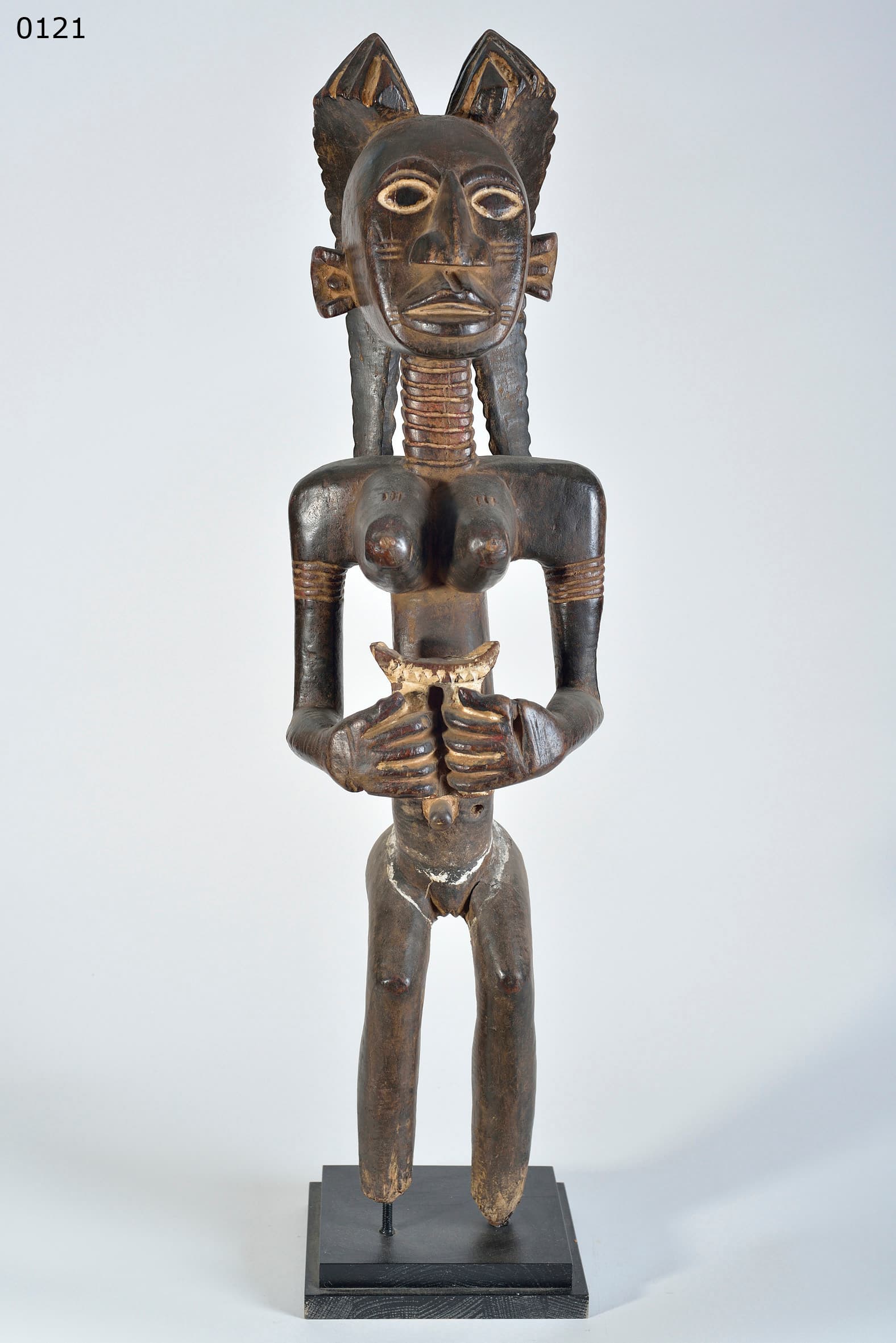
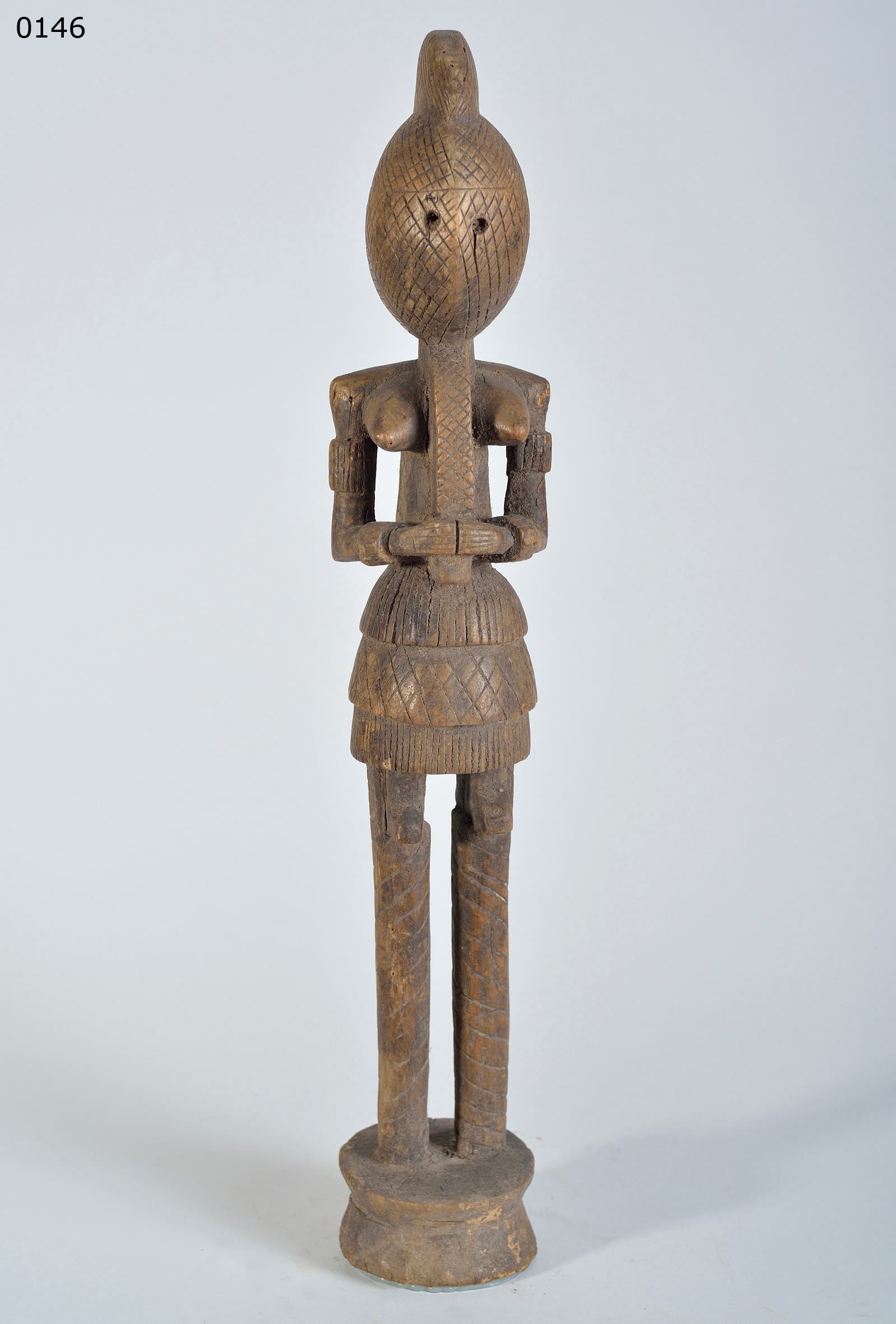
Diese extrem abstrakte, säulenartige Holzfigur besitzt einen stark stilisierten, flachen, halbkreisförmigen Kopf mit schwach eingeritzten Gesichtszügen, einfachen, herabhängenden Armen und subtil hervorstehenden Brüsten. Das Holz ist versteinert, federleicht und vollständig mit einer trockenen, graubraunen, oxidierten Patina überzogen.
1. Ästhetischer Stil und regionale Merkmale
Diese als Biiga (Kind) bezeichnete Figur zeigt den intensiven, eleganten Minimalismus des Mossi-Volkes in Burkina Faso. Der Bildhauer hat die menschliche Form auf ihre wesentlichen, geometrischen Bestandteile reduziert. Der zylindrische, unnachgiebige Torso steht für die strukturelle Stärke des Stammes. Der flache, halbkreisförmige Kopf spiegelt die traditionellen Kammfrisuren erwachsener Mossi-Frauen wider, während die subtilen Brüste das Geschlecht andeuten. Diese bewusste Ablehnung des anatomischen Realismus schafft ein reines, grafisches Ideogramm des Lebens und der zukünftigen Fruchtbarkeit.
2. Rituelle Funktion und Geheimbundkontext
Biiga-Puppen erfüllen in der Mossi-Gesellschaft einen doppelten Zweck. In erster Linie werden sie von jungen, noch nicht eingeweihten Mädchen als erzieherisches Spielzeug getragen, um ihnen die mütterlichen Pflichten des Tragens, Fütterns und Waschens eines Kindes beizubringen. Wenn jedoch eine reife Frau mit dem Kinderkriegen kämpft, wird die Biiga zu einem hochheiligen Fruchtbarkeitsfetisch erhoben. Die Frau bringt die Puppe zu einer Wahrsagerin, um sie weihen zu lassen, und sie kümmert sich verzweifelt um sie, indem sie sie mit Sheabutter salbt und ihr die ersten Tropfen ihrer Milch anbietet, um die Ahnen auf magische Weise dazu zu bewegen, ihr eine echte Schwangerschaft zu gewähren.
3. Physische Patina und Altersnachweis
Das Alter dieser Puppe aus dem 19. Jahrhundert ist an ihrer extremen physischen Austrocknung zu erkennen. Das Holz hat jegliche innere Feuchtigkeit verloren, ist versteinert und unglaublich leicht. Die ursprünglichen, scharfen Einschnitte im Gesicht und an den Armen sind durch ein Jahrhundert intensiver mütterlicher Behandlung, Reibung und Salbung völlig geglättet und verwischt worden. Die Oberfläche hat keinen modernen Glanz, sondern weist stattdessen eine gespenstische, trockene, graubraune Oxidation auf, die auf das extreme Alter und die Umwelteinflüsse in der Sahelzone hinweist.
Zusammenfassung
Diese Mossi Biiga ist eine gelungene Ausführung des westafrikanischen Minimalismus und dient als ergreifendes Symbol mütterlicher Hoffnung. Die extreme, versteinerte Austrocknung und die tiefe, von der Handhabung abgenutzte Patina machen sie zu einem höchst authentischen Artefakt der Fruchtbarkeitsmagie aus dem 19. Jahrhundert.
KI-unterstützt erstellt aus Sammlungsgutachten, Objektfotografie und eigener Recherche, redaktionell geprüft. Fehler sind möglich — Hinweise darauf sind uns willkommen. Zum Verfahren →