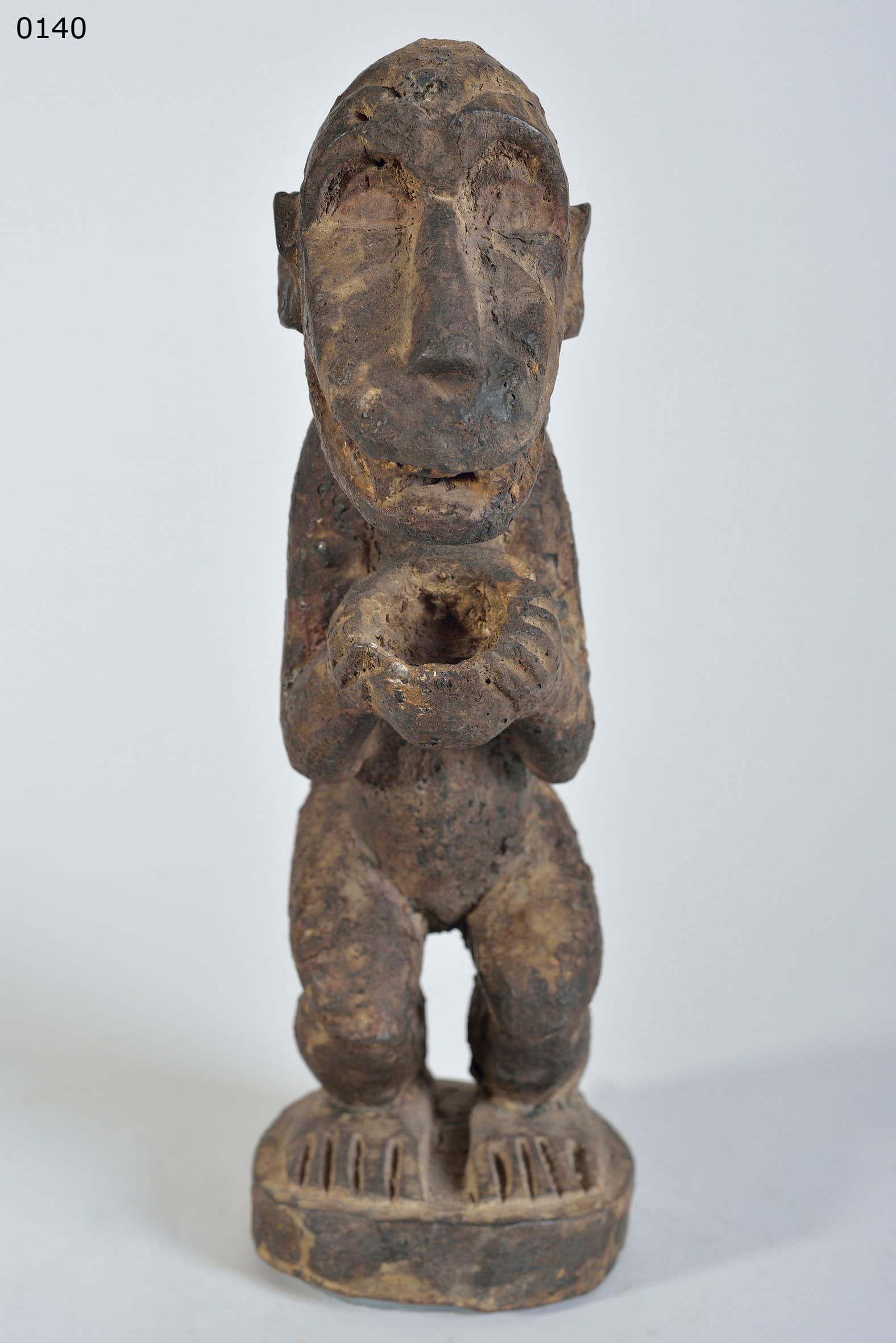
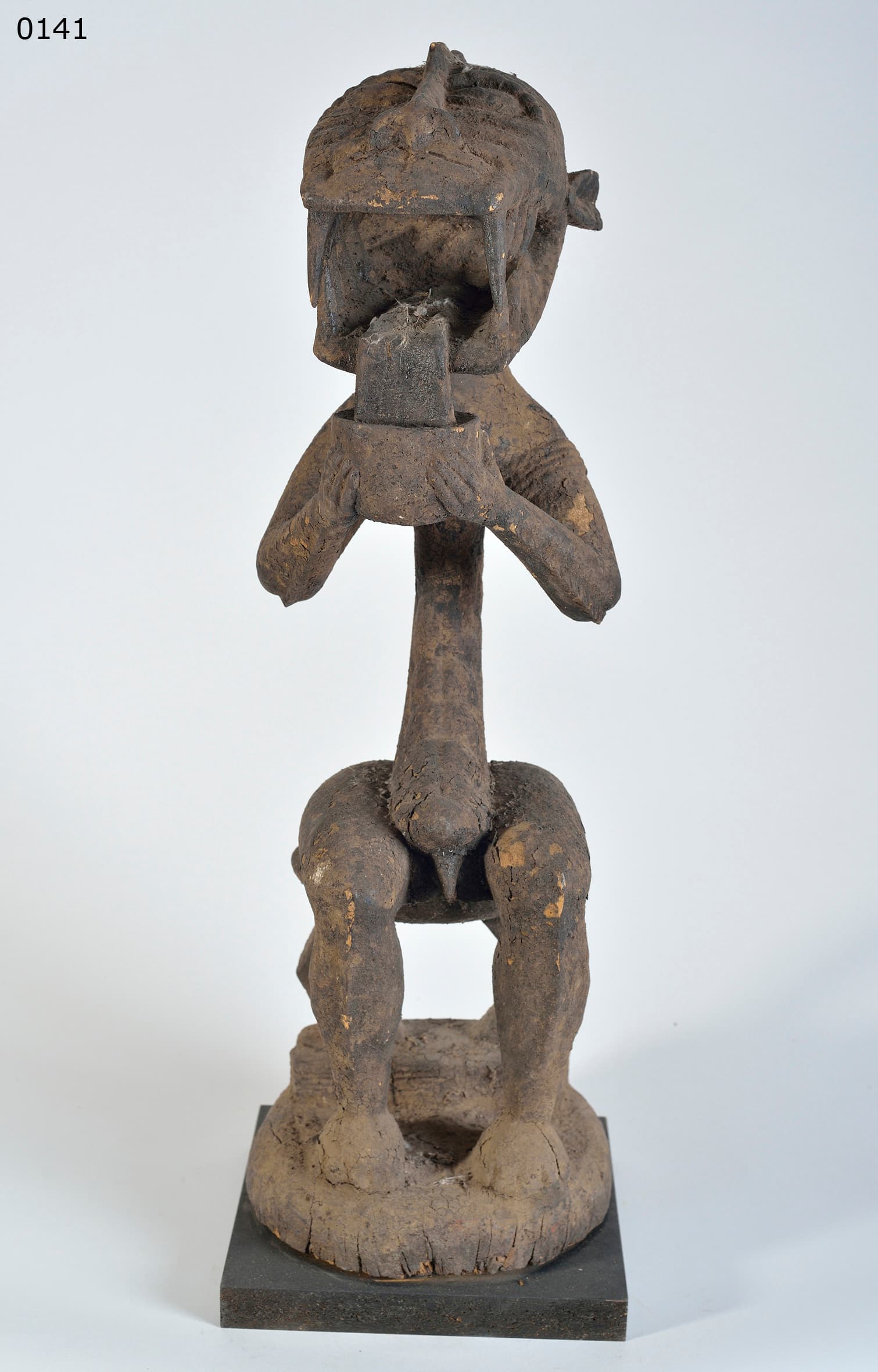
Diese fein geschnitzte hölzerne Heckenrolle besteht aus einem funktionalen U-förmigen Sockel, der eine hölzerne Rolle hält, die von einem fein ausgearbeiteten Januskopf (mit zwei Gesichtern) gekrönt wird, der zwei heitere menschliche Köpfe mit kunstvollen Kammfrisuren zeigt. Das Holz ist sehr glatt und trägt eine dunkle, ölige Reibungspolitur.
1. Ästhetischer Stil und regionale Eigenheiten
Die Baule von der Elfenbeinküste sind dafür bekannt, nützliche, alltägliche Gegenstände in fein gestaltete Miniaturkunstwerke zu verwandeln. Diese Heckenrolle veranschaulicht diese Meisterschaft in der intimen, kleinformatigen Schnitzerei. Der Bildhauer hat einen Januskopf (zwei Gesichter, die in entgegengesetzte Richtungen schauen) nahtlos in ein funktionales Werkzeug integriert. Die Gesichter zeigen einen charakteristischen Baule-Naturalismus - gewölbte Brauen, zarte Münder und kunstvoll geschnittenes Haar. Das Janus-Motiv symbolisiert Allwissenheit, da die Schutzgeister traditionell gleichzeitig über die Vergangenheit und die Zukunft wachen.
2. Rituelle Funktion und Geheimbundkontext
In Westafrika ist die Schmalbandweberei ein reiner Männerberuf und gilt als ritueller Akt, der die rhythmische Schöpfung des Universums nachahmt. Über dem Webstuhl sind Heckenrollen aufgehängt, an denen die Schnüre befestigt sind, die die Kettfäden anheben und absenken. Indem der Weber idealisierte Ahnenporträts auf die Rollen schnitzt, soll sichergestellt werden, dass sein Webstuhl vor schädlichen Kräften geschützt ist, die dazu führen könnten, dass sich die Fäden verheddern oder reißen. Es wird angenommen, dass das rhythmische Klacken der Rolle die körperliche Stimme des Ahnen ist, der die Hände des Webers führt.
3. Physische Patina und Altersnachweis
Die Patina dieses Stücks spricht für ein hohes Alter und eine intensive Nutzung. Das gesamte Objekt wurde durch die ständige Reibung der Hände des Webers und das Auftragen von Webstuhlölen zu einem glänzenden Finish poliert. Vor allem das Innere des U-förmigen Rahmens und das zentrale hölzerne Rad weisen tiefe, glatte, asymmetrische Rillen auf, die durch die wiederholte Reibung der Baumwollwebschnüre verursacht wurden, die über längere Zeit über das Holz liefen.
Zusammenfassung
Diese janusköpfige Webrolle von Baule ist ein charakteristisches Beispiel westafrikanischer Gebrauchskunst, bei der die Alltagsarbeit durch eine spirituelle Skulptur aufgewertet wird. Die heitere Darstellung und die tiefe, durch die Reibung der Schnüre entstandene Patina machen sie zu einem ausdrucksstarken Zeugnis dieser Handwerkstradition.
KI-unterstützt erstellt aus Sammlungsgutachten, Objektfotografie und eigener Recherche, redaktionell geprüft. Fehler sind möglich — Hinweise darauf sind uns willkommen. Zum Verfahren →