Diese beiden stark abstrahierten Holzfiguren mit verkürzten Oberkörpern und stilisierten, vereinfachten Köpfen sind auf langen, grob behauenen Pflöcken montiert. Ihre Oberflächen sind vollständig von einer auffallend dicken, dunklen und sehr bröckeligen Ansammlung von Opferstoffen und rituellen Verkrustungen bedeckt.
1. Ästhetischer Stil und regionale Charakteristika
Diese Figuren repräsentieren die rohe, viszerale Ästhetik des Dahomeyan (Fon) Bocio (ermächtigte Körper). Im Gegensatz zu den äußerst raffinierten, höfischen Messingarbeiten des Fon-Königspalastes verzichten die Bocio-Figuren bewusst auf künstlerischen Schliff. Die Schnitzerei ist absichtlich grob, verkürzt und aggressiv. Die hölzerne Armatur wird als völlig sekundär betrachtet; ihr einziger Zweck ist es, als strukturelles Gerüst für das massive Auftragen von bo (magische Medizin) zu dienen. Die wahre Ästhetik ist die einer chaotischen, überwältigenden Anhäufung, die eine erschreckende, unvorhersehbare spirituelle Energie visuell vermitteln soll.
2. Rituelle Funktion und Geheimbund-Kontext
Bocio sind aktive, hochflüchtige spirituelle Blitzableiter. Sie werden am Eingang eines Familiengeländes, einer Dorfkreuzung oder eines speziellen Voodoo-Schreins fest in die Erde gepflanzt und dienen einem verzweifelten Verteidigungszweck. Sie sind dazu bestimmt, bösartige Kräfte, Flüche (gbo) und Krankheiten, die für die menschlichen Bewohner bestimmt sind, anzuziehen, zu absorbieren und zu neutralisieren. Der Priester (bokonon) "füttert" die Figuren ständig mit Opfern, um ihre inneren Geister aggressiv und wachsam zu halten und sie in die Lage zu versetzen, physisch gegen unsichtbare Hexen zurückzuschlagen.
3. Physische Patina und Altersindikatoren
Die ausgeprägte, verkrustete Oberfläche dieser Figuren spricht für ihre Authentizität und ein aktives Schreinleben. Das Holz ist von einer massiven, geschichteten und tief geschwärzten Patina aus geronnenem Palmöl, Tierblut, zerkauten Kolanüssen und irdenen Pulvern überzogen. Diese dichte, bröckelige Verkrustung füllt die ursprünglichen Schnitzspuren weitgehend aus und weist auf eine jahrzehntelange, intensive rituelle Ernährung hin. Die langen, unteren Holzpflöcke weisen starke, unregelmäßige Erosion und Fäulnis auf, was auf eine Platzierung über längere Zeiträume direkt in der feuchten dahomeyschen Erde hindeutet.
Zusammenfassung
Diese beiden Fon Bocio-Figuren sind eindringliche Manifestationen westafrikanischer Voodoo-Verteidigungsmagie. Ihre rohen, unnachgiebigen Holzarmaturen und ihre dicken, geschwärzten Opferkrusten machen sie zu hochaktiven, repräsentativen Instrumenten der spirituellen Kriegsführung.
KI-unterstützt erstellt aus Sammlungsgutachten, Objektfotografie und eigener Recherche, redaktionell geprüft. Fehler sind möglich — Hinweise darauf sind uns willkommen. Zum Verfahren →

Seltene Kraftfigur (verwendet in VOODOO-Zeremonien)
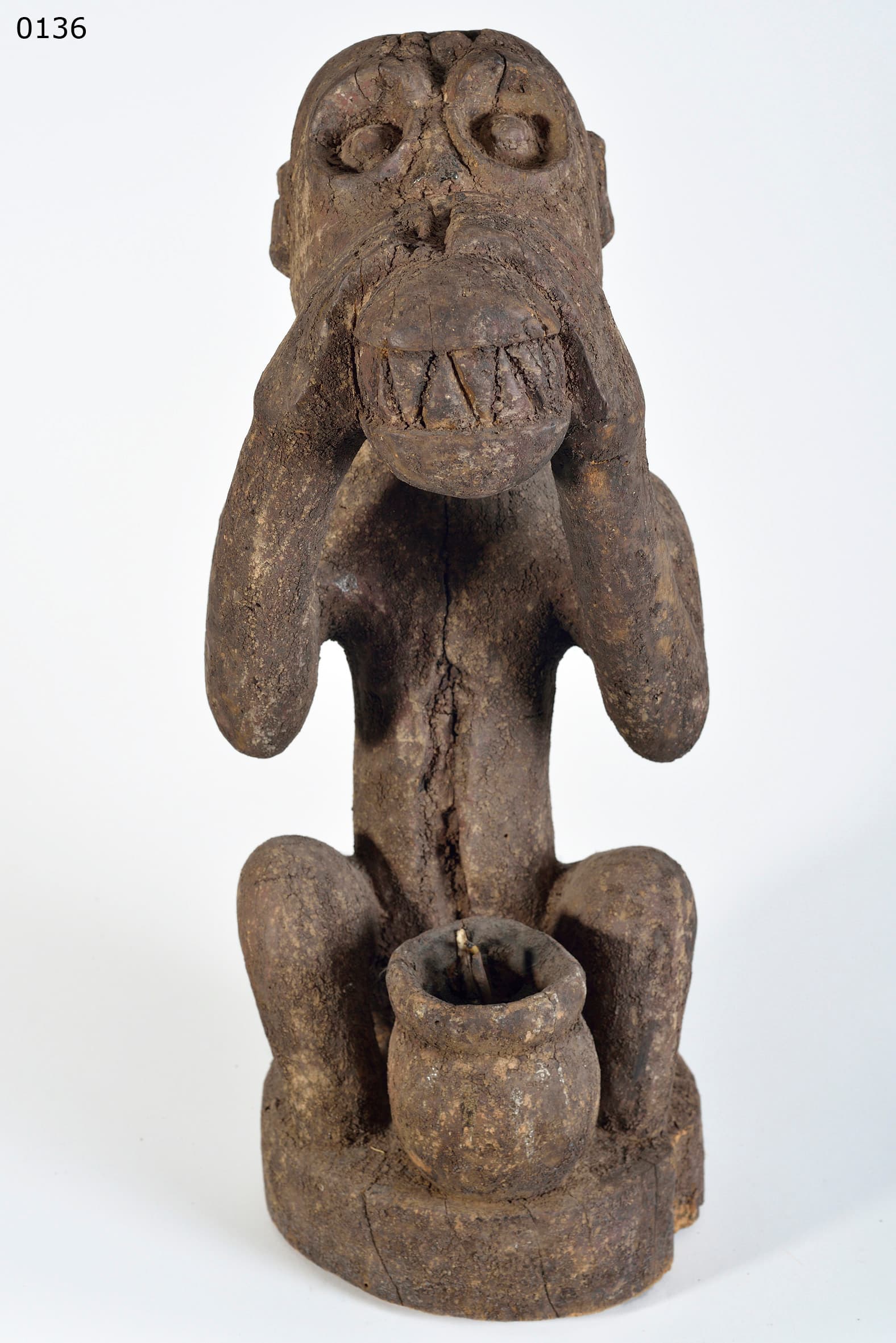
Affenschreinfigur
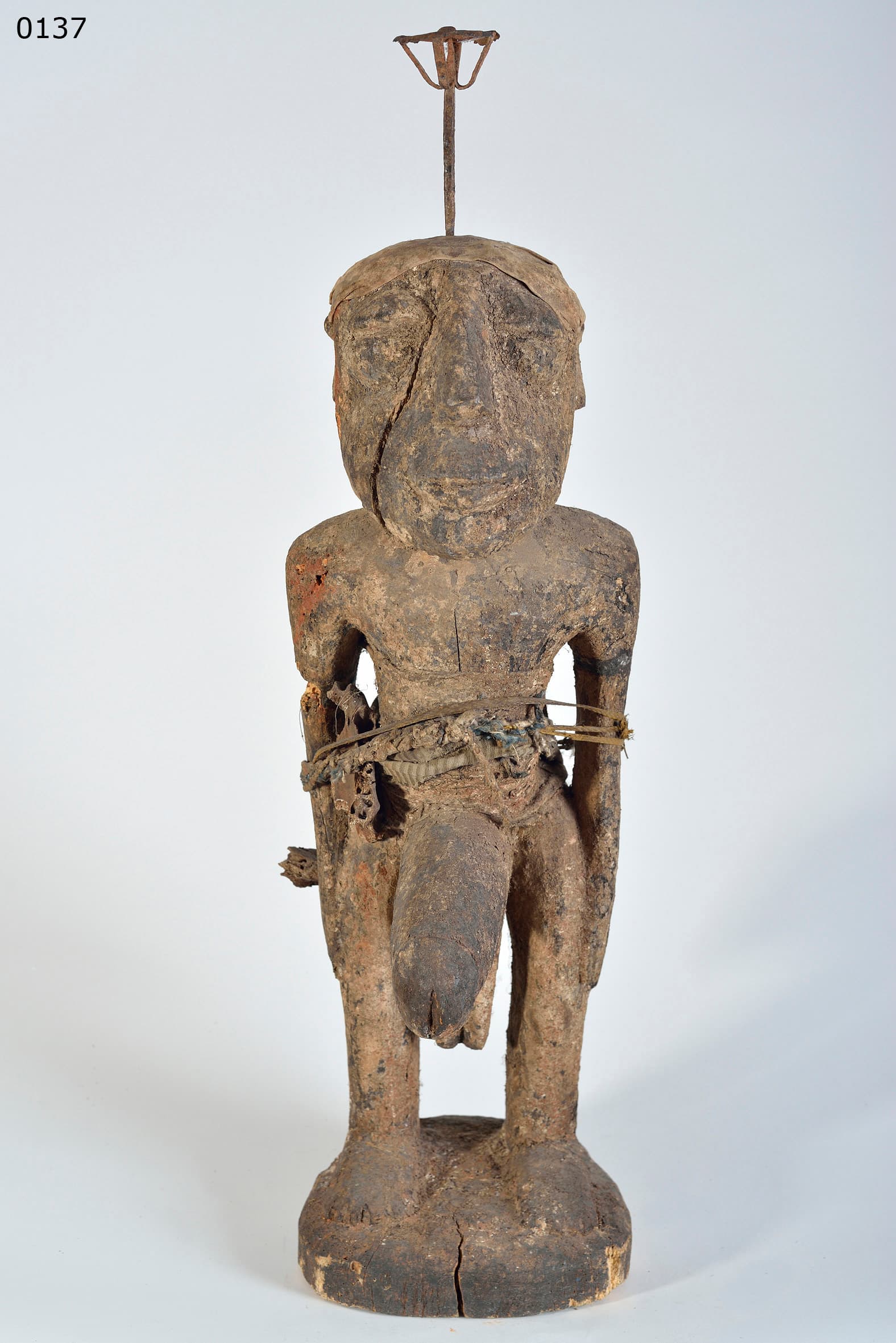
BOCIO-Statue (wird bei Voodoo-Zeremonien verwendet)
