Was uns das Objekt erzählt.
Gestützt auf Feldforschung, Museumsbestände und Fachliteratur — erzählt mit Respekt vor dem Kontext, in dem dieses Objekt entstand.
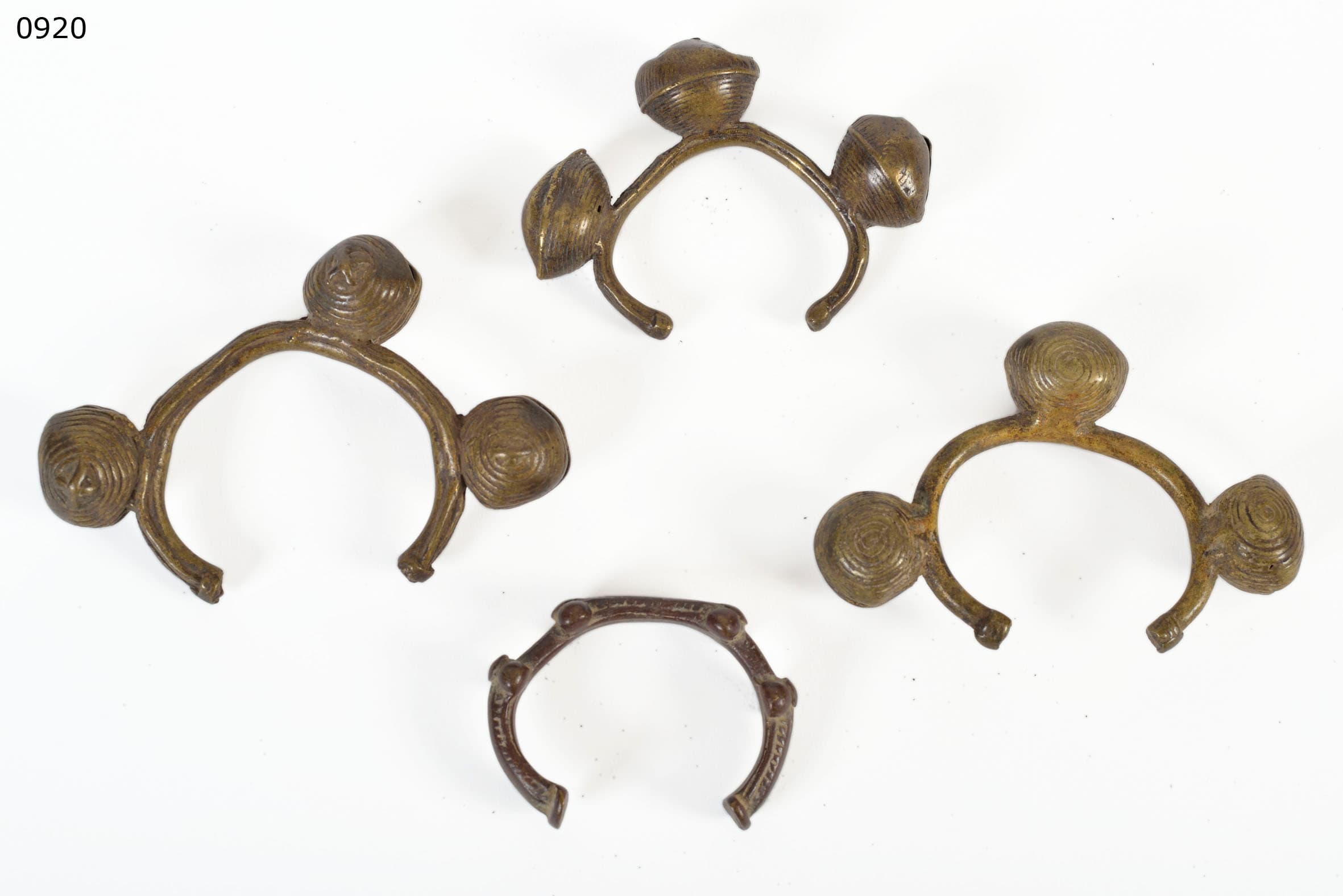
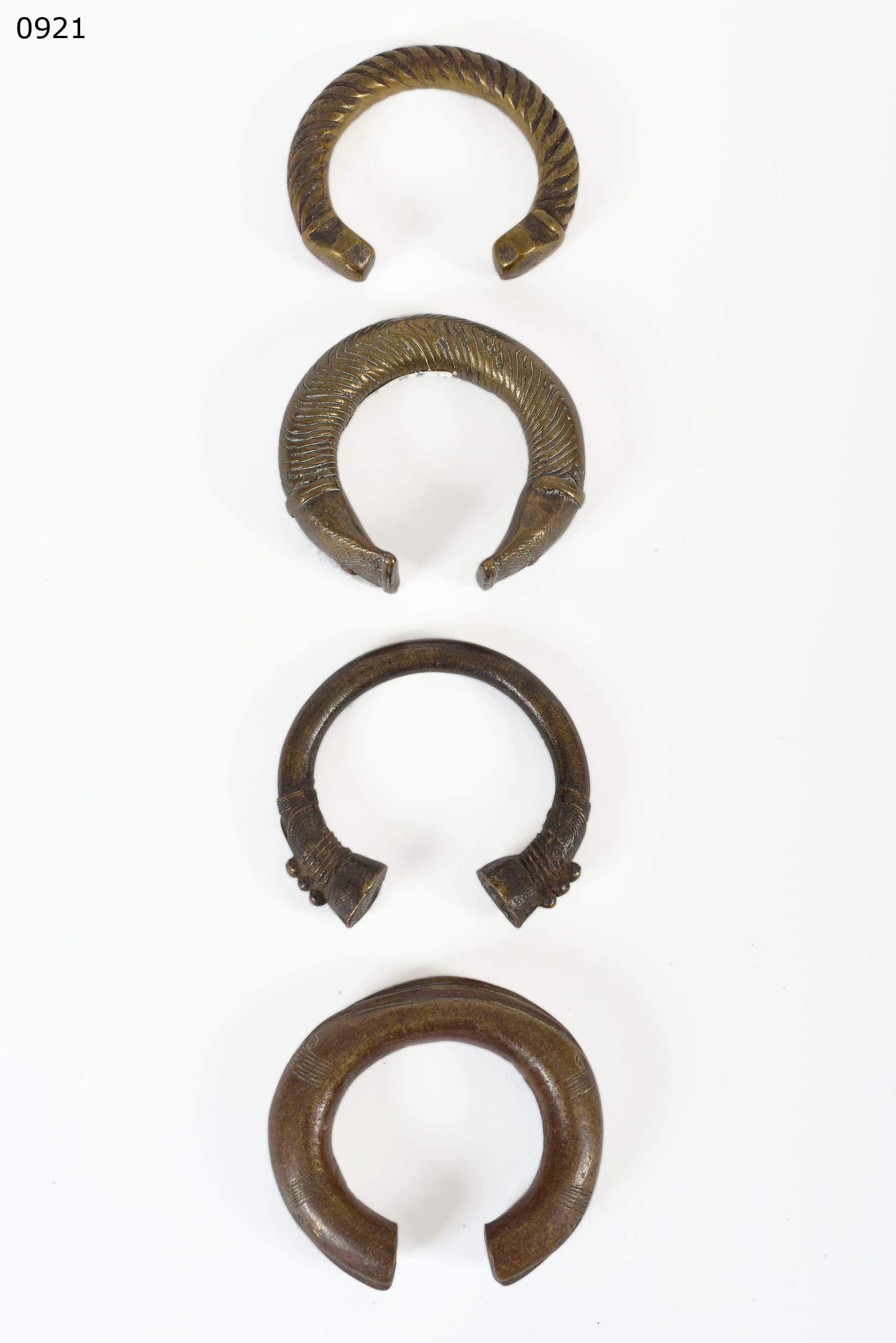
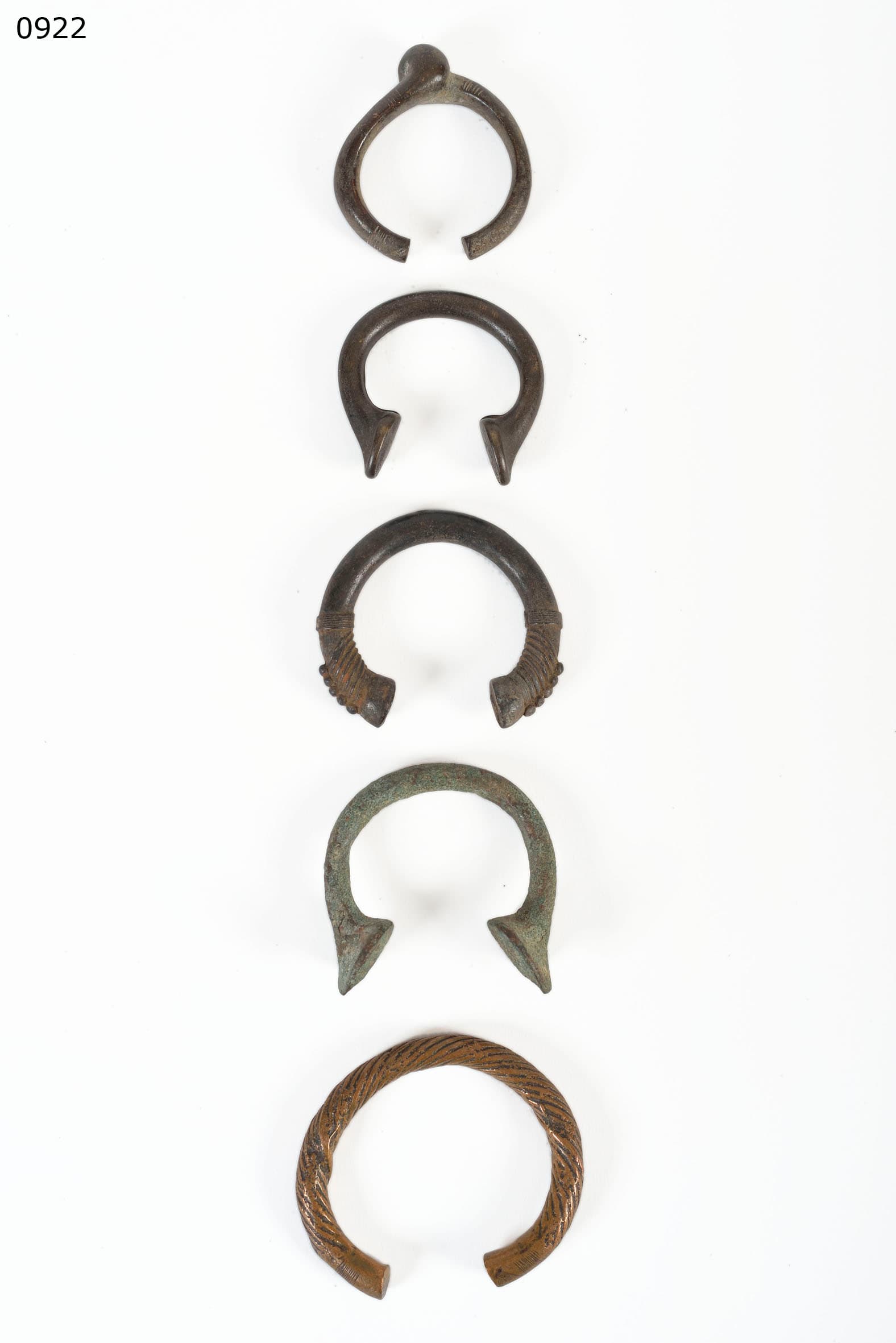
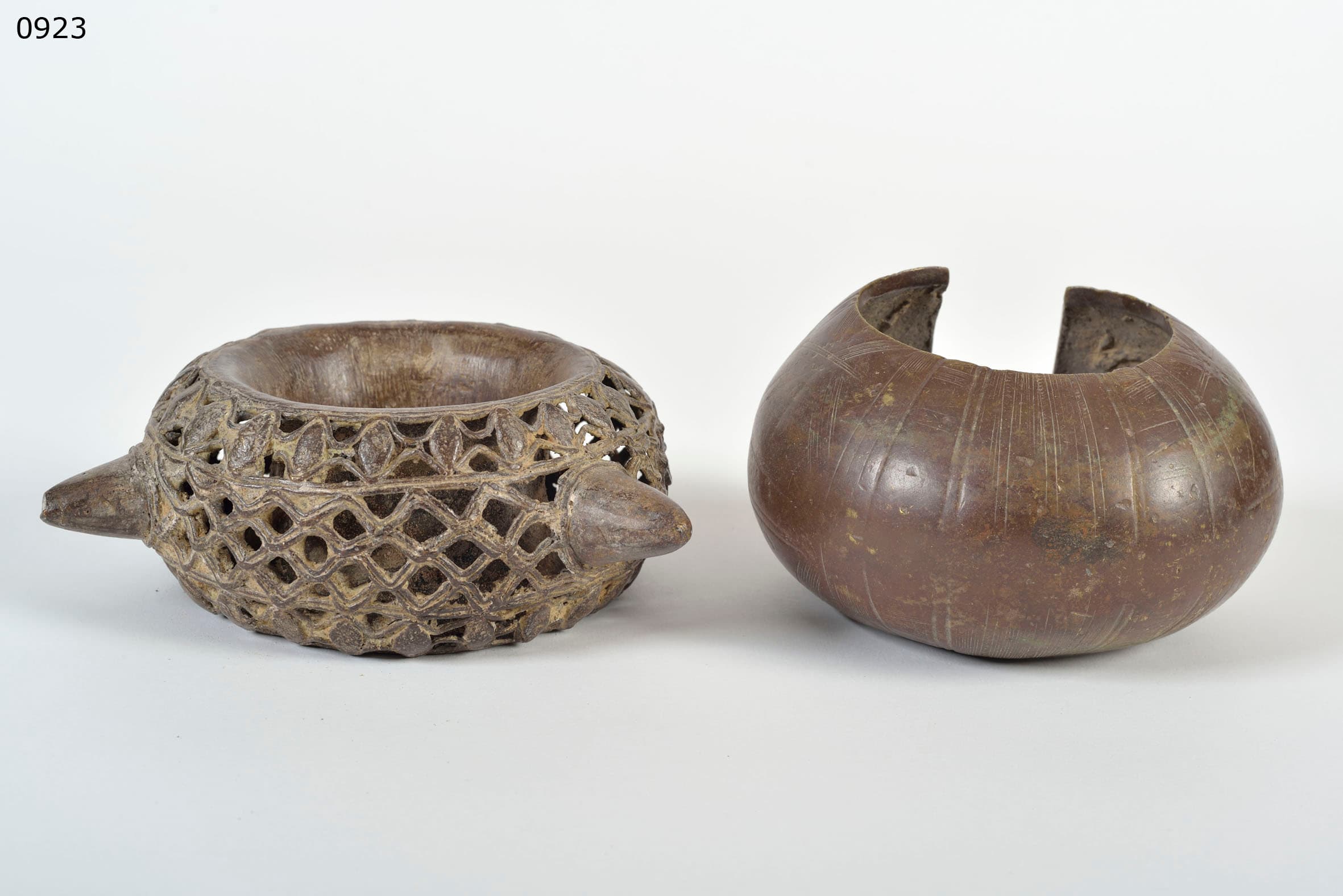
WEST AFRICA Six Ivory Bracelets (Set, 6.5–12 cm)
This grouping features six smooth, hollowed ivory armbands of varying widths and thicknesses, displaying a gradient of patination from creamy white to deep honey-brown. Surface wear and natural age cracks are visible on the thicker pieces, indicating prolonged contact with human skin.
1. Aesthetic Style and Regional Traits
Ivory bracelets are a ubiquitous marker of prestige across West Africa, crafted by hollowing out sections of elephant tusks. Their forms range from thin, delicate bands to thick, massive cylinders, and the variation in color and thickness across this set suggests they may have been sourced from different regional workshops or belonged to individuals of varying social status. The restrained turned form reflects a regional preference for displaying wealth through the inherent rarity of the elephant tusk itself, rather than through elaborate surface ornamentation — the material's preciousness was understood to require no embellishment.
2. Ritual Function and Status Adornment
In many West African societies — particularly among the Igbo, Yoruba, and Akan — heavy ivory bracelets were worn primarily by chiefs, titleholders, and prominent women as visible markers of wealth and social rank. They were often passed down as heirloom objects, accumulating spiritual weight and ancestral connection through generations of ceremonial wear. Restricted by sumptuary tradition to elite members of the lineage, the act of wearing them at festivals or installation ceremonies materially announced one's place at the apex of the social hierarchy and bound the wearer to the accumulated reputation of past generations.
3. Physical Patina and Age Verification
The varying patinas across these six bracelets — from a pale cream to a rich, oxidized caramel — reflect extensive handling and the natural absorption of body oils over decades. Age-related hairline fissures (craquelure) confirm the organic degradation of the ivory, consistent with the estimated early 20th-century age. The differential aging across the set is itself diagnostic: ivory absorbs body oils unevenly depending on individual wear patterns, and faking such a coordinated yet varied gradient across six pieces is virtually impossible.