Was uns das Objekt erzählt.
Gestützt auf Feldforschung, Museumsbestände und Fachliteratur — erzählt mit Respekt vor dem Kontext, in dem dieses Objekt entstand.
WEST AFRICA Five Minimalist Bronze Torque Bracelets (6–8 cm)
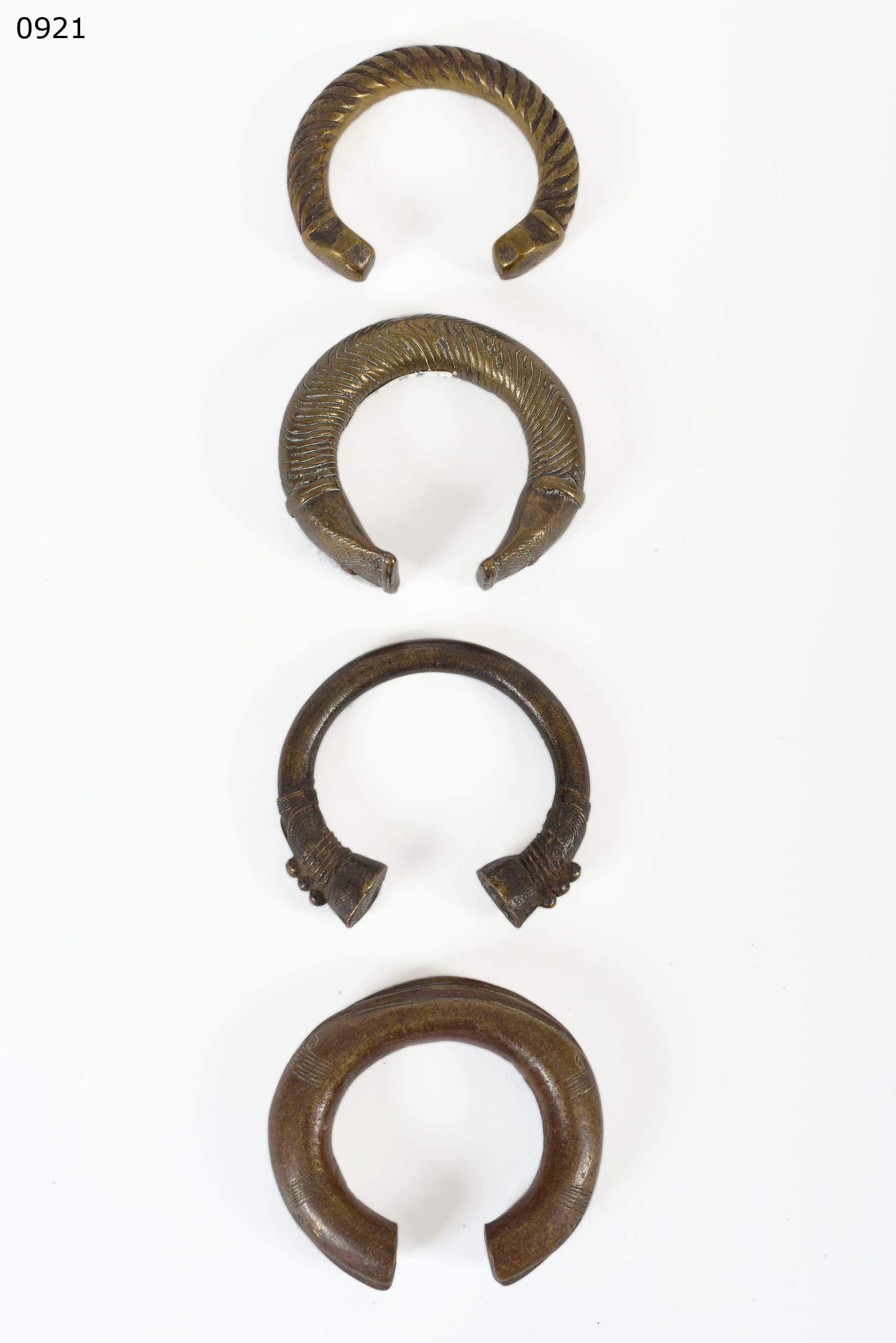
This group of five slender, C-shaped bronze bracelets is defined by unadorned, minimalist shanks terminating in either sharply pointed or slightly flared finials. The smooth, darkened metal displays a rich, oxidized surface indicative of prolonged skin contact.
1. Aesthetic Style and Regional Traits
In contrast to highly decorated cast ornaments, these five bronze torques emphasize stark minimalism and the pure physical properties of the metal. Forged rather than cast, their elegant C-shape relies entirely on the tensile strength of the bronze to grip the wearer's wrist or ankle. This structural reduction draws the eye to the terminal points — some dangerously sharp, others gently flared — creating a severe, architectural silhouette that is highly modernist in its aesthetic restraint.
2. Ritual Function and Marital Status
In many West African societies, the accumulation of simple, heavy metal rings was inextricably linked to women's status and marital transitions. Bracelets like these were often given by a groom to his bride, worn in stacked, graduated rows on the forearms or calves. The resulting clinking sound announced the movement of a high-status, married woman, while the sheer weight of multiple torques physically inhibited rapid movement, imposing a slow, dignified, and distinctly aristocratic gait. The forced bodily comportment was the central message rather than an inconvenience.
3. Physical Patina and Age Verification
The dark, muted olive-brown patina across these five pieces is the result of atmospheric oxidation combining with natural body oils. Unlike shrine objects that develop thick, crusty encrustations from burials or libations, these bracelets have a smooth, "cured" feel characteristic of daily bodily wear. The slight softening of the pointed finials through repeated handling securely places their creation and active use within the early to mid-20th century.
Summary
Stripped of excessive ornamentation, these five bronze torques are elegant studies in metallurgical tension and minimalist design. Their smooth, skin-polished patinas authenticate them as intimate, deeply personal artifacts associated with nuptial wealth and aristocratic female mobility.