Was uns das Objekt erzählt.
Gestützt auf Feldforschung, Museumsbestände und Fachliteratur — erzählt mit Respekt vor dem Kontext, in dem dieses Objekt entstand.
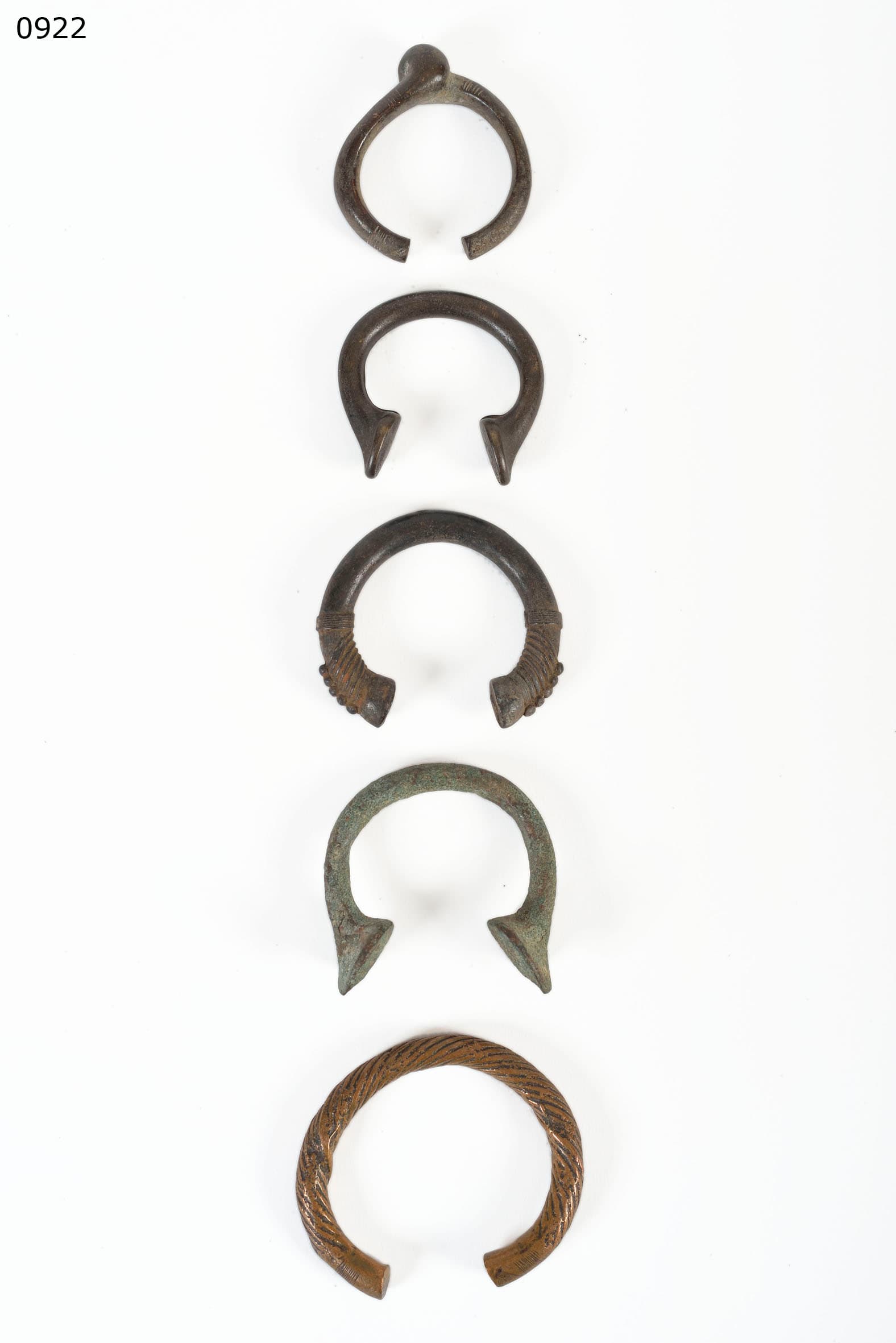
WEST AFRICA Four Twisted Brass Bracelets (7.5/8 cm)
These four C-shaped brass bracelets feature a mix of thick, deeply grooved twisted motifs and incised geometric bands, tapering towards solid, blunt finials. The brass exhibits a warm, golden handling patina with trace oxidation in the deeper recesses.
1. Aesthetic Style and Regional Traits
This set illustrates the West African metallurgical fascination with torsional energy — the physical appearance of twisted tension. By casting the brass to mimic heavily braided rope or tightly coiled vines, the metalsmiths infused the rigid objects with a dynamic, kinetic visual language. This "twisted" aesthetic is common across multiple ethnic groups from the Ivory Coast to Nigeria, serving both as a display of technical casting prowess and a metaphor for the binding, unbreakable strength of the lineage or community.
2. Ritual Function and the Manilla Economy
Beyond personal adornment, uniform brass and bronze rings functioned as recognized forms of mobile wealth in pre-colonial and early-colonial West Africa. Derived conceptually from the European "manilla" trade, locally cast heavy bracelets were accumulated to consolidate capital. They were worn stacked on the arms as a conspicuous display of economic prosperity and were frequently used to finalize major social transactions, such as settling legal disputes or paying bride wealth during marriage alliances. The dual role as currency and adornment integrated economic and aesthetic functions into a single object class.
3. Physical Patina and Age Verification
The patination on these four bracelets is a textbook example of anthropogenic (human-created) wear. The prominent outer ridges of the twists and the blunt ends of the finials have been buffed to a soft, luminous golden hue from decades of rubbing against skin, sweat, and coarse woven textiles. Conversely, the deep grooves retain a darkened, oxidized crust, providing the high-contrast relief that authenticates their generational use and an early 20th-century timeline.
Summary
Highlighting the intersection of jewelry and currency, this set of four brass bracelets demonstrates the dynamic torsional aesthetics of West African metalwork. Their contrasting patina of deep oxidation and polished highlights confirms their rich history as both active adornments and mobile wealth.