Was uns das Objekt erzählt.
Gestützt auf Feldforschung, Museumsbestände und Fachliteratur — erzählt mit Respekt vor dem Kontext, in dem dieses Objekt entstand.
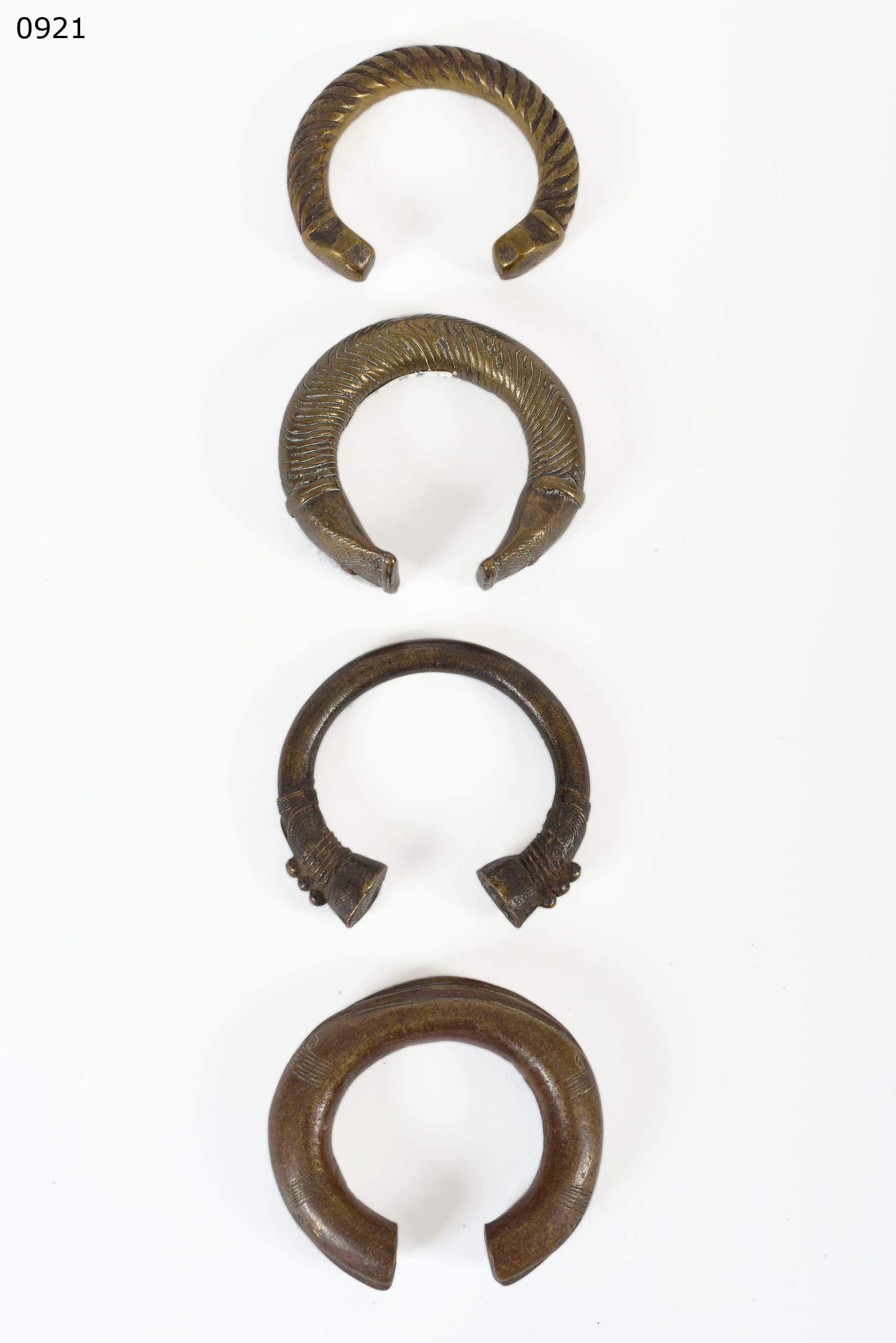
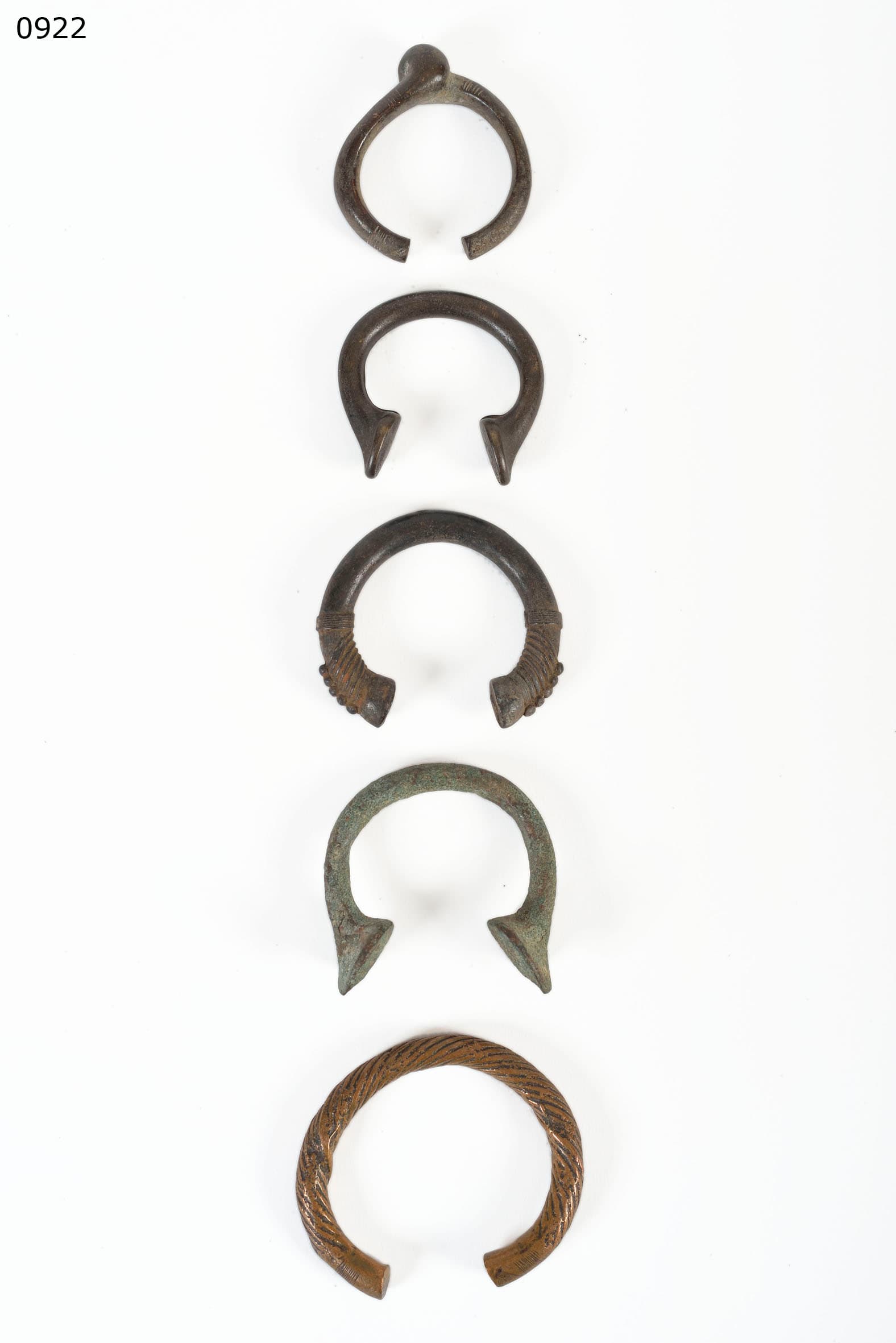
WEST AFRICA Four Brass Bracelets with Bulbous Finials (6.5–12 cm)
These four small brass bracelets are characterized by slender, curved bands that terminate in large, bulbous, domed or rattle-like finials. The metal exhibits a warm, handled antique bronze finish with localized green oxidation around the joints.
1. Aesthetic Style and Regional Traits
This collection of bracelets highlights the minimalist, tension-based design prevalent in West African metalwork. Instead of enclosing the wrist entirely, these "torque" or C-shaped designs rely on the inherent tensile strength of the brass to grip the arm. The dramatic contrast between the slender, unadorned shanks and the massive, bulbous finials creates an elegant visual balance. This minimalist geometry emphasizes the raw beauty and weight of the metal itself, stripping away narrative detail for pure architectural form. The torque format is regionally widespread but each finial style identifies a specific local tradition.
2. Ritual Function and Currency
Bracelets with heavy, bulbous finials often served a dual purpose in West African societies. If hollowed and filled with iron pellets, they functioned as rattles, producing a rhythmic clinking during movement that was believed to ward off evil spirits and announce the presence of an initiate. Additionally, heavy brass objects like these were historically utilized as a recognized form of currency (similar to manillas), used to consolidate wealth, settle disputes, and pay bride prices, making them wearable bank accounts. The dual currency-and-adornment status integrated economic and aesthetic functions into a single object class.
3. Physical Patina and Age Verification
The patination across all four pieces is remarkably consistent with long-term bodily wear. The prominent, bulbous ends have been worn incredibly smooth, reflecting the light with a soft, golden-brown luster that only decades of friction against human skin and natural oils can produce. The minor accumulations of verdigris in the recesses near the finials confirm their age and authenticate them as deeply utilized, historical artifacts rather than modern decorative casts.