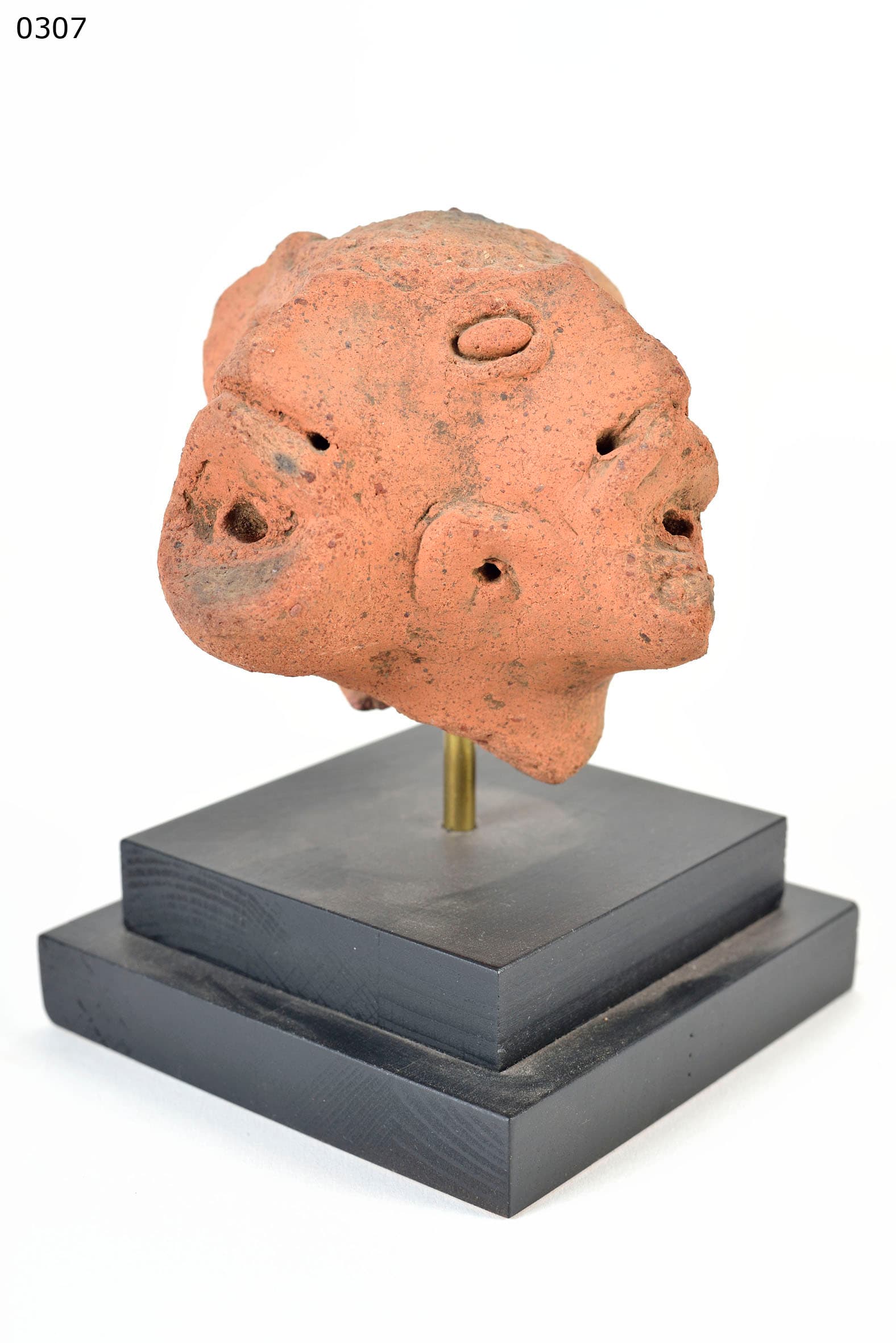
Dieser antike Bronzehelm weist eine tief gewölbte Form auf, die mit geflochtenen, seilartigen Reliefs entlang der Nähte verziert ist und von einer kleinen, stark stilisierten sitzenden Figur gekrönt wird. Das Metall ist stark patiniert mit reichen, erdigen Kupfertönen, Grünspan und dichten archäologischen Verkrustungen.
1. Ästhetischer Stil und regionale Charakteristika
Die Komaland-Kultur im Norden Ghanas ist bekannt für ihre archäologischen Terrakotta- und Bronze-Artefakte. Dieser Helm zeigt eine charakteristische Koma-Stilisierung, insbesondere in den vereinfachten, aber ausdrucksstarken Merkmalen der krönenden Figur und den geometrischen Reliefbändern, die Textil- oder Ledernähten in Metall nachempfunden sind - eine Übersetzungshilfe, die darauf hindeutet, dass die Bronze als dauerhafte, sakrale Replik einer verderblichen rituellen Kopfbedeckung konzipiert war. Das Idiom der Koma bevorzugte eine komprimierte, fast cartoonhafte Anatomie in Kombination mit zarten dekorativen Bändern, eine Kombination, die die Tradition von den benachbarten Metallarbeiten der Akan oder Mossi unterscheidet.
2. Rituelle Funktion und Bedeutung für das Begräbnis
Koma-Bronzen wurden häufig in Grabhügeln beigesetzt und dienten als Grabbeigaben oder rituelle Opfergaben für eine bestimmte Elite. Ein Helm mit diesem Design gehörte wahrscheinlich einem Häuptling oder Hohepriester, wobei die bekrönende Figur als spiritueller Wächter oder als Darstellung der Ahnen diente, die den Verstorbenen im Jenseits leiten sollten. Der Kontext der Hügelgräber, die seit den 1980er Jahren in großem Umfang ausgegraben wurden, stellt dieses Objekt in den Kontext eines inzwischen untergegangenen politischen und religiösen Systems, dessen Erinnerung nur durch solche archäologisch geborgenen Insignien überlebt.
3. Physische Patina und Altersnachweis
Die tiefgreifende Degradierung der Bronzeoberfläche, einschließlich starker Malachit-Oxidation (grün) und tiefem Lochfraß, spricht für eine jahrhundertelange unterirdische Vergrabung. Die organischen Ablagerungen und die strukturelle Integrität der Kupferlegierung sind vereinbar mit der geschätzten Datierung des archäologischen Horizonts von Koma in das 12. bis 18. Jahrhundert. Die Verkrustung ist eher mineralisiert als oberflächlich, was auf eine chemische Bindung zwischen dem vergrabenen Boden und dem korrodierenden Metall hinweist, die sich erst im Laufe mehrerer Jahrhunderte stabiler Vergrabung entwickelt.
Zusammenfassung
Dieser seltene Überrest aus dem antiken Komaland bietet einen wertvollen Einblick in die metallurgischen Fähigkeiten und Bestattungspraktiken des alten Ghana. Seine charakteristische Bestattungspatina und seine archaische Ikonographie machen ihn zu einem bedeutenden Zeugnis der archäologischen afrikanischen Kunst.
KI-unterstützt erstellt aus Sammlungsgutachten, Objektfotografie und eigener Recherche, redaktionell geprüft. Fehler sind möglich — Hinweise darauf sind uns willkommen. Zum Verfahren →