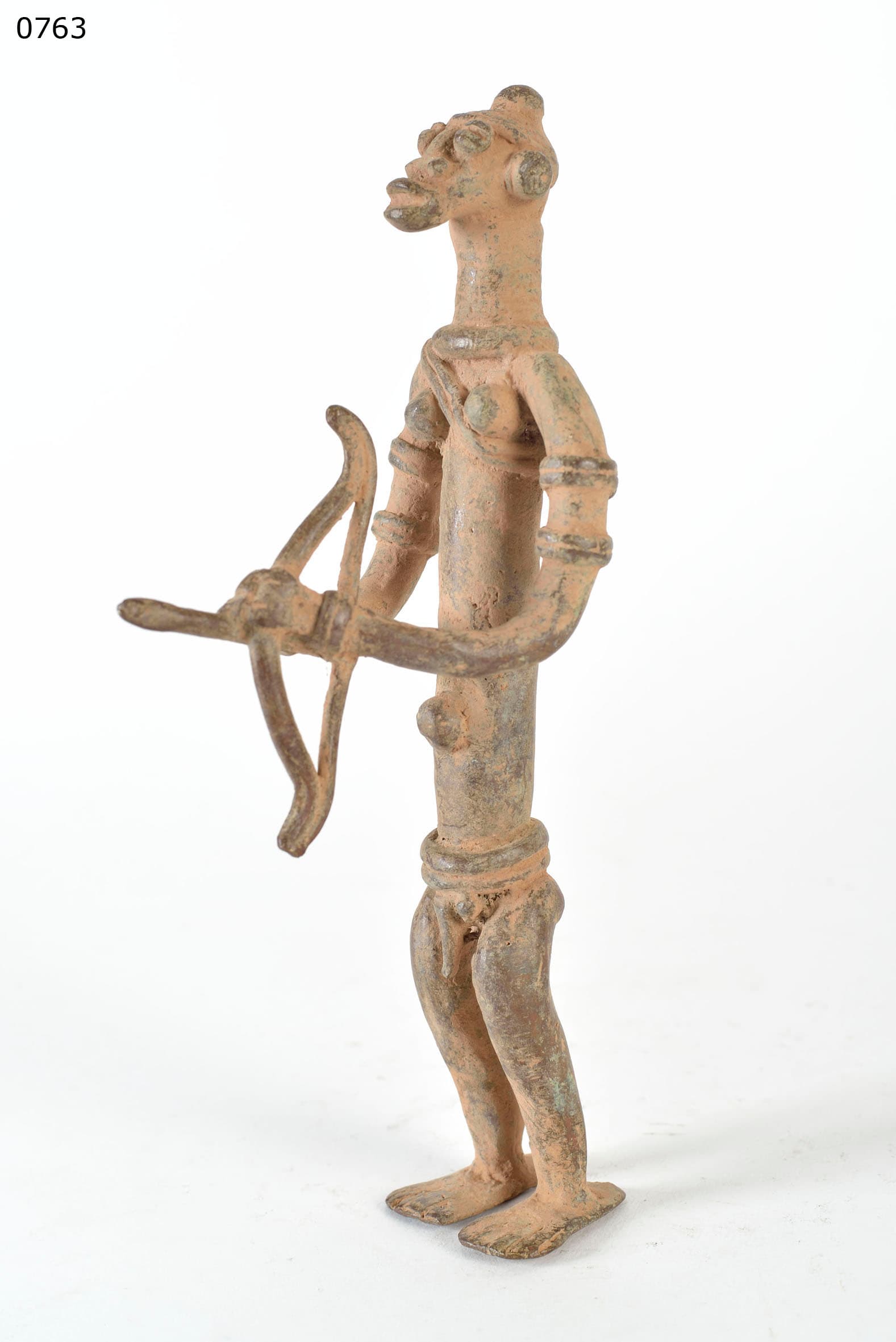
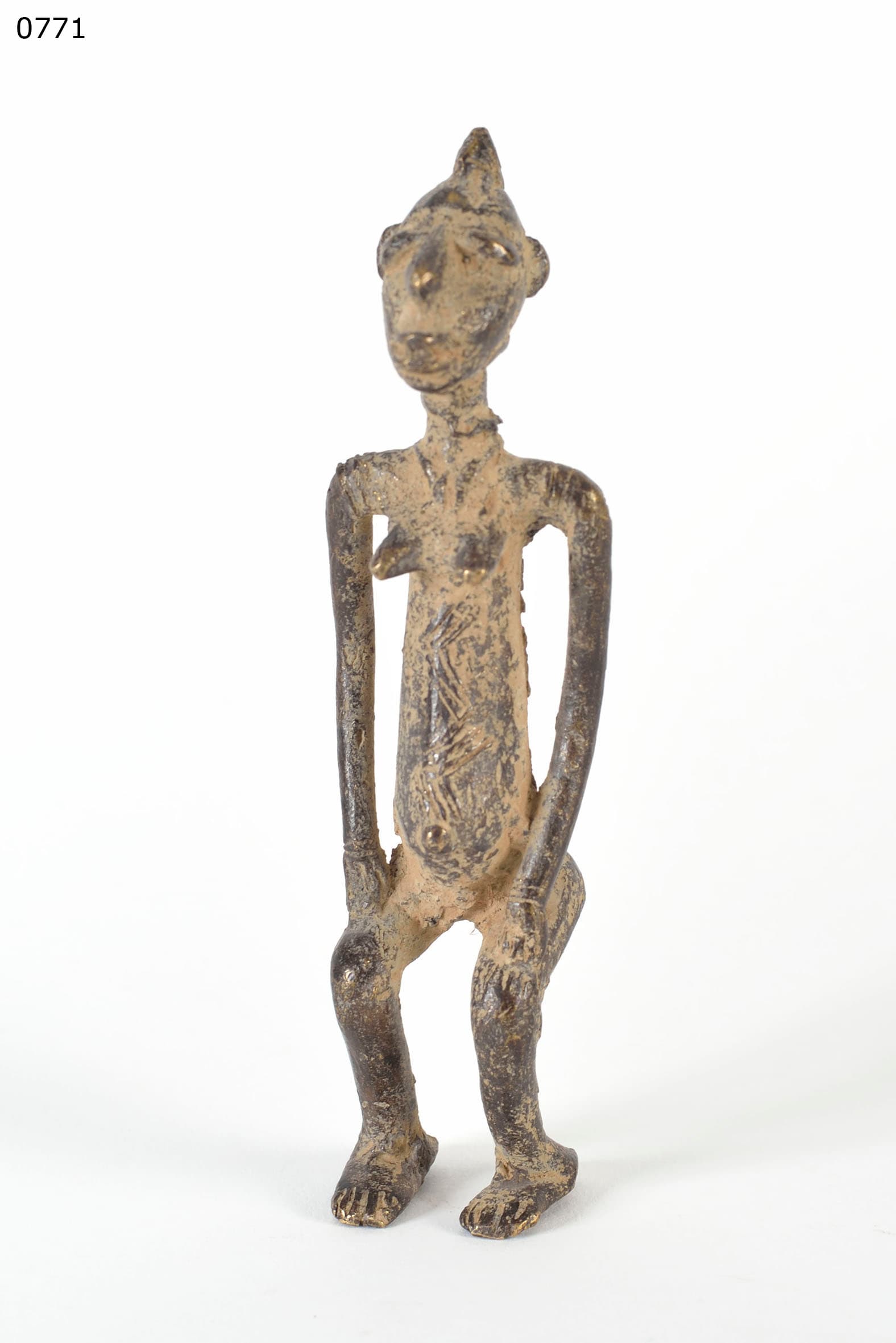
Eine langgestreckte, stark stilisierte, aufrecht stehende weibliche Bronzefigur, die sich durch die Anwesenheit einer Miniaturfigur (ein Kind) auszeichnet, die horizontal über ihrer Taille hängt. Die Bronze weist eine stark degradierte, stark oxidierte und krustige archäologische Patina auf.
1. Ästhetischer Stil und regionale Eigenheiten
Das Volk der Gan ist dafür bekannt, dass es die menschlichen Proportionen in surreale, drahtartige Extreme treibt. Diese Mutterschaftsfigur ist ein Beispiel für diese Ästhetik, mit einem langen, röhrenförmigen Torso und stark vereinfachten, hervorstehenden Gesichtszügen. Die Einbeziehung des Kindes, das sich horizontal an die Figur klammert, durchbricht die strenge Vertikalität der Mutter und erzeugt eine starke visuelle Spannung, die die lebenswichtige, lebenserhaltende Rolle der Frau innerhalb der Abstammungslinie hervorhebt. Die horizontale Ausrichtung des Kindes ist selbst eine kompositorische Besonderheit der Gan, die sich von dem vertikalen Format der benachbarten Akan- oder Mossi-Mutterfiguren unterscheidet.
2. Rituelle Funktion und königliche Verehrung
Angesichts der technischen Schwierigkeit des Wachsausschmelzverfahrens im alten Burkina Faso war diese Bronze ein hochrangiges Objekt. Sie wurde wahrscheinlich für ein königliches oder ein großes Gemeinschaftsheiligtum in Auftrag gegeben, um eine Gründungsmatriarchin darzustellen. Die Verehrung dieser Figur sollte die anhaltende Fruchtbarkeit der Frauen in der Gemeinschaft, den sicheren Übergang der Kinder ins Erwachsenenalter und die allgemeine Stabilität der Gan-Gesellschaft gewährleisten. Die bronzenen Mutterschaftsfiguren deuten eher auf eine institutionelle als auf eine häusliche Verehrung hin - das Holz diente der Haushaltsskala.
3. Physische Patina und Altersnachweis
Das hohe Alter dieses Stücks zeigt sich in seinem Oberflächenzustand. Die Bronze wurde chemisch stark zersetzt, was zu einer dicken, krustigen Schicht aus Malachit und kalzifizierter Erde führte, die feinere Gussdetails verdeckt. Diese starke archäologische Verwitterung steht im Einklang mit einer Datierung auf das 16. bis 19. Jahrhundert und deutet auf ein langes Vergraben oder Aussetzen in einem irdenen Schrein hin.
Zusammenfassung
Ein exquisites Beispiel für die metallurgische Abstraktion des antiken Gan, bei der die spirituelle Bedeutung der mütterlichen Figur durch extreme Dehnung zum Ausdruck kommt. Die tiefgreifende archäologische Verwitterung und die einzigartige Komposition machen es zu einer seltenen und historisch wichtigen Antiquität.
KI-unterstützt erstellt aus Sammlungsgutachten, Objektfotografie und eigener Recherche, redaktionell geprüft. Fehler sind möglich — Hinweise darauf sind uns willkommen. Zum Verfahren →