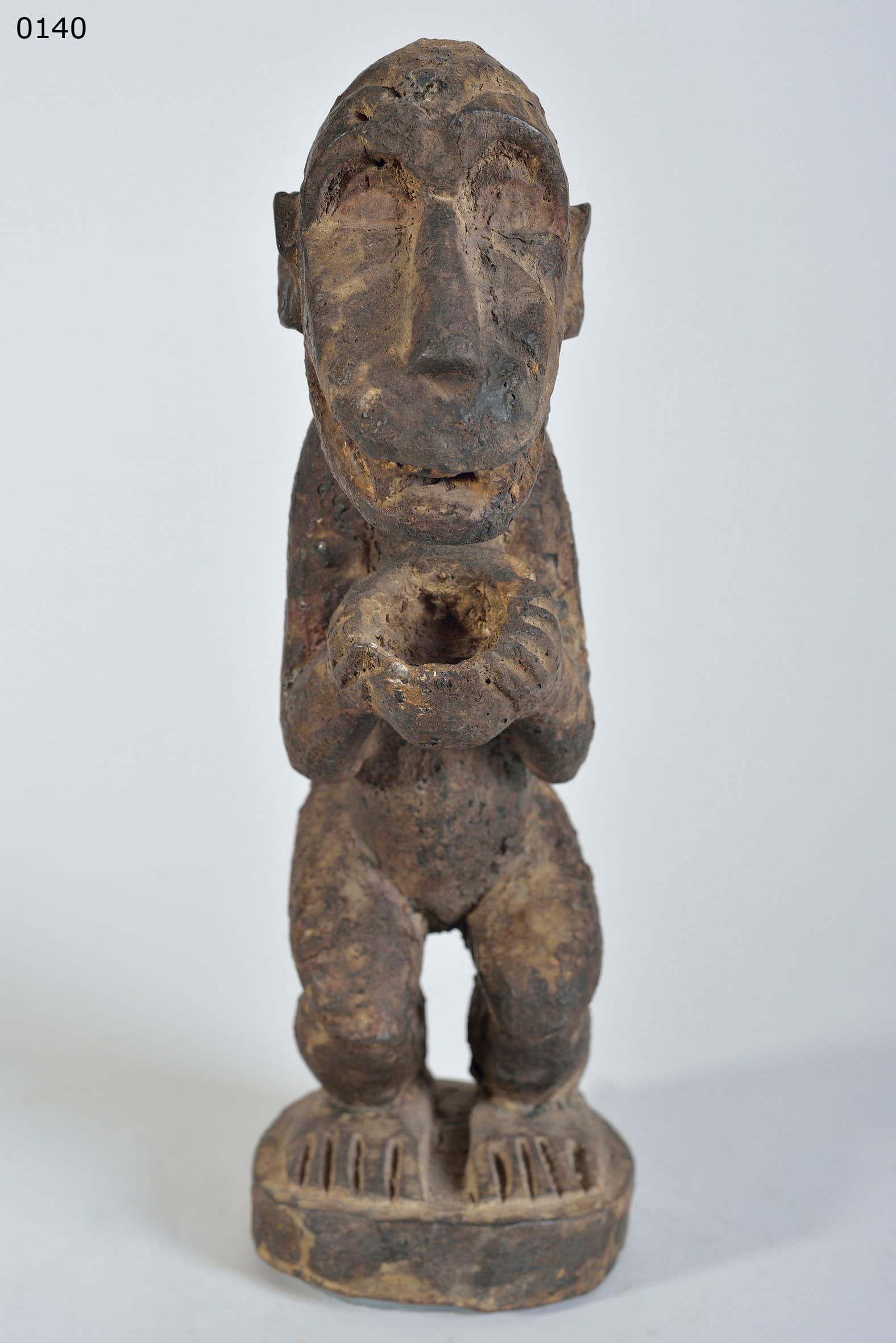
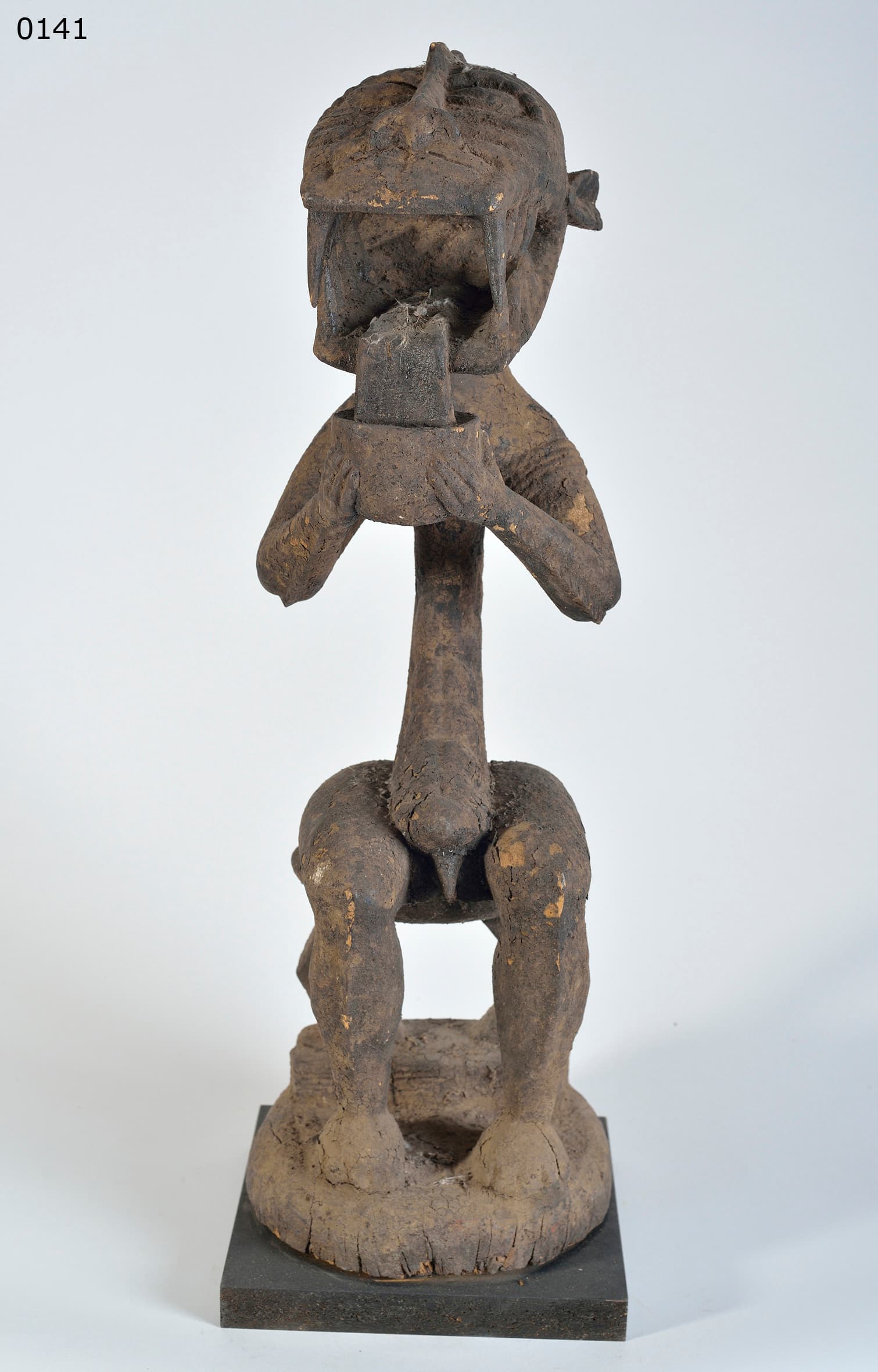
Eine große, fein geschnitzte, stehende männliche Figur mit klassischen Baule-Gesichtszügen, bekleidet mit einem Tropenhelm aus der Kolonialzeit, einem Hemd mit Kragen und einer Hose. Das Holz trägt eine glatte, rötlich-braune Patina mit Resten von lokalen Pigmenten.
1. Ästhetischer Stil und regionale Charakteristika
Diese monumentale Figur ist ein hervorragendes Beispiel für das Genre des "Colon" (Kolonialstil) der Baule. Der Künstler hat die strengen, klassischen Regeln der Baule-Schönheit beibehalten - das ruhige, detailreiche Gesicht, die gewölbten Augenbrauen und den langen Hals -, aber die Figur ausdrücklich in die erkennbare Uniform eines europäischen Verwalters gekleidet. Diese stilistische Dualität stellt einen entscheidenden Moment der kulturellen Überschneidung dar. Die Baule haben ihre Formensprache nicht aufgegeben, um den Kolonisator darzustellen, sondern den Kolonisator in ihr bestehendes ikonografisches Vokabular aufgenommen.
2. Rituelle Funktion und Blolo Bian
Nach dem Glauben der Baule hat jeder einen jenseitigen Ehepartner (blolo bian für eine Frau). Als sich die sozioökonomische Landschaft mit dem Kolonialismus veränderte, glaubte man, dass diese Geistergatten Darstellungen von modernem Reichtum und Prestige verlangen. Durch die Beauftragung einer als Kolonialoffizier gekleideten Geisterfigur versuchte der Besitzer, die vermeintliche Macht, die Bildung und den Status der Kolonisatoren zu seinem eigenen spirituellen Vorteil zu nutzen. Die Kolonkleidung ist somit weniger als bloßer Beleg für die europäische Präsenz zu verstehen, sondern vielmehr als eine strategische spirituelle Aufwertung - eine Beschwörung neuer Formen der Wirksamkeit, die durch traditionelle Rituale kanalisiert werden sollte.
3. Physische Patina und Altersnachweis
Die unglaublich glatte, von Hand geriebene Oberfläche von Gesicht, Händen und Helm deutet auf eine lange, liebevolle Behandlung und Staubentfernung hin. Schwache Spuren von roten und weißen Pigmenten in den Vertiefungen deuten darauf hin, dass die Figur gelegentlich bei privaten häuslichen Ritualen gesalbt oder gepudert wurde. Die natürliche Oxidation des Holzes ist vereinbar mit einer Entstehung im frühen 20. Jahrhundert. Der Verlauf der Politur - konzentriert auf markante Merkmale, zurückbehaltenes Pigment in den Vertiefungen - legt eine wiederholte rituelle Nutzung nahe.
Zusammenfassung
Diese Baule-Kolon-Figur ist ein monumentales historisches Dokument, das meisterhaft die klassische indigene Ästhetik mit den komplexen psychologischen Realitäten der Kolonialzeit verbindet. Die feine Schnitzerei und die tiefe Patina unterstreichen die hohe gestalterische Qualität dieses Objekts.
KI-unterstützt erstellt aus Sammlungsgutachten, Objektfotografie und eigener Recherche, redaktionell geprüft. Fehler sind möglich — Hinweise darauf sind uns willkommen. Zum Verfahren →