Ein gewaltiger und furchterregender Holzkopf, stark verkrustet mit dicker, geronnener Opfersubstanz, mit einer eingelassenen Glasflasche am Kragen und zahlreichen geschmiedeten Eisenspikes, die direkt in den Schädel und den Hals getrieben sind.
1. Ästhetischer Stil und regionale Eigenheiten
Obwohl im Datensatz fälschlich als Bateba-Figur der Lobi katalogisiert, wird dieses Objekt aufgrund seiner visuellen Taxonomie und Geografie als klassische "Bocio"-Kraftfigur der Fon definiert. Die Ästhetik der Fon ist hier brutal und akkumulativ: Der Künstler behandelt die Holzschnitzerei lediglich als Armatur zum Machterhalt. Die wahre Kunst liegt in der bewussten, aggressiven Kombination von Eisennadeln, eingebettetem Glas und Opferstoffen, die ein Objekt schaffen, das schockieren, einschüchtern und eine rohe, übernatürliche Kraft ausstrahlen soll. Diese Anti-Ästhetik ist das Markenzeichen der Region - Fon Vodun lehnt die polierten Oberflächen der Yoruba-Skulpturen zugunsten einer bewusst akzentuierten Bildsprache ab.
2. Rituelle Funktion und aggressiver Vodun-Zauber
Es handelt sich um ein Objekt intensiver, aktiver Verteidigungsmagie. In der Vodun-Religion von Benin werden Eisenspitzen in ein Bocio getrieben, um bösartige Geister, Flüche oder Krankheiten, die sich gegen den Besitzer richten, "festzunageln" oder zu fangen. Die eingelassene Glasflasche enthielt wahrscheinlich hochkonzentrierte Bo (magische Medizin) und diente als spiritueller Motor des Stücks. Sie wurde von einem Bokonon (Priester) geschaffen, um Hexerei gewaltsam abzuwehren, wobei jeder Stachel einen einzelnen Akt magischer Hingabe zur Neutralisierung einer bestimmten, namentlich genannten Bedrohung darstellt.
3. Physische Patina und Altersnachweis
Das dominierende physische Merkmal dieses Stücks ist seine tiefe, geschwärzte Patina - eine dicke, verkohlte Kruste aus Blut, Palmöl und Alkohol, die sich im Laufe der kontinuierlichen rituellen Ernährung gebildet hat. Die starke Oxidation der Eisenspitzen und die organische Einbindung der Glasflasche in die Kruste sprechen für eine intensive, aktive Nutzung im frühen 20. Jahrhundert in einem Fon-Schrein. Die Integration von Flasche, Eisen, Holz und Opfersubstanz in eine einzige chemisch gebundene Masse gilt bei einem erst kürzlich hergestellten Objekt als schwer nachahmbar.
Zusammenfassung
Dieses schwer bewaffnete Kraftobjekt ist ein eindringliches Beispiel für die akkumulative Magie der Fon und verkörpert die viszerale Intensität des westafrikanischen Vodun. Seine dichte Opferkruste und die markanten Eisenbeschläge machen es zu einem eindrucksvollen Zeugnis der spirituellen Verteidigung.
KI-unterstützt erstellt aus Sammlungsgutachten, Objektfotografie und eigener Recherche, redaktionell geprüft. Fehler sind möglich — Hinweise darauf sind uns willkommen. Zum Verfahren →

Seltene Kraftfigur (verwendet in VOODOO-Zeremonien)
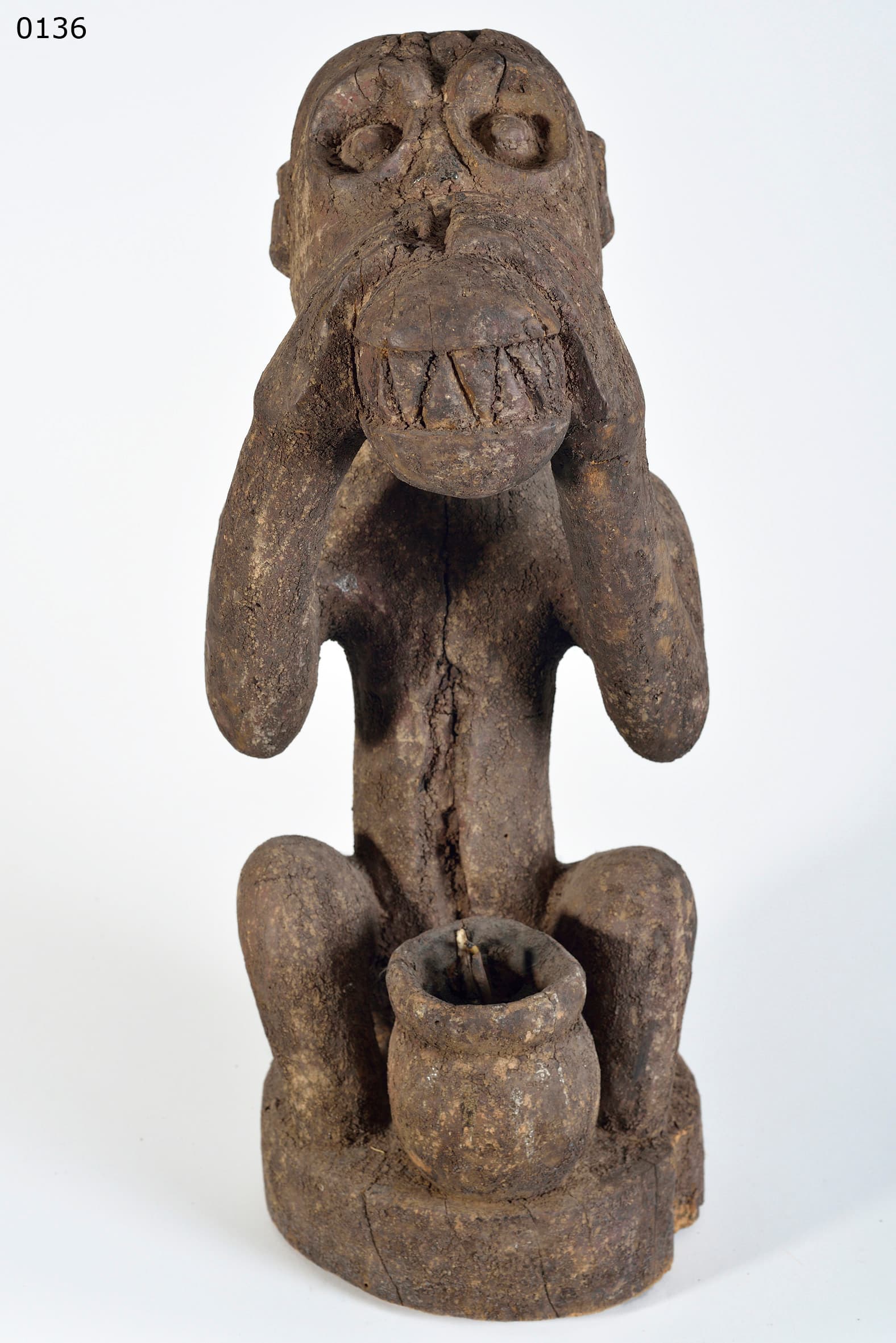
Affenschreinfigur
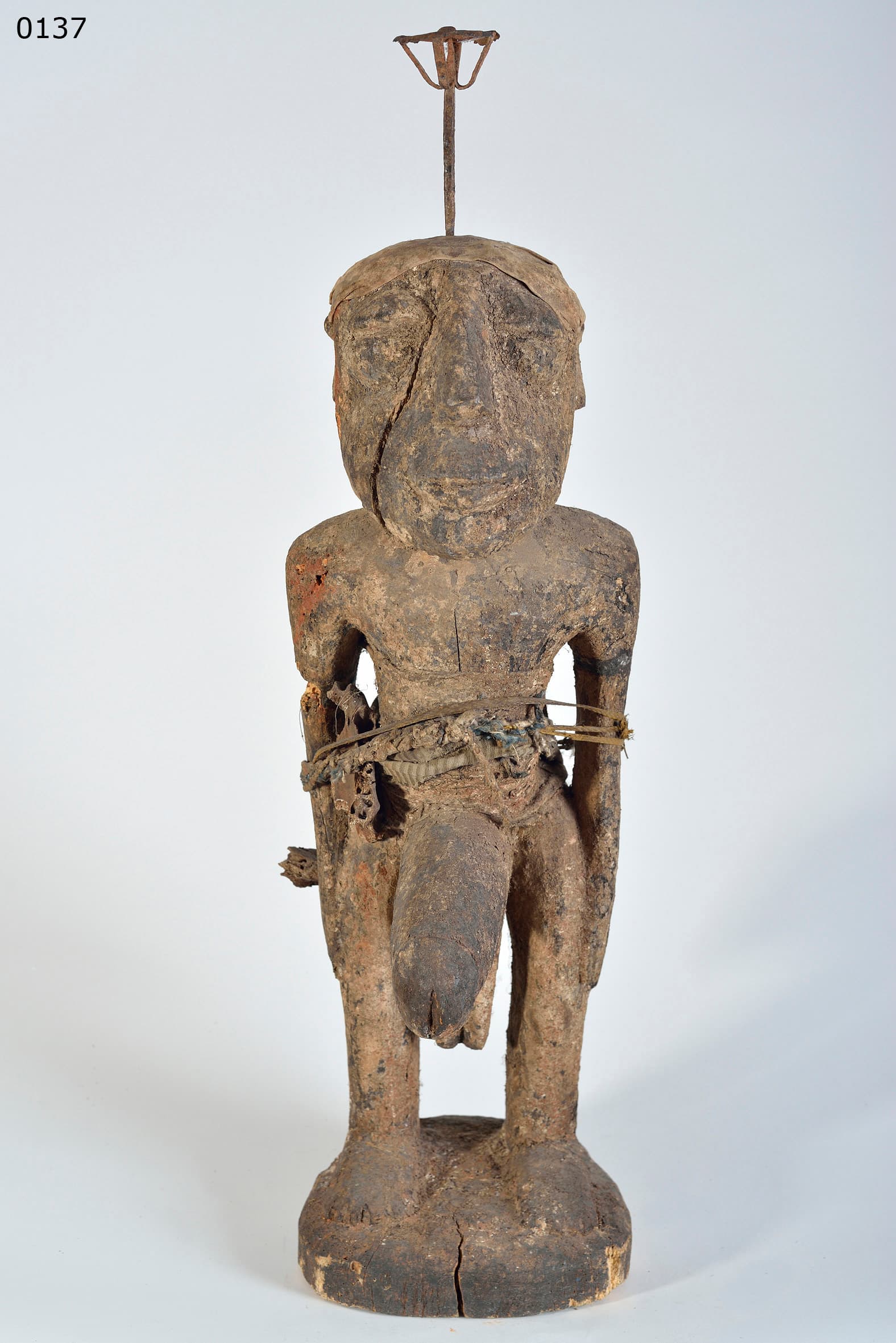
BOCIO-Statue (wird bei Voodoo-Zeremonien verwendet)
