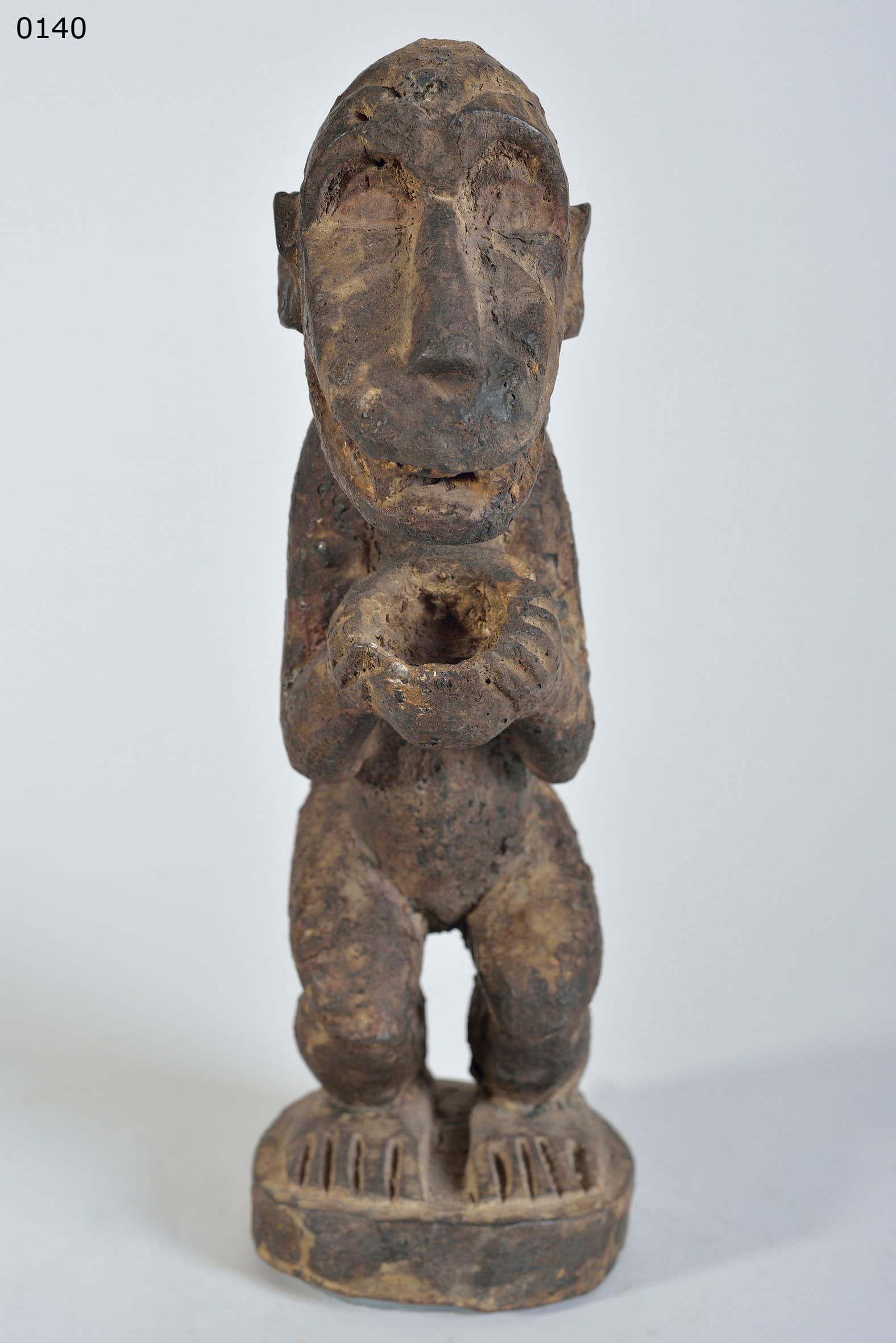
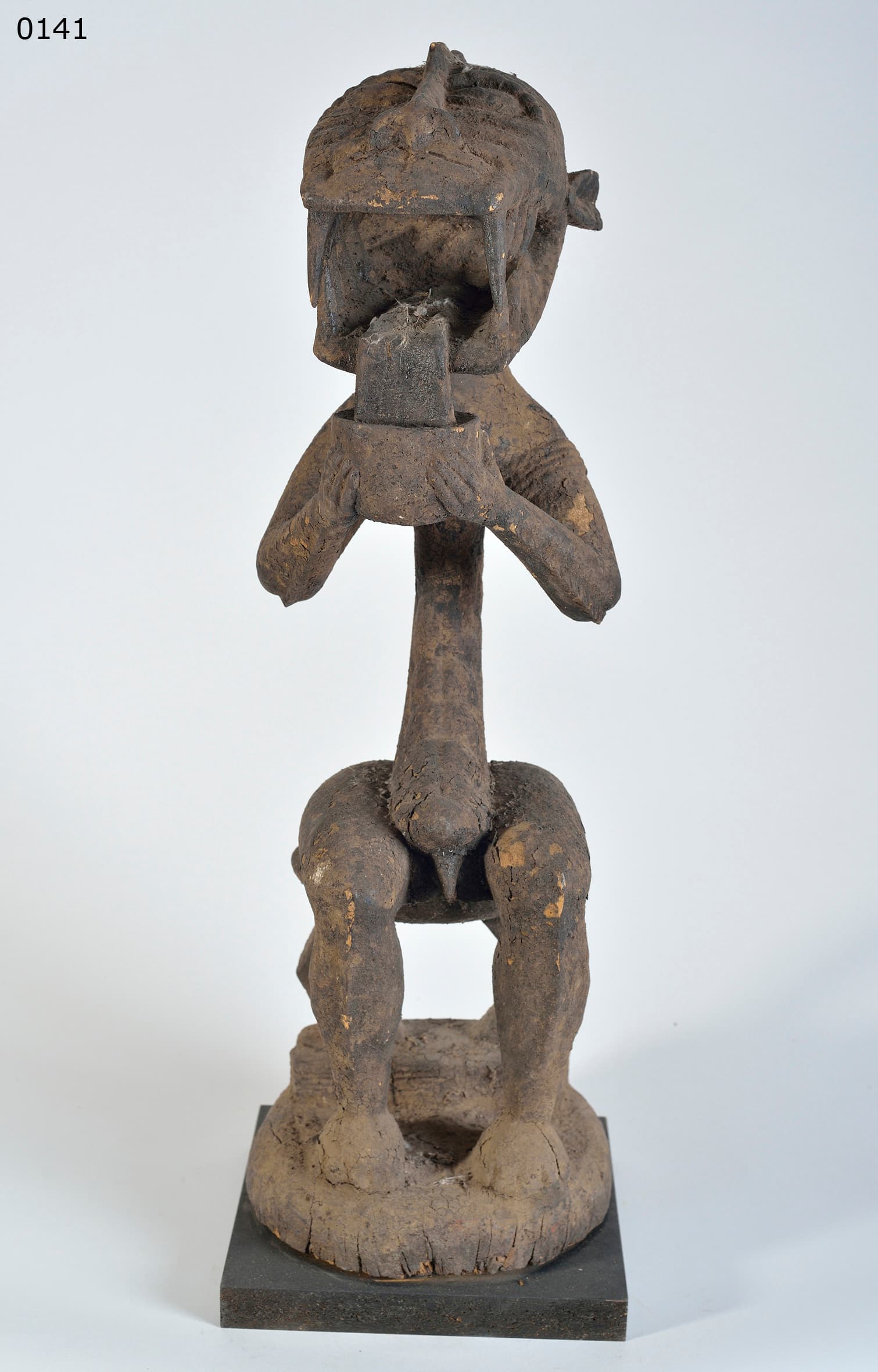
Zwei stark abstrahierte, zierliche Holzfiguren mit einfachem, zylindrischem Torso ohne Arme und Beine, der von einem abgerundeten, flachgesichtigen Kopf gekrönt wird. Das Holz weist starke Trockenerosion, tiefe Austrocknungsrisse und einen vollständigen Verlust der ursprünglichen Oberflächenbehandlung auf.
1. Ästhetischer Stil und regionale Charakteristika
Die Baule schnitzen selten in solch strenger, minimalistischer Abstraktion, sondern bevorzugen in der Regel sehr raffinierte, naturalistische Porträts. Im Zusammenhang mit bestimmten Fruchtbarkeitstalismanen wird die menschliche Form jedoch oft auf ihre absolute geometrische Essenz reduziert. Die einfachen zylindrischen Körper und scheibenförmigen Gesichter betonen den spirituellen Nutzen und die rohe symbolische Masse des Objekts gegenüber der ästhetischen Eitelkeit, indem sie die Details entfernen, um ein reines konzeptionelles Gefäß zu schaffen. Die Abweichung vom Baule-Klassizismus ist hier selbst diagnostisch - diese reduzierten Formen gehören zu einem parallelen rituellen Register, das unterhalb der sichtbaren Porträttradition wirkt.
2. Rituelle Funktion und Fruchtbarkeitspraxis
Diese kleinen, vereinfachten Puppen wurden wahrscheinlich als sehr persönliche Fruchtbarkeitsamulette verwendet. Sie wurden oft von Frauen mit Kinderwunsch getragen und dienten als irdische Gefäße, um die Geister ungeborener Kinder oder den blolo bian (Geistergatte aus dem Jenseits) anzuziehen und zu besänftigen. Indem die Besitzerin diese abstrakten Leihmütter trug und pflegte, glaubte sie, eine erfolgreiche Schwangerschaft und den sicheren Übergang des Lebens von der geistigen in die körperliche Welt gewährleisten zu können. Durch ihre Tragbarkeit waren sie eher mit dem reproduktiven Leben einer einzelnen Frau als mit einem Hausaltar verbunden, was sie zur intimsten Form der Fruchtbarkeitspraxis der Baule machte.
3. Physische Patina und Altersnachweis
Die Datierung in das 19. Jahrhundert wird durch den schlechten Zustand des Holzes stark unterstützt. Die massive Austrocknung der Zellen, die Längsrisse und die weichen, erodierten Kanten sprechen für eine generationenlange Nutzung und anschließende Umwelteinwirkung, die weit vor der kommerziellen Schnitzerei des 20. Jahrhunderts. Das völlige Fehlen moderner Werkzeugspuren und die stark oxidierte, trockene Maserung bestätigen ihren Status als authentische, alte Artefakte.
Zusammenfassung
Diese zutiefst archaischen Baule-Fertilitätspuppen stellen eine seltene, stark abstrahierte Abweichung vom typischen Baule-Klassizismus dar. Ihr extremes Alter und die tiefgreifende Austrocknung des Materials machen sie zu ergreifenden, historisch bedeutsamen Talismanen westafrikanischer Mutterliebe.
KI-unterstützt erstellt aus Sammlungsgutachten, Objektfotografie und eigener Recherche, redaktionell geprüft. Fehler sind möglich — Hinweise darauf sind uns willkommen. Zum Verfahren →