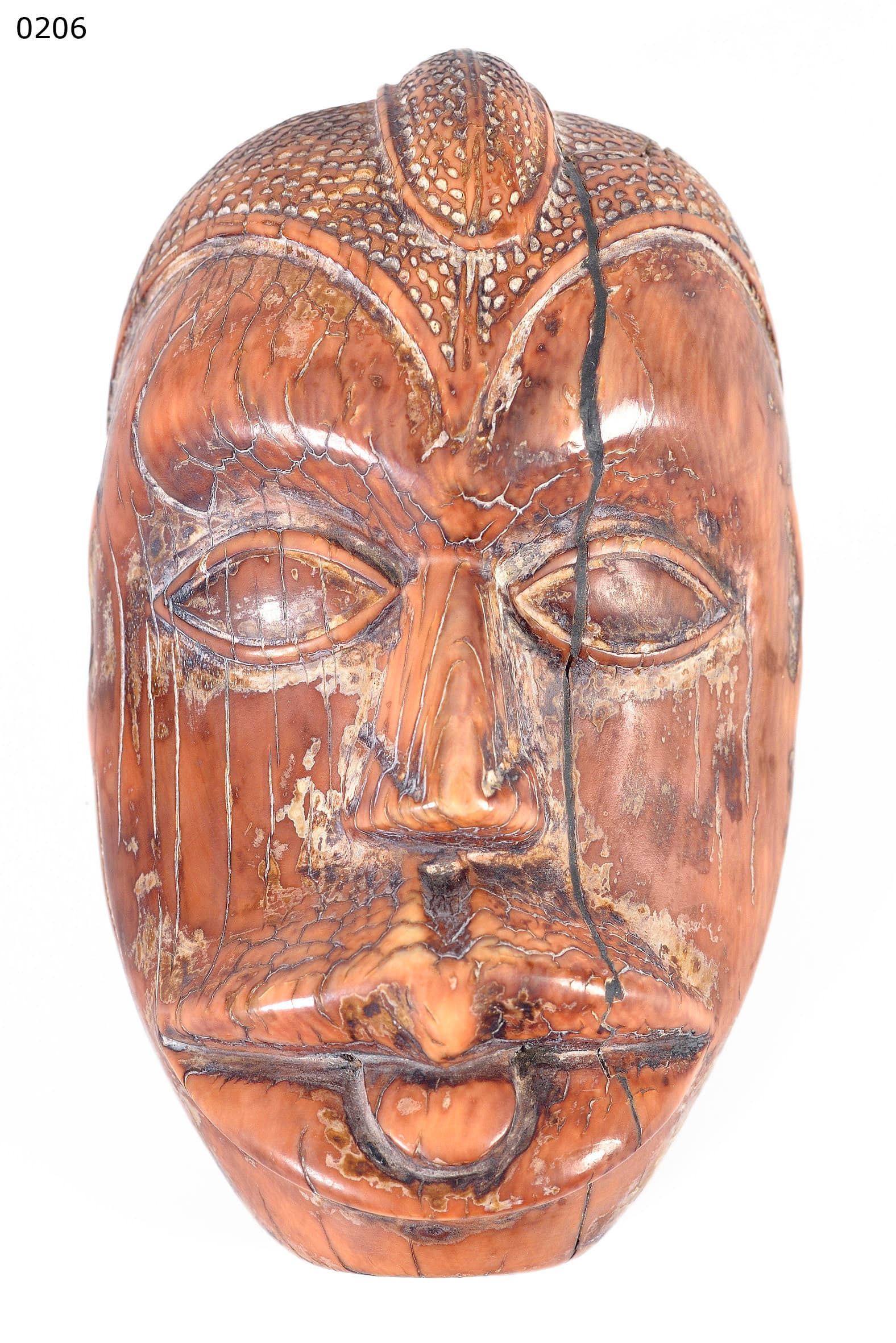
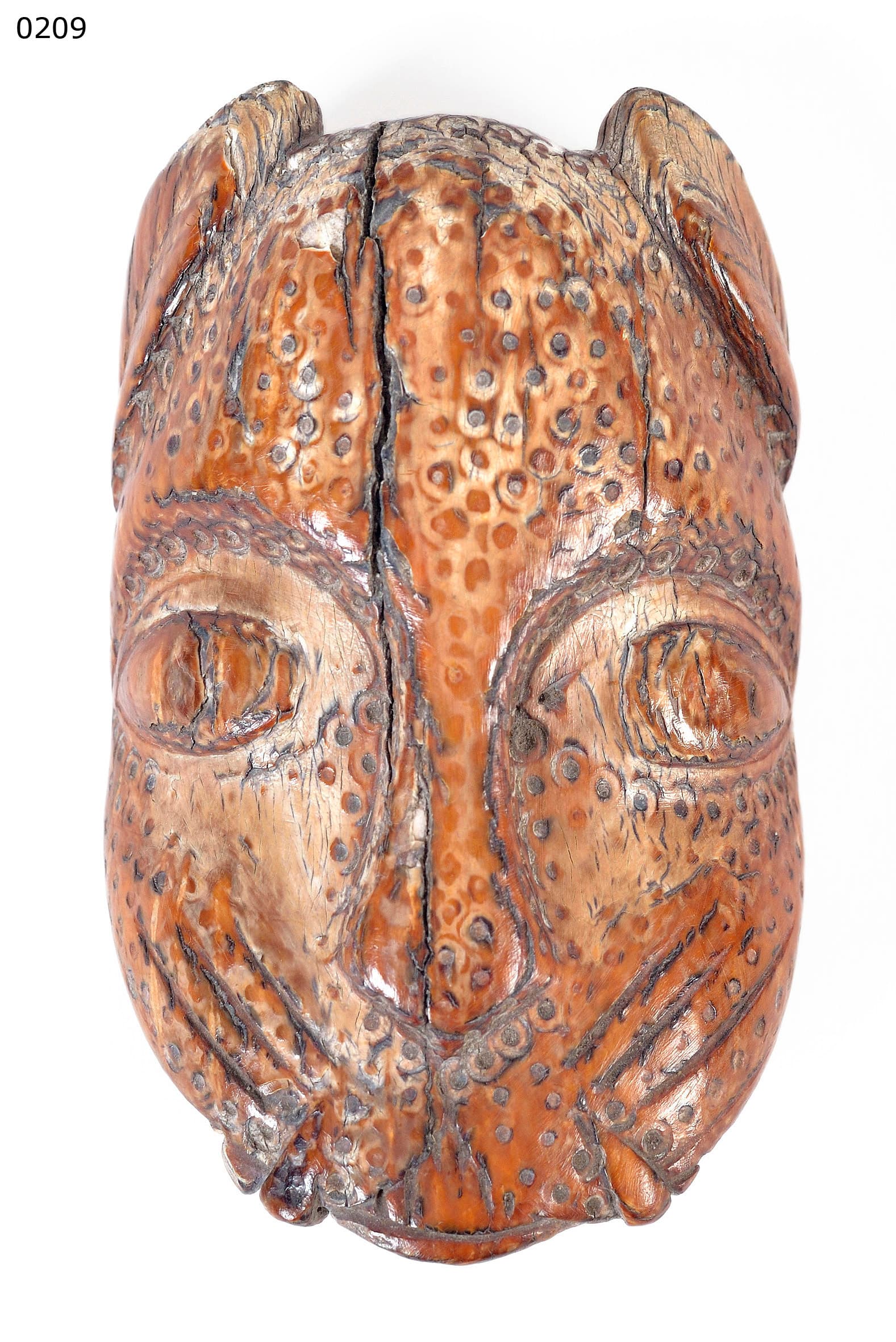
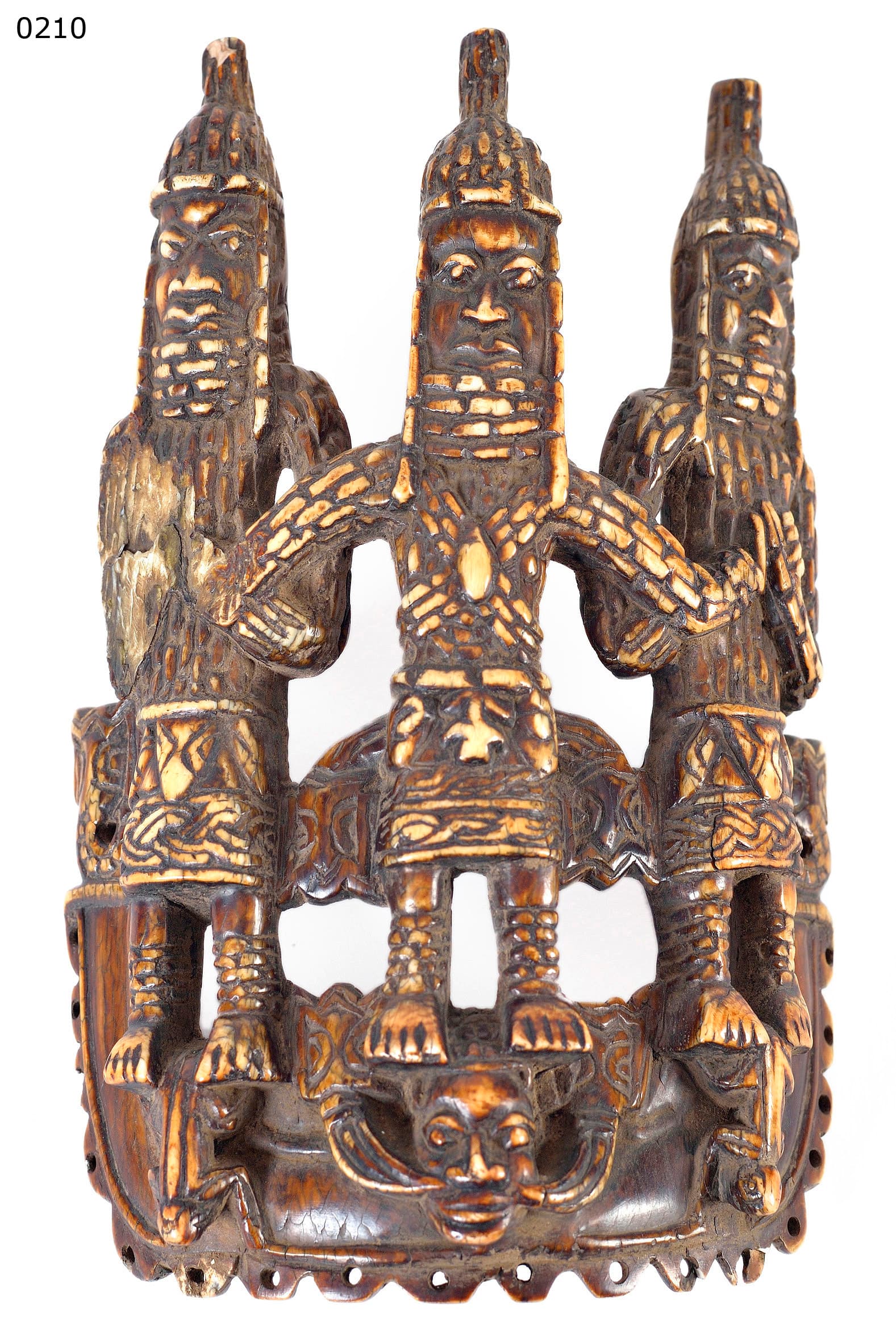
Eine aufwendig geschnitzte Elfenbeinfigur, die einen Benin Oba (König) oder einen hochrangigen Häuptling darstellt, der einen hohen korallenbesetzten Kragen (odigba) trägt und Insignien in der Hand hält. Er sitzt auf einem stilisierten Pferd. Das Elfenbein hat einen cremefarbenen, blassen Ton mit deutlichen vertikalen Altersrissen.
1. Ästhetischer Stil und regionale Merkmale
Die Elfenbeinschnitzerei im Benin-Königreich war das strenge Monopol der königlichen Igbesanmwan-Gilde. Diese Skulptur zeugt von der Sorgfalt, mit der sie die komplexen, vielschichtigen Insignien des Benin-Hofes gestalteten. Der hohe Kranz aus Korallenperlen (odigba), das gewebte Tuch und die spezifischen zeremoniellen Utensilien sind keine bloße Dekoration, sondern präzise historische Markierungen des königlichen Ranges und der göttlichen Autorität. Das institutionelle Monopol der Igbesanmwan bedeutete, dass alles Elfenbein, das Benin durchquerte, durch die Gildenkanäle fließen musste, was jedes erhaltene Stück zu einem Fragment eines integrierten königlichen Produktionssystems machte.
2. Rituelle Funktion und königliche Ikonographie
In den dichten tropischen Wäldern Südnigerias waren Pferde selten, unglaublich teuer und sehr anfällig für Tsetsefliegen. Daher gilt die Darstellung einer Figur auf einem Pferd traditionell als ein bedeutendes Symbol für Reichtum, militärische Eroberung und einen hohen politischen Status. Diese Figur wurde wahrscheinlich auf einem königlichen Ahnenaltar im Palast des Oba aufgestellt, um einen bestimmten Kriegerkönig aus der Geschichte Benins zu ehren. Die reitende Ikonographie diente der Visualisierung politischer Legitimität - jeder Betrachter verstand, dass der abgebildete Herrscher nachweislich wohlhabend und siegreich genug war, um trotz der regionalen Herausforderungen Pferde zu unterhalten.
3. Physische Patina und Altersindikatoren
Der physische Zustand des Elfenbeins deutet auf ein hohes Alter hin. Die tiefen, längs verlaufenden Austrocknungsrisse (Craquelure), die parallel zur natürlichen Maserung des Stoßzahns verlaufen, gelten als schwer künstlich nachzubilden; sie weisen auf das Ergebnis langjähriger organischer Zellkontraktion hin. Dieser unrestaurierte, rissige Zustand ist vereinbar mit einer Datierung in die "späte Benin-Periode" und stützt die Einordnung als historische Antiquität. Die Risse verlaufen genau entlang der Wachstumsringe des Stoßzahns, eine strukturelle Ausrichtung, die sich von künstlich herbeigeführten Rissen unterscheidet.
Zusammenfassung
Ein charakteristischer Ausdruck der königlichen Ikonographie von Benin, der das Prestige und die kriegerische Macht des Oba durch das anspruchsvolle Medium Elfenbein zum Ausdruck bringt. Die komplizierte Darstellung der Korallenregalien und die tiefen, natürlichen Altersrisse sprechen für eine Einordnung als bedeutendes Artefakt der nigerianischen Hofkunst.
KI-unterstützt erstellt aus Sammlungsgutachten, Objektfotografie und eigener Recherche, redaktionell geprüft. Fehler sind möglich — Hinweise darauf sind uns willkommen. Zum Verfahren →