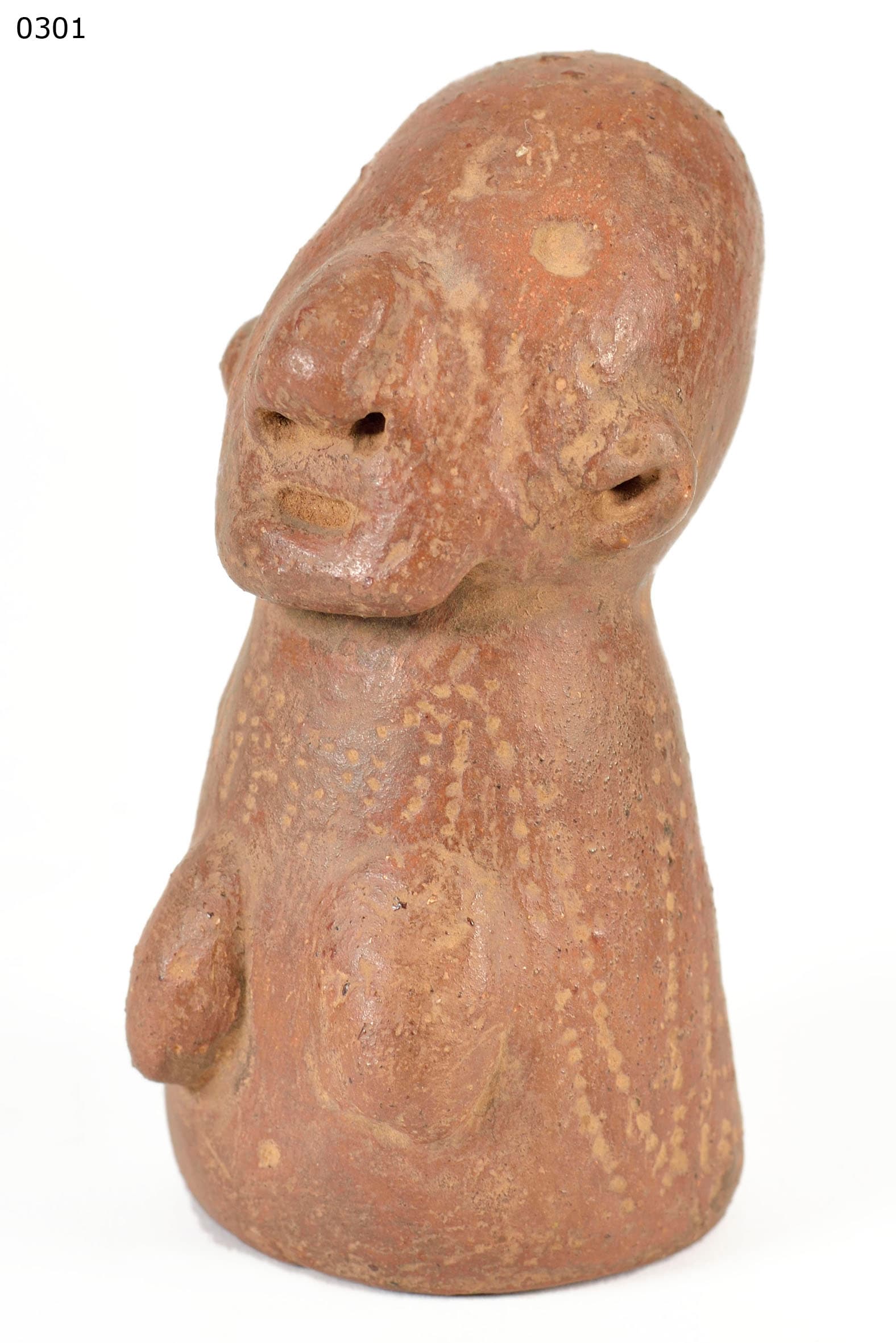
Eine winzige, antike Bronzefigur, die eine sitzende oder kniende Frau mit länglichem Gesicht, hervorstehenden, gewölbten Augen und auf die Beine gestützten Händen darstellt. Die Oberfläche ist stark beschädigt, und feine Details sind durch dicke Schichten irdener Verkrustungen und grüne Oxidation verloren gegangen.
1. Ästhetischer Stil und regionale Eigenheiten
Diese Miniaturbronze verkörpert perfekt den ausgeprägten, abgeschwächten Formalismus des Stils des Nigerdeltas (Djenné). Der Kopf ist radikal gestreckt und nach oben geneigt, gekennzeichnet durch stark geöffnete, hervorstehende Augen und ein markantes Kinn. Diese surreale Verlängerung entfernt sich vom Porträt und schafft ein transzendentes, fast reptilienartiges oder jenseitiges Antlitz, das für tiefe spirituelle Hellsichtigkeit und die Verbindung mit dem Göttlichen steht. Das nach oben geneigte Gesicht ist eine Ansprache an höhere Mächte - eher eine ikonografische Haltung als eine naturalistische Darstellung.
2. Rituelle Funktion und Deponierung im Erdheiligtum
Die demütige, sitzende Haltung - die oft als Gebetshaltung, Unterwerfung oder Trauer gedeutet wird - legt nahe, dass es sich um eine Votivfigur handelt. In den mittelalterlichen Städten Malis wurden Tausende von kleinen Terrakotten und Bronzen in kommunalen Erdschreinen, Fundamenten oder Stadtmauern deponiert. Sie fungierten als ständige, örtlich begrenzte Fürsprecher, die den Erdgeistern ständige Gebete darbrachten, um Hungersnöte, Dürren oder den Zusammenbruch der Gesellschaft zu verhindern. Ihre Aufstellung war dauerhaft - einmal installiert, blieb die Figur auf unbestimmte Zeit im Namen der Gemeinschaft im Dienst.
3. Physische Patina und Altersnachweis
Die extreme Verwitterung dieser Figur ist ihr wichtigstes Echtheitsmerkmal. Die Bronze hat ihren ursprünglichen metallischen Glanz verloren und wurde vollständig durch eine Kruste aus oxidiertem Kupfer (Malachit) und gehärtetem Schlamm ersetzt. Die Verwischung der Hände und Gesichtszüge ist das Ergebnis der chemischen Zersetzung während der jahrhundertelangen unterirdischen Vergrabung, die die Figur in den archäologischen Horizont des 12. bis 16. Jahrhunderts stellt. Die Erosion der Details folgt eher der Chemie des natürlichen Zerfalls von vergrabener Bronze als einem Muster menschlicher Handhabung.
Zusammenfassung
Eine intime und sehr eindrucksvolle Votivfigur aus dem Nigerdelta, die die klassischen langgestreckten Proportionen und die spirituelle Unterwerfung dieser Kultur widerspiegelt. Die extreme Verwitterung und die starke archäologische Verkrustung machen sie zu einem ergreifenden Fragment der mittelalterlichen Geschichte Malis.
KI-unterstützt erstellt aus Sammlungsgutachten, Objektfotografie und eigener Recherche, redaktionell geprüft. Fehler sind möglich — Hinweise darauf sind uns willkommen. Zum Verfahren →