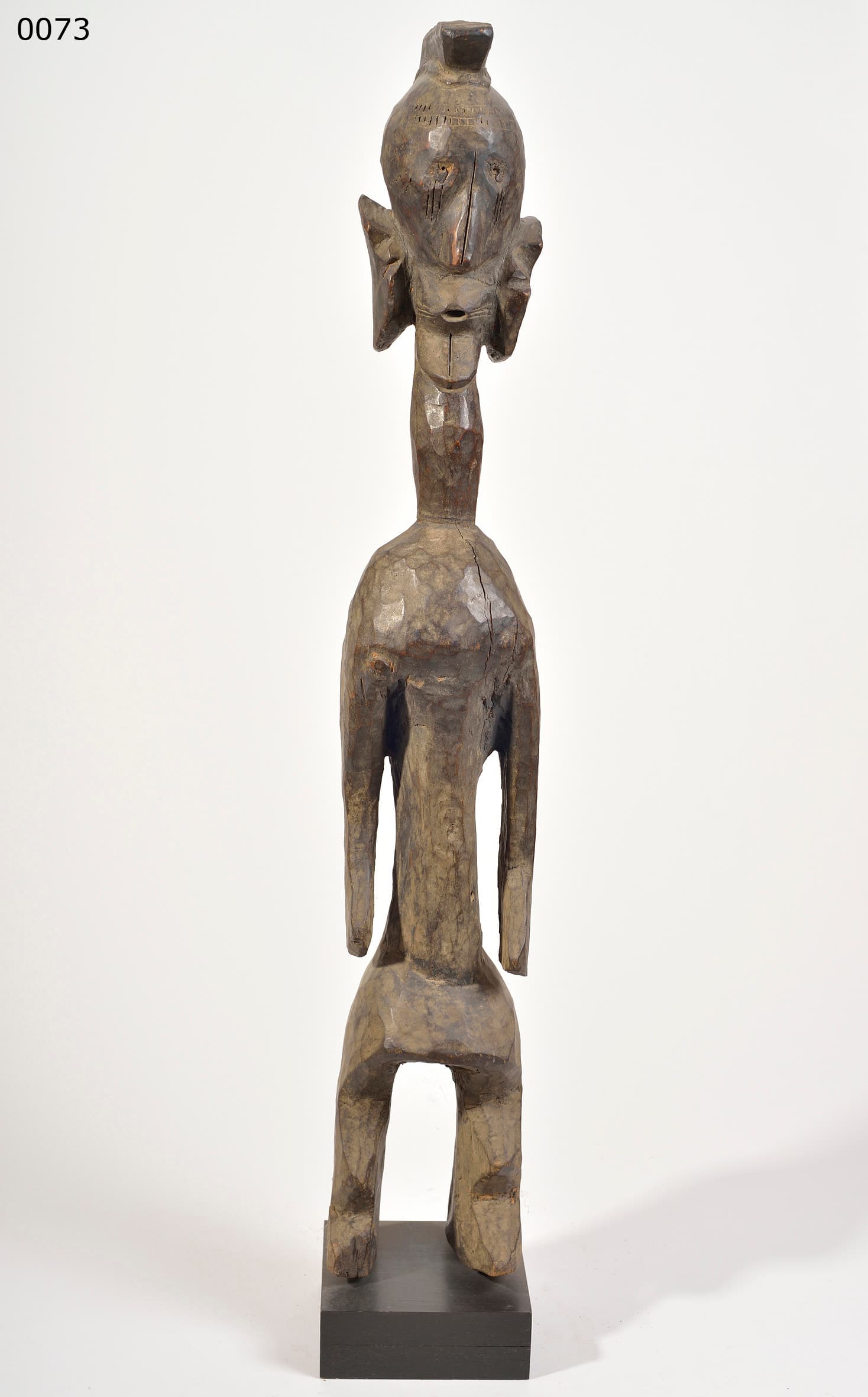
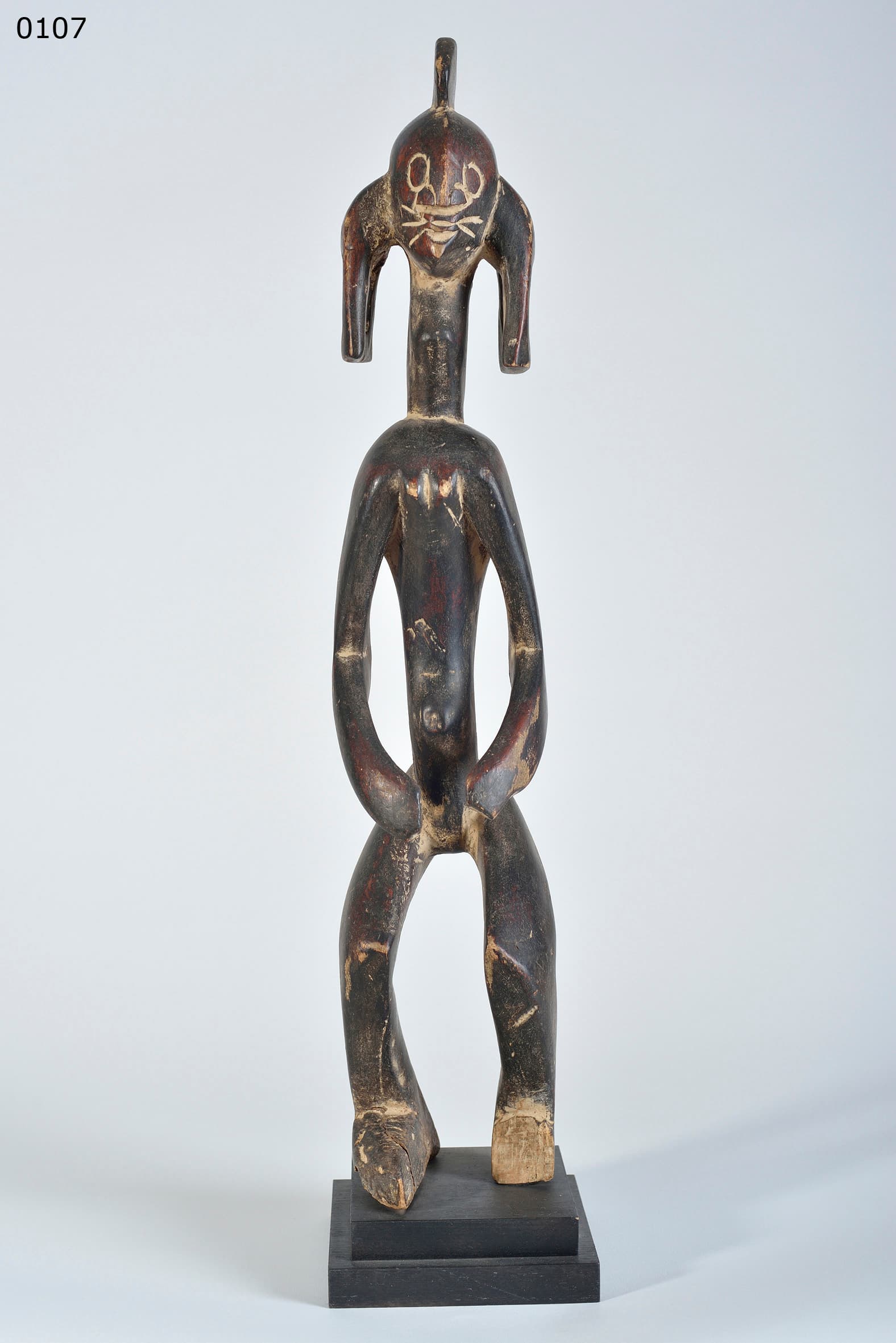
Ein Paar kleiner, stark oxidierter Bronzefiguren, die mit nach vorne gestreckten Armen stehen. Sie haben die klassischen, stilisierten Köpfe und verlängerten Hälse, die typisch für das Benue-Tal sind. Das Metall hat eine dicke, krustige rostbraune und grüne Patina.
1. Ästhetischer Stil und regionale Charakteristika
Während die Mumuye vor allem für ihre großen, abstrakten Holzstatuen bekannt sind, folgen ihre Metallarbeiten genau der gleichen radikalen geometrischen Reduktion. Diese Figuren weisen die geschwungenen, helmartigen Kämme, die hervorstehenden Ohren und die röhrenförmigen Körper auf, die die Ästhetik der Mumuye ausmachen, und wurden auf charakteristische Weise in Miniaturformen aus wachsbeschichtetem Metall umgesetzt. Die medienübergreifende Übertragung des Mumuye-Formenvokabulars zeigt die Tiefe der regionalen Ästhetik - die Abstraktion ist eher kulturell als materiell bedingt.
2. Rituelle Funktion und Verwendung für Weissagungen
Kleine Metallfiguren mit ausgestreckten Armen wurden im Tal des Benue-Flusses häufig für Weissagungen oder Heilungszwecke verwendet. Sie wurden von einem Vabong (Regenmacher oder Wahrsager) gehalten und dienten der Kommunikation mit Ahnen oder Naturgeistern. Ihre ausgestreckten Arme dienten als symbolische Rezeptoren, um spirituelle Botschaften aufzufangen, Opfergaben zu empfangen oder Hexerei von einem Klienten abzuwehren. Die rezeptive Armhaltung ist eher eine funktionale als eine dekorative Ikonografie - sie zeigt an, dass die Figur so gestaltet ist, dass sie aktiv Übertragungen aus der Geisterwelt empfängt.
3. Physische Patina und Altersnachweis
Die tief entsteinte, ungereinigte Oberfläche dieser Figuren - dominiert von einer starken Anhäufung von Cuprit (rostbraun) und Malachit (grün) - deutet auf eine ausgedehnte, langfristige Exposition in einem irdenen Altarkontext hin. Dieses hohe Maß an atmosphärischer Zersetzung und Opferverkrustung spricht für eine Datierung in das 19. Jahrhundert. Die übereinstimmende Patinatiefe des Paares stützt die Annahme einer parallelen Nutzung des Altars über mehrere Jahrzehnte hinweg.
Zusammenfassung
Ein seltenes und ausdrucksstarkes Paar Mumuye-Bronzen, das die bekannte hölzerne Abstraktion der Stilgruppe eindringlich in Metall umsetzt. Ihre ausgedehnten, als rezeptiv interpretierten Haltungen und die starke Oxidation des Altars sprechen für eine Verwendung als historische Wahrsagewerkzeuge.
KI-unterstützt erstellt aus Sammlungsgutachten, Objektfotografie und eigener Recherche, redaktionell geprüft. Fehler sind möglich — Hinweise darauf sind uns willkommen. Zum Verfahren →