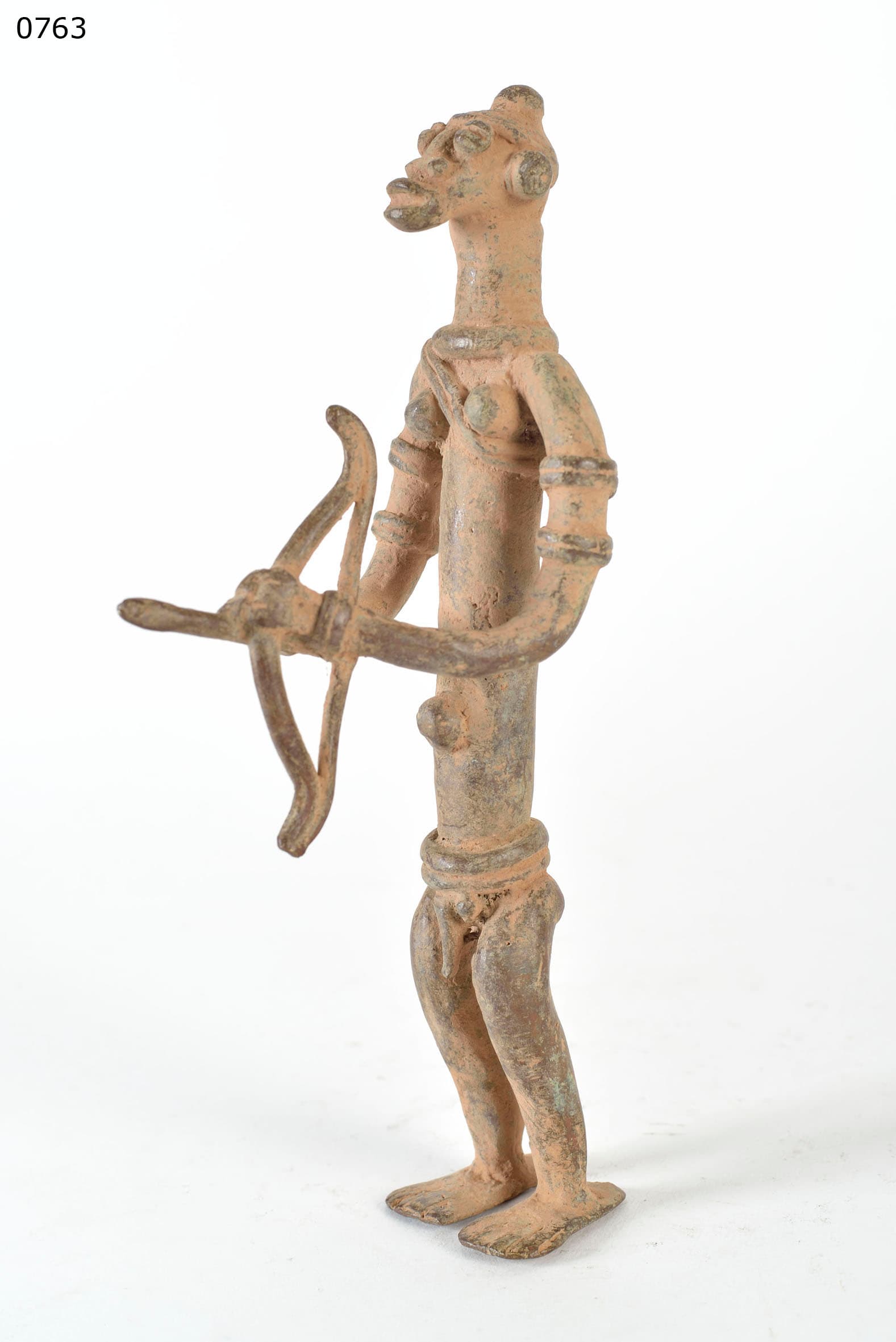
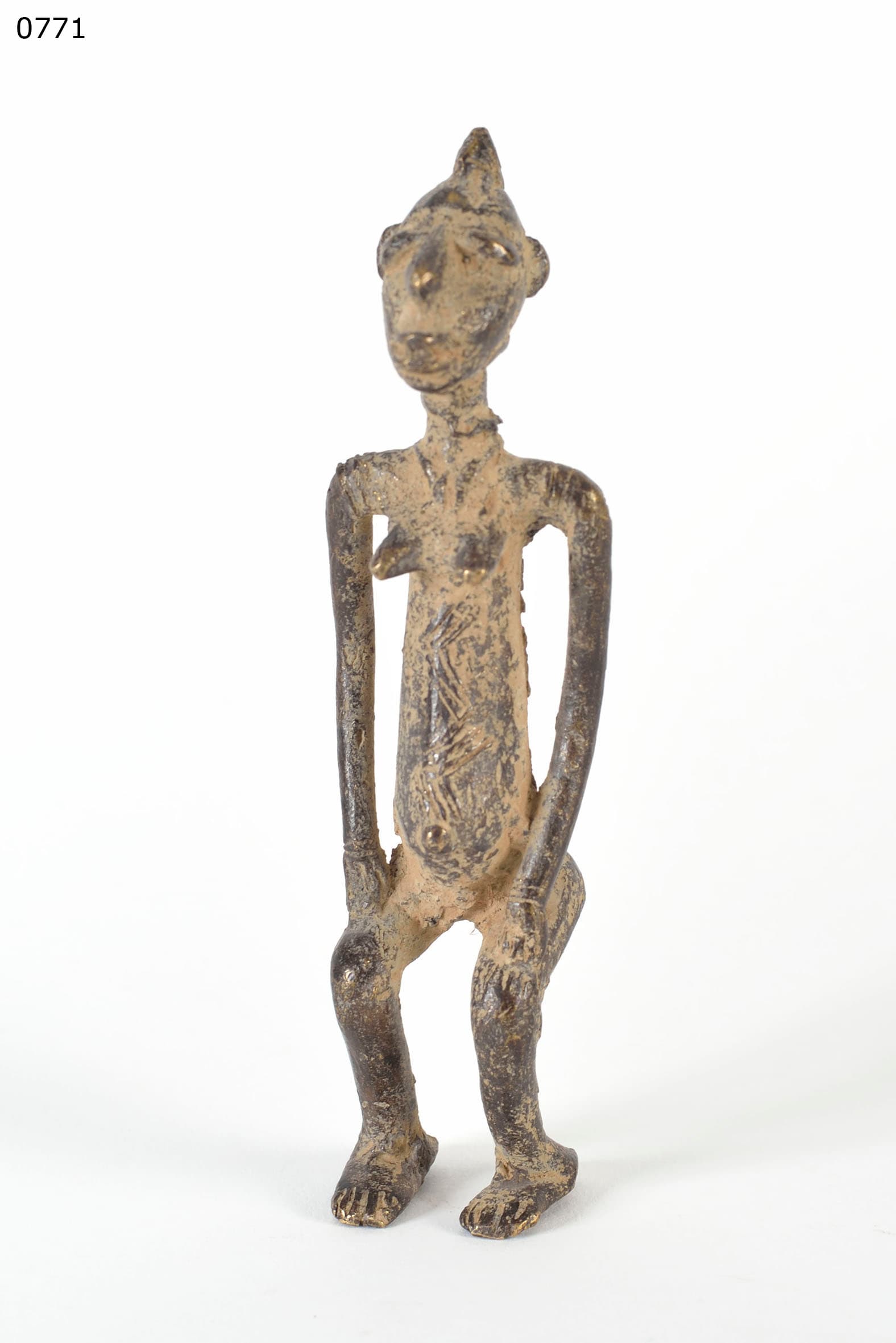
Eine stark stilisierte, langgestreckte antike Bronze, die eine stehende weibliche Figur mit in die Hüften gestützten Armen darstellt, mit dem charakteristischen vorspringenden, entenartigen Mund von Gan und großen, scheibenförmigen Ohren. Das Metall trägt eine tiefe, krustige, grünspanhaltige Grabpatina.
1. Ästhetischer Stil und regionale Merkmale
Diese Figur ist ein eindeutiges Beispiel für die surreale Abstraktion, die den antiken Gan-Bronzeguss kennzeichnet. Die menschliche Form ist stark abgeschwächt, während die Gesichtszüge übertrieben sind, bis sie zoomorph werden - insbesondere der breite, vorspringende, schnabelartige Mund. Durch diese absichtliche Verzerrung entfernt sich die Figur vom menschlichen Porträt und rückt in den Bereich des Mythologischen, indem sie einen mächtigen, jenseitigen Ahnen oder Geist darstellt. Der schnabelartige Mund ist ein wiederkehrendes diagnostisches Merkmal von Gan und identifiziert die Figur innerhalb des etablierten Korpus.
2. Rituelle Funktion und spirituelle Wachsamkeit
Die Haltung der Figur mit den fest in die Hüften gestemmten Händen ist ein universelles westafrikanisches Zeichen für Wachsamkeit, Bereitschaft und Verteidigungsfähigkeit. Diese Figur, die in einem lokalen Erdschrein aufbewahrt wurde, war ein ständiger, wachsamer Wächter. Ihre Hauptaufgabe bestand darin, bösartige Magie abzufangen, den Haushalt oder das königliche Anwesen zu schützen und als aktiver Kanal für Gebete an die Geisterwelt zu dienen. Die Haltung mit den Händen auf den Hüften in Kombination mit dem aufmerksamen Schnabelgesicht erzeugt ein doppeltes Signal der aktiven Wachsamkeit.
3. Physische Patina und Altersnachweis
Die tiefe, körnige Patina, die die Figur bedeckt, ist ein klassisches Zeichen für eine lange Vergrabung oder starke Umwelteinwirkung. Die dicke Anhäufung von oxidiertem Kupfer (Malachit) und gehärteter Erde hat die feinen Gussdetails verwischt, was eine physische Authentifizierung seiner archäologischen Herkunft aus dem 16. bis 19.
Zusammenfassung
Eine beeindruckende antike Gan-Bronze, die in extremer, fast zoomorpher Abstraktion einen beeindruckenden spirituellen Wächter darstellt. Seine selbstbewusste Haltung und die tiefe archäologische Patina machen ihn zu einem höchst bedeutenden Überbleibsel der frühen Metallurgie Burkina Fasos.
KI-unterstützt erstellt aus Sammlungsgutachten, Objektfotografie und eigener Recherche, redaktionell geprüft. Fehler sind möglich — Hinweise darauf sind uns willkommen. Zum Verfahren →