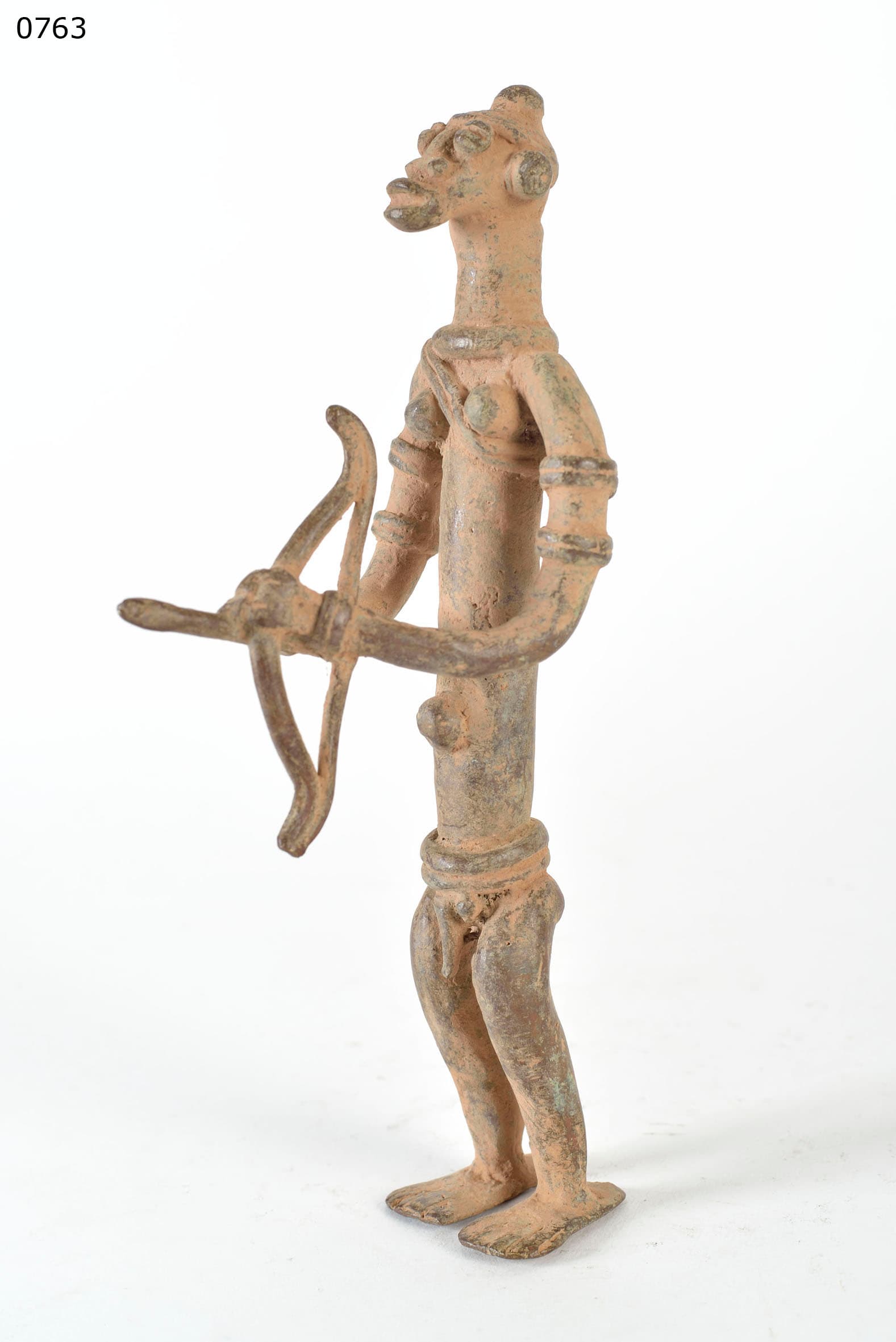
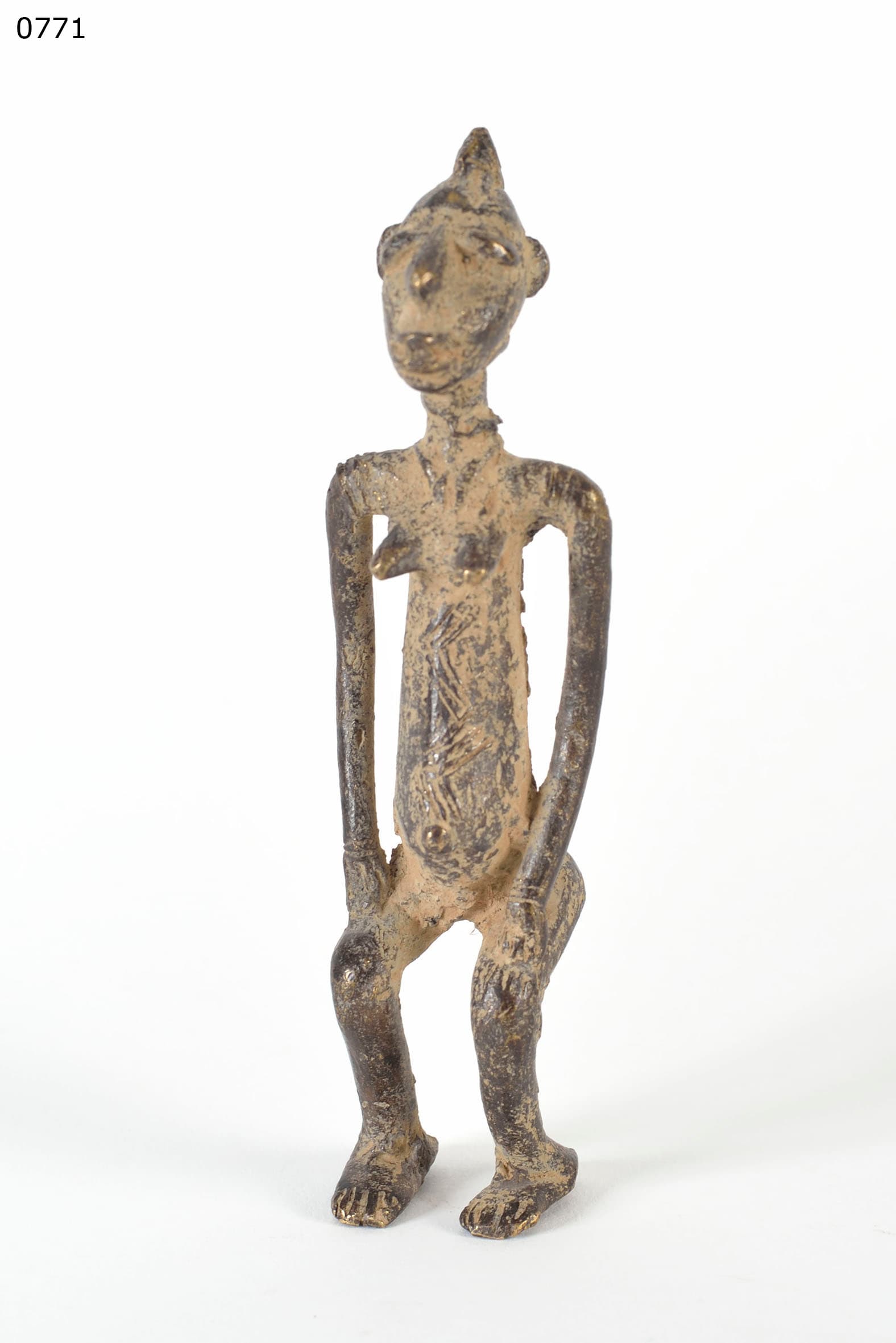
Einer von zwei kleinen, antiken Anhängern aus Gan-Bronze. Es handelt sich um einen flachen, dreieckigen oder schildförmigen Anhänger mit durchbrochenen Schlaufen an der Spitze und einem stilisierten Gesicht. Die Bronze trägt eine trockene, krustige Grünspanpatina.
1. Ästhetischer Stil und regionale Eigenheiten
Dieser Anhänger zeigt die Meisterschaft der Gan, geometrische Formen mit subtilen, stilisierten Darstellungen zu kombinieren. Der dreieckige Anhänger verwendet wahrscheinlich das Schildmotiv als Symbol der geistigen und körperlichen Verteidigung. Geometrische schildförmige Anhänger im Gan-Korpus haben durchweg eher eine schützende als eine dekorative Funktion - die Form selbst ist der operative Anspruch.
2. Rituelle Funktion und persönlicher Schutz
Dieses in einem intimen Rahmen gegossene Objekt war ein sehr persönliches Amulett. Es wurde von Personen mit hohem sozialem oder spirituellem Ansehen - wie Wahrsagern oder erfolgreichen Kriegern - getragen, um ständigen, mobilen Schutz vor Hexerei und Unglück zu gewährleisten. Die starken Aufhängeschlaufen bestätigen seine Funktion als tragbares, aktives magisches Mittel und nicht als stationäres Schreinstück.
3. Physische Patina und Altersnachweis
Das hohe Alter dieser kleinen Bronze zeigt sich in ihrem Oberflächenzustand. Das Metall hat seinen ursprünglichen Glanz vollständig verloren und wurde durch eine dicke, krustige Schicht aus oxidiertem Kupfer (Malachit) und gehärteter Erde ersetzt. Diese tiefe, ungereinigte archäologische Verwitterung ist das direkte Ergebnis einer jahrhundertelangen Vergrabung oder Umwelteinwirkung und bestätigt die Herkunft aus dem 16. bis 19.
Zusammenfassung
Ein seltenes und intimes Beispiel des antiken Gan-Bronzegusses, der die geometrische Form perfekt für den persönlichen talismanischen Schutz nutzt. Seine tiefe archäologische Patina sichert seine Authentizität als bedeutendes burkinisches Altertum. (Artikel stilistisch identifiziert; fehlt in der ursprünglichen Excel-Registrierung)
KI-unterstützt erstellt aus Sammlungsgutachten, Objektfotografie und eigener Recherche, redaktionell geprüft. Fehler sind möglich — Hinweise darauf sind uns willkommen. Zum Verfahren →