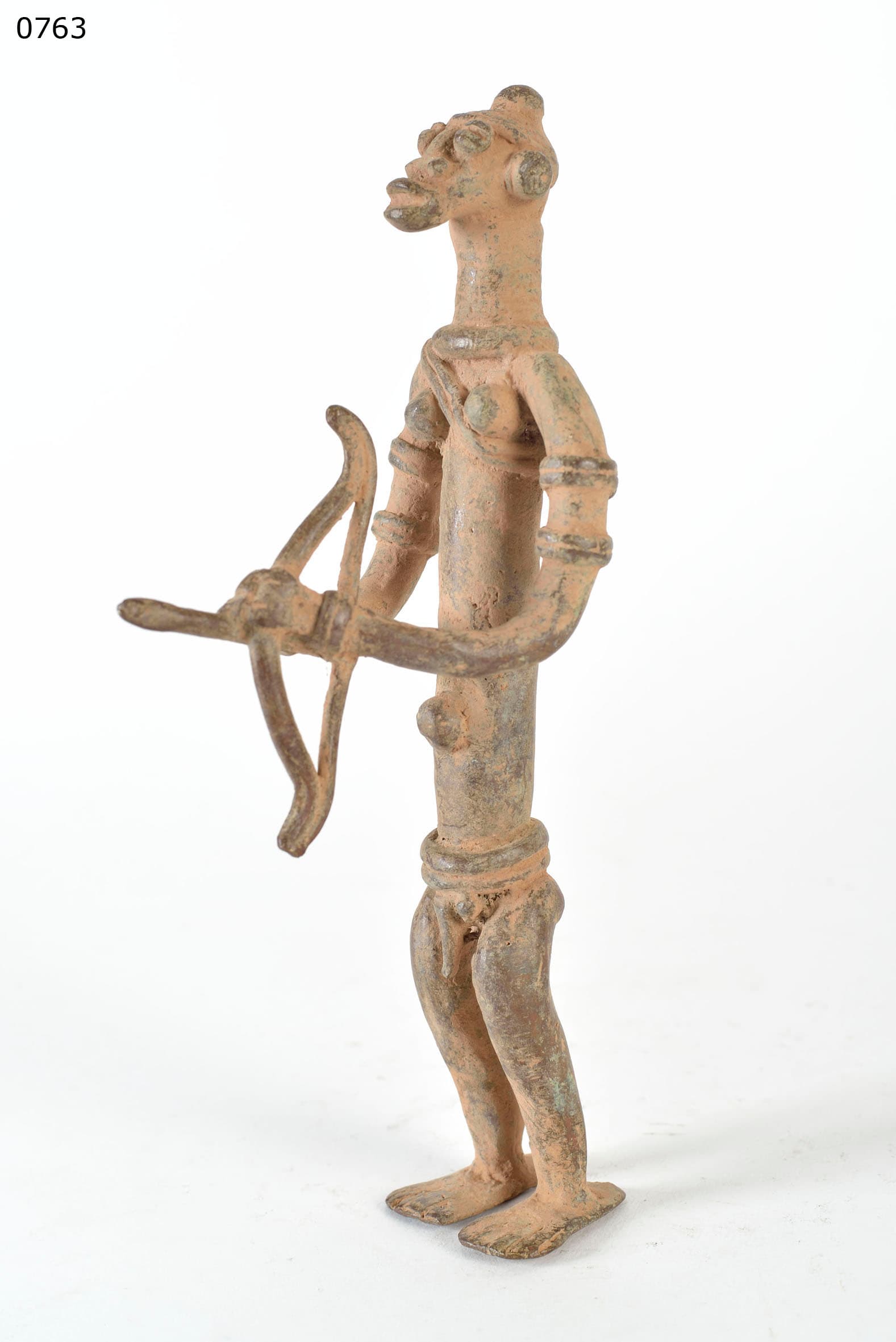
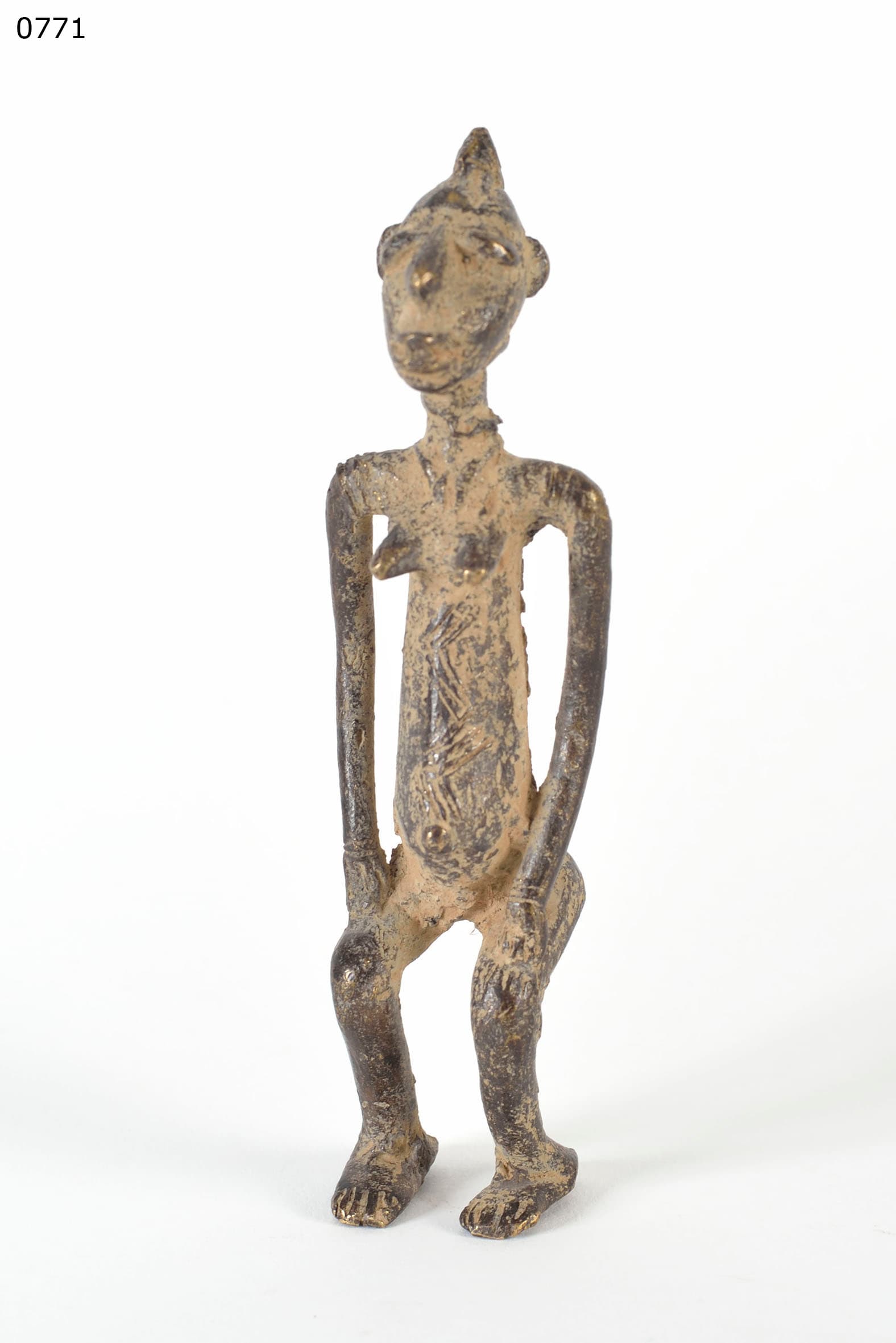
Diese hohe, säulenförmige Figur aus Bronze und Stein ist stark mit einer dicken, oxidierten Patina überzogen. Sie zeigt einen abstrakten humanoiden Kopf und ein kleines, ausladendes Kind auf dem Torso. Ihre minimalistische, phallusartige Form betont die rituelle Masse gegenüber feinen anatomischen Details.
1. Ästhetischer Stil und regionale Eigenheiten
Das Volk der Gan in Burkina Faso ist für seine charakteristischen Metallarbeiten bekannt, die sich oft durch strenge Abstraktion und langgestreckte Formen auszeichnen. Diese Mutterschaftsfigur reduziert den menschlichen Körper auf seine bloße architektonische Essenz und verwendet eine massive, fast phallische zylindrische Basis, aus der rudimentäre Gesichtszüge und ein Kind hervortreten. Diese Reduktion der Form dient dazu, die Figur zu monumentalisieren und ein biologisches Subjekt in einen zeitlosen, geometrischen Archetypus zu verwandeln, der stark auf die Ästhetik der Moderne anspielt. Die gemischte Bronze- und Steinkomposition ist innerhalb des Gan-Korpus ungewöhnlich und deutet auf einen elitären Auftrag oder eine spezielle rituelle Funktion hin.
2. Rituelle Funktion und voltaische Heiligtümer
In der spirituellen Landschaft der voltaischen Region sind Mutterschaftsfiguren selten nur Fruchtbarkeitshilfen, sondern komplexe Gefäße der Ahnenkontinuität und Schutzmagie. Die Integration des Kindes in den blockartigen Torso der Mutter deutet auf eine untrennbare Verbindung und eine gemeinsame spirituelle Haut hin, die wahrscheinlich in einem Schrein-Kontext funktioniert, um das Gedeihen der Linie zu sichern. Solche Objekte waren ein zentraler Bestandteil von Familienaltären und dienten als Überträger von Gebeten an die Erdgeister und die Gründermatriarchen. Die verschmolzene Mutter-Kind-Komposition verschlüsselt die Kontinuität des Stammbaums in einer einzigen untrennbaren ikonografischen Einheit.
3. Physische Patina und Altersnachweis
Die starke, krustige Verwitterung auf der Bronze-/Steinoberfläche deutet auf ein langes Vergraben oder eine Exposition in einem irdenen Schrein hin. Diese starke Oxidation und Mineralisierung - bei der das ursprüngliche Metall durch jahrhundertelange Umwelteinflüsse fast vollständig verdeckt ist - bestätigt die Datierung auf das 16. bis 19. Jahrhundert. Es spricht für ein rituelles Leben, in dem das Objekt wiederholt mit Opferstoffen gesalbt wurde und schließlich mit der heiligen Erde selbst eins wurde.
Zusammenfassung
Diese Gan-Mutterschaftsfigur ist ein Triumph der voltaischen Abstraktion, die tiefe Altertümlichkeit mit einer verblüffend modernen geometrischen Strenge verbindet. Ihre stark mineralisierte Patina und ihre archetypische Form festigen ihren Status als museales Relikt burkinischer Metallurgiekunst.
KI-unterstützt erstellt aus Sammlungsgutachten, Objektfotografie und eigener Recherche, redaktionell geprüft. Fehler sind möglich — Hinweise darauf sind uns willkommen. Zum Verfahren →