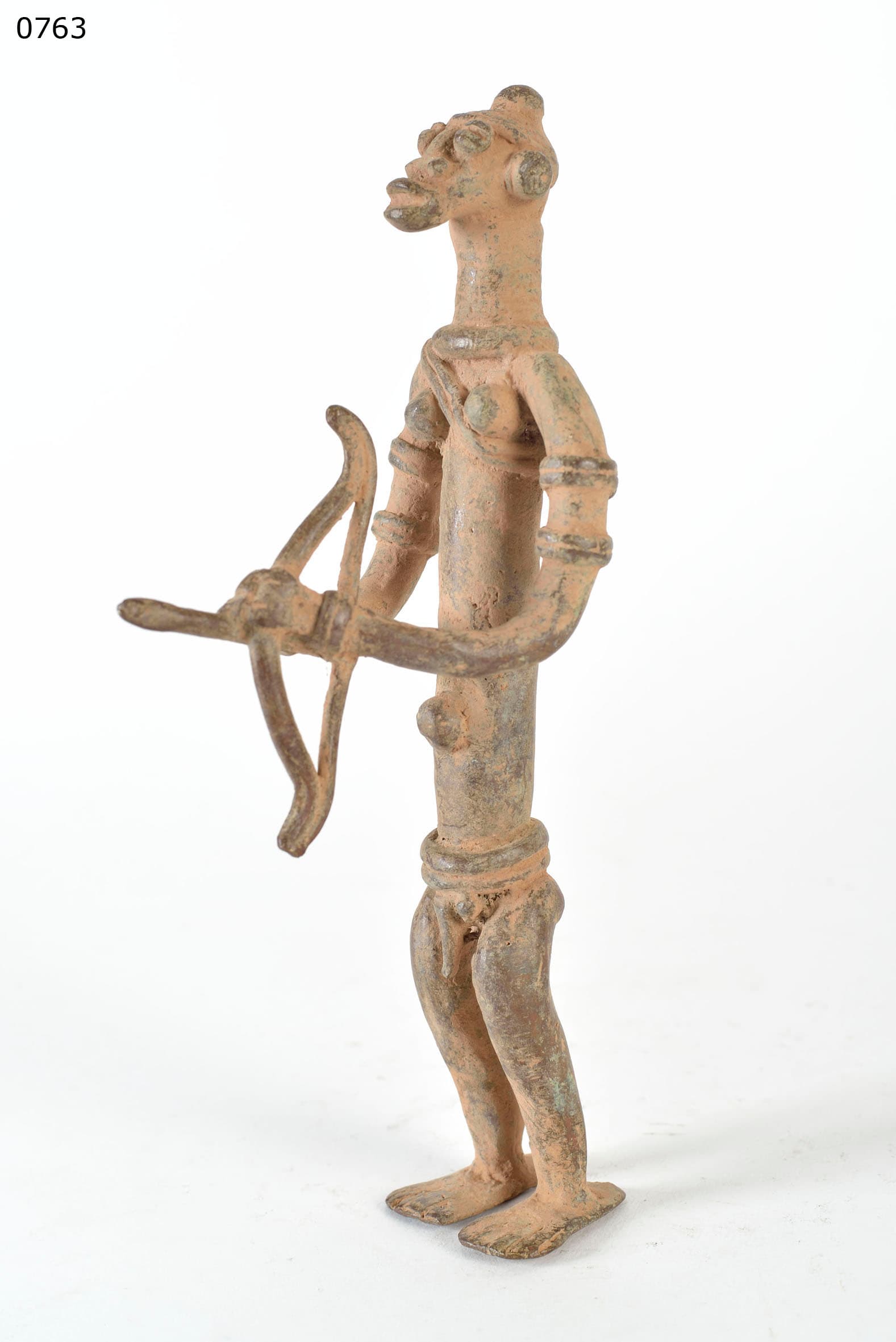
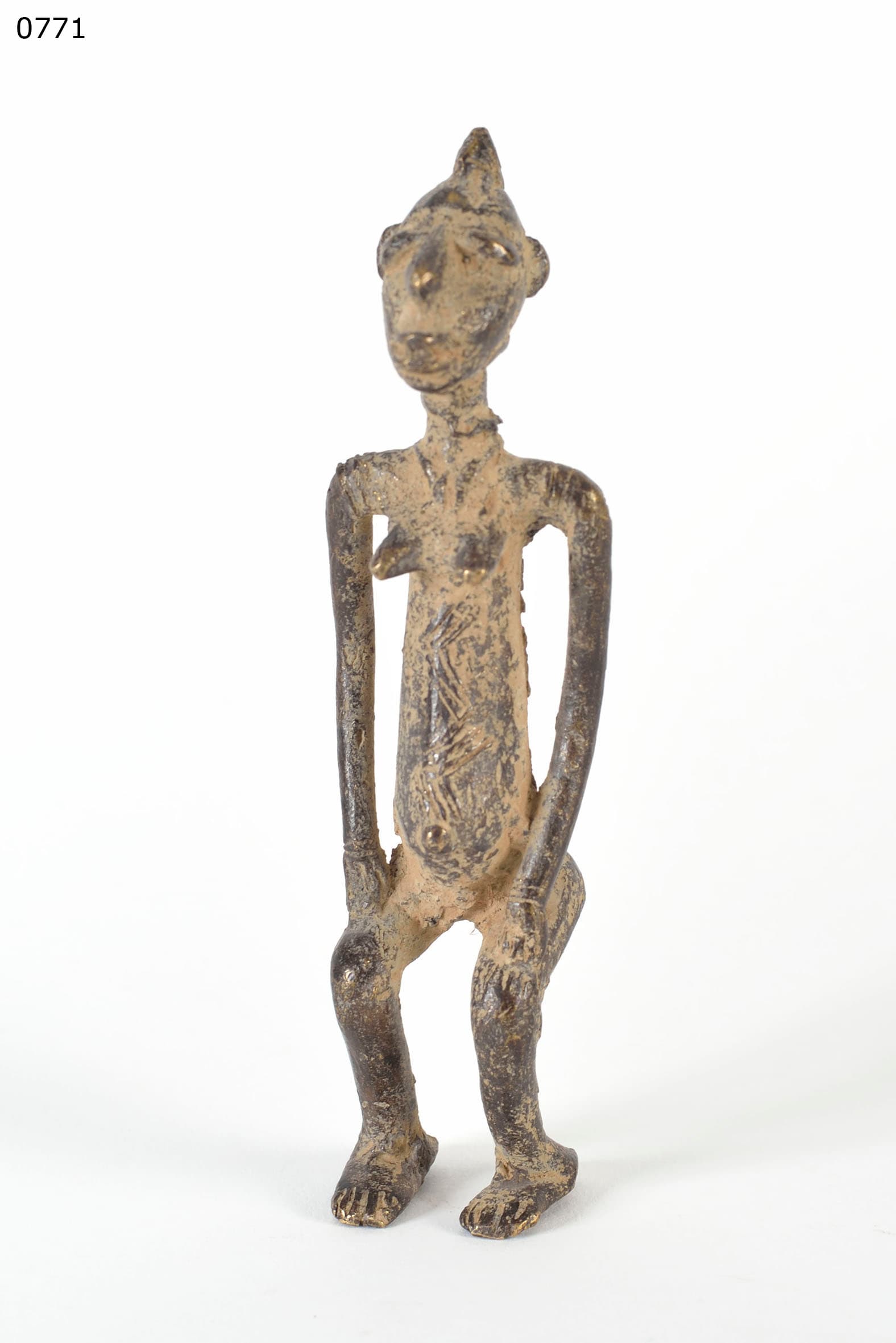
This tall, columnar bronze and stone figure is heavily encrusted with a thick, oxidized patina, featuring an abstract humanoid head and a small projecting child on its torso. Its minimalist, phallic-like shape emphasizes ritual mass over fine anatomical detail.
1. Aesthetic style and regional traits
The Gan people of Burkina Faso are celebrated for their distinctive metalwork, often characterized by severe abstraction and elongated forms. This maternity figure strips the human body to its barest architectural essence, using a solid, almost phallic cylindrical base from which rudimentary facial features and a child emerge. This reduction of form serves to monumentalize the figure, turning a biological subject into a timeless, geometric archetype that resonates strongly with modernist aesthetics. The mixed bronze-and-stone composition is unusual within the Gan corpus and signals an elite commission or specialized ritual function.
2. Ritual function and voltaic shrines
In the spiritual landscape of the Voltaic region, maternity figures are rarely just fertility aids; they are complex vessels of ancestral continuity and protective magic. The integration of the child into the mother's block-like torso suggests an inseparable bond and a shared spiritual skin, functioning likely within a shrine context to secure lineage prosperity. Such objects were central to proprietary family altars, acting as conduits for prayers directed at earth spirits and founding matriarchs. The fused mother-child composition encodes lineage continuity into a single inseparable iconographic unit.
3. Physical patina and age indicators
The severe, crusty weathering on the bronze/stone surface is indicative of prolonged burial or exposure within an earthen shrine context. This heavy oxidation and mineralization — where the original metal is almost entirely obscured by environmental interaction — is consistent with its attributed 16th–19th century dating. It speaks to a ritual life where the object was repeatedly anointed with sacrificial materials, eventually becoming one with the sacred earth itself.
Summary
This Gan maternity figure is a notable example of Voltaic abstraction, merging significant age with a geometric severity. Its heavily mineralized patina and archetypal form are consistent with the traditions of Burkinabe metallurgical artistry.
Written with AI assistance from the collection appraisal, object photography and our own research; editorially reviewed. Mistakes are possible — corrections are welcome. How we work →