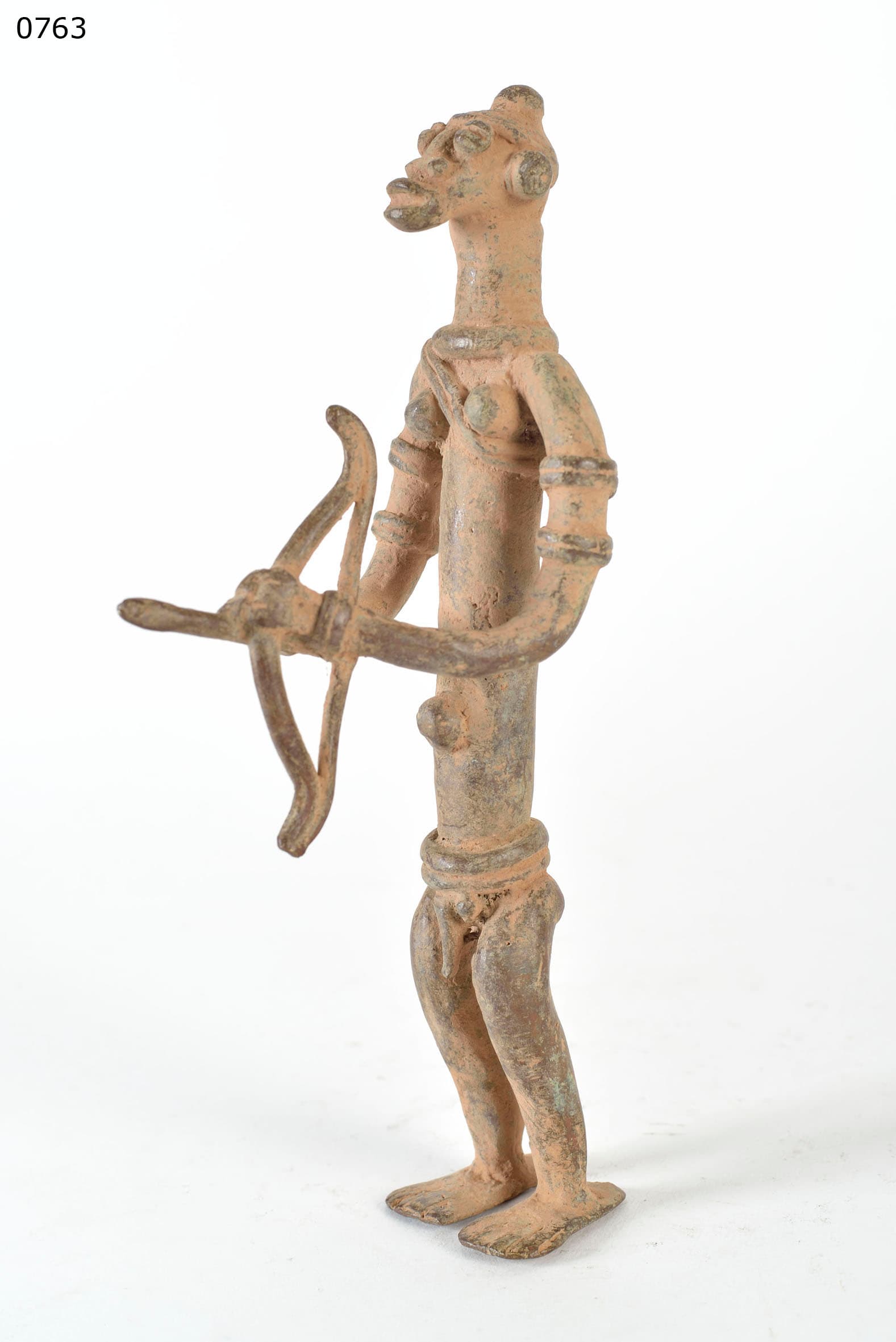
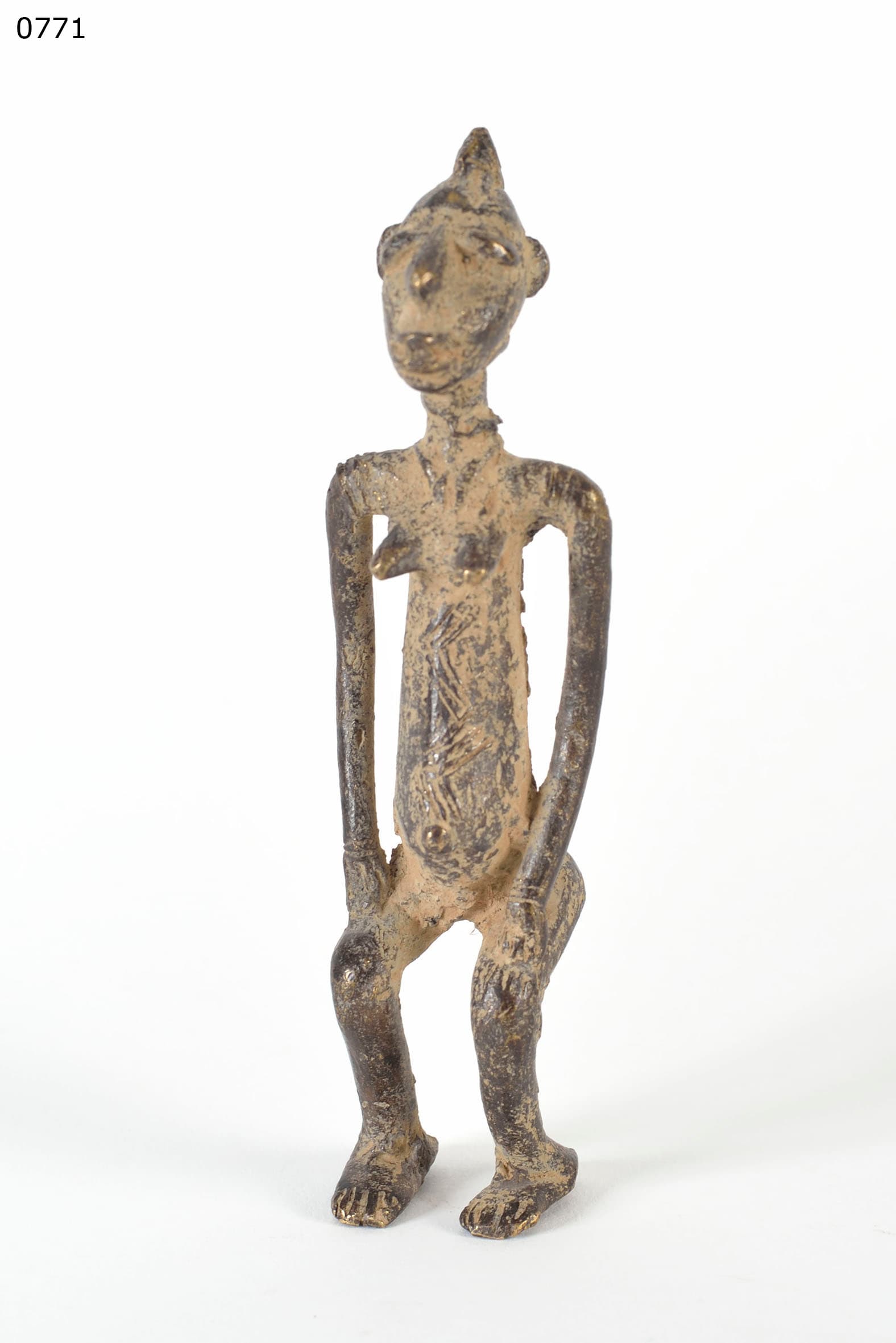
Eines von drei schweren Bronzeornamenten. Es handelt sich um ein dickes, rundes Band, das mit zwei auftauchenden Figuren verziert ist, die von hängenden Glocken begleitet werden. Es weist eine dicke, stark verkrustete archäologische Patina mit lebhafter grüner und brauner Oxidation auf.
1. Ästhetischer Stil und regionale Eigenheiten
Das Volk der Gan ist für seine alten, komplizierten Bronzegüsse im Wachsausschmelzverfahren (cire perdue) hoch geschätzt. Die Integration von zwei Figuren mit gegossenen Glocken auf einem tragbaren Band stellt eine besonders aufwendige Variante der Gan-Ornamenttradition dar, bei der der Guss über den strukturellen Umfang des Bandes hinausgeht und skulpturale und akustische Elemente hervorhebt. Durch die Einbeziehung der Glocken erhält das Ornament neben seiner visuellen auch eine akustische Identität.
2. Rituelle Funktion und akustische Autorität
In der Gesellschaft von Gan waren die massiven bronzenen Fußkettchen und Armbänder ausschließlich Königen, hochrangigen Eingeweihten und mächtigen Priesterinnen vorbehalten. Die Glocken fungierten als potente apotropäische Zaubermittel; ihr Geläut kündigte die Anwesenheit elitärer Personen an und wehrte gleichzeitig bösartige Geister ab. In Kombination mit den beiden Figuren, die den Schutz der königlichen Ahnen beschwören, diente dieses Ornament sowohl als Reichtumsanzeige als auch als aktives Schutzmittel. Die akustische Ankündigung war untrennbar mit der visuellen Darstellung verbunden - beide fungierten gemeinsam in der öffentlichen Präsenz der Elite.
3. Physische Patina und Altersnachweis
Die Oberfläche ist ein Lehrstück für tiefgreifende metallurgische Alterung: Sie ist von einer dicken, stabilen Schicht aus Cuprit und Malachit (grün-braune Kruste) bedeckt, was darauf hindeutet, dass sie entweder in einem Grab beigesetzt oder jahrhundertelang in der feuchten Erde eines königlichen Heiligtums aufbewahrt wurde. Diese aggressive Mineralisierung kann nicht so schnell künstlich herbeigeführt werden und ist das definitive Merkmal für die angegebene Herkunft aus dem 16. bis 19.
Zusammenfassung
Dieses Ornament aus Gan-Bronze zeugt von den großartigen Fähigkeiten des Wachsausschmelzverfahrens und dem kombinierten visuellen und akustischen Prestige der alten Könige von Burkina Faso. Seine verkrustete archäologische Patina und die integrierten Glocken machen es zu einem äußerst seltenen, musealen Ornament von großem historischen Gewicht.
KI-unterstützt erstellt aus Sammlungsgutachten, Objektfotografie und eigener Recherche, redaktionell geprüft. Fehler sind möglich — Hinweise darauf sind uns willkommen. Zum Verfahren →