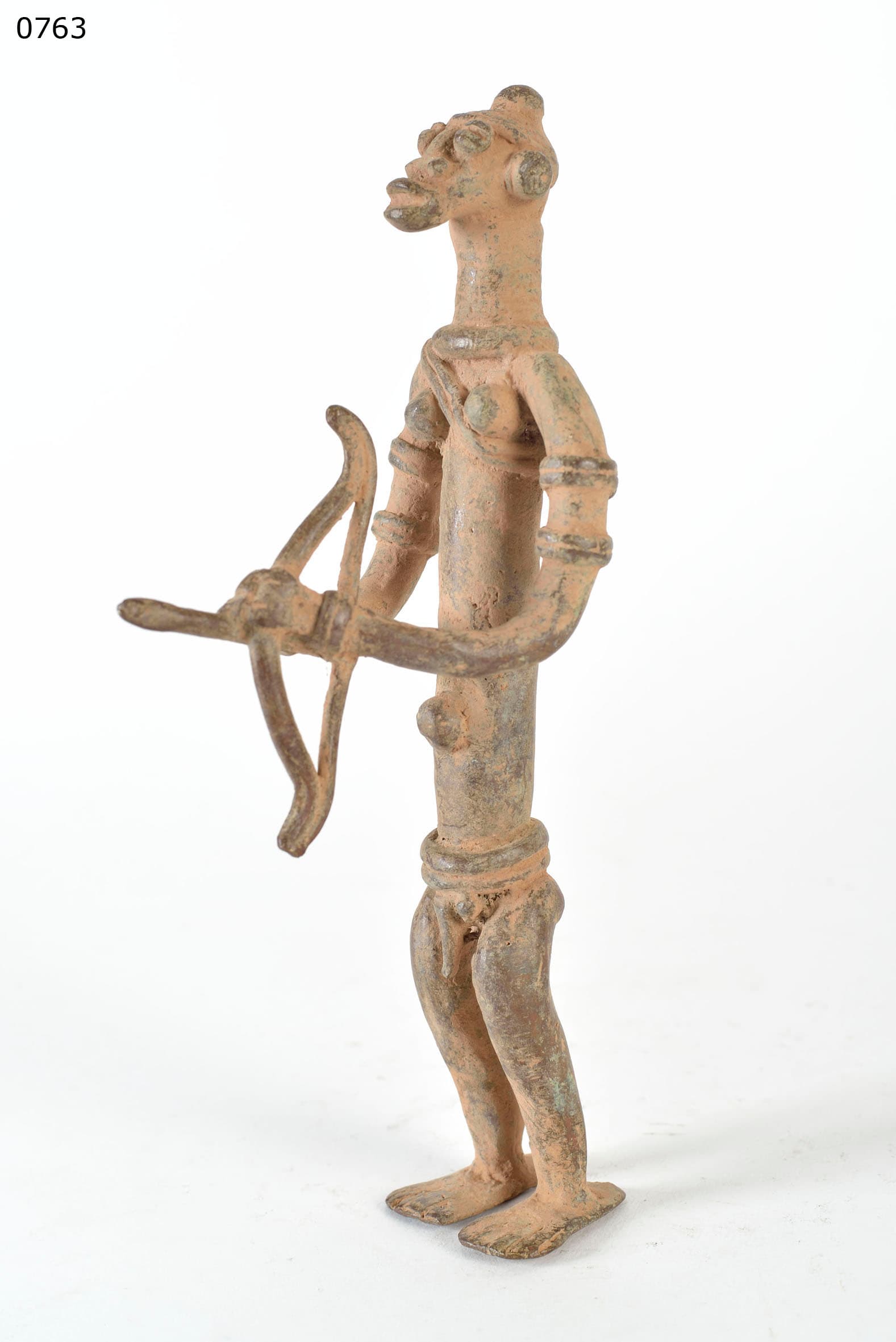
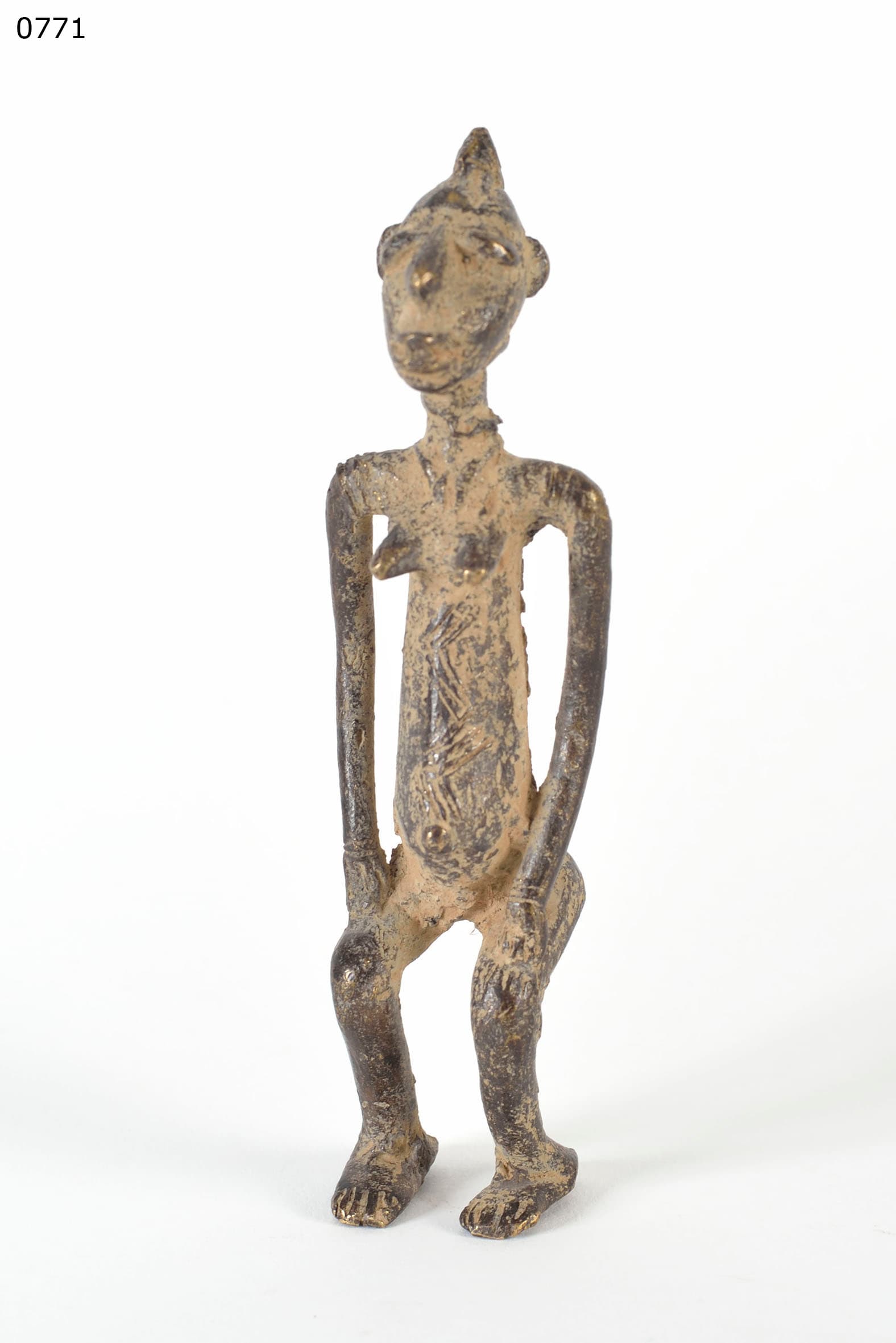
Eines von drei schweren Bronzeornamenten. Dieses Stück weist ein dickes rundes Band auf, das mit einem stilisierten Chamäleon oder einer Eidechse als skulpturalem Abschluss geschmückt ist. Es weist eine dicke, stark verkrustete archäologische Patina mit lebhafter grüner und brauner Oxidation auf.
1. Ästhetischer Stil und regionale Eigenheiten
Das Volk der Gan ist hoch geschätzt für seine alten, komplizierten Bronzegüsse im Wachsausschmelzverfahren (cire perdue). Die Einbeziehung des Chamäleons - einer Kreatur, die im voltaischen Mythos eng mit Verwandlung, ursprünglicher Weisheit und den Ursprüngen der Welt verbunden ist - erhebt diese Güsse von bloßem Schmuck zu einem tragbaren kosmologischen Emblem. Der langsame, multidirektionale Blick des Chamäleons ist in der gesamten voltaischen Region ikonografisch aufgeladen, wo es die geduldige, umfassende Überwachung der Ahnen symbolisiert.
2. Rituelle Funktion und kosmologische Ikonographie
In der Gan-Gesellschaft waren massive bronzene Fußkettchen und Armbänder ausschließlich Königen, hochrangigen Eingeweihten und mächtigen Priesterinnen vorbehalten. Die Chamäleon-Ikonographie beschwört die Verbindung des Trägers mit der ursprünglichen Weisheit und der transformativen Kraft, die eine Brücke zwischen dem Reich der Menschen und dem der Ahnen schlägt. Das Ornament kennzeichnete seinen Träger somit als Teilnehmer an den tiefsten ikonografischen Registern des ganischen religiösen Denkens, die über die bloße Zurschaustellung von Reichtum hinausgehen.
3. Physische Patina und Altersnachweis
Die Oberfläche bietet ein Lehrbeispiel für tiefgreifende metallurgische Alterung - sie ist von einer dicken, stabilen Schicht aus Cuprit und Malachit (grün-braune Kruste) bedeckt, was darauf hindeutet, dass sie entweder in einem Grab beigesetzt oder jahrhundertelang in der feuchten Erde eines königlichen Schreins aufbewahrt wurde. Diese aggressive Mineralisierung kann nicht so schnell künstlich herbeigeführt werden und ist das definitive Merkmal für die angegebene Herkunft aus dem 16. bis 19.
Zusammenfassung
Dieses Ornament aus Gan-Bronze zeugt von den großartigen Fähigkeiten des Wachsausschmelzverfahrens und der komplexen kosmologischen Ikonographie der alten Könige von Burkina Faso. Sein Chamäleon-Finale und seine verkrustete archäologische Patina machen es zu einem äußerst seltenen, musealen, tragbaren Emblem von großer historischer Bedeutung.
KI-unterstützt erstellt aus Sammlungsgutachten, Objektfotografie und eigener Recherche, redaktionell geprüft. Fehler sind möglich — Hinweise darauf sind uns willkommen. Zum Verfahren →