Dieser eiserne Altar besteht aus einem vertikalen Schaft, der eine flache, runde Scheibe trägt, die mit hängenden, konischen, glockenartigen Anhängern geschmückt ist und von einer stilisierten, abstrakten, sitzenden Figur überragt wird. Es weist einen gleichmäßigen, stark verkrusteten braunen Rost auf, der auf ein hohes Alter und eine lange Lagerung hinweist.
1. Ästhetischer Stil und regionale Eigenheiten
Das Volk der Fon in der Republik Benin ist bekannt für die Herstellung von Asen, tragbaren Eisenaltären, die zu Ehren bestimmter verstorbener Ahnen geschaffen wurden. Dieses Exemplar ist eine klassische Darstellung dieser Form: eine parasolartige obere Scheibe, die von einem Pfahl getragen wird. Das Tableau auf der Oberseite - in diesem Fall eine einsame sitzende Figur - fungiert als visuelles Sprichwort oder symbolisches Porträt, das die Identität, den Status oder den Beruf des geehrten Toten vermittelt. Die hängenden konischen Glocken sind so gestaltet, dass sie im Wind läuten oder beim Anschlagen den Geist des Ahnen zum Altar rufen.
2. Rituelle Funktion und Vodun-Verankerung
Asen sind grundsätzlich aktive Objekte innerhalb des komplexen Systems des Vodun. Nach bestimmten Begräbnisriten werden diese Altäre innerhalb spezieller Familienschreine (dexoxo) in die Erde eingelassen. Sie dienen als buchstäbliche Schnittstelle zwischen den Lebenden und den Toten; Familienmitglieder gießen Trankopfer aus Palmöl, Wasser oder Tierblut über die Scheibe, um den Ahnen im Jenseits zu unterstützen und ihren fortwährenden Schutz und Segen für die lebende Linie zu sichern. Die Scheibe fungiert als buchstäbliche Landeplattform für den Geist des Vorfahren während der Beschwörungen.
3. Physische Patina und Altersnachweis
Die Datierung auf das 19. Jahrhundert wird durch den starken Verfall des Eisens stark unterstützt. Da die Aschen in die Erde gepflanzt wurden und ständig mit organischen Stoffen bedeckt waren, rosten sie mit der Zeit sehr stark. Das dicke, körnige und abblätternde Eisenoxid (Rost), das das gesamte Objekt bedeckt, deutet darauf hin, dass es viele Jahrzehnte in einem Schrein stand und dem feuchten Küstenklima Benins ausgesetzt war. Dieser Grad an authentischem, terrestrischem Verfall ist ein definitives Zeichen für das Alter und die primäre rituelle Verwendung.
Zusammenfassung
Dieser eiserne Asenaltar ist eine ergreifende Manifestation der Fon-Gedenkkunst und fängt die visuellen Sprichwörter und rituellen Mechanismen des Vodun-Ahnenkults perfekt ein. Seine starke, abblätternde Rostpatina bestätigt seine Herkunft aus dem 19. Jahrhundert und sein aktives Leben innerhalb eines irdenen Familienschreins.
KI-unterstützt erstellt aus Sammlungsgutachten, Objektfotografie und eigener Recherche, redaktionell geprüft. Fehler sind möglich — Hinweise darauf sind uns willkommen. Zum Verfahren →

Seltene Kraftfigur (verwendet in VOODOO-Zeremonien)
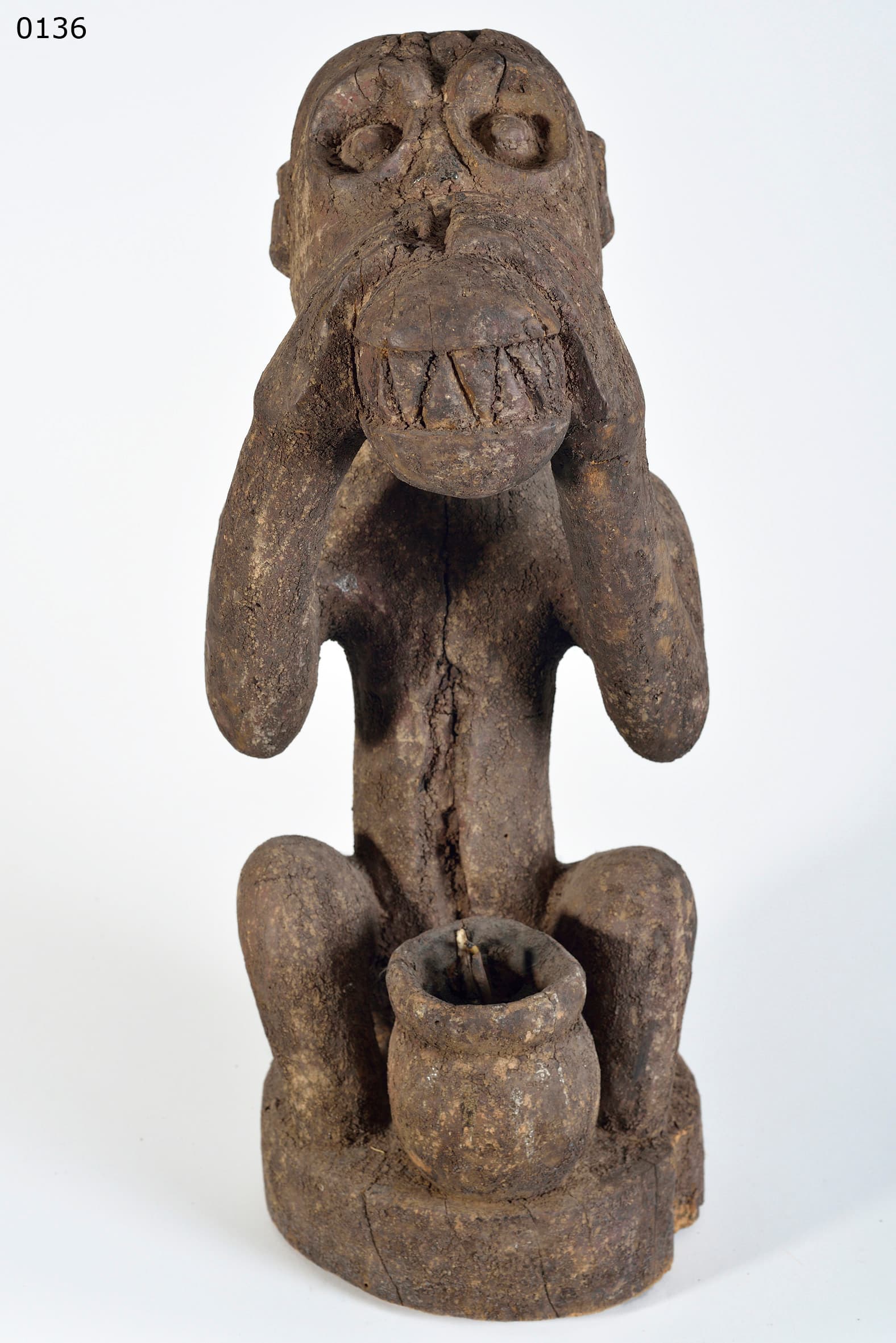
Affenschreinfigur
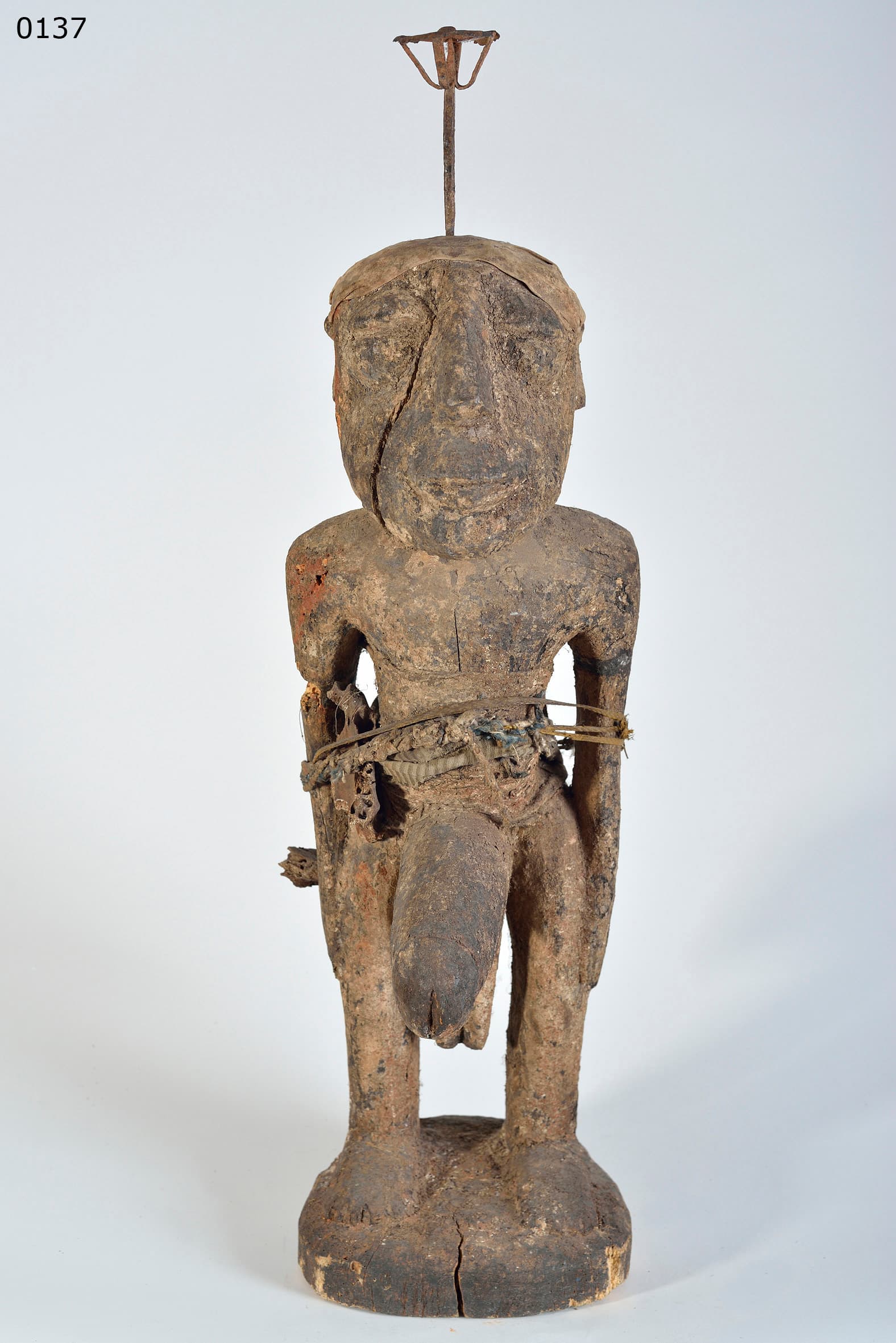
BOCIO-Statue (wird bei Voodoo-Zeremonien verwendet)
