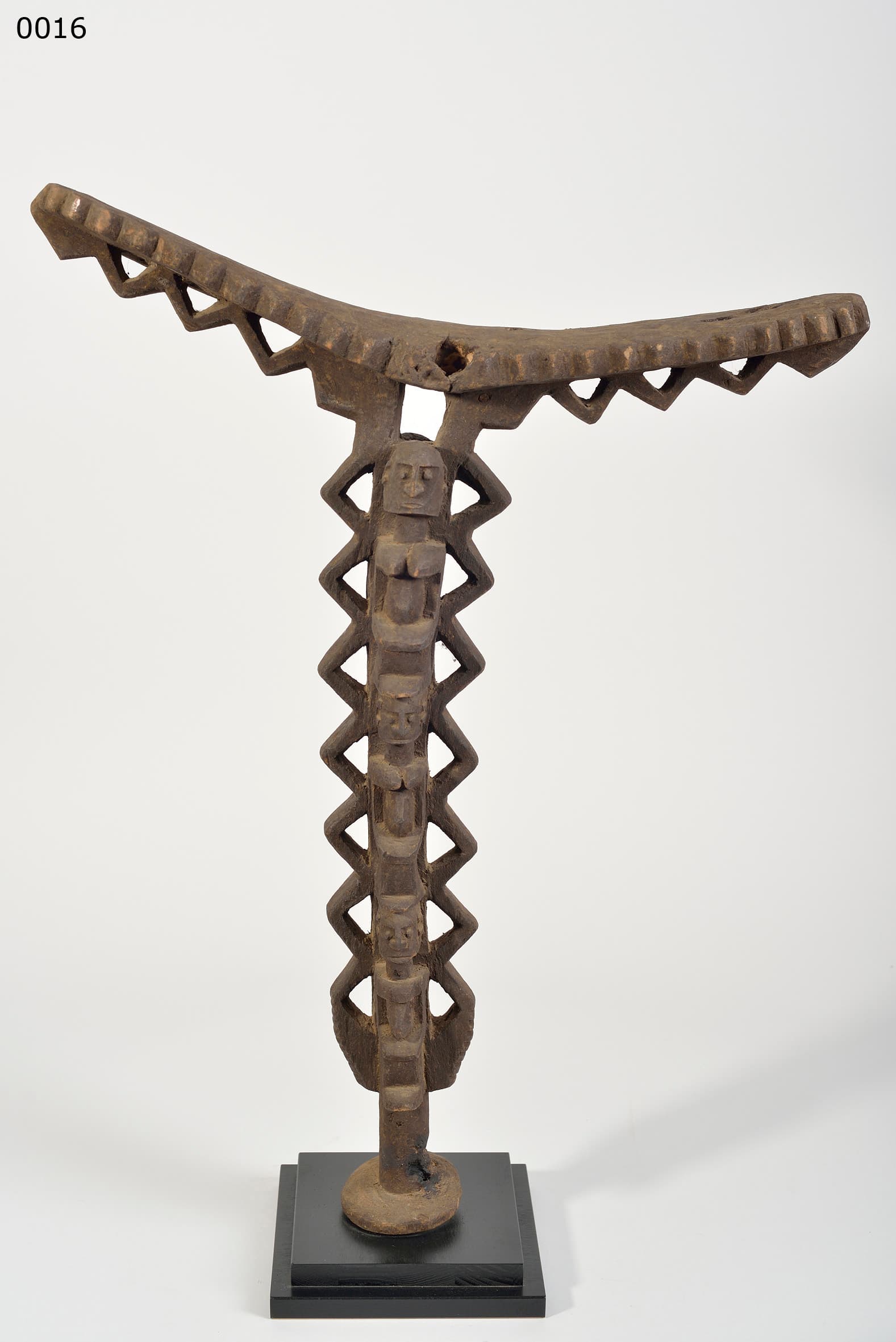
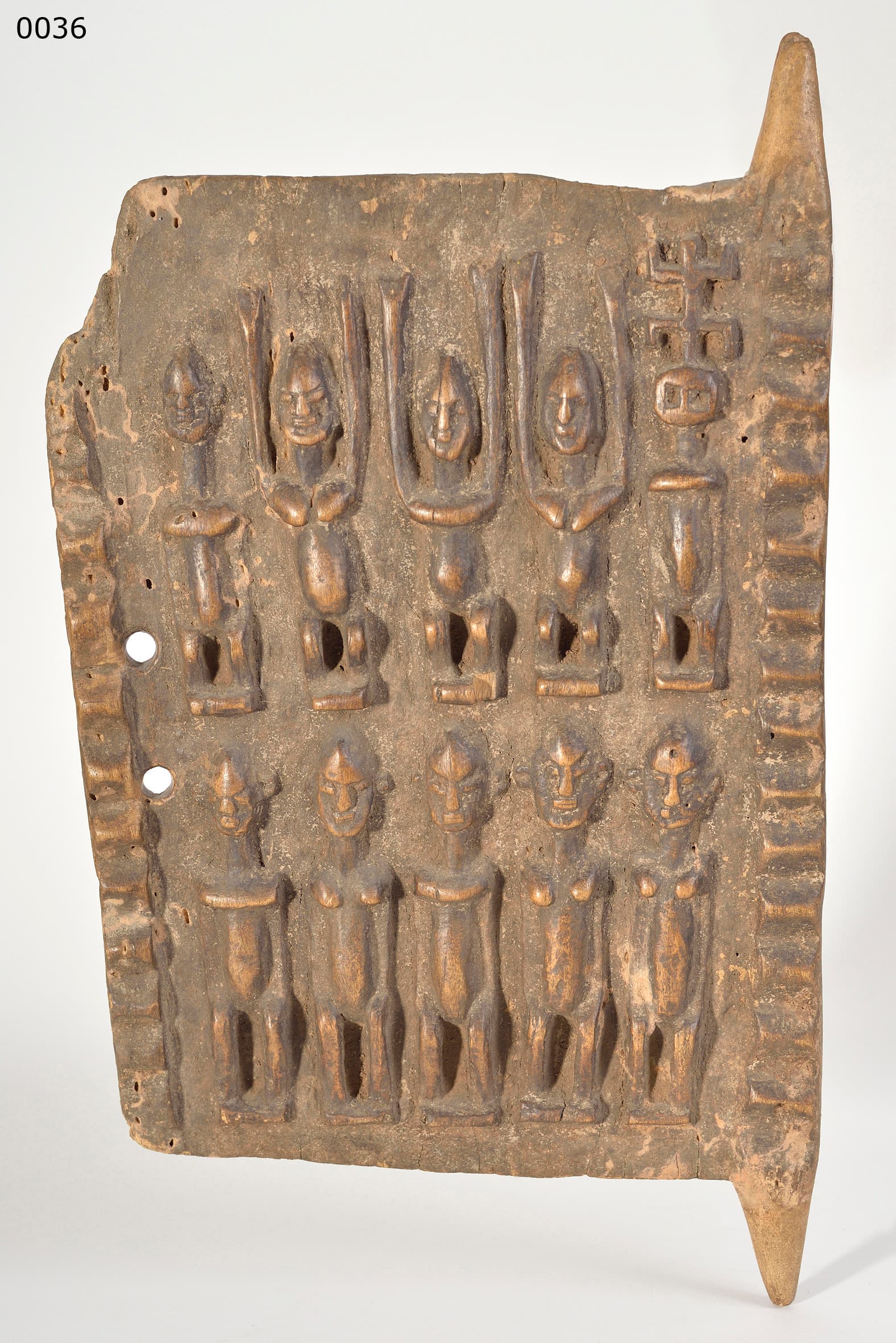
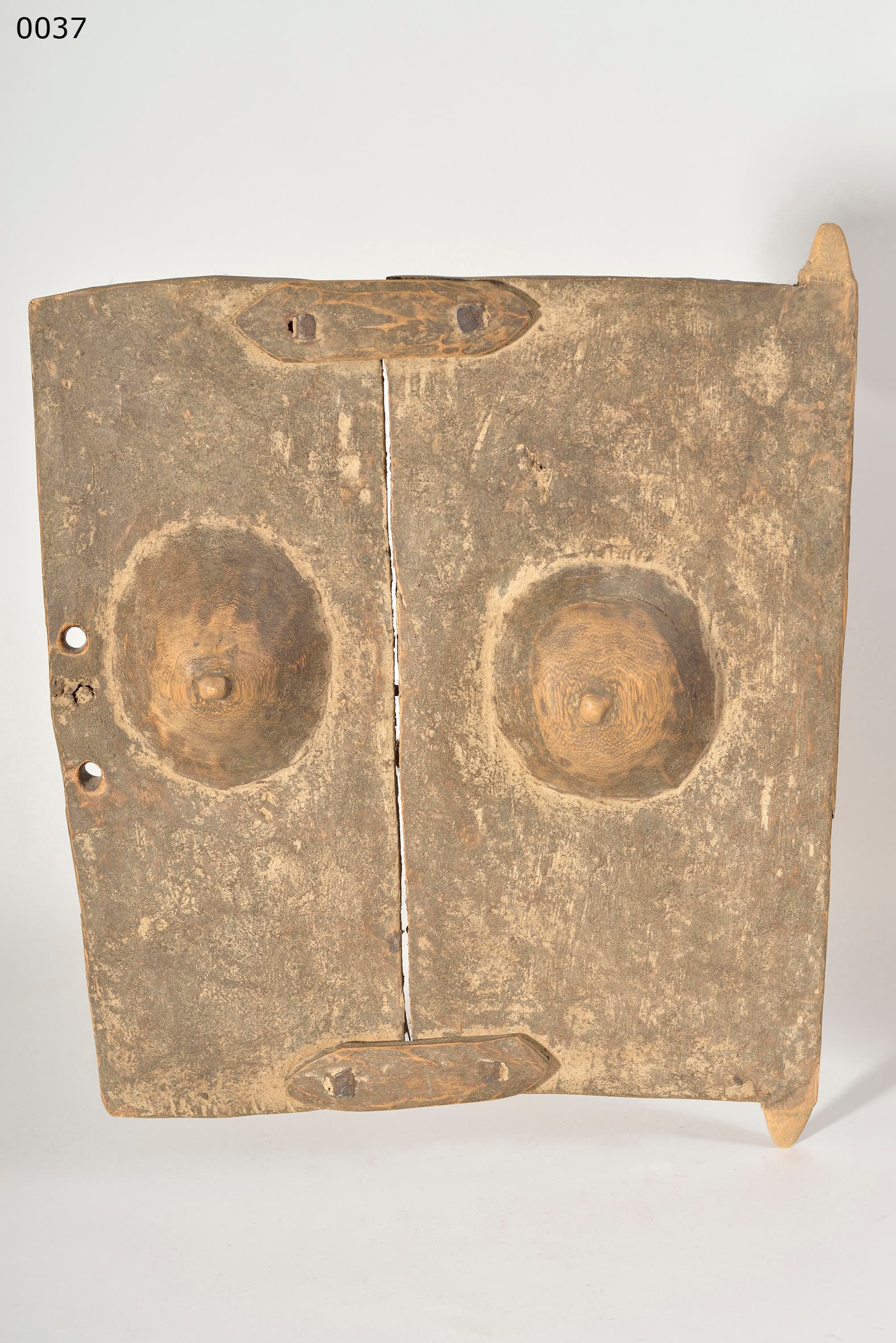
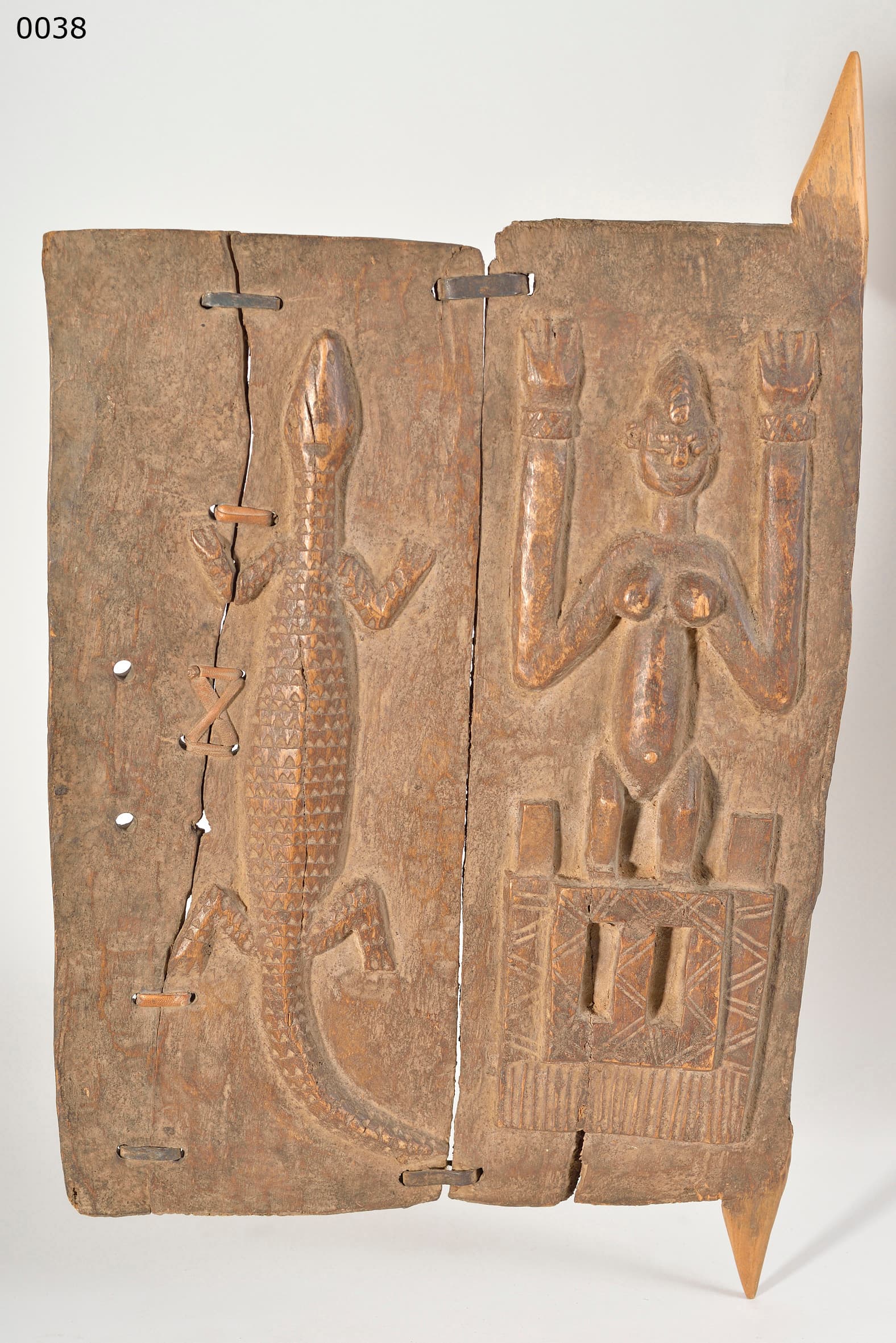
One of four matched equestrian figures from a single ritual ensemble (1035-1038). This 15 cm unarmed rider is mounted on a highly abstracted, minimalist horse forged from a stark horizontal bar with peg-legs. The iron is covered in a profound, highly textured, and friable terrestrial rust crust.
1. Aesthetic style — equestrian minimalism and static authority
This piece, like its three companions in the Salanon ensemble, demonstrates the vast expressive range of Dogon blacksmiths within strict equestrian abstraction. The horse is reduced to a stark horizontal bar, the rider to a vertical spine. The unarmed posture projects an aura of static, supreme authority and celestial observation rather than martial action. This silent, unweaponed stance is traditionally understood to represent the Hogon as a quiet observer of cosmic order, positioned above the chaotic affairs of mortal combat.
2. Ritual function — the cavalry of the hogon
In the precipitous, rocky terrain of the Bandiagara Escarpment, horses were practically useless for daily transport; they were highly valued prestige vehicles associated with the Hogon (supreme leader). Consequently, this iron figure is understood to serve as a multi-layered metaphor: it represents the wealth and authority of the priesthood, while simultaneously symbolizing the Nommo descending to earth in their cosmic ark. Grouped with its three companion figures on a major village altar, this unarmed observer formed part of a spiritual cavalry guarding the community from all cardinal directions.
3. Physical patina — terrestrial crust and the archival record
The physical condition of this figure is spectacular from an archival perspective. It shares with its three companions a dense, highly friable, and deeply textured orange-brown rust crust. This heavy mineralization indicates the entire ensemble was permanently installed outdoors or heavily embedded in the mud of a Binu sanctuary, subjected to generations of cyclical rains and the application of thick organic libations. Its publication history supports the view that this rugged, archaeological decay represents an uncleaned record of Malian devotion.
Summary
A static, unarmed equestrian observer projecting the silent authority of the Hogon, this is one of four matched figures from a single Salanon ensemble. Its heavy, friable terrestrial rust is consistent with its history as part of an elite spiritual cavalry of an early 20th-century sanctuary.
Written with AI assistance from the collection appraisal, object photography and our own research; editorially reviewed. Mistakes are possible — corrections are welcome. How we work →