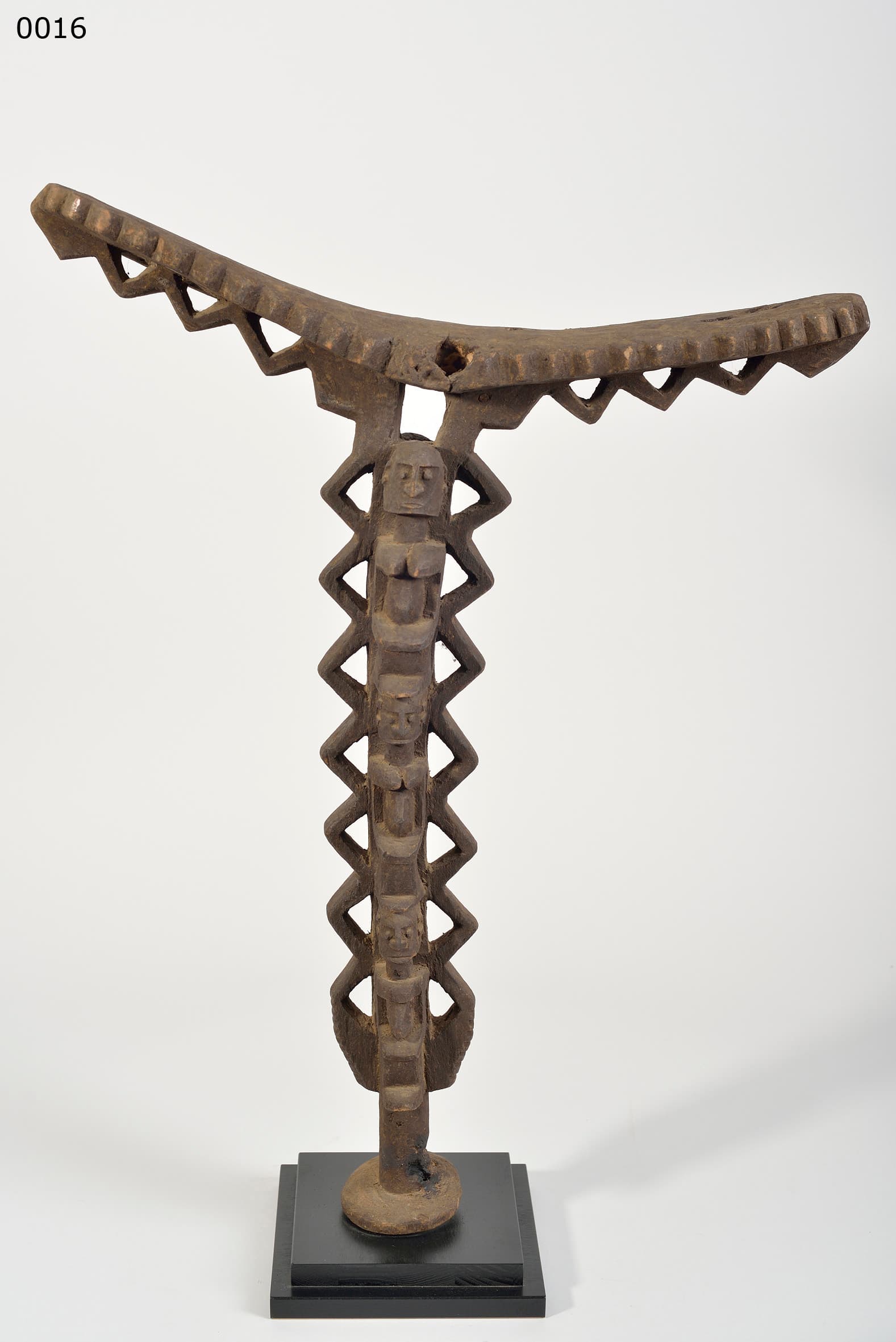
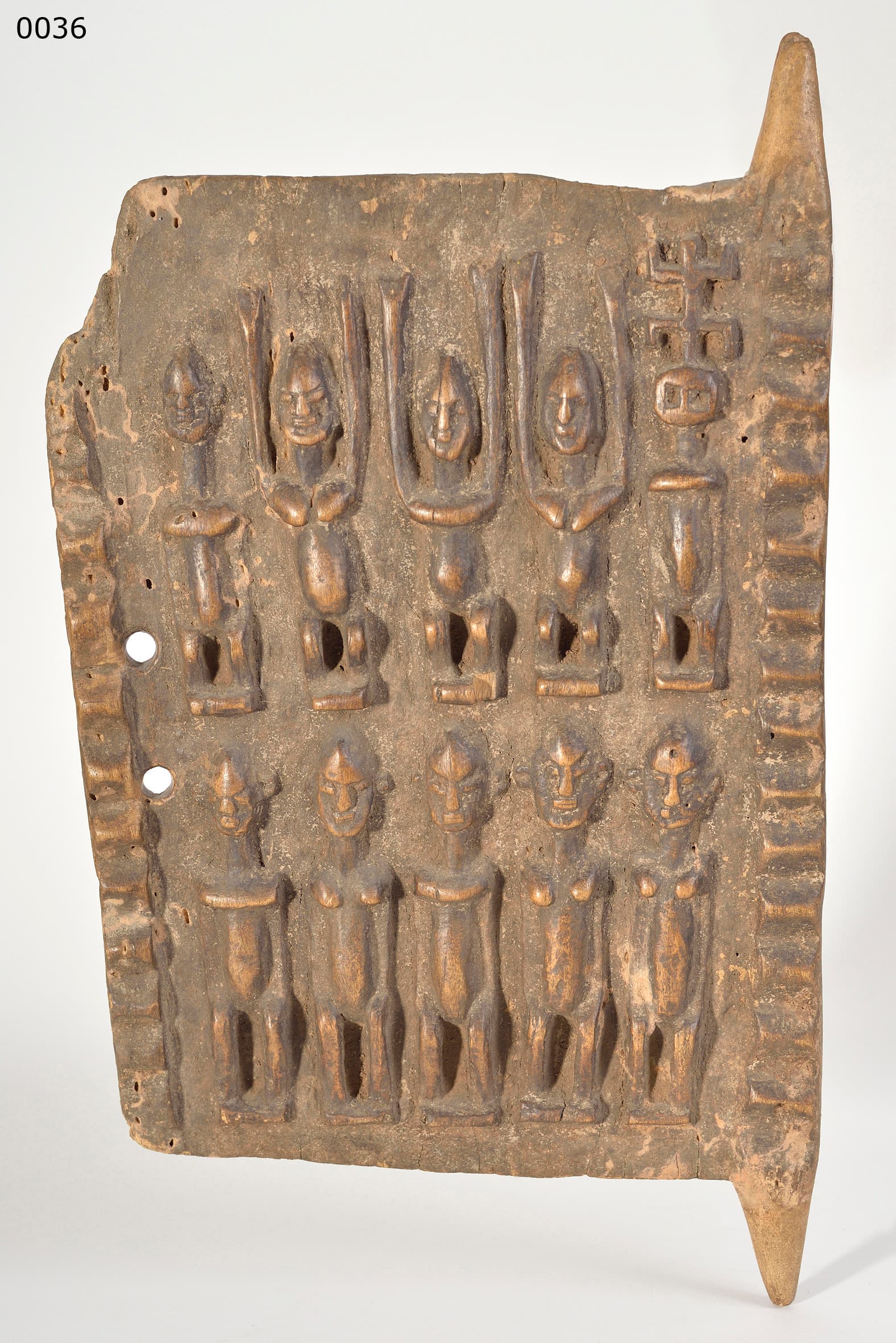
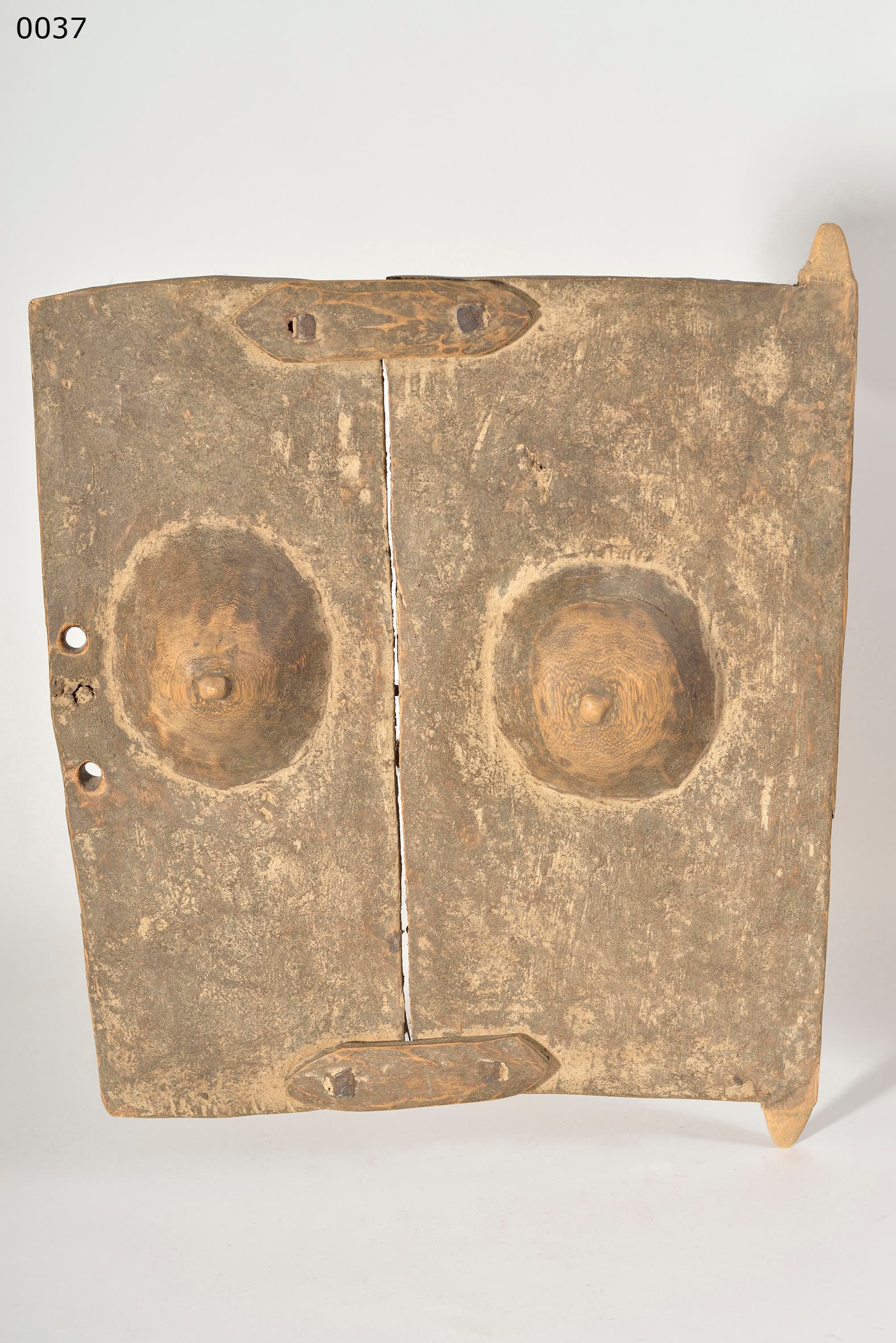
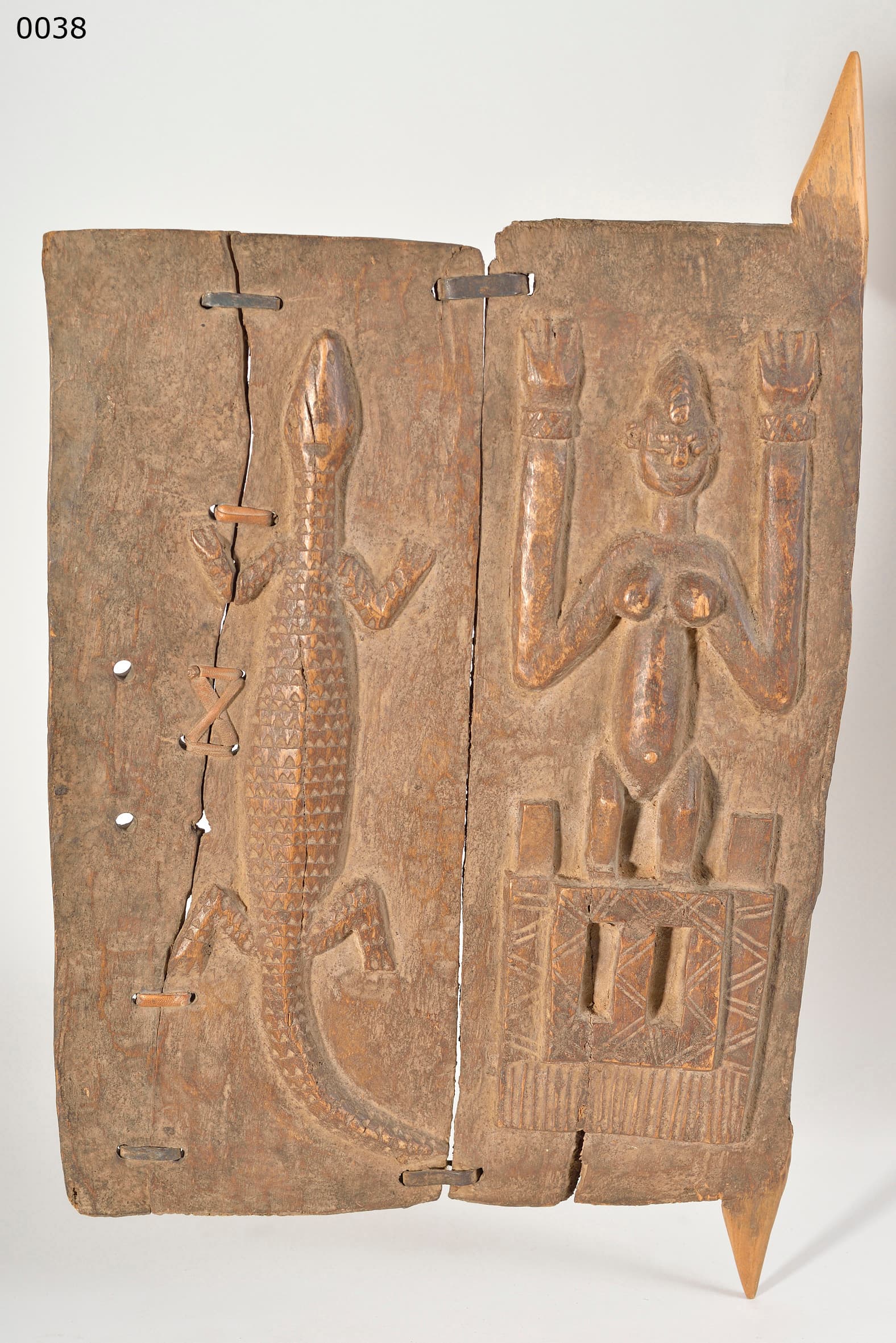
This deeply weathered, abstract wooden mask portrays a stylized monkey (Dege) with a massive, domed cranium, deeply excavated rectangular eye sockets, and a jutting, squared-off muzzle. The surface is entirely coated in a thick, friable, earthen crust that obscures the underlying wood grain.
1. Aesthetic style — brutalist zoomorphism in Dogon masquerade
The Dogon carve several types of monkey masks (Dege), representing different primate species native to the Bandiagara Escarpment. This piece utilizes an astonishingly brutalist abstraction to capture the wild, untamed essence of the cynocephalus (baboon). The carver has utilized sharp, intersecting geometric planes and profound negative space—particularly in the massive, hollowed-out eyes—to create an architecture of primal force. There is no attempt at soft naturalism; instead, the harsh angles and massive muzzle convey raw, physical power and aggressive, animalistic energy.
2. Ritual function — awa society and the wilderness
The Awa society is the central masking association of the Dogon, responsible for the spectacular Dama funerary rites that restore cosmic order after a death. During the Dama, the monkey mask dances erratically and aggressively, stealing from the crowd and displaying uncultivated, anti-social behavior. This performance is highly didactic; by vividly acting out the chaotic, gluttonous nature of the untamed bush, the monkey dancer highlights and reinforces the importance of civilized, ordered human behavior within the village.
3. Physical patina — sacrificial encrustation and cave taphonomy
The extraordinary surface of this mask is a direct result of Dogon storage and ritual practices. When not in use, masks are often sequestered in the high, dry caves of the Bandiagara cliffs. The thick, crusty, grey-brown patina on this mask is a true archaeological skin—a mixture of windblown Sahelian dust, bat guano, and ritual libations of millet porridge that were poured over the mask to feed the spirit. This heavily textured, friable encrustation is consistent with an early 20th-century origin.
Summary
A powerful, monolithic expression of the untamed wilderness, this Dogon monkey mask is a triumph of brutalist zoomorphic abstraction. Its deeply excavated geometry and thick, crusty cave patination recall examples in the classic Dogon carving tradition.
Written with AI assistance from the collection appraisal, object photography and our own research; editorially reviewed. Mistakes are possible — corrections are welcome. How we work →