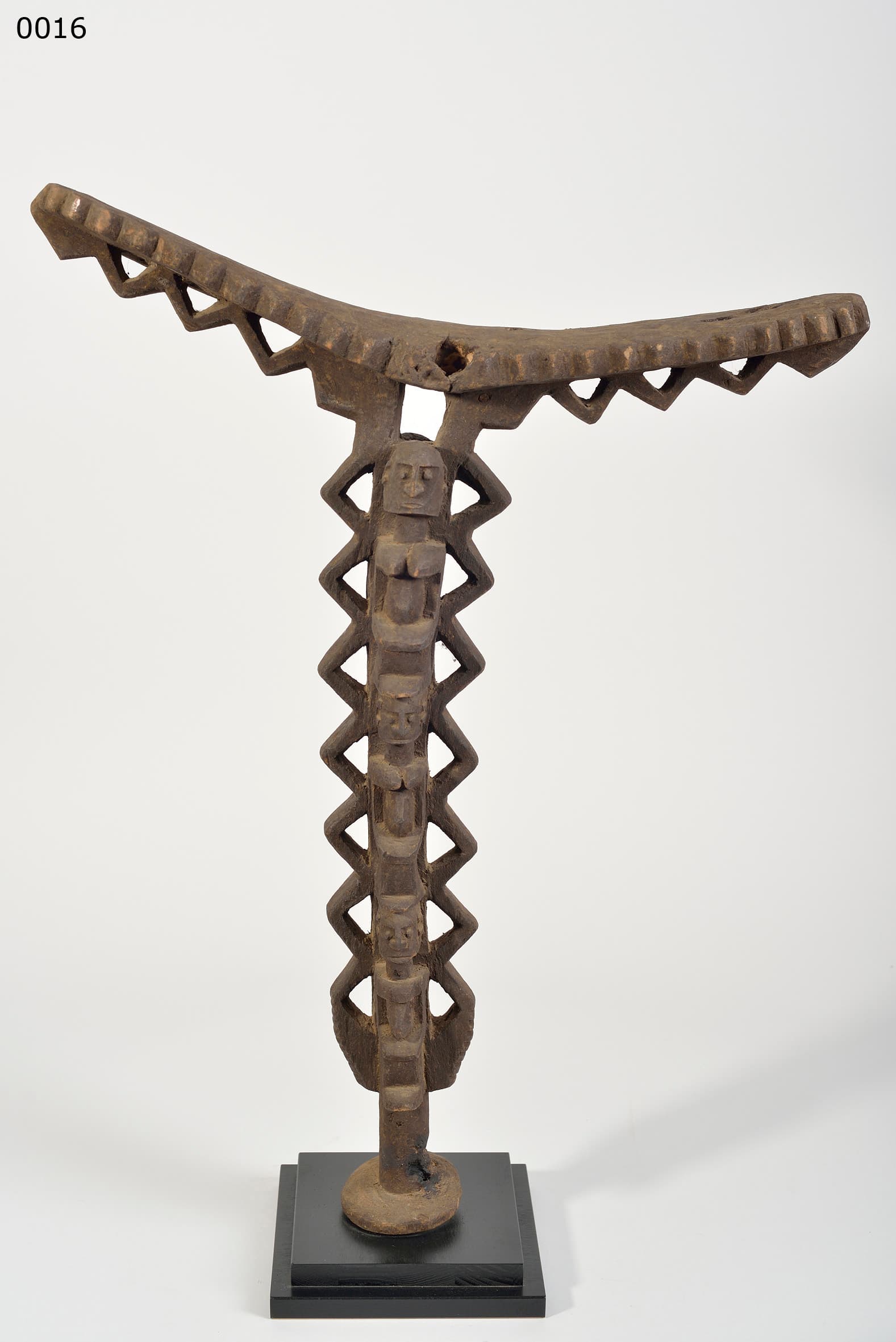
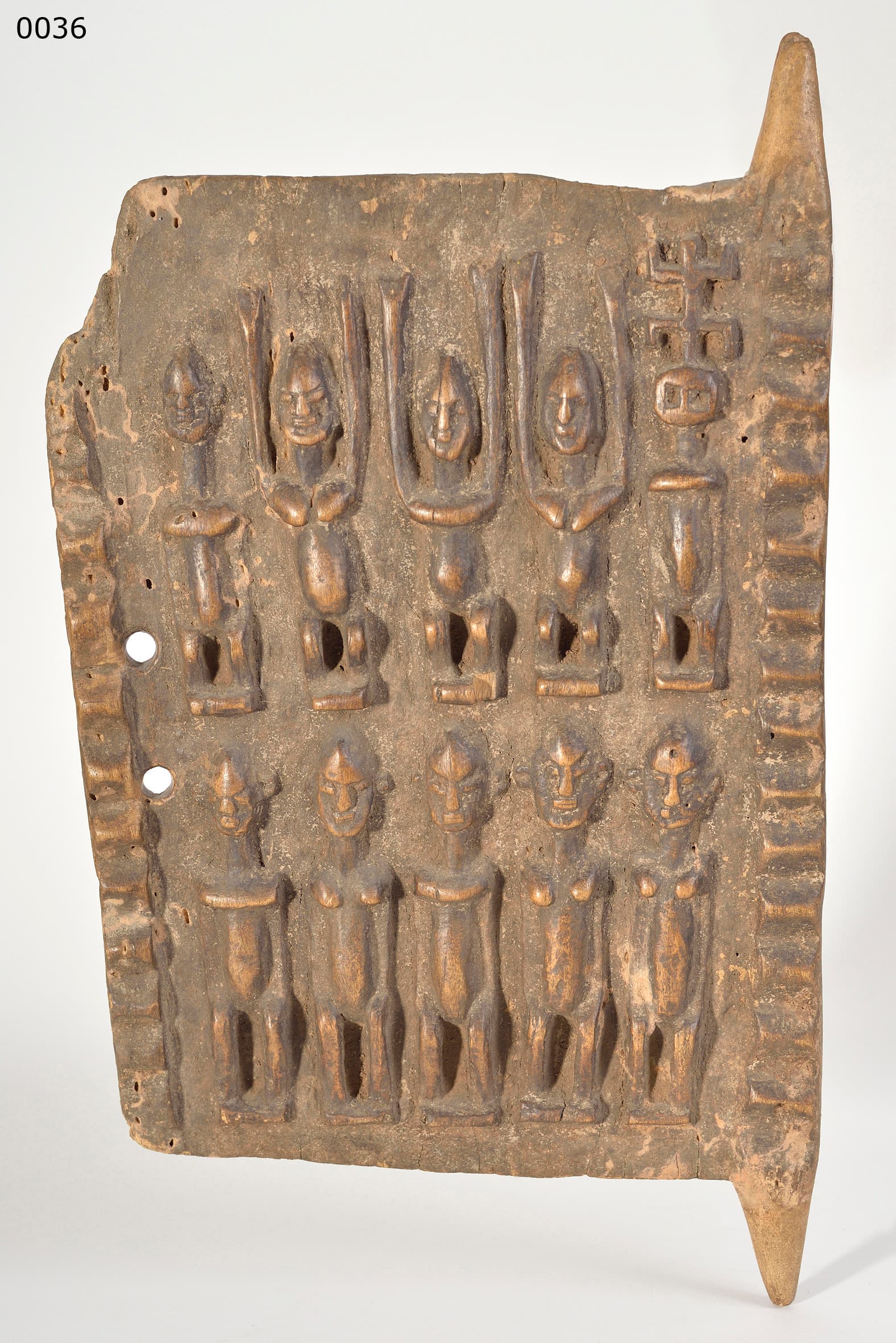
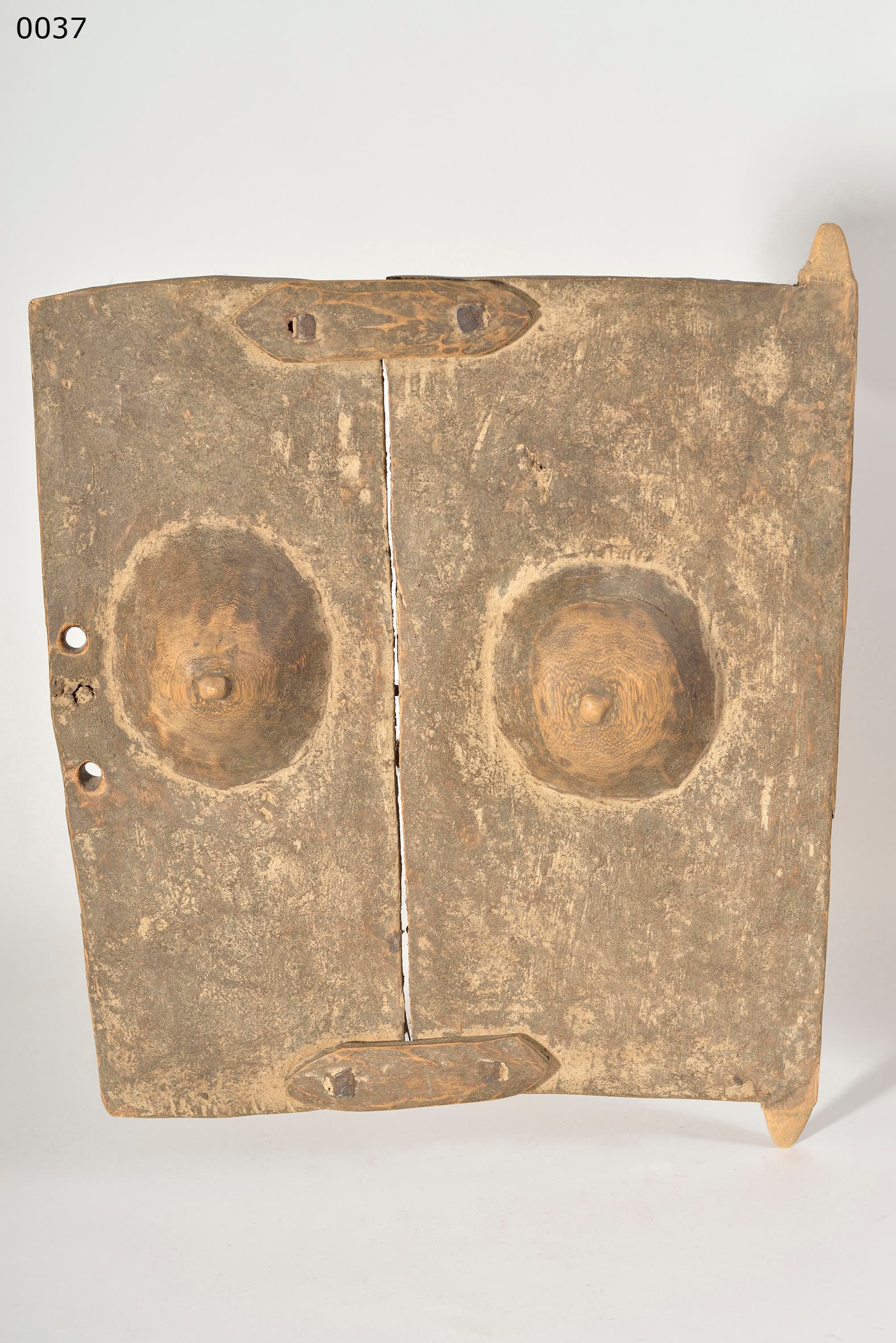
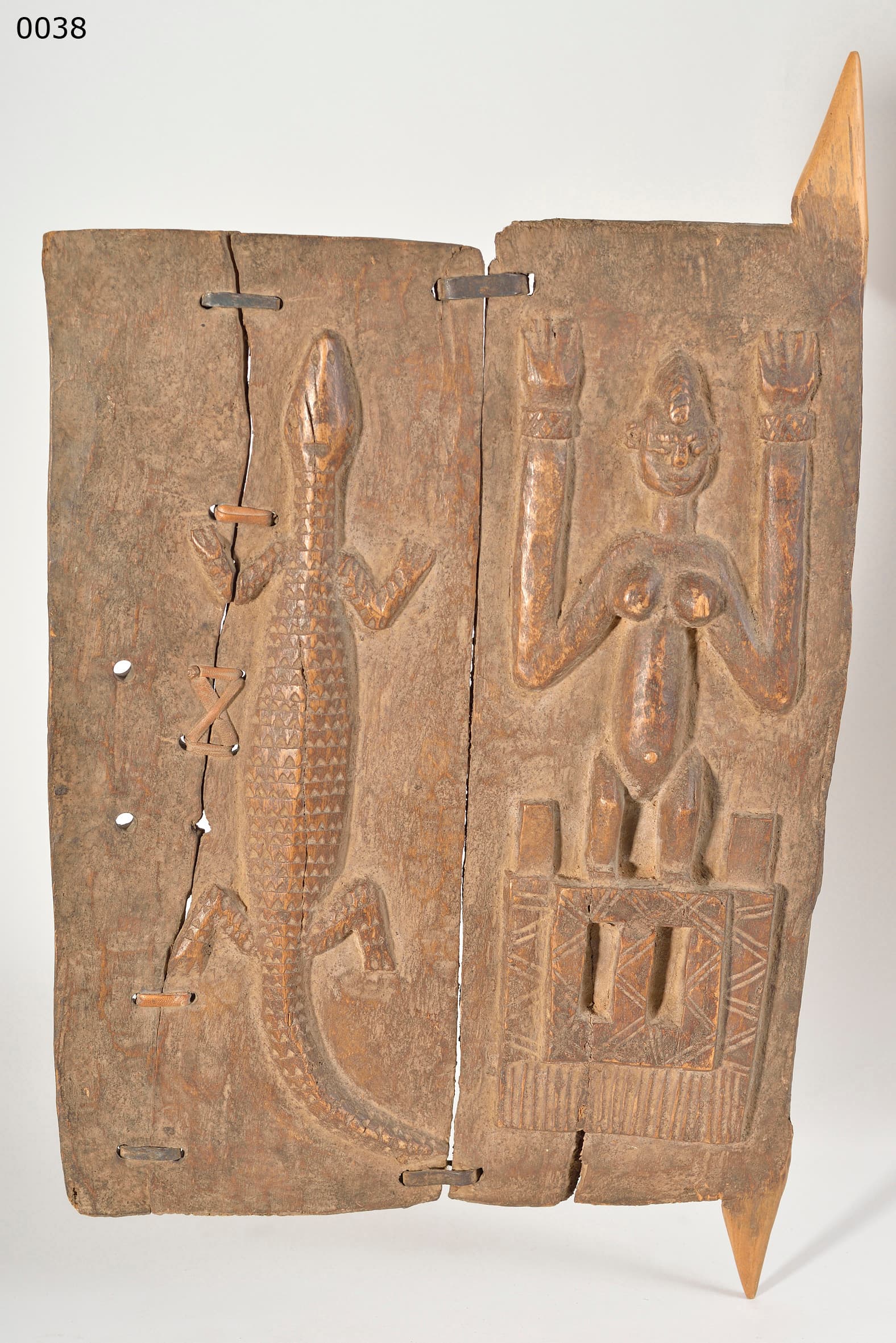
This large, complex wooden mask consists of a classic, rectangular, box-like Dogon faceplate featuring deep, rectangular eye hollows, surmounted by a tall, fully carved standing female figure with her arms raised upward. The wood is severely dry, pale, and extensively weathered.
1. Aesthetic style — the architecture of the satimbe mask
Although simply labeled "mask" in the spreadsheet, this object is consistent with the Satimbe ("sister on the head") type, one of the most culturally significant mask forms in the Dogon repertoire. The carver has engineered a complex, two-part architecture: the lower mask is a stark, rectangular grid of deep negative space representing the traditional, anonymous mask face, while the towering superstructure is a fully realized, three-dimensional female figure. The dramatic, raised arms of the figure create a soaring, vertical silhouette that recalls the heights of the Bandiagara Escarpment.
2. Ritual function — the yasigine and the honor of women
In the highly patriarchal Dogon society, the Awa (masking society) is entirely controlled by men. However, the Satimbe mask is a significant exception, carved to honor the Yasigine—the "sister of the masks." According to Dogon myth, women were the original discoverers of masks and the secrets of the spirit world before men stole them. The Yasigine is the only female permitted to participate in the Awa rituals, providing beer and food for the dancers. This mask type dances during the Dama funerary rites to publicly honor the role of women in Dogon spiritual life.
3. Physical patina — extreme desiccation and pale oxidation
The taphonomy of this 106 cm mask is consistent with origins in the harsh Malian climate. The wood has suffered extreme cellular desiccation, losing much of its internal moisture and resulting in a lightweight, fragile matrix. The surface is bereft of commercial polish or fresh pigments. Instead, it features the pale, ash-grey and bone-white oxidation characteristic of wood that has been exposed to hot, dry Saharan winds and stored in the dusty, high-altitude burial caves of the Dogon cliffs, supporting an attribution to the early 20th century.
Summary
This Dogon Satimbe mask is a soaring, architectural work that pays homage to the mythological role of women in the Awa society. Its towering, raised-arm superstructure and severe, ash-grey desiccation associate it with the classic tradition of Malian carving.
Written with AI assistance from the collection appraisal, object photography and our own research; editorially reviewed. Mistakes are possible — corrections are welcome. How we work →