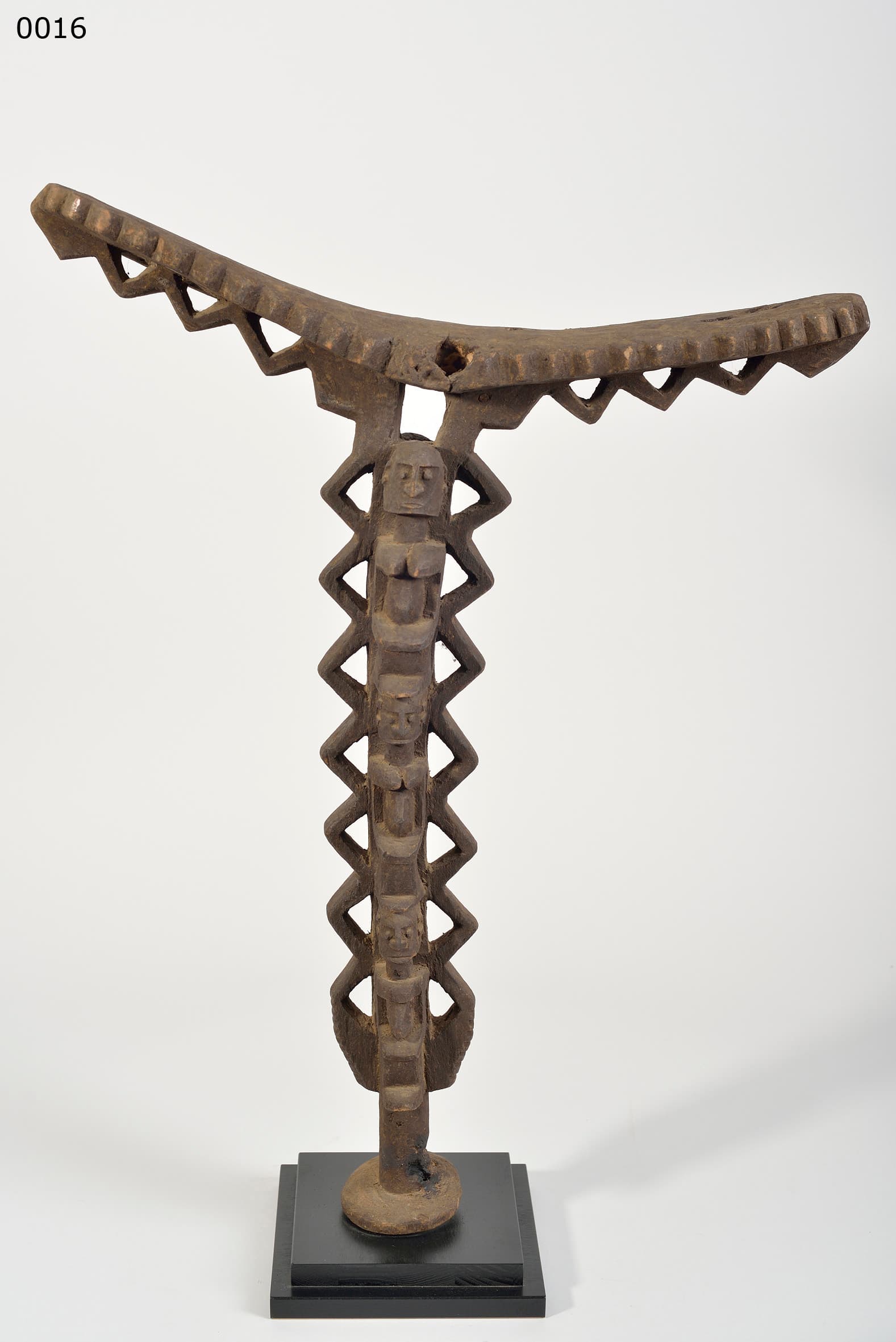
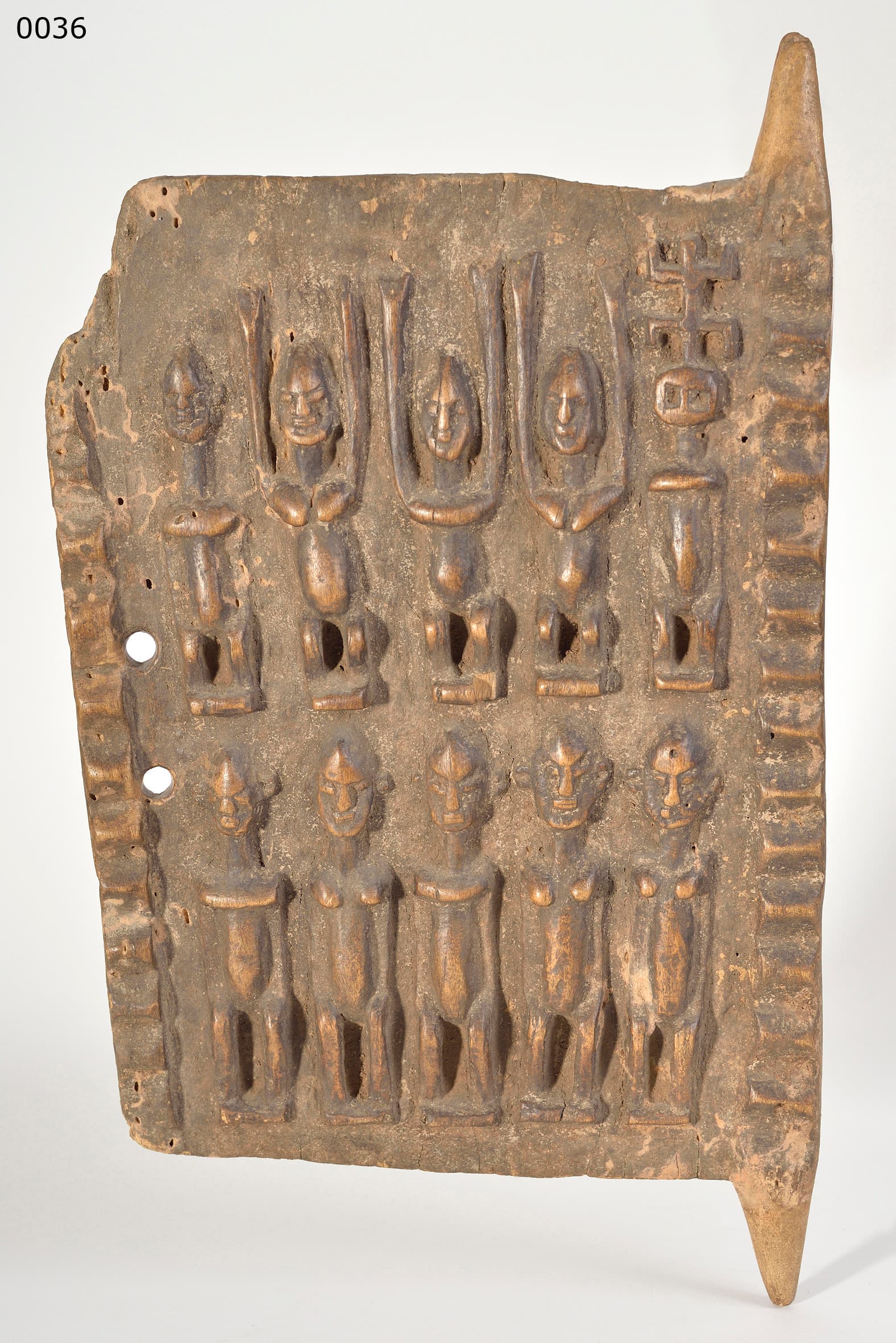
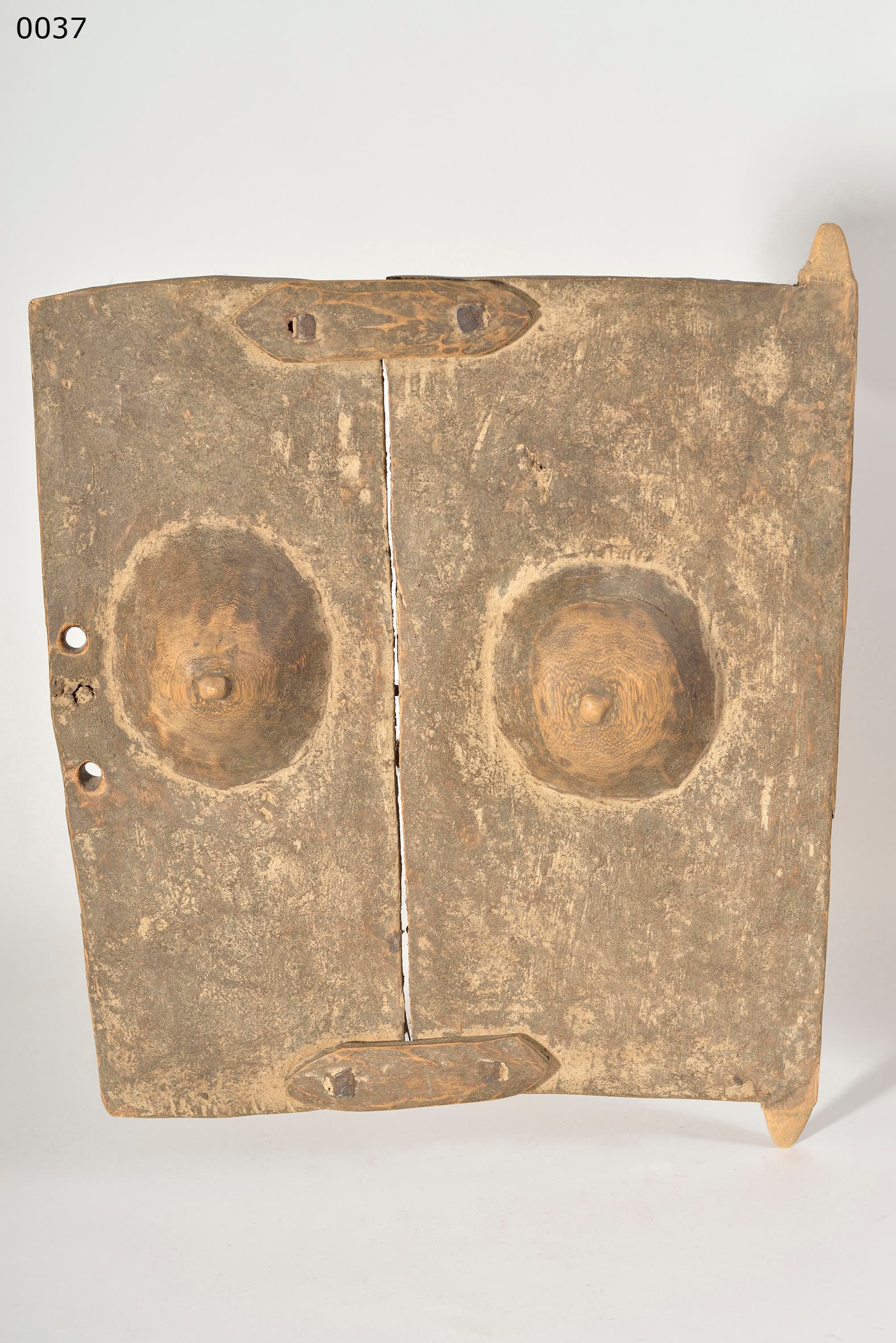
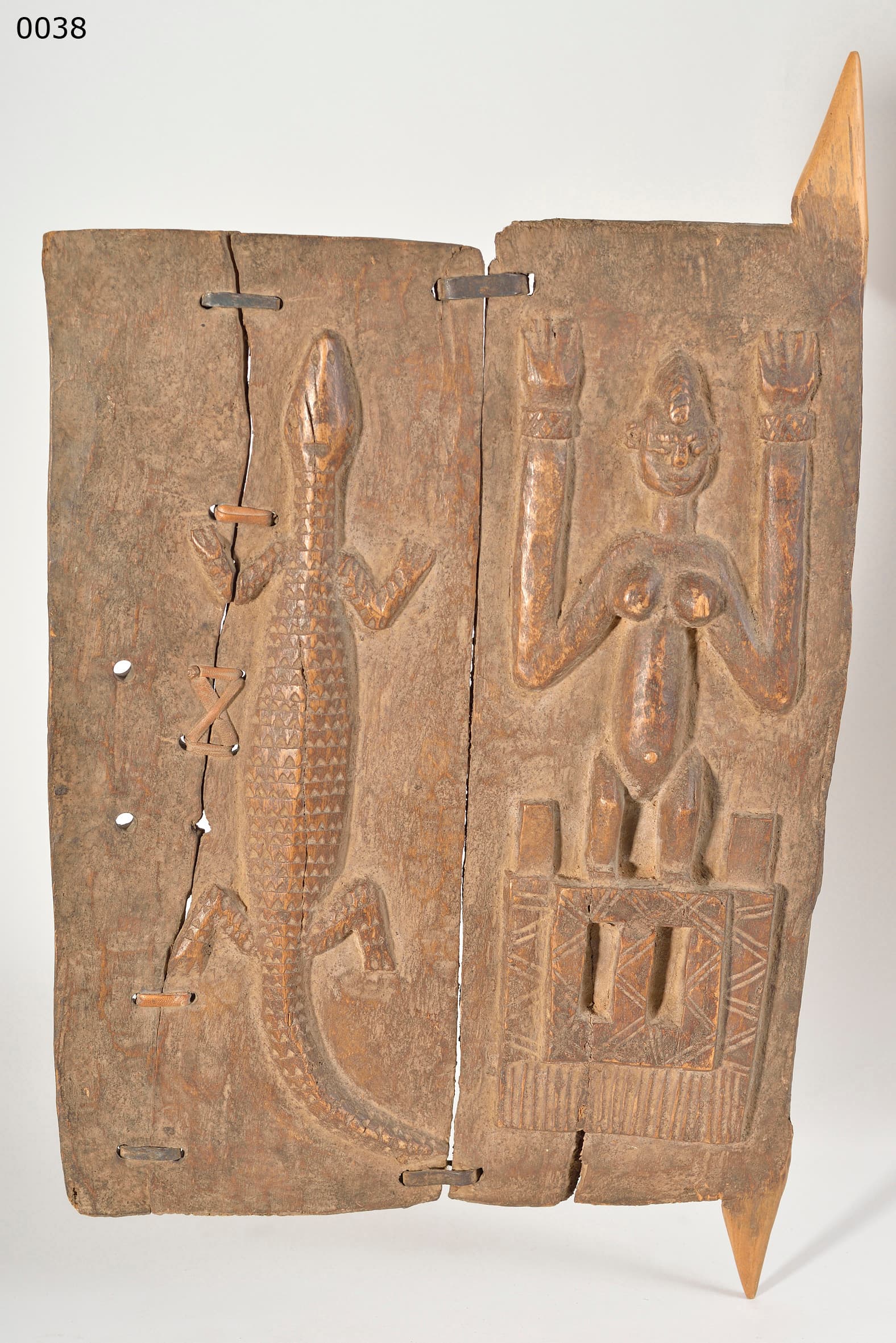
This imposing wooden mask features the traditional Dogon rectangular faceplate with deep, squared eye-hollows, topped by a soaring, fully rendered female figure standing with arms thrust upward. The dark hardwood is profoundly desiccated, exhibiting deep vertical shrinkage fissures and a matte, soot-darkened patina.
1. Aesthetic style — architectural verticality and the satimbe form
The Satimbe (literally translated as "sister on the head") is a structural marvel within the Dogon Awa masquerade corpus. The sculptor has engineered a brilliant, two-part composition: the stark, geometric anonymity of the rectangular face mask serves as a solid architectural foundation for the breathtaking, three-dimensional figurative sculpture above. The female figure's radically elongated torso and upward-reaching arms—a classic Dogon gesture of prayer linking earth to the heavens—create a dynamic, soaring silhouette designed to be silhouetted against the bright Sahelian sky during performance.
2. Ritual function — the yasigine and the myth of the first mask
In the deeply patriarchal society of the Dogon, the Satimbe mask is an astonishing exception, carved specifically to honor female power. According to Dogon mythology, masks and their associated spiritual powers were originally discovered by women before being appropriated by men. This mask pays homage to the Yasigine, the only female initiates permitted within the Awa society. Danced during the complex Dama funerary rites, the Satimbe publicly acknowledges that the spiritual and physical survival of the village, and the proper functioning of the mask cult itself, is fundamentally anchored by maternal authority.
3. Physical patina — desiccation fissures and ritual smoke
The condition of this 120 cm mask is consistent with an early 20th-century deployment. Stored in the dark, smoky rafters of an elder's home or a dedicated village sanctuary between ceremonies, the wood has acquired a deep, charcoal-like oxidation. The massive, organic longitudinal cracks running through the figure's torso and the mask's faceplate are the result of severe cellular desiccation—the slow, irreversible drying of the tropical hardwood over decades in the arid Malian climate. This profound taphonomic stress is consistent with natural aging.
Summary
A striking architectural and mythological representation, this Dogon Satimbe mask immortalizes the indispensable power of the female ancestor within a male-dominated cult. Its extreme, structural desiccation and dark, smoky patina are consistent with a significant history of use in Malian masquerade.
Written with AI assistance from the collection appraisal, object photography and our own research; editorially reviewed. Mistakes are possible — corrections are welcome. How we work →