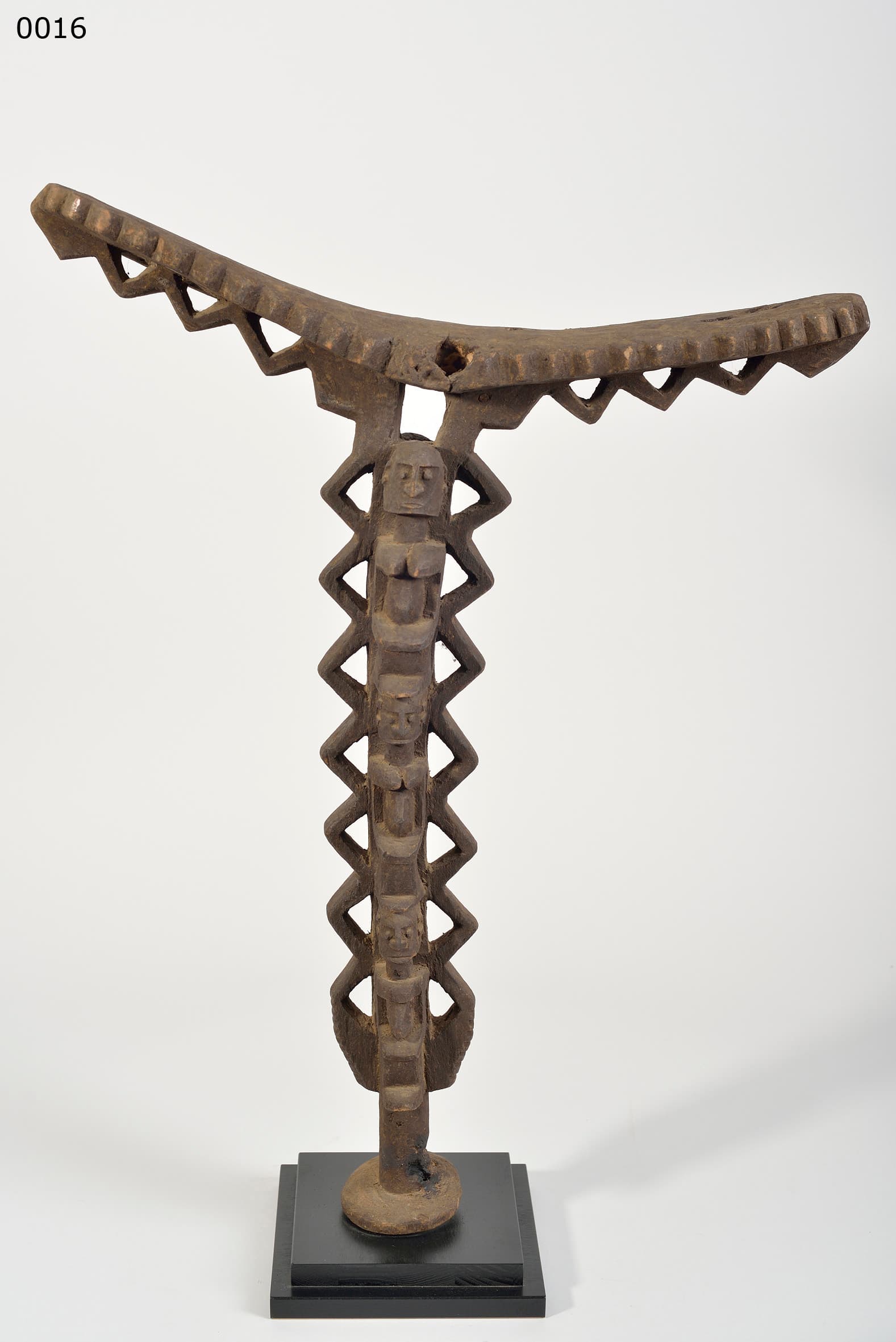
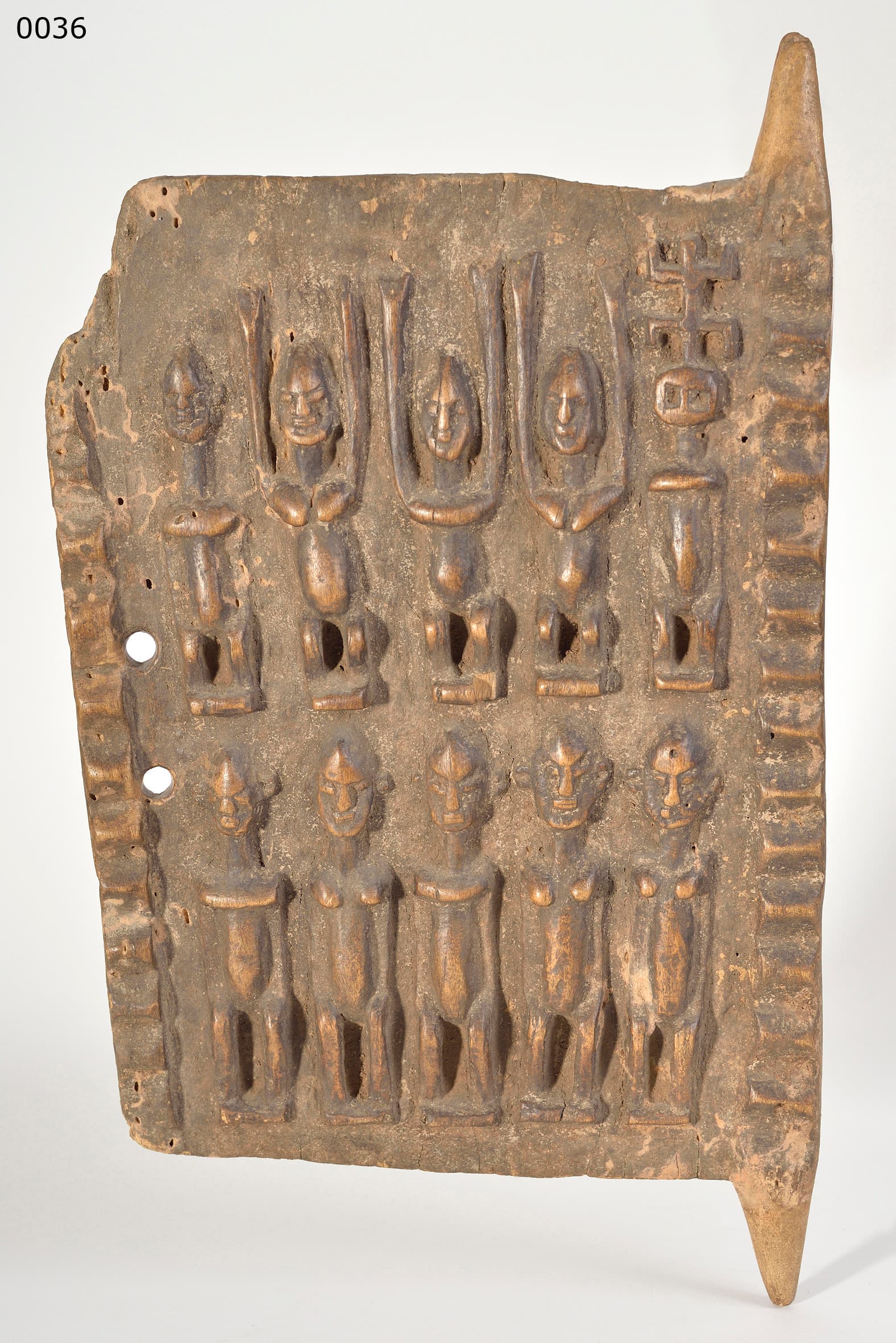
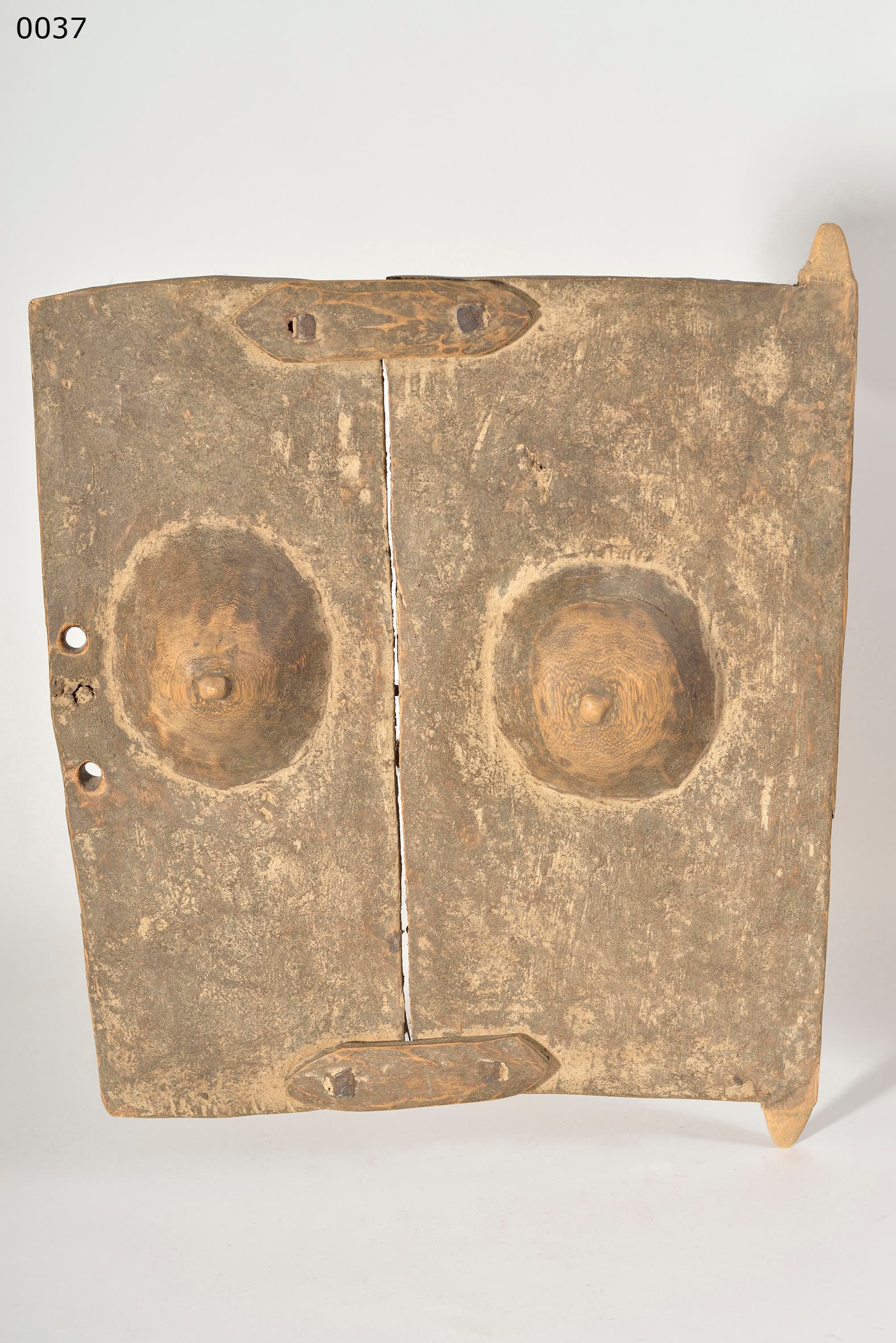
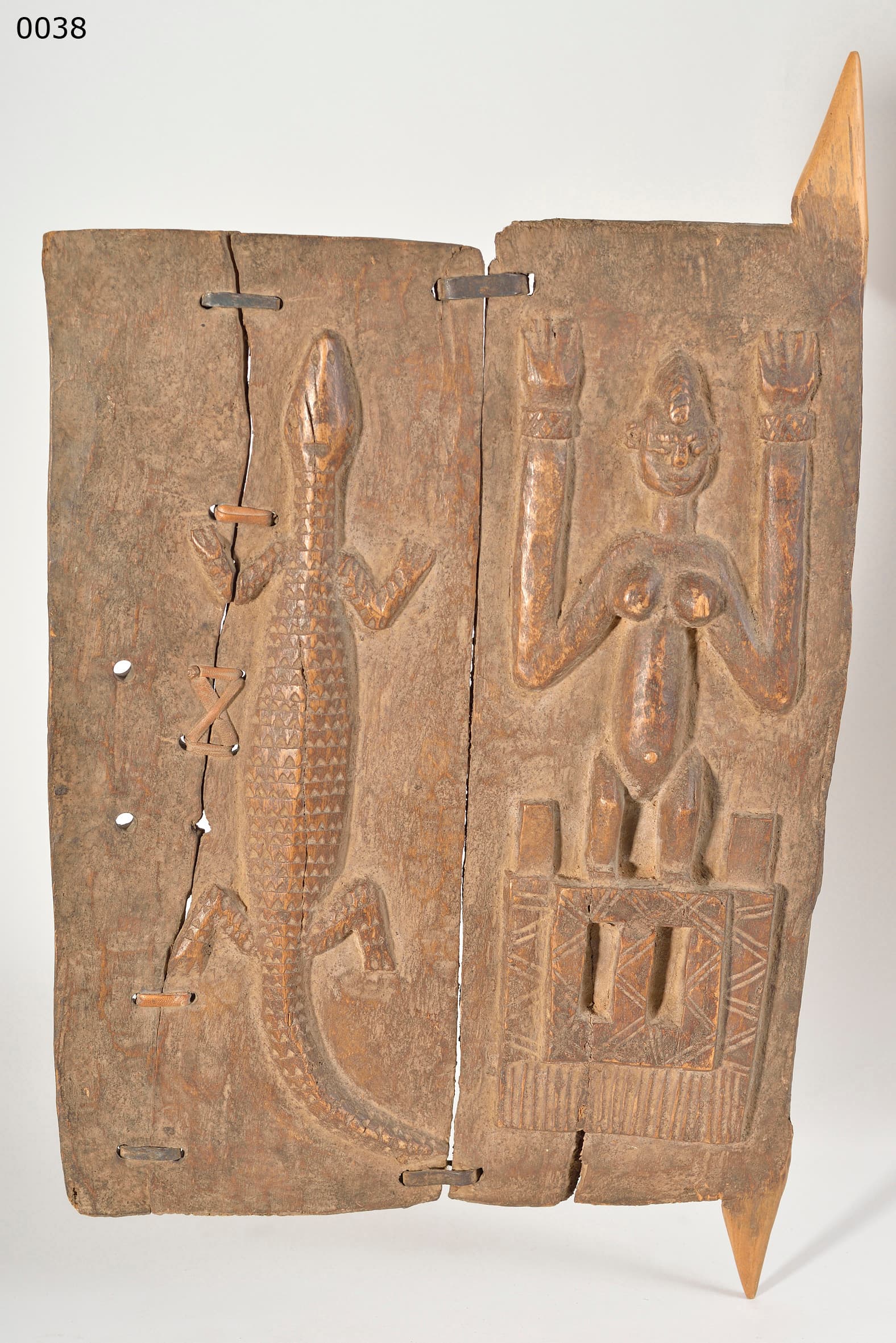
Measuring 412 cm (over 13 feet) in height, this monumental Sirige mask consists of a long, articulated wooden plank painted with rhythmic chevron, zigzag, and square motifs in white, blue, red, and yellow. The base features a classic, geometric Dogon faceplate.
1. Aesthetic style — monumental scale and the chevron motif
The Sirige mask represents a highly complex feat of sculptural engineering in African art. Carving a continuous, four-meter-long plank from a single, straight tree trunk requires significant skill to maintain structural integrity without snapping. The entire surface is covered in a graphic pattern: the continuous, painted chevrons and zigzags symbolize the movement of water, the path of the serpent, and the descent of the Nommo (creator spirits) from the sky. This large, two-dimensional canvas acts as a visual representation of Dogon cosmology.
2. Ritual function — supreme athleticism in the dama festival
The performance of the Sirige is a central element of the Dama funerary festival. The mask is not merely paraded; the dancer, biting down on a thick wooden block inside the mask to support its weight, must perform demanding athletic feats. He swings the 13-foot plank in wide, sweeping arcs, snapping his head forward to strike the tip of the mask against the earth. This kinetic dance is traditionally understood to weave the fabric of the universe, sweeping away the spiritual contamination of death and binding the celestial realm to the terrestrial village.
3. Physical patina — structural taphonomy and trade polychromy
The survival of a 412 cm wooden mask from the early 20th century is rare, as they are prone to snapping during dances or rotting in storage. The wood shows profound, arid desiccation. The complex polychrome surface is consistent with period examples: the vivid blue is likely early European Reckitt's Blue, traded into the Sahel, mixed with local red ochres and white kaolin. This paint has heavily flaked, dried, and faded into the porous wood, suggesting that this monumental structure was actively used and historically aged in the Malian elements.
Summary
A notable example of West African sculptural engineering, this 412 cm Dogon Sirige mask is a monumental, kinetic representation of cosmic creation and athletic devotion. Its scale and faded, polychromatic chevron patterns make it an ethnographic work of notable rarity.
Written with AI assistance from the collection appraisal, object photography and our own research; editorially reviewed. Mistakes are possible — corrections are welcome. How we work →