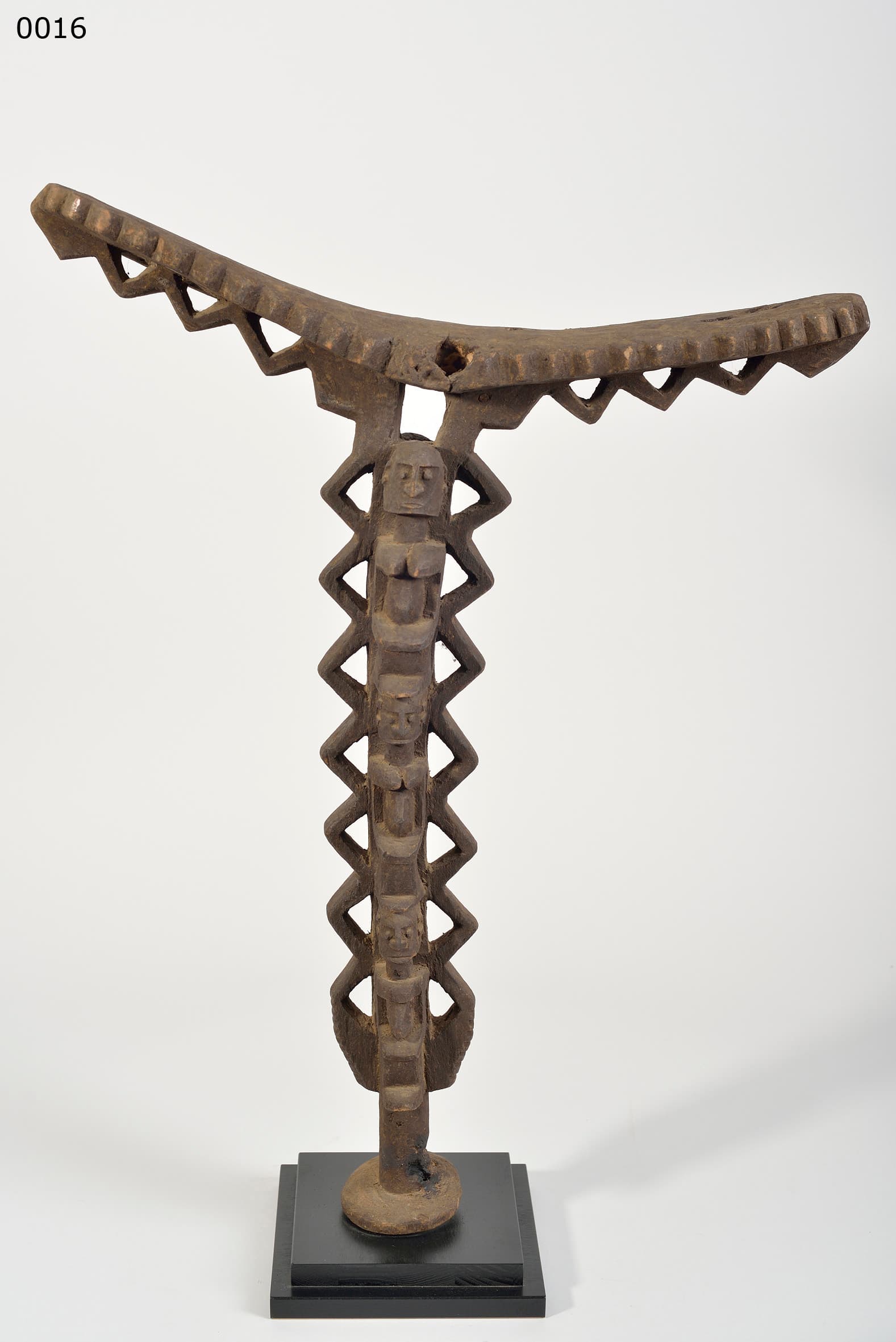
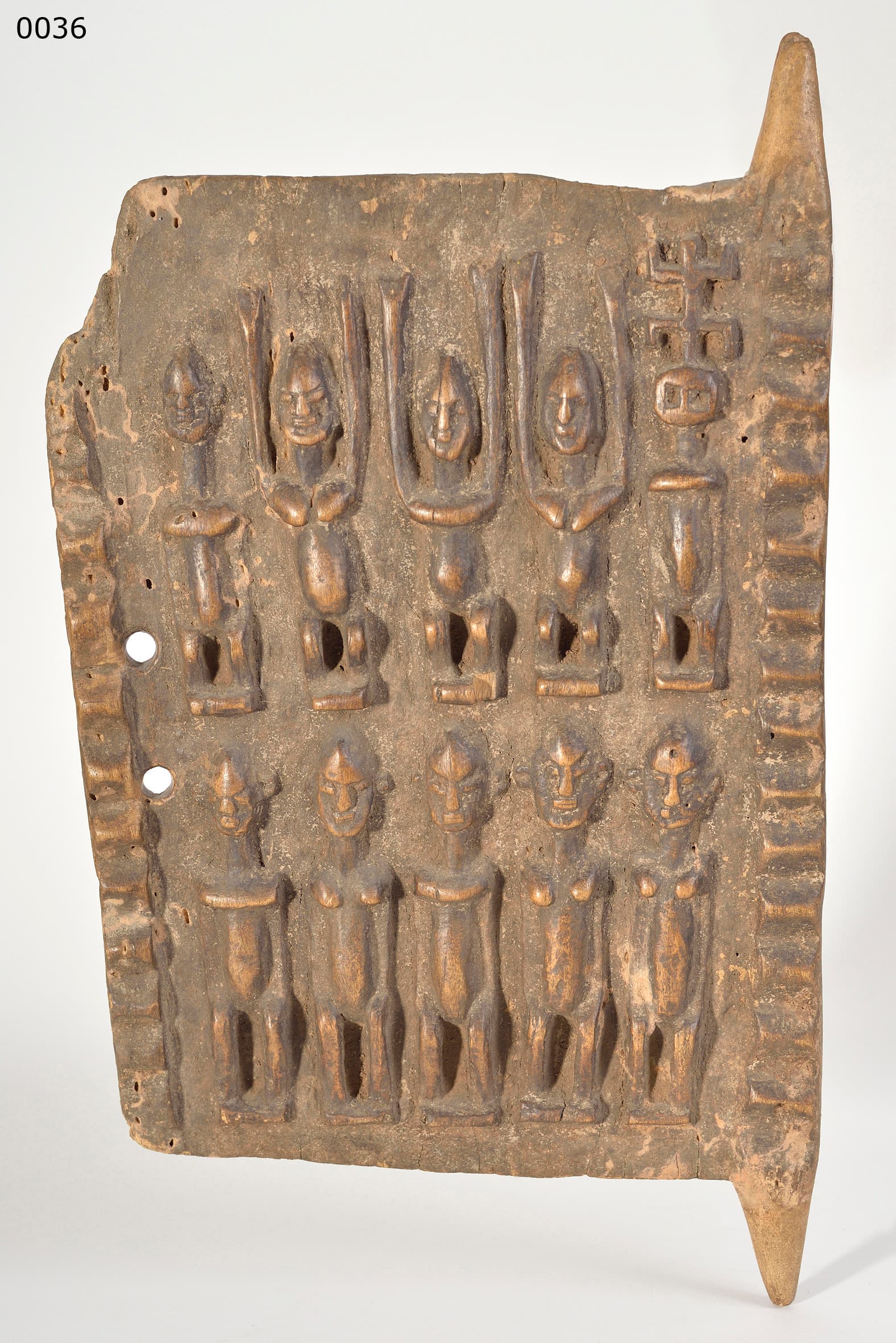
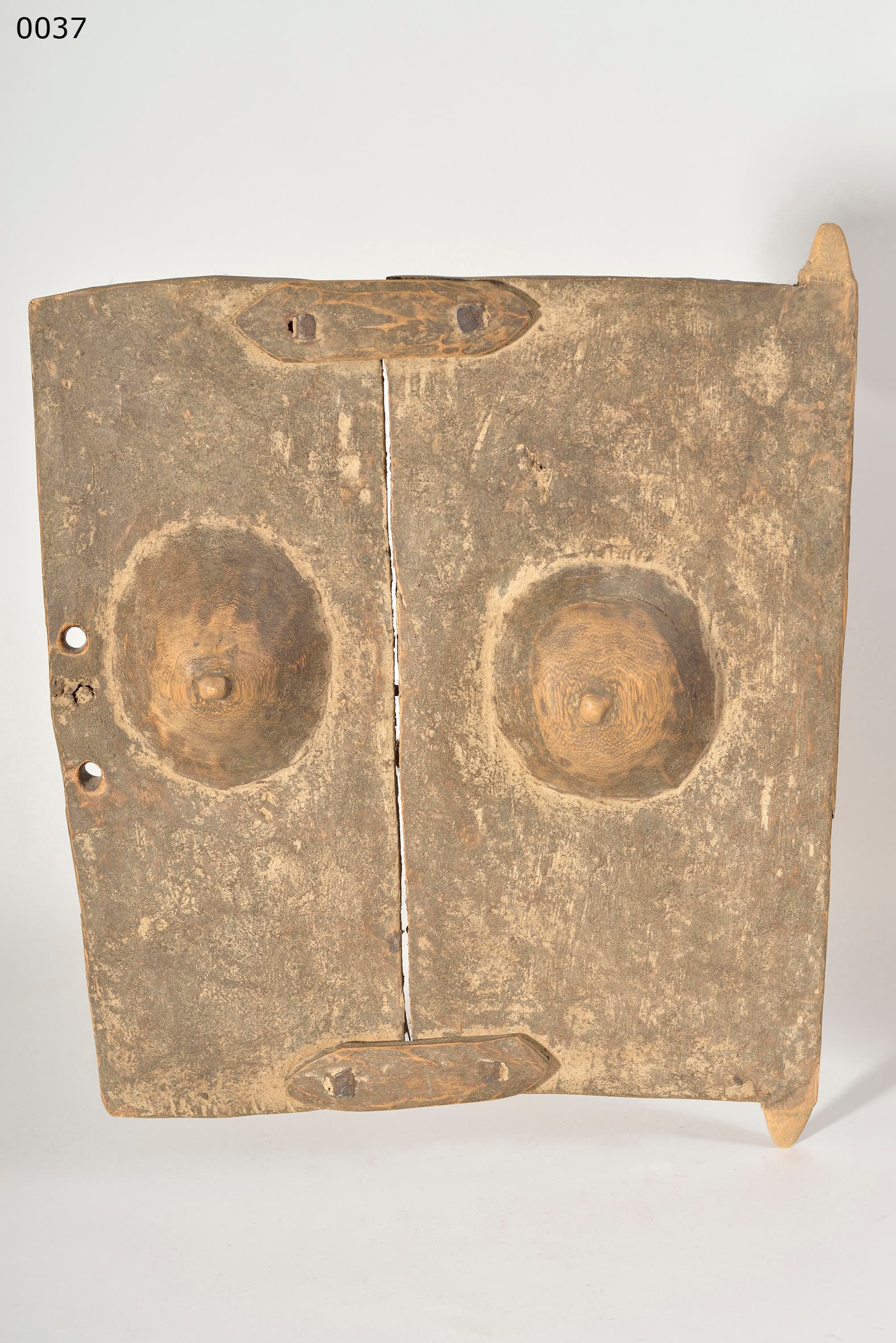
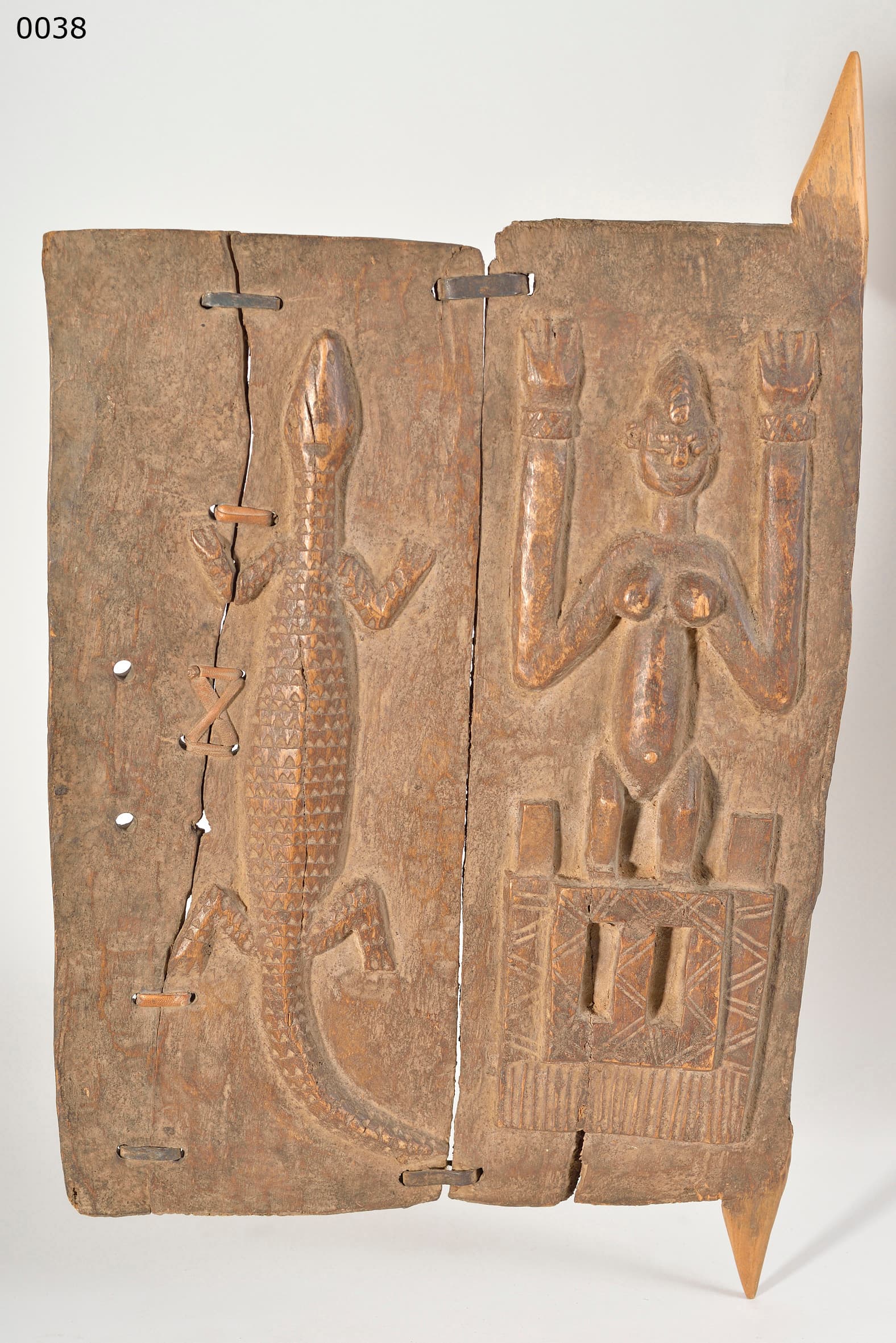
Ein hoher, schwerer Eisenstab (wohl 1. Hälfte 20. Jh., 139 cm) der Dogon aus Mali - gekrönt von einer dreizackigen Gabel, unter der eine stark stilisierte menschliche Figur direkt in den Schaft geschmiedet ist.
1. Die Magie des Schmieds
In der Gesellschaft der Dogon ist das Schmieden von Eisen eine zutiefst spirituelle Angelegenheit.
- Die Jemme-Kaste: Der Schmied ist ein Meister der Elemente, respektiert und gefürchtet für seine Fähigkeit, rohes Erz durch Feuer in Metall zu verwandeln.
- Nyama-Akkumulator: Geschmiedete Gegenstände gelten als stark durchdrungen von Nyama (Lebenskraft). Ein Stab dieser Größe wird als Reservoir dieser Lebenskraft angesehen, dessen Herstellung beachtliche metallurgische Fähigkeiten erfordert.
2. Der Nommo und der Himmel
Die dreizackige Spitze gilt als klassisches kosmologisches Motiv der Dogon.
- Abstieg des Nommo: Die Gabel steht traditionell für den Abstieg der ursprünglichen, im Wasser lebenden Vorfahren vom Himmel.
- Blitzstab: Er wird als spirituelle Leitung verstanden, die das irdische Reich mit der Schöpfergottheit Amma verbinden soll. Die kleine geschmiedete Figur wird als Ahnenvermittler gedeutet, der zwischen Himmel und Erde schwebt.
3. Altar des Hogon
Dieses Objekt wird nicht als Waffe, sondern als ritueller Amtsstab interpretiert.
- Das Werkzeug des Hohepriesters: Wird traditionell dem Hogon zugeschrieben – dem obersten geistigen Führer eines Dogon-Dorfes.
- Bitte um Regen: In Zeiten von Dürre oder Krisen soll der Hogon den Stab an einem Altar im Freien in die Erde getrieben haben, um die spirituelle Verteidigung des Dorfes zu verankern und den Himmel um Regen und landwirtschaftliche Fruchtbarkeit anzurufen.
Zusammenfassung
Dieser Dogon-Stab, ein bemerkenswertes Zeugnis sahelischer Metallurgie, wird als ritueller Eisenaltar interpretiert. Er verbindet die tiefe Kosmologie und den Status der Hogon zu einem dauerhaften, physischen Symbol für spirituelle Kraft.
KI-unterstützt erstellt aus Sammlungsgutachten, Objektfotografie und eigener Recherche, redaktionell geprüft. Fehler sind möglich — Hinweise darauf sind uns willkommen. Zum Verfahren →