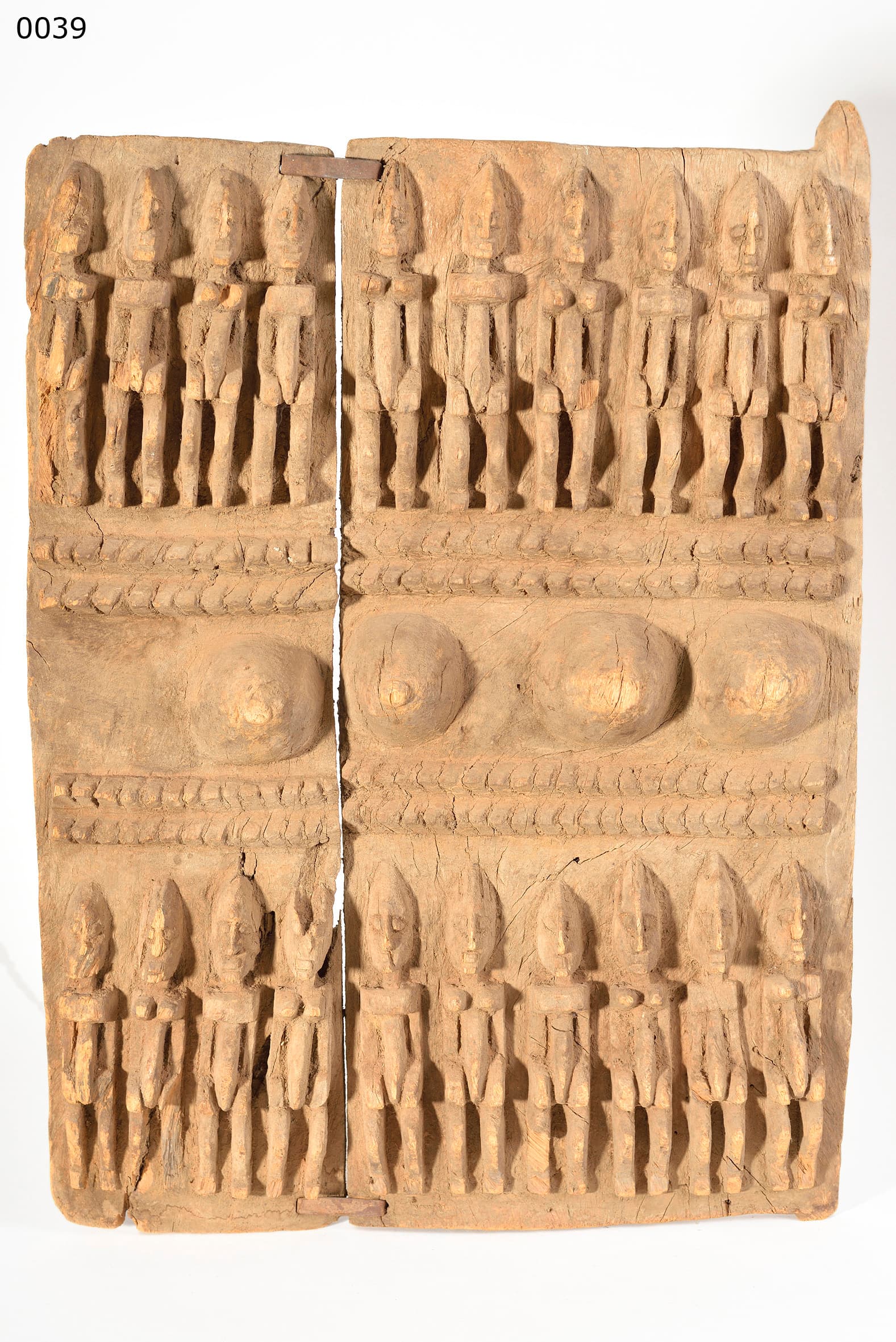
Ein schwerer rechteckiger hölzerner Kornspeicherladen (19. Jh. - 1. Hälfte 20. Jh., 48 cm) von den Dogon aus Mali - geschnitzt im Hochrelief mit markanten stilisierten weiblichen Brüsten.
1. Der Kornspeicher als Zentrum des Universums
Für die Dogon ist der Getreidespeicher das wichtigste architektonische Bauwerk des Dorfes.
- Er ist nicht nur ein Silo, sondern ein verkleinertes Modell des Universums, das als "Heiligtum der Nahrung" bezeichnet wird und für das Überleben des Stammes steht. Die schweren Holztüren und Fensterläden sollen die Ernte vor physischen Dieben und, was noch wichtiger ist, vor geistiger Verunreinigung schützen.
2. Fruchtbarkeit und die mütterliche Kornkammer
- Die Brüste: Auffällige stilisierte Brüste sind in Hochrelief geschnitzt. Im Dogon-Denken ist der Kornspeicher konzeptionell weiblich - er nährt und versorgt die Familie aus seinem "Bauch", wie es eine Mutter tut.
- Die Metapher wird explizit gemacht: Die geschnitzten Brüste materialisieren den Behälter für die Nahrung als stillenden Körper.
3. Die Metapher des geschnitzten Körpers
- Ein nährender Körper: Durch die Darstellung der mütterlichen Form auf der Außenseite des Silos erklärt der Haushalt, dass die gelagerte Hirse die Muttersubstanz der Familie ist - ein Geschenk, das jedes Mitglied der Linie ernährt.
- Architektur als Anatomie: Die mütterliche Ikonographie verschmilzt Architektur mit Anatomie und behauptet, dass der Getreidespeicher selbst die Ahnenmutter ist.
Zusammenfassung
Dieser Fensterladen stellt eine zweckmäßige Tür als Torso der ernährenden Mutter des Dorfes dar. Die mütterliche Ikonographie verschmilzt Architektur und Anatomie und behauptet, dass der Getreidespeicher selbst die angestammte Matriarchin ist.
KI-unterstützt erstellt aus Sammlungsgutachten, Objektfotografie und eigener Recherche, redaktionell geprüft. Fehler sind möglich — Hinweise darauf sind uns willkommen. Zum Verfahren →