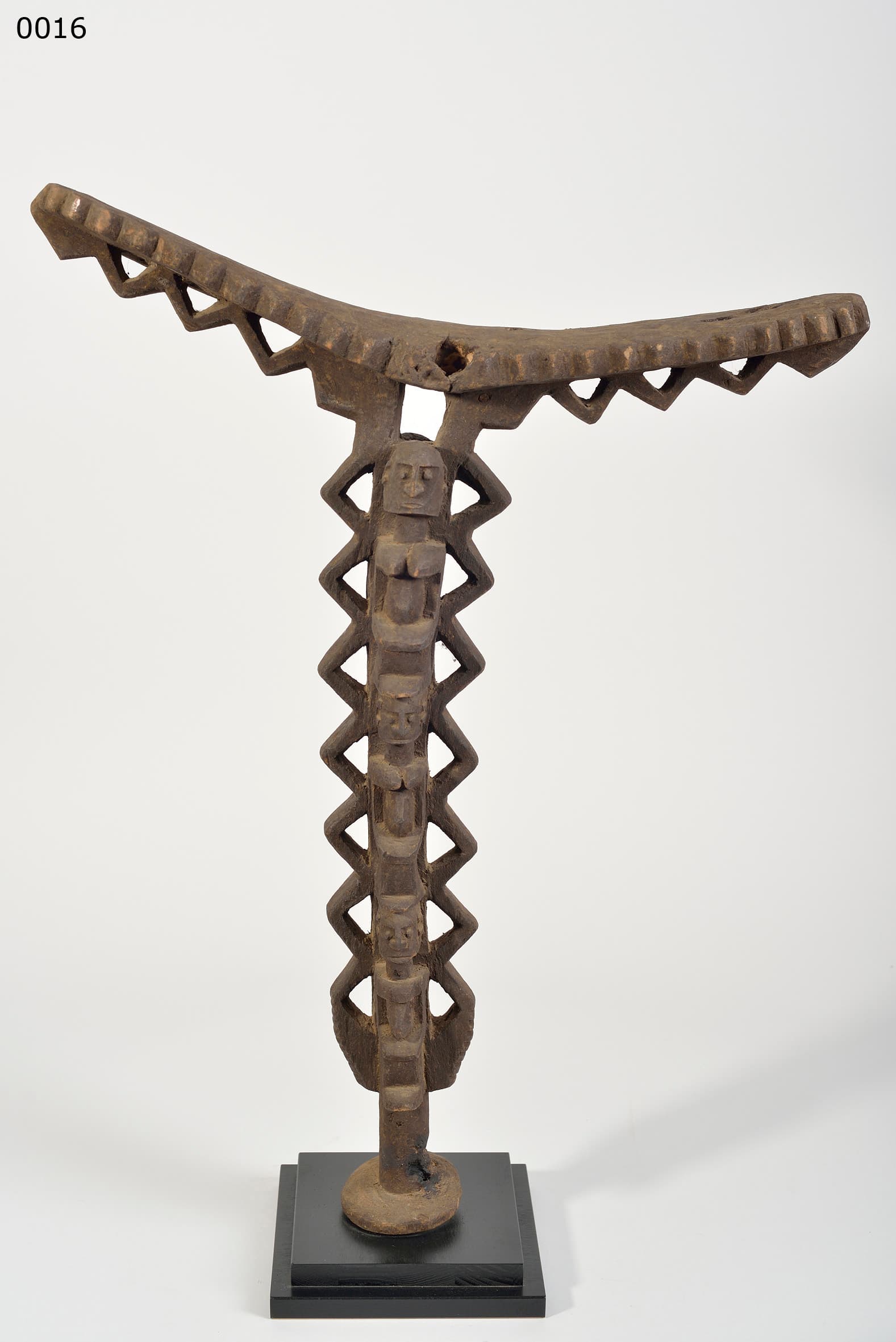
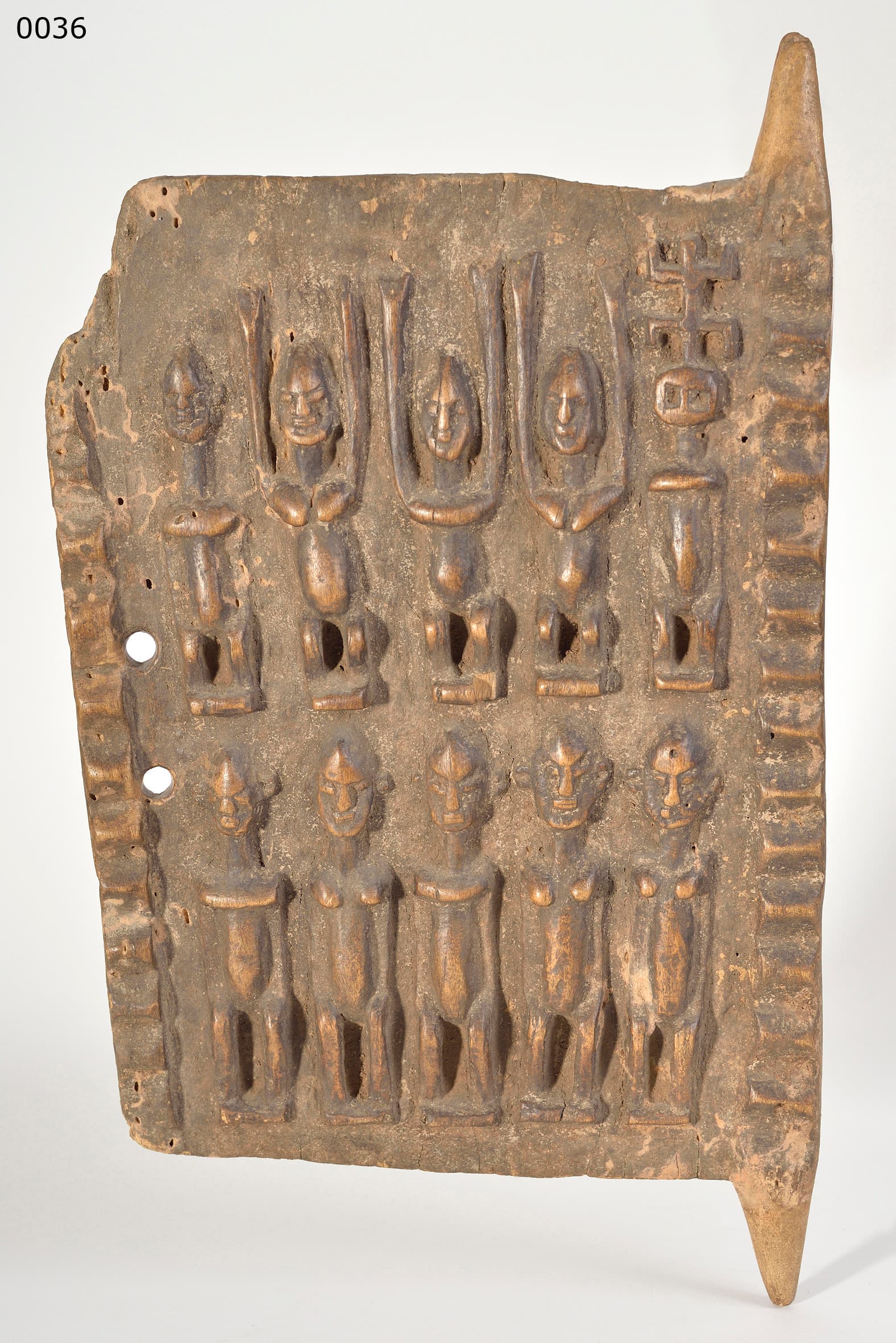
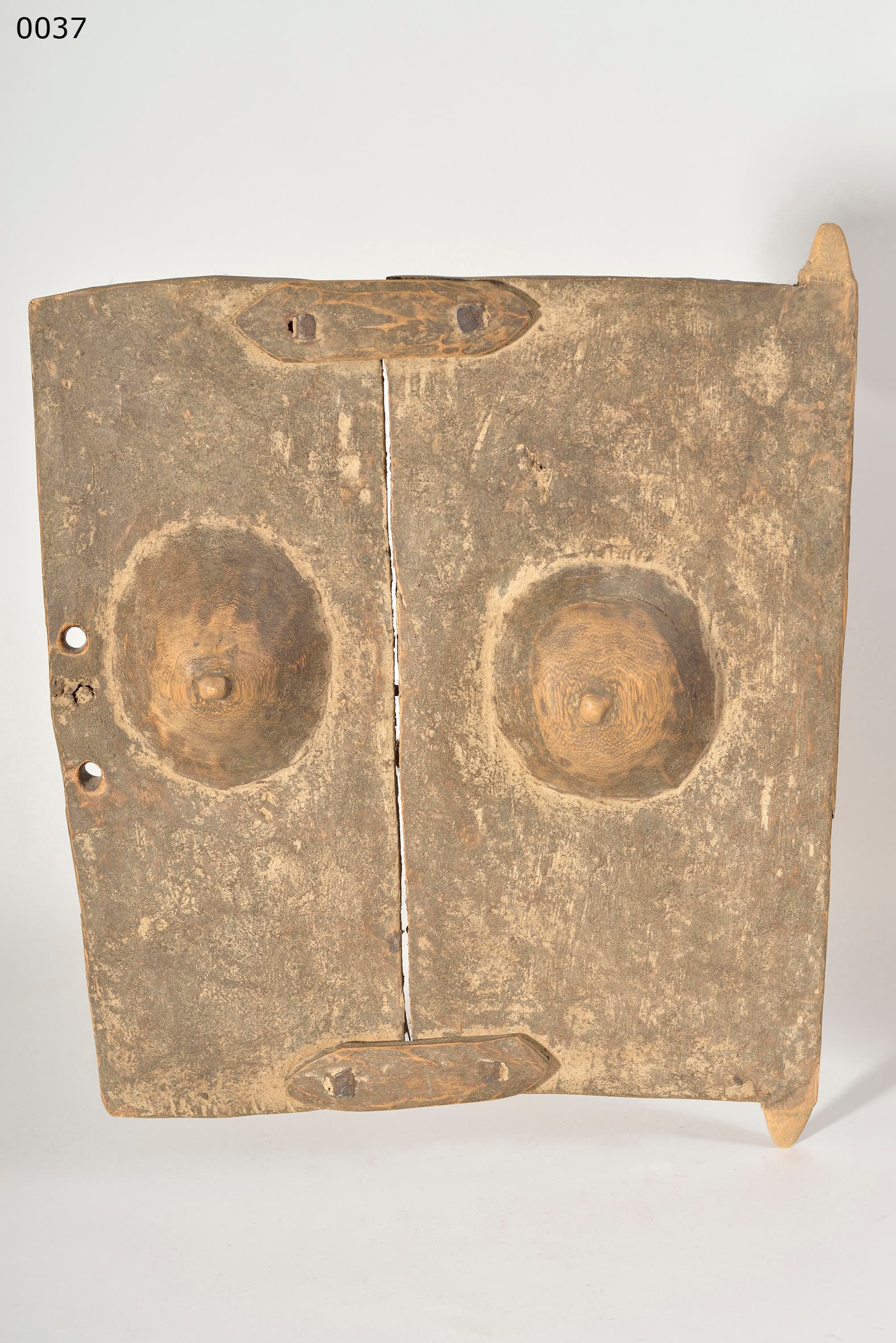
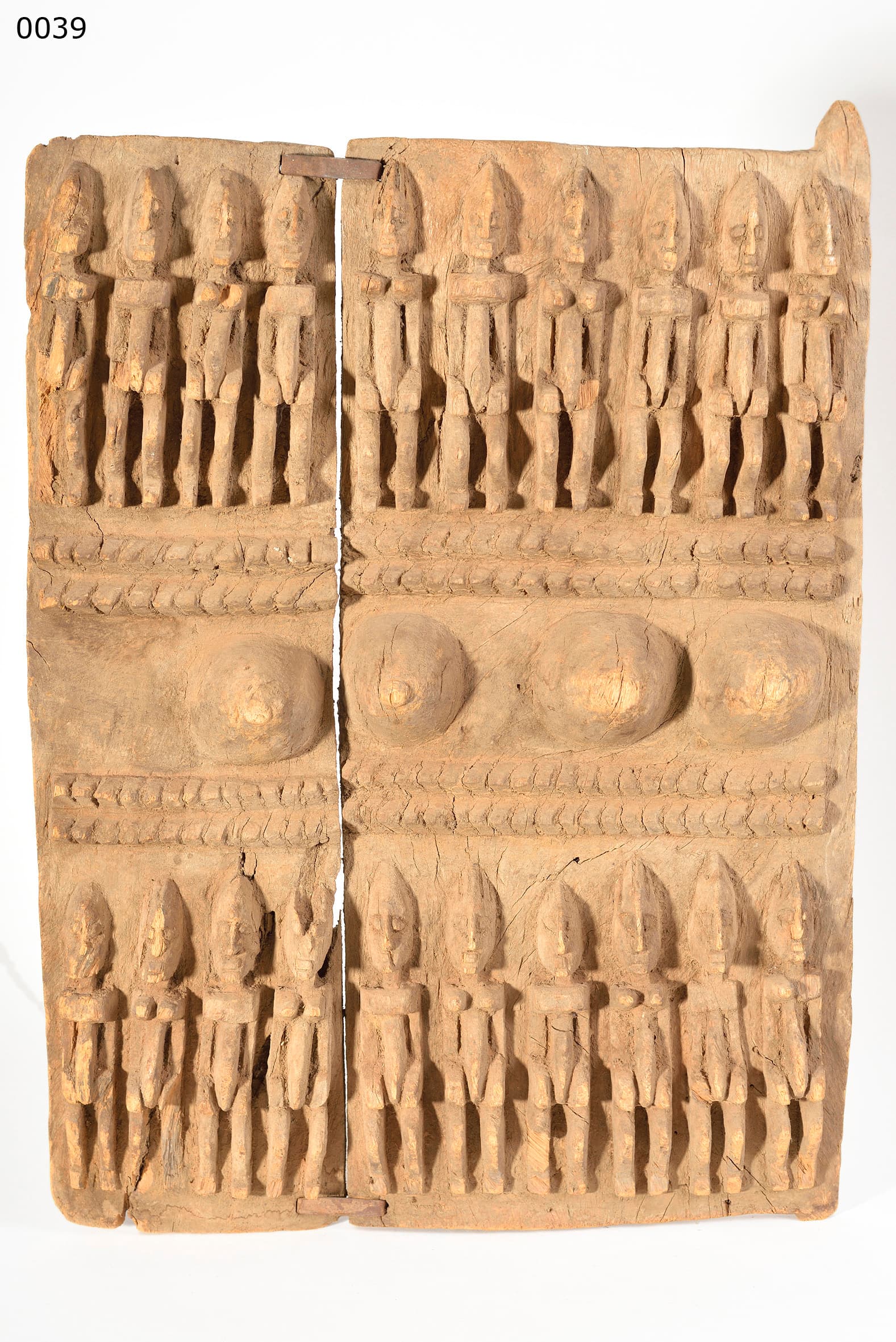
Ein schwerer rechteckiger hölzerner Fensterladen (19. Jh. - 1. Hälfte 20. Jh., 58 cm) von den Dogon aus Mali - geschnitzt im Hochrelief mit einer Nommo-Figur neben einer großen Reptilienform.
1. Der Kornspeicher als Zentrum des Universums
Für die Dogon ist der Getreidespeicher das wichtigste architektonische Bauwerk des Dorfes.
- Er ist nicht nur ein Silo, sondern ein verkleinertes Modell des Universums, das als "Heiligtum der Nahrung" bezeichnet wird und für das Überleben des Stammes steht. Die schweren Holztüren und Fensterläden sollen die Ernte vor physischen Dieben und, was noch wichtiger ist, vor geistiger Verunreinigung schützen.
2. Nommo und der Wassergeist Binu
- Die Reptilienform: Neben der Nommo-Figur ist eine Eidechse oder ein Krokodil in Hochrelief geschnitzt. In der Dogon-Kosmologie repräsentiert dieses Reptil den Wassergeist (Binu) - eine Verkörperung der aquatischen Ursprünge des Lebens und ein Hüter der Feuchtigkeit in der trockenen Sahelzone.
- Beschwörung der Feuchtigkeit: Die Anwesenheit des Binu beschwört Regen herauf und bewahrt die gelagerte Hirse vor Fäulnis.
3. Schutz und Aufbewahrung
- Ein spirituelles Alarmsystem: Das Reptil ist sowohl ein Gebet für Wasser als auch ein wütendes Raubtier, das vor Dieben (menschlichen und spirituellen) schützt. Seine Zähne und seine reptilienartige Silhouette verkünden Feindseligkeit gegenüber jedem, der in das Getreide eindringen will.
- Ahnen plus Element: Durch die Paarung von Nommo mit Binu, der Verschluss Schichten Vorfahren und Wasser-Geist auf einer einzigen hölzernen Ebene - die Nommo betet zum Himmel, während die Binu bewacht das gespeicherte Getreide.
Zusammenfassung
Dieser Verschluss schichtet Ahnen und Wassergeist auf eine einzige hölzerne Fläche. Der Nommo betet zum Himmel, während der Binu das gelagerte Getreide bewacht. So entsteht ein kleines Kosmogramm, das den Nahrungsvorrat der Familie metaphysisch intakt hält.
KI-unterstützt erstellt aus Sammlungsgutachten, Objektfotografie und eigener Recherche, redaktionell geprüft. Fehler sind möglich — Hinweise darauf sind uns willkommen. Zum Verfahren →