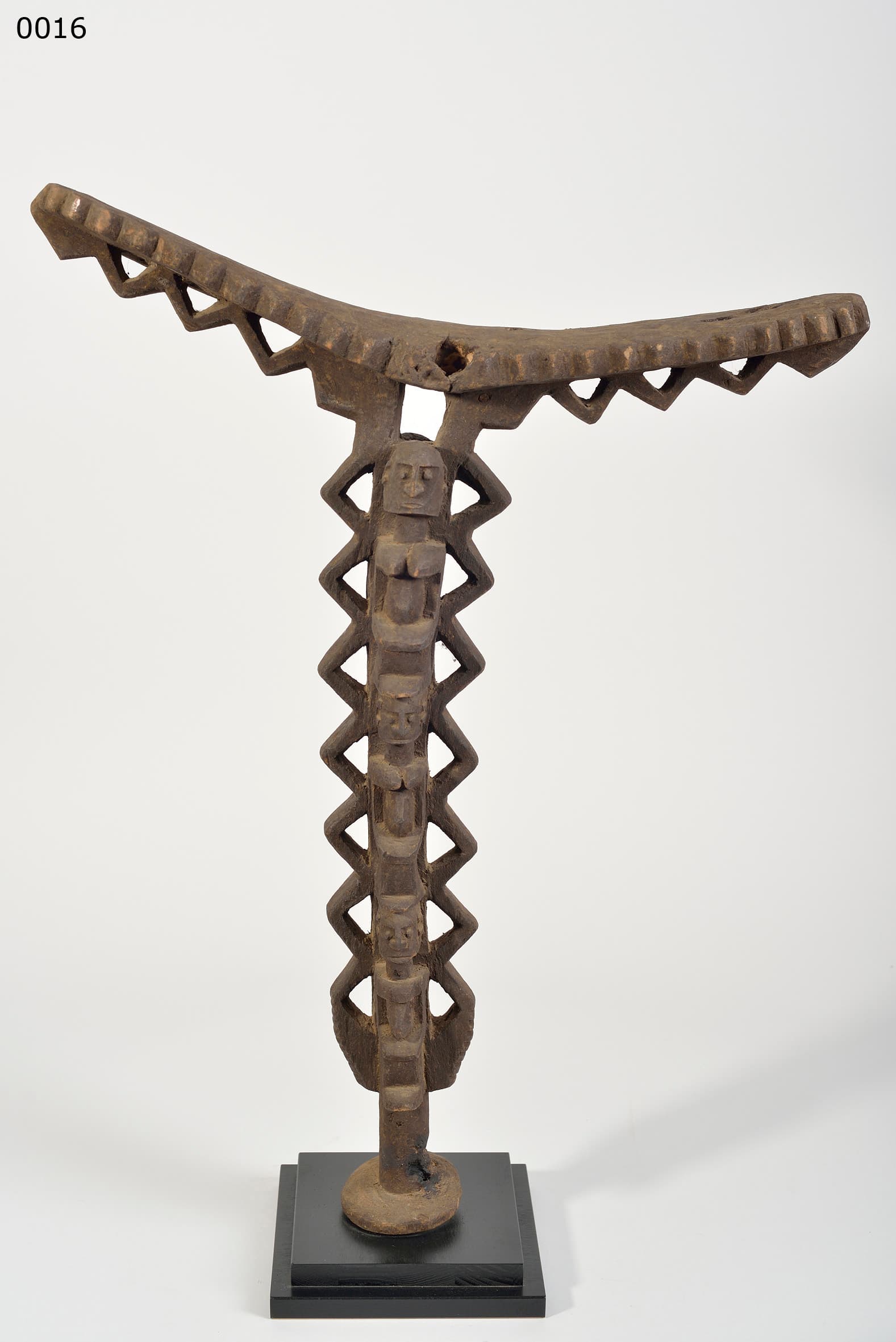
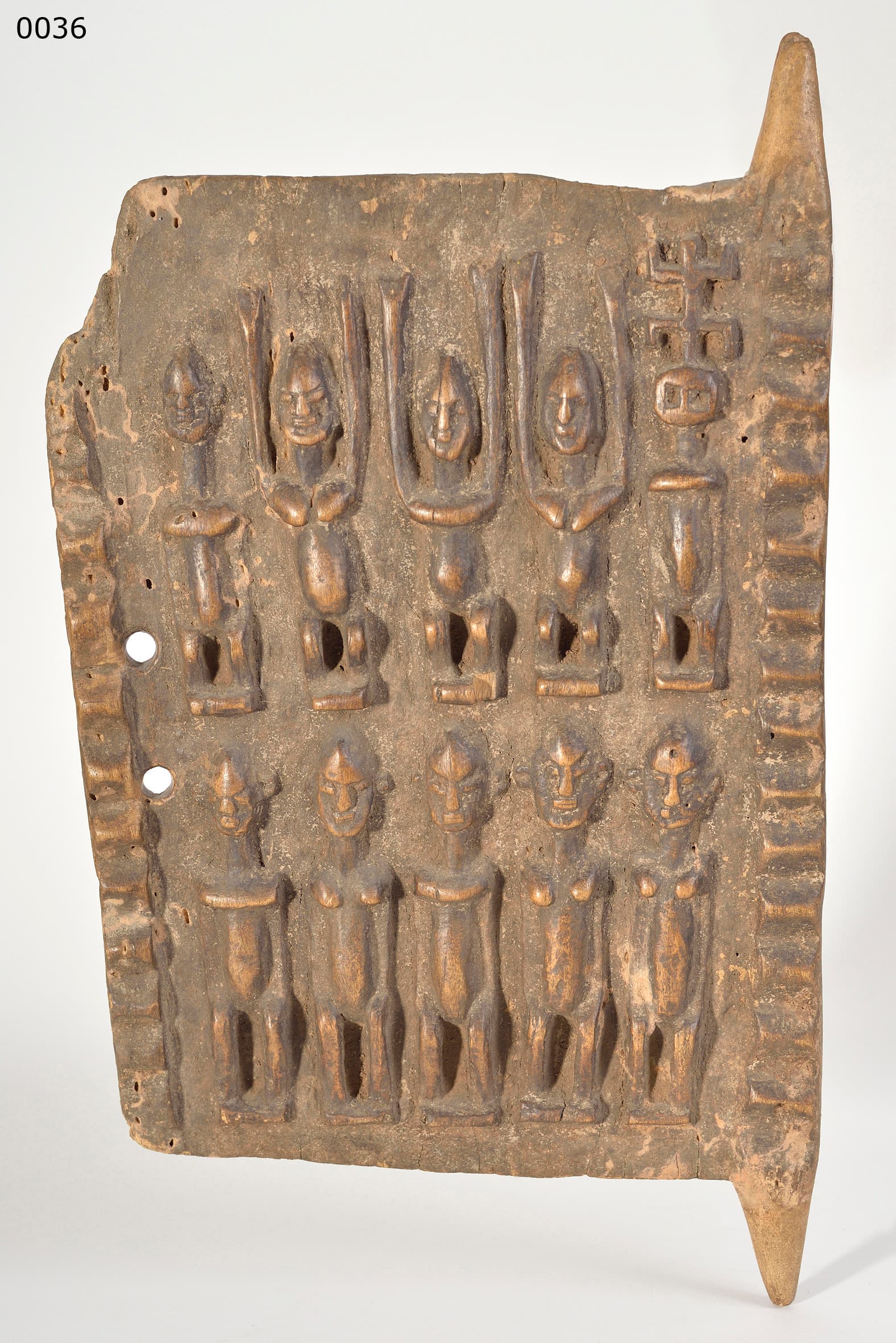
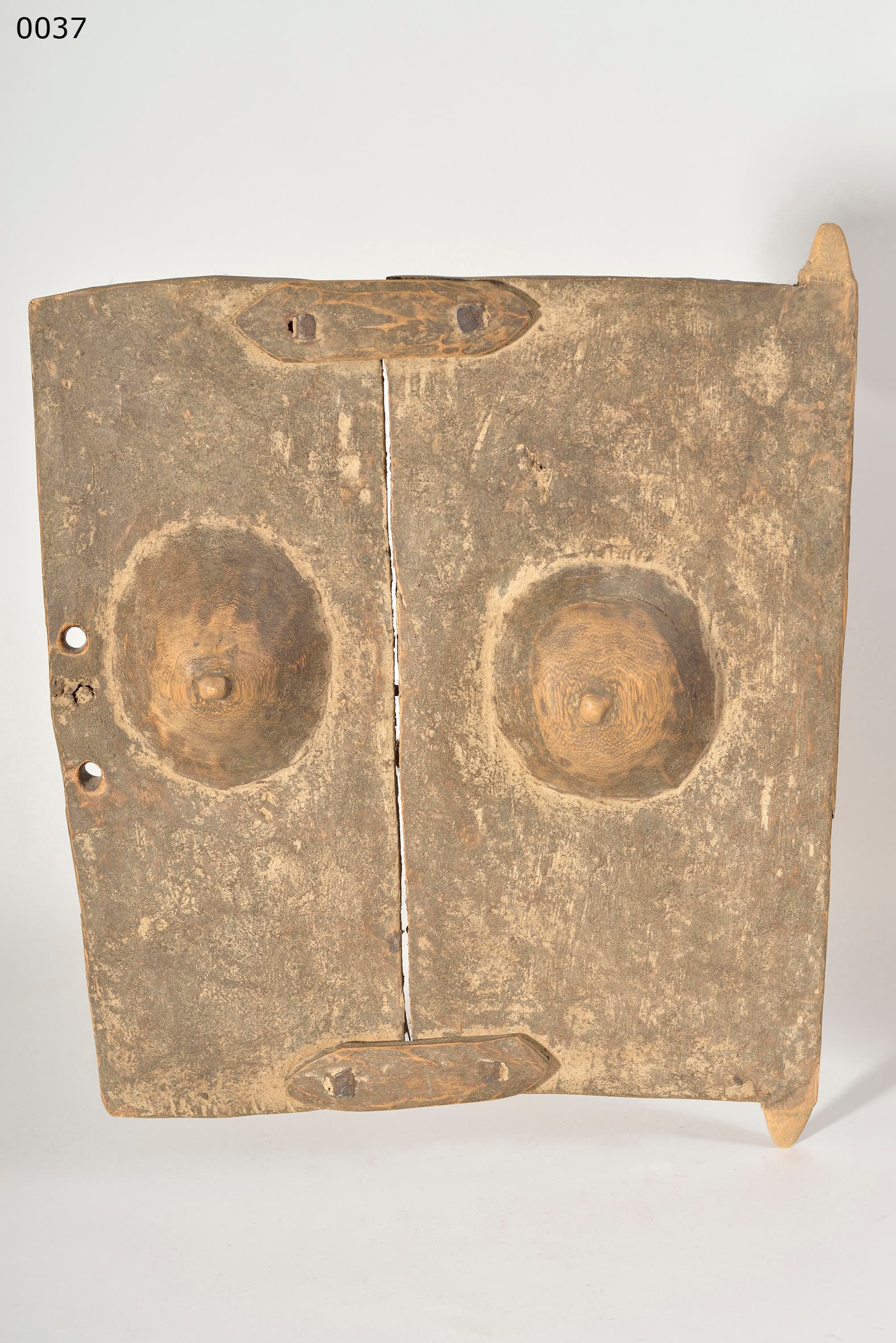
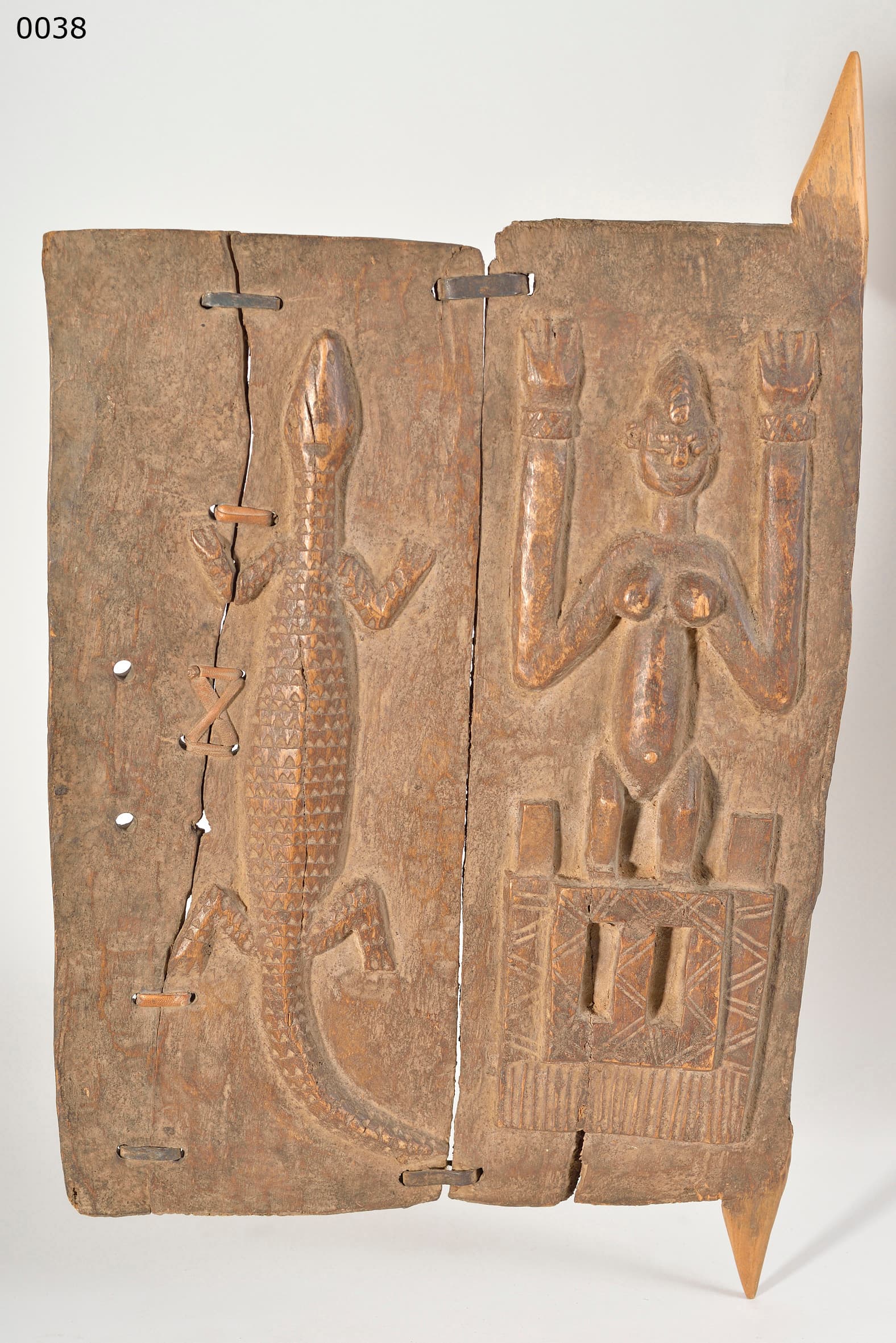
Diese 31 cm große Eisenskulptur stellt ein stilisiertes Krokodil oder eine große Eidechse dar. Sie hat einen abgeflachten, sich an den Boden schmiegenden Körper, kurze, kantige Beine und geometrische Kreuzschraffuren, die über den Rücken geritzt sind. Das schwere Eisen weist eine trockene, stabile und tief oxidierte braune Patina auf.
1. Ästhetischer Stil - Reptilienmasse und Oberflächengravur
Diese Skulptur fängt auf brillante Weise das schwere, irdische Gewicht des Krokodils ein. Indem der Schmied das Eisen zu einem breiten, abgeflachten Profil schmiedete, betonte er die Verbindung des Tieres mit dem Boden und dem Wasser. Ungewöhnlich für Dogon-Eisenarbeiten weist dieses Stück eine ausgeprägte Oberflächenverzierung auf: eine Reihe von eingeschnittenen, kreuzschraffierten Rautenmustern, die entlang der Rückseite verlaufen. Diese subtile Gravur ahmt die gepanzerten Schuppen der Reptilienhaut nach und fügt der ansonsten strengen geometrischen Abstraktion eine Ebene des taktilen Realismus hinzu.
2. Rituelle Funktion - Wächter des Wassertisches
Im trockenen Bandiagara Escarpment ist Wasser die kostbarste Ressource, und das Krokodil wird als ihr oberster Wächter verehrt. Krokodile bewohnen oft die wenigen permanenten Wasserbecken am Fuße der Klippen und gelten als irdische Avatare des Nommo. Diese schwere Eisenfigur wurde auf einem Altar aufgestellt und diente als Schutzobjekt, das dafür sorgte, dass die Wasserquellen des Dorfes nicht versiegten. Ihre geerdete, horizontale Haltung sollte den Grundwasserspiegel metaphorisch "bedecken" und ihn für die Gemeinschaft sichern.
3. Physikalische Patina - Oxidation innerhalb der Einschnitte
Das Alter dieses Stücks aus dem 20. Jahrhundert wird durch die Patinierung innerhalb der eingravierten Kreuzschraffur bestätigt. Der dunkelbraune, sehr stabile Rost hat sich tief in die eingemeißelten Rillen eingegraben und die Ritzungen vollständig naturalisiert. Wäre dieses Stück eine moderne Reproduktion, würden die eingravierten Linien blankes, rohes Metall oder künstliche, oberflächliche Alterung zeigen. Die tiefe, einheitliche Oxidation sowohl auf den glatten Oberflächen als auch auf der strukturierten Rückseite spricht dafür, dass es über viele Jahrzehnte hinweg langsam als Einheit gealtert ist.
Zusammenfassung
Dieses Eisenkrokodil mit seiner schweren Erdmasse und den seltenen eingeritzten Schuppen ist ein mächtiger Dogon-Hüter des Wassers und der Fruchtbarkeit. Seine tiefe, gleichmäßige Oxidation - insbesondere in den eingravierten Details - unterstreicht seinen Charakter als ausdrucksstarkes ethnografisches Objekt.
Dokumentation: publiziert in "DOGON".
KI-unterstützt erstellt aus Sammlungsgutachten, Objektfotografie und eigener Recherche, redaktionell geprüft. Fehler sind möglich — Hinweise darauf sind uns willkommen. Zum Verfahren →