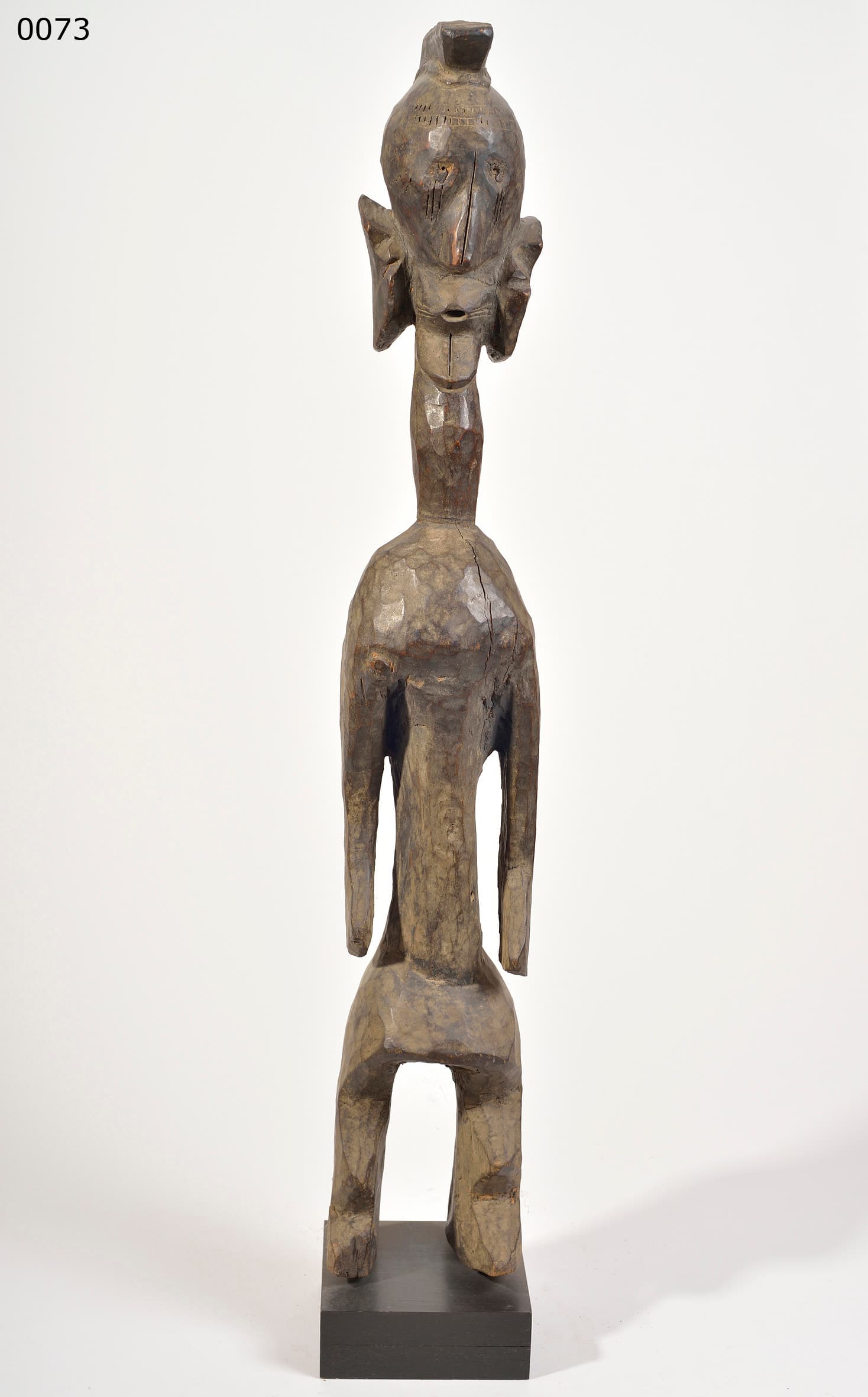
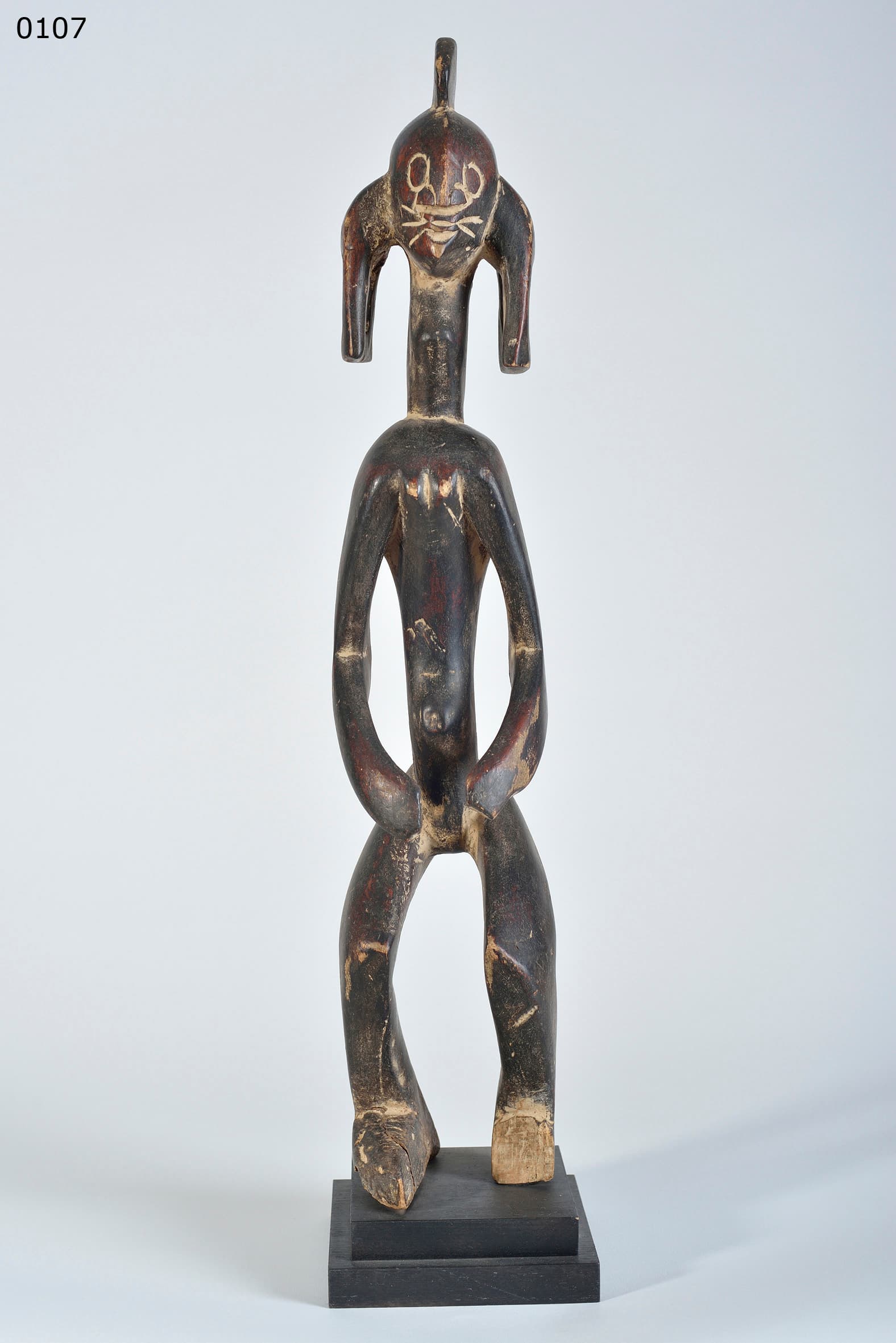
Eine Holzfigur (81 cm), die dem 19. Jahrhundert zugeschrieben wird, von den Mumuye in Nigeria - länglicher, röhrenförmiger Torso, Scheitelkopf mit großen, ausgestellten Ohren und langen, bandartigen Armen, die sich nach unten neigen, um einen dramatischen negativen Raum auf beiden Flanken zu schaffen.
1. Zur zeitlichen Einordnung
Vorkoloniale Mumuye-Figuren gelten als außergewöhnlich selten.
- Tiefe rituelle Patina: Die Oberfläche ist erodiert, rissig und mit Opfermaterial verkrustet - Spuren, die für einen langjährigen Schreingebrauch sprechen.
- Ästhetik vor dem Kontakt: Wohl geschnitzt, bevor europäische Handelsgüter die visuelle Kultur Nigerias beeinflussten, zeigt diese Figur die charakteristischen Proportionen der Mumuye-Idiomatik.
2. Die kubistische Silhouette
Die Formensprache gilt als ein Höhepunkt der Abstraktion im Benue-Tal.
- Arme aus Bändern: Die Arme sind vom Körper losgelöst und schwingen wie Strebepfeiler nach außen, wodurch das dichte Hartholz in einen schwebenden Rhythmus übergeht.
- Langer Kopf: Der hohe Scheitel und die riesigen Ohren verweisen auf die prestigeträchtige Frisur und die Ohrstöpsel, die auf eine Person von hohem Ahnenrang hindeuten.
3. Orakel des Wahrsagers
Traditionell gilt dieses Objekt nicht als passives Grabzeichen.
- Das Instrument des Priesters: Dürfte im Kontext der Wahrsagerei (Iaga) genutzt worden und in entsprechenden Sitzungen zum Einsatz gekommen sein.
- Mundstück der Ahnen: Der Überlieferung nach wurden Fragen zu Krankheit, Diebstahl, Krieg und Dürre direkt an die Figur gestellt, um die vermittelten Antworten der Ahnen einzuholen.
Zusammenfassung
Diese dem 19. Jahrhundert zugeschriebene Mumuye-Figur gilt als ein bedeutendes Beispiel der vorkolonialen Skulptur des Benue-Tals. Ihre kinetische, bandbewehrte Silhouette und die dichte rituelle Patina sprechen für eine Nutzung als einflussreiches Orakelinstrument im Kontext der Mumuye-Wahrsagerei.
KI-unterstützt erstellt aus Sammlungsgutachten, Objektfotografie und eigener Recherche, redaktionell geprüft. Fehler sind möglich — Hinweise darauf sind uns willkommen. Zum Verfahren →