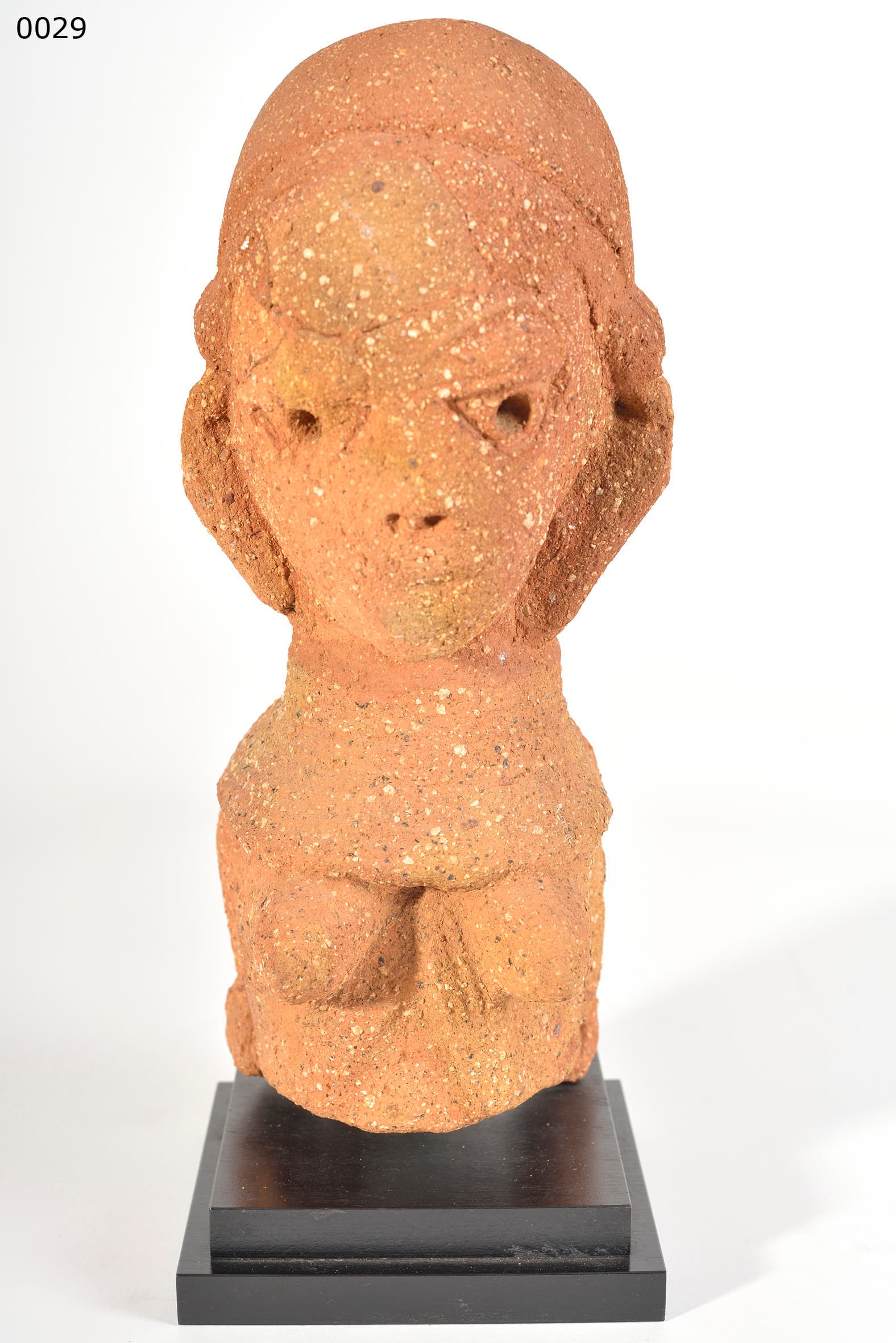
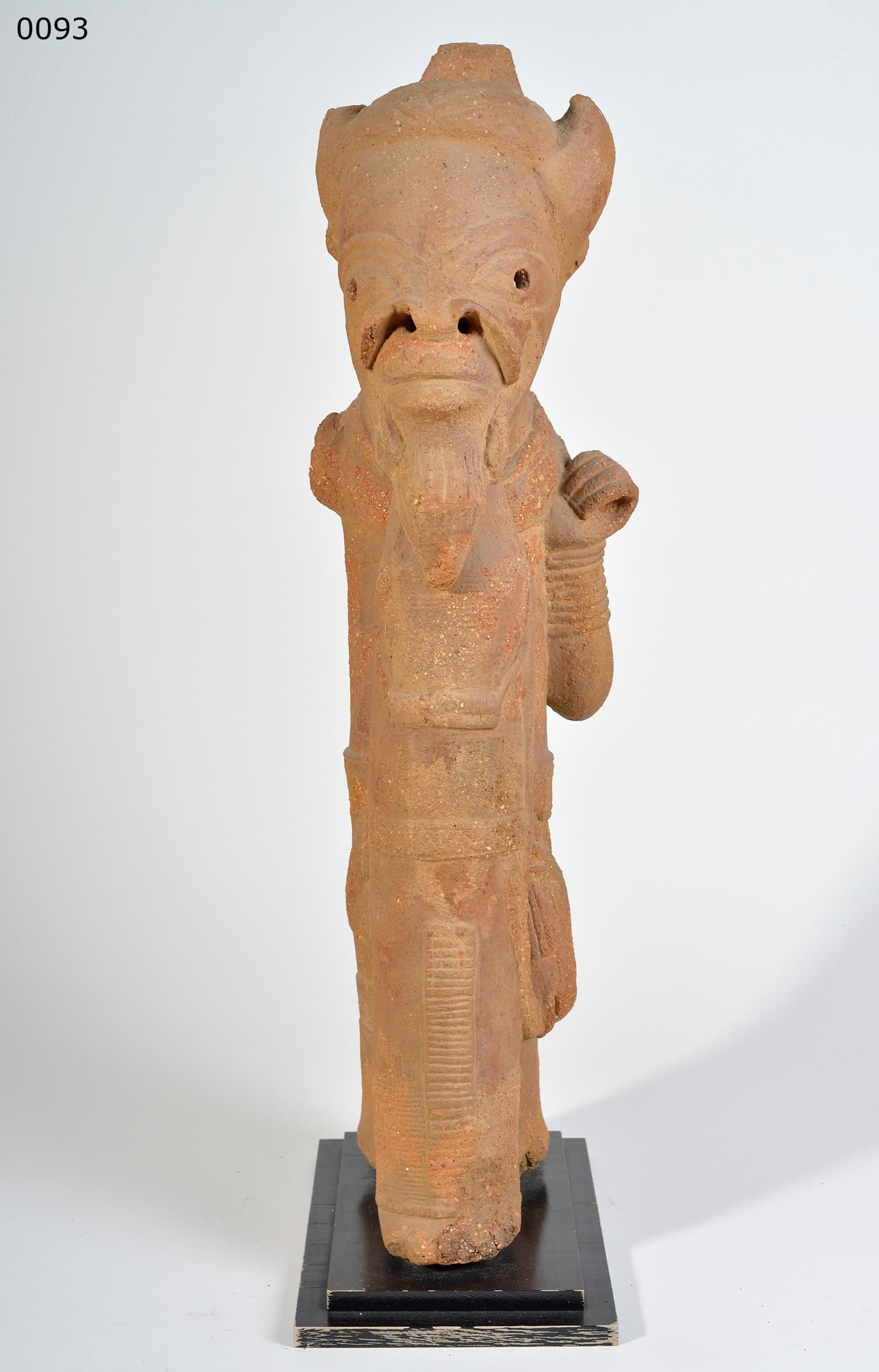
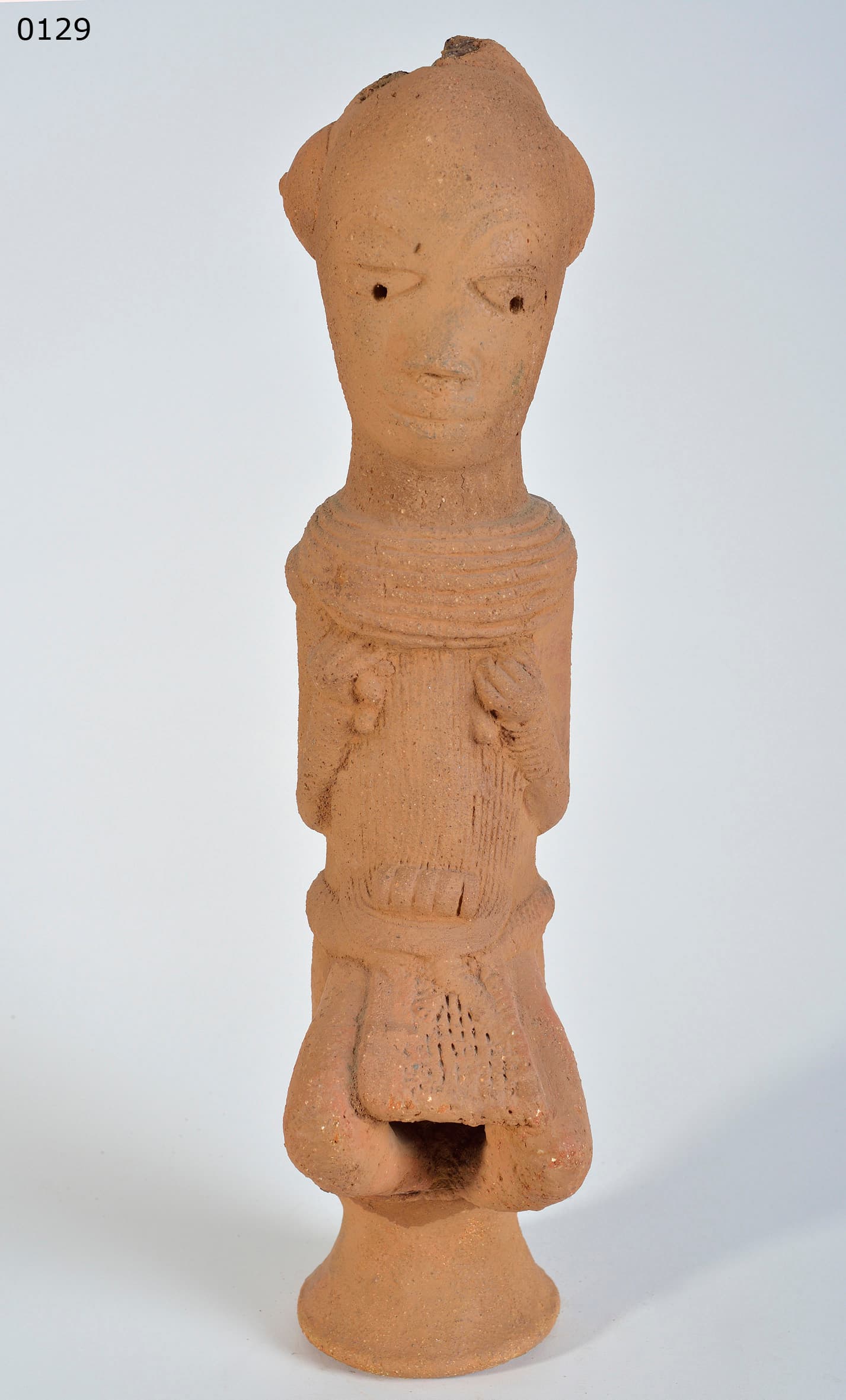
Ein außergewöhnlich detaillierter Terrakottakopf und Teiltorso (ca. 2.000 Jahre alt, 40 cm) von den Nok in Nigeria - die klassischen dreieckigen, durchbrochenen Augen der Nok, aufgeweitete Nasenlöcher und aufwendiger Perlenschmuck um den Hals, der gebrannte Ton unglaublich grob mit gebrochenen Kanten und tiefen Erdablagerungen im Inneren des hohlen Kerns.
1. Die Quintessenz der Nok-Ästhetik
Die Nok-Kultur, die zwischen 500 v. Chr. und 200 n. Chr. entstand, ist die älteste bekannte Bildhauertradition in Afrika südlich der Sahara.
- Dreieckige, durchbohrte Augen: Die tief durchbohrten dreieckigen Augen und die offenen Lippen waren technische Lösungen, um zu verhindern, dass der dicke Ton beim Brennen explodiert - sie wurden zum stilprägenden Merkmal der Kultur.
- Eliteschmuck: Komplizierte Perlenketten und komplexe Frisuren spiegeln eine hochentwickelte, tief geschichtete eisenzeitliche Gesellschaft wider und nicht eine Subsistenzkultur.
2. Elite-Porträts aus der Eisenzeit
Nok-Figuren dieser Größe und Komplexität werden allgemein als idealisierte Porträts von Königen, Hohepriestern oder Gottheiten angesehen.
- Schrein- und Grabkontext: Keine Gegenstände des täglichen Gebrauchs, sondern heilige Artefakte, die in grundlegenden Gemeinschaftsschreinen oder den Gräbern der Ultra-Elite aufgestellt wurden.
- Beherrschende Aura: Der intensive, nach vorne gerichtete Blick und die kunstvollen Verzierungen vermitteln eine Aura göttlichen Reichtums, die der antiken Bevölkerung Respekt und Verehrung abverlangt.
3. Diagnostische Lochfraß und Sinterung
Die rohen Bruchkanten an der Basis des Torsos deuten darauf hin, dass die Figur einst Teil einer viel größeren Ganzkörperskulptur war - eine häufige Realität bei Nok-Überresten.
- Grobes Tempera: Der Ton enthält sichtbar die schweren Quarz- und Glimmereinschlüsse, die von Nok-Töpfern als Tempera hinzugefügt wurden.
- Gesinterte Erde: Die tiefe, unnachgiebige Verschmelzung alter Erde in den durchbohrten Augen, Nasenlöchern und inneren Hohlräumen spricht für eine sehr lang anhaltende Vergrabung in der nigerianischen Erde.
Zusammenfassung
Diese weibliche Nok-Figur ist ein charakteristisches Beispiel für diese frühe Bildhauertradition Afrikas und vermittelt eine Aura antiker Macht. Ihre durchbrochenen geometrischen Augen und die tiefgreifende geologische Sinterung machen sie zu einem bedeutenden Objekt für Sammlungen antiker Kunst.
KI-unterstützt erstellt aus Sammlungsgutachten, Objektfotografie und eigener Recherche, redaktionell geprüft. Fehler sind möglich — Hinweise darauf sind uns willkommen. Zum Verfahren →