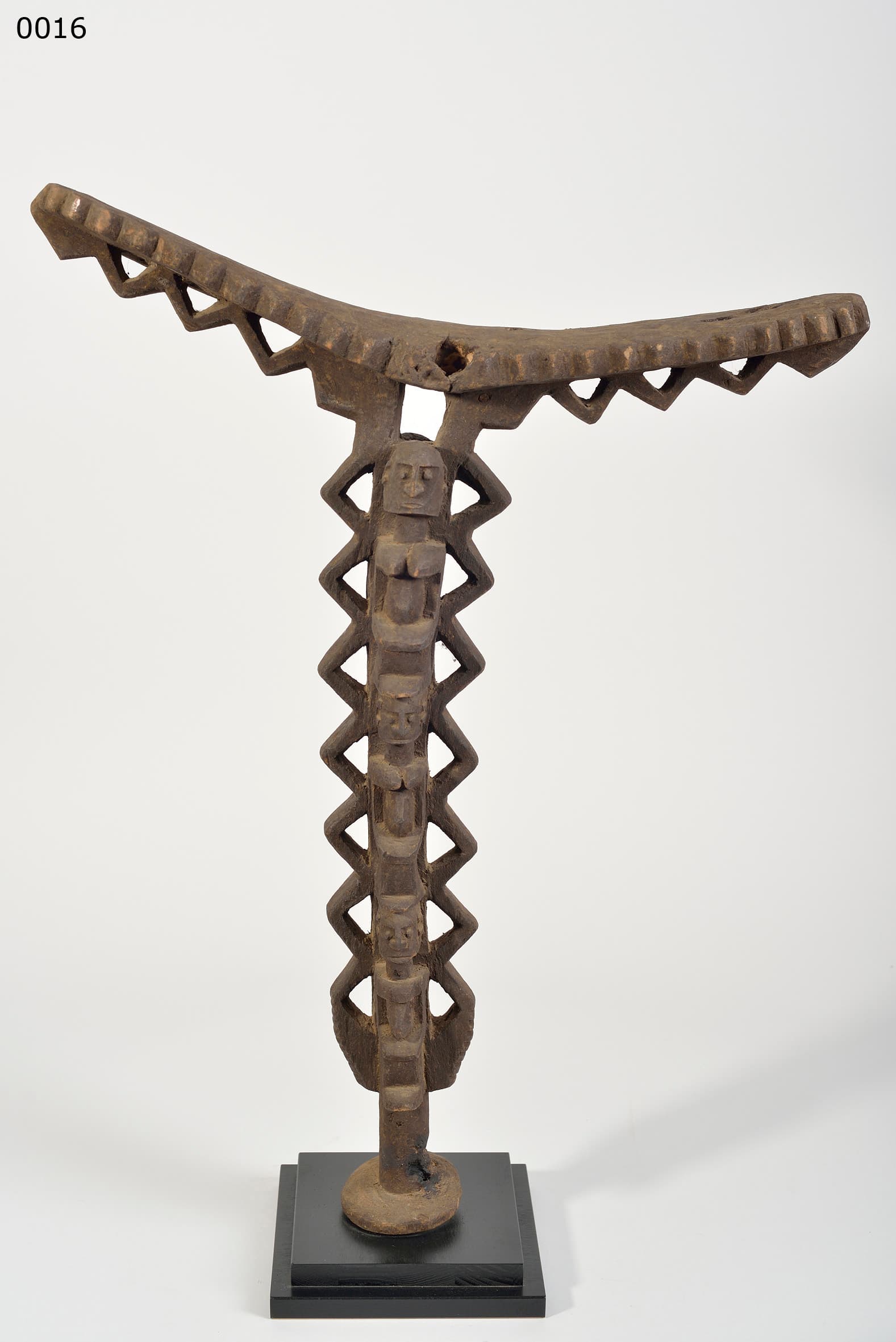
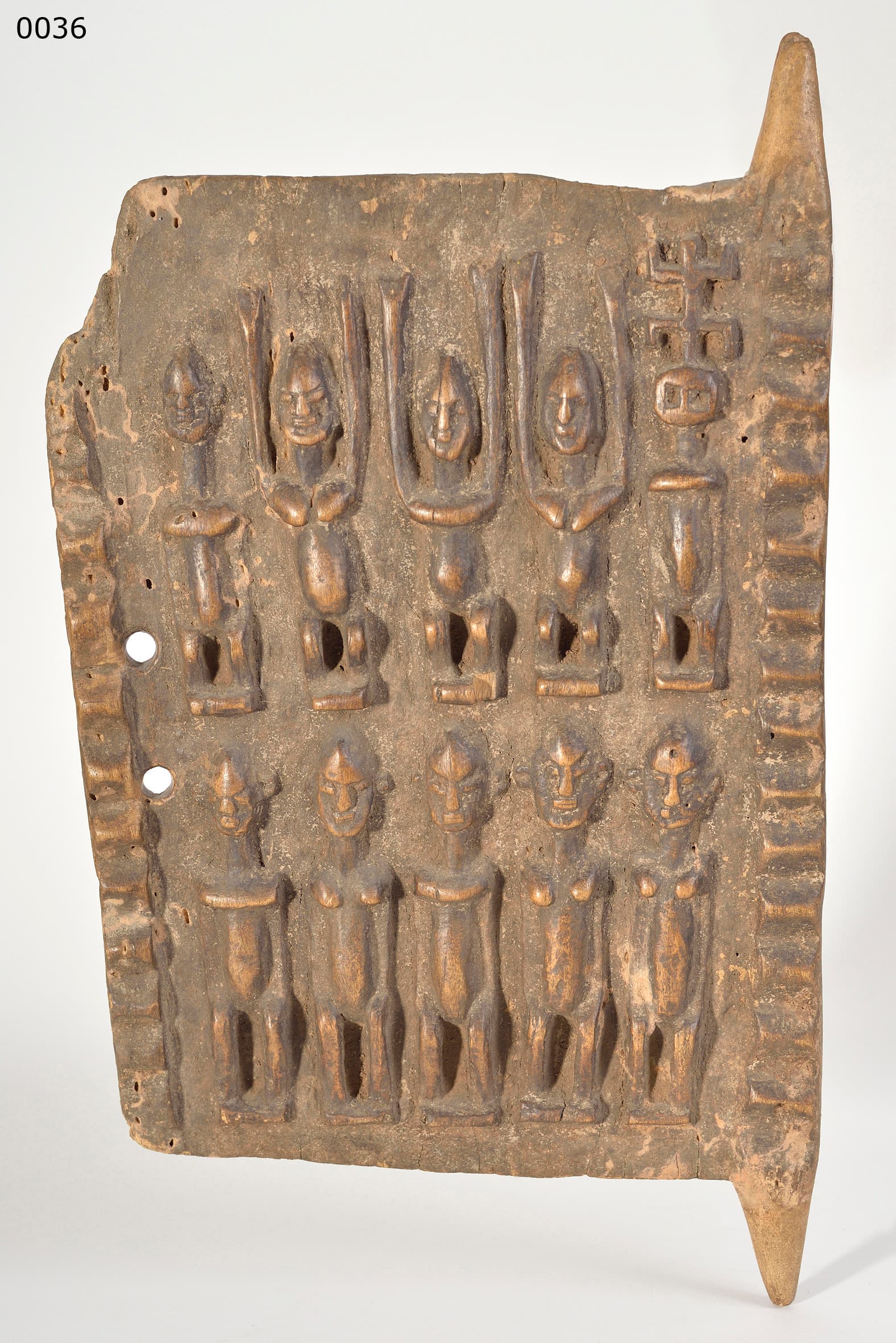
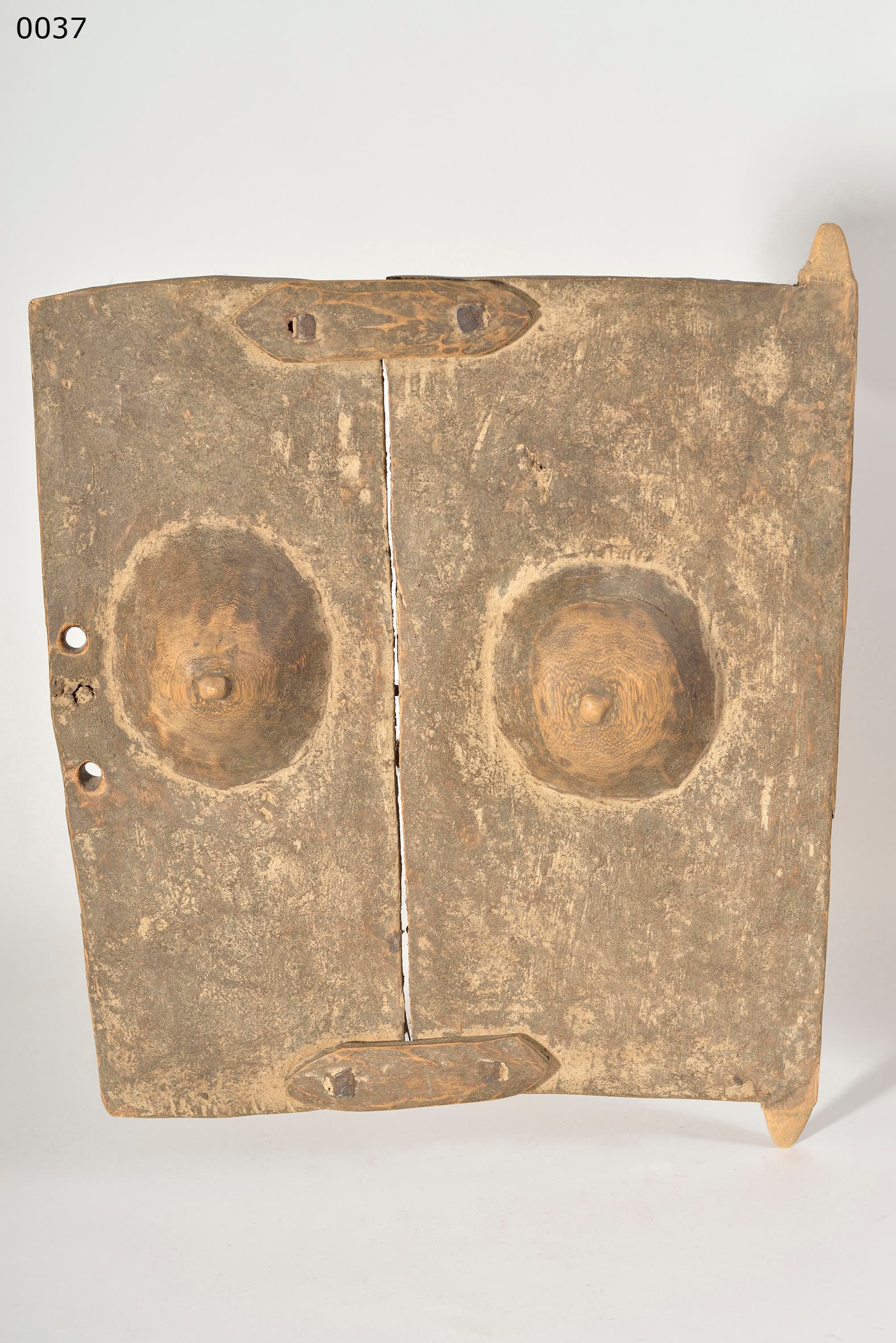
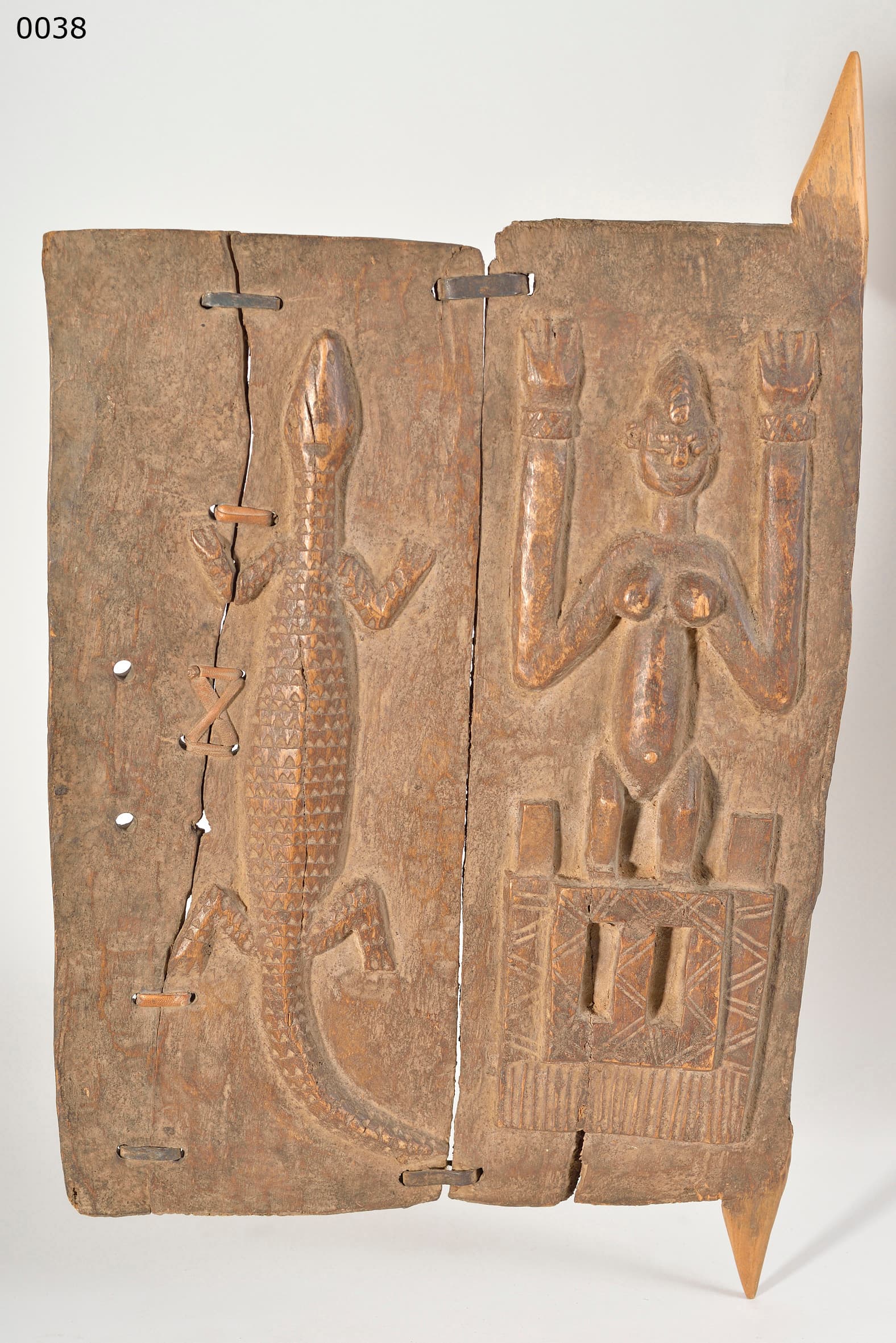
Eine dynamisch hockende weibliche Holzfigur (wohl 19. Jh., 59 cm) von den Dogon aus Mali - helmartige Kammfrisur, spitz zulaufende Brüste, gestreckter Torso und stark ausgetrocknetes, rissiges Holz mit kalkhaltiger sahelischer Verwitterung.
1. Bombou-Toro Stilistische Merkmale
Die Schnitzerei repräsentiert den klassischen Bombou-Toro-Stil der Dogon-Skulptur, wie er in Hélène Leloups grundlegender Klassifikation beschrieben wird.
- Architektonische Geometrie: Der weibliche Körper ist trotz der hockenden Haltung – ein kanonischer Gestus der Ahnenverehrung mit auf den Oberschenkeln ruhenden Händen – in eine strenge vertikale Säule verwandelt, die die architektonische Spannung gegenüber dem anatomischen Realismus betont.
- Ewig statt flüchtig: Die pfeilartige Nase, die übertriebenen Brüste und die wuchtigen Füße auf der ovalen Basis projizieren zeitlose Beständigkeit - die Skulptur fängt eher das Wesen der Vorfahrin ein als ein lebendes Abbild.
2. Anrufung der Ya Sigine
Weibliche Figuren in der Kunst der Dogon beziehen sich häufig auf die Ya Sigine, die mythologische weibliche Vorfahrin, die im Mittelpunkt der Awa-Maskengesellschaft und der Institution des Todes steht – ein ritueller Kontext, der trotz der wissenschaftlichen Debatten zwischen Griaules früher Kosmologie und van Beeks späteren Korrekturen in der Forschung weithin anerkannt ist.
- Dualität der Macht: Sie wird oft als Ausdruck einer komplexen Verschmelzung von tiefgreifender Gefahr und vitaler Fruchtbarkeit interpretiert - sowohl gefürchtet als auch lebensspendend.
- Schreinfunktion: Auf Familien- oder Dorfaltären platziert, werden Figuren dieser Art angerufen, um die lebensspendenden Eigenschaften der Frauen zu kanalisieren und das fragile Gleichgewicht zwischen den Lebenden und dem Reich der Toten zu erhalten.
3. Sahelische Oberflächenaustrocknung
Die Patina liefert wichtige Indizien für die geografische und historische Herkunft.
- Matt und zerklüftet: Durch die über Generationen andauernde Aufbewahrung in den Felsgrotten der Bandiagara-Klippen war die Figur zwar vor Regen geschützt, erfuhr jedoch eine extreme natürliche Austrocknung. Dies führte zu massiven vertikalen Trocknungsrissen durch Kopf, Torso und Beine sowie einer tief erodierten, teils krustigen matten Oberfläche.
- Trapped Libations: Reste von Opfersubstanz in den Werkzeugspuren sowie die tiefgreifenden Oxidations- und Erosionsspuren sprechen für einen Entstehungszeitraum im 19. Jahrhundert und weisen auf eine rituelle Verwendung vor der westlichen Sammlung hin.
Zusammenfassung
Diese weibliche Dogon-Figur gilt als eine eindrucksvolle Verkörperung geometrischer Klarheit und archaischer Monumentalität. Ihre klassischen Proportionen und die extrem ausgetrocknete sahelische Patina machen sie zu einem charakteristischen Beispiel für malische Skulpturen, die dem 19. Jahrhundert zugeschrieben werden.
KI-unterstützt erstellt aus Sammlungsgutachten, Objektfotografie und eigener Recherche, redaktionell geprüft. Fehler sind möglich — Hinweise darauf sind uns willkommen. Zum Verfahren →