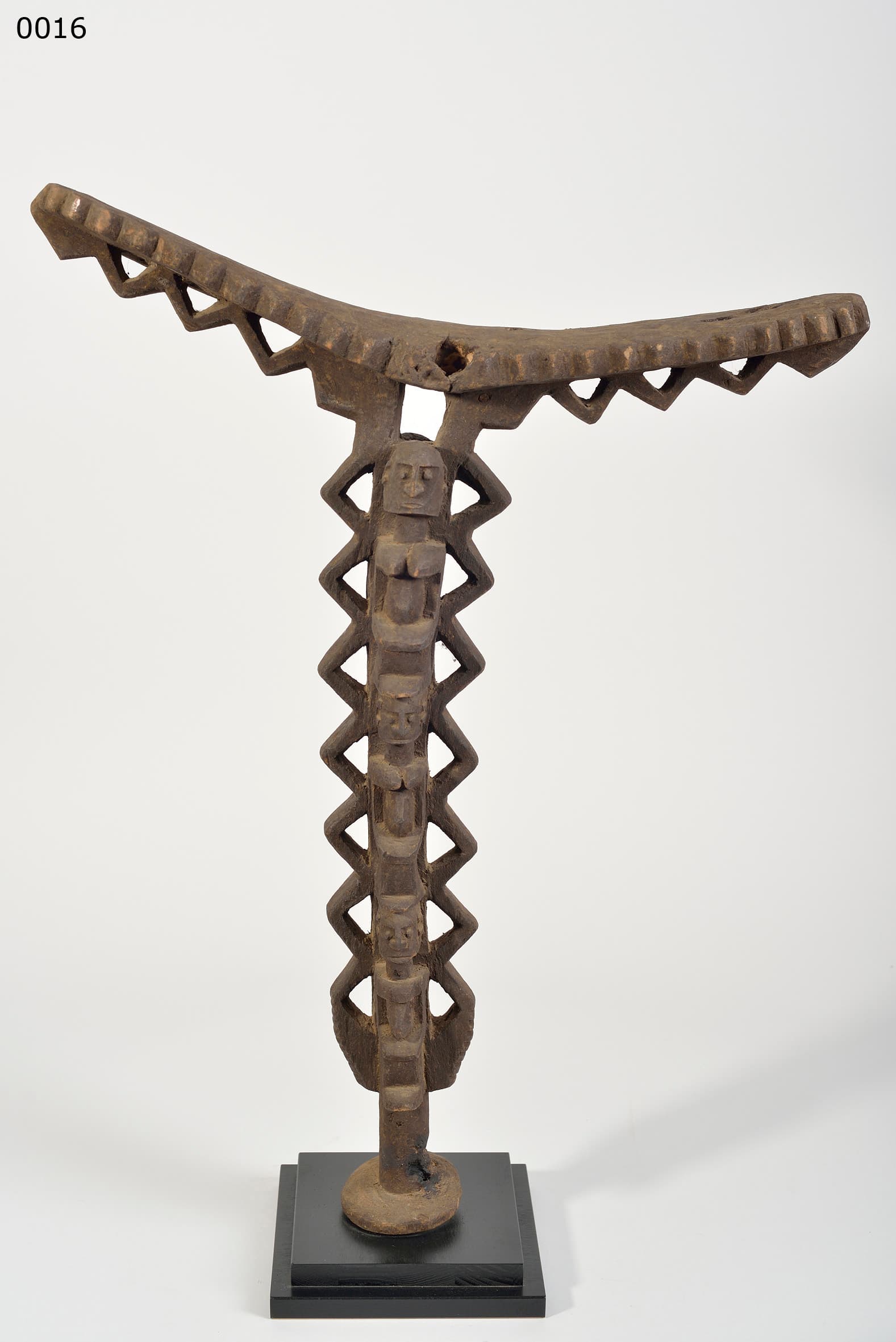
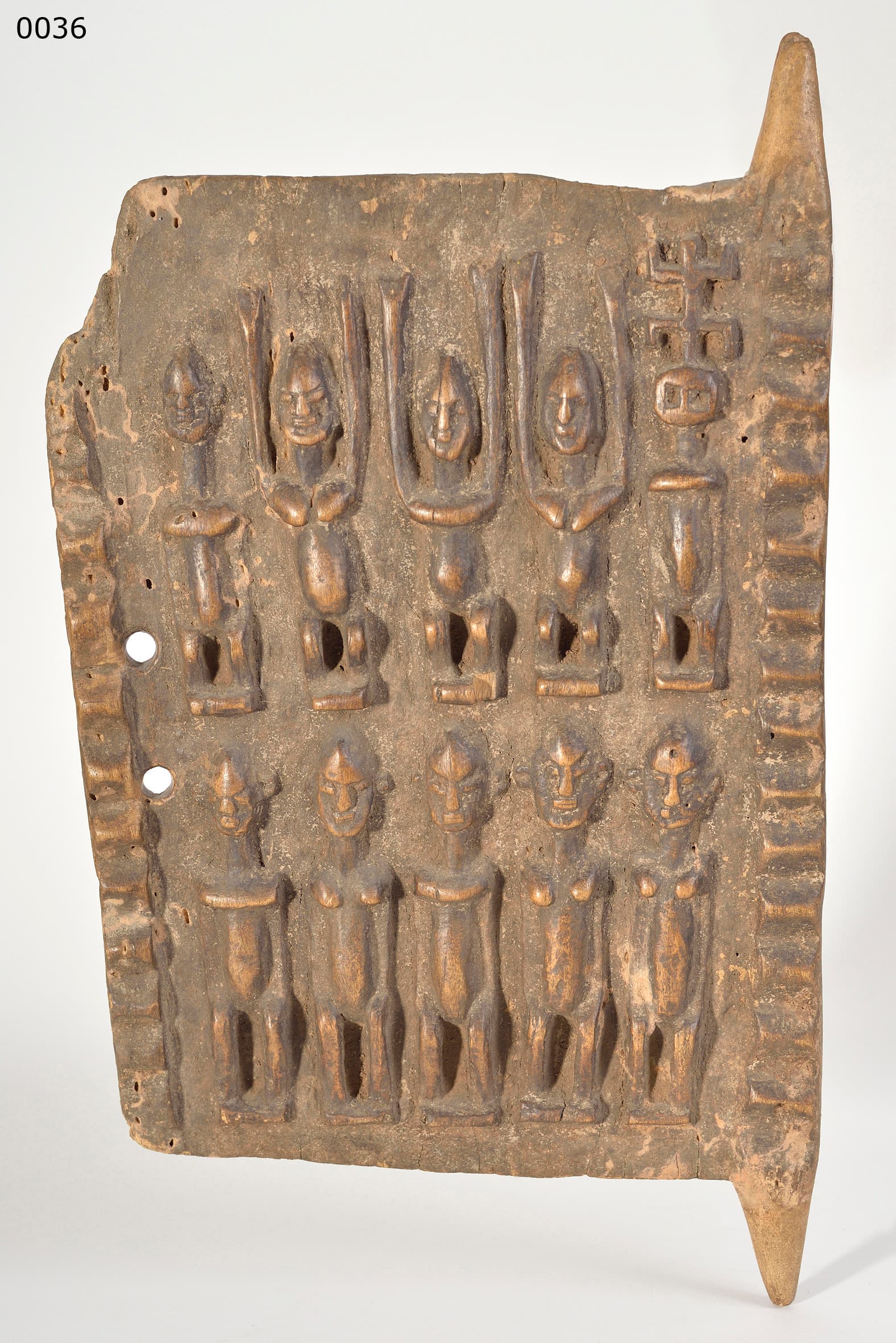
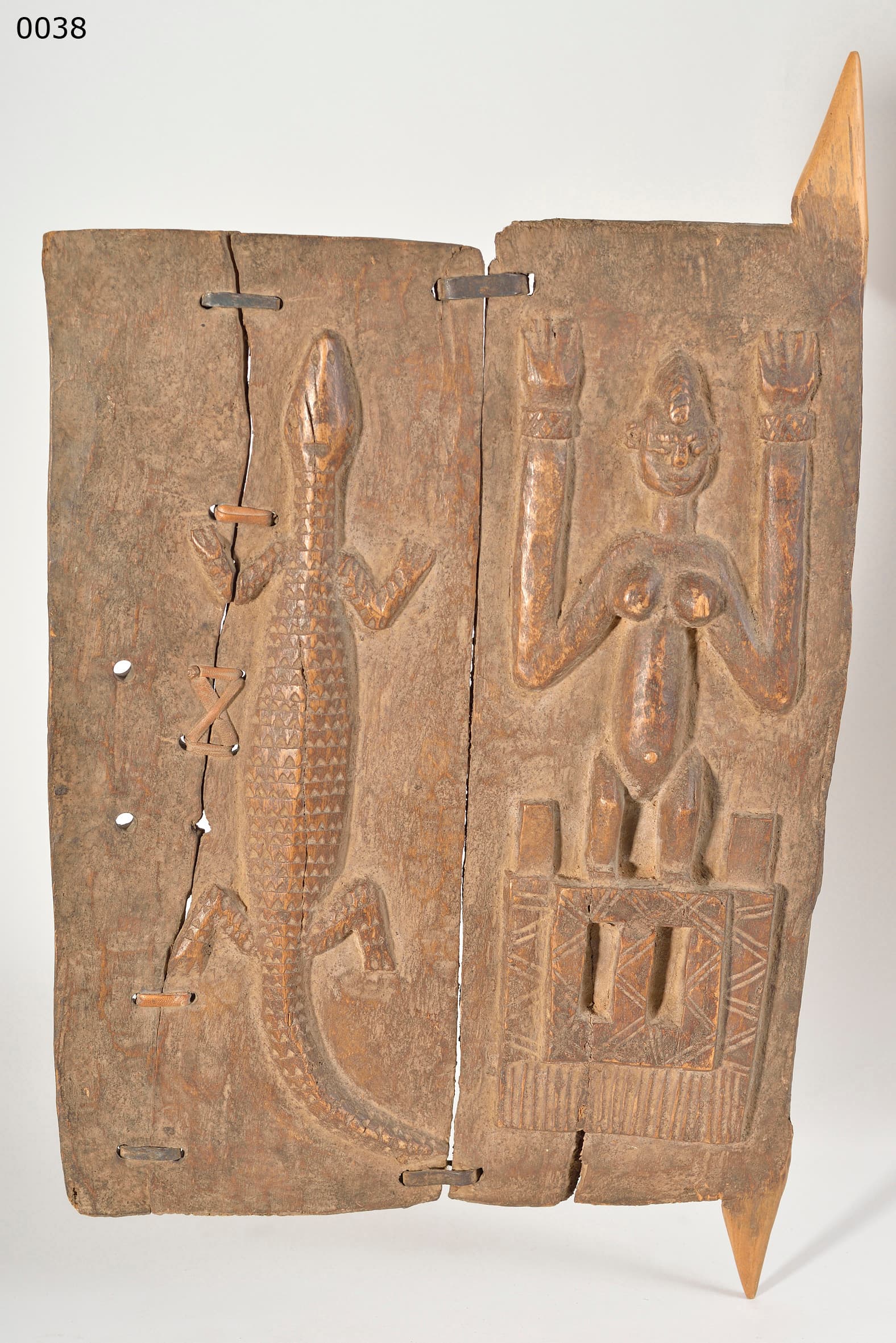
Eine Dogon-Nackenstütze (37 cm) aus Mali aus dem 19. Jahrhundert - eine sanft geschwungene Ruheplattform, die von blockartigen vertikalen Säulen getragen wird und horizontal in einen länglichen, pfeifenähnlichen Griff übergeht. Das dichte, dunkle Hartholz ist zu einer reichen, fühlbaren Patina poliert, die von intensiver Handhabung herrührt.
1. Architektonische Innovation und Nützlichkeit
Während sich der Tellem auf einen strengen Minimalismus stützte, führten die Dogon-Schnitzer des 19. Jahrhunderts komplexe architektonische Variationen in Gebrauchsgegenstände ein.
- Portables Multi-Tool: Der verlängerte Griff verwandelt eine einfache Kopfstütze in ein äußerst tragbares, vielseitiges Werkzeug.
- Ausgewogene Asymmetrie: Die schweren, blockartigen Stützpfeiler bilden ein Gegengewicht zu dem geschwungenen, horizontalen Schwung des Griffs - eine visuell überzeugende Komposition, die im Gebrauch dennoch perfekt waagerecht liegt.
2. Der Schutz des heiligen Kopfes
In der Dogon-Gesellschaft ist der Kopf der Sitz der Nyama (Lebenskraft) und der persönlichen Identität.
- Haar als Status: Aufwendige Frisuren signalisieren sozialen Rang, Initiationsgrad und Reife.
- Tägliche Erhebung: Die Nackenstütze bewahrte diese komplizierten, mit Schlamm oder Fett gefüllten Frisuren davor, im Schlaf zerdrückt oder verschmutzt zu werden - ein intimer Gegenstand, der den Schweiß und die Essenz seines Besitzers über ein ganzes Leben hinweg in sich aufnahm.
3. taktile Patina aus dem 19. Jahrhundert
Die Oberfläche zeugt von einem langen funktionalen Leben.
- Öl und Haut: Die dunkle, glänzende Patina ist an der geschwungenen Halsstütze und dem länglichen Griff am stärksten ausgeprägt - genau dort, wo menschliche Haut und Haaröle ständig in Kontakt waren.
- Strukturhärtung: Die tiefe Härtung des Holzes und die glatten, abgerundeten Kanten der Schnitzereien bestätigen die Herkunft aus dem 19. Jahrhundert und den echten vorkolonialen Gebrauch.
Zusammenfassung
Diese Nackenstütze der Dogon ist ein hervorragendes Beispiel für gehobene Gebrauchskunst, bei der sich geniales architektonisches Design mit vertrauter Alltagsfunktion verbindet. Die reichhaltige, glänzende Patina und die einzigartige, langgestreckte Form machen sie zu einem sehr begehrten ethnografischen Artefakt.
KI-unterstützt erstellt aus Sammlungsgutachten, Objektfotografie und eigener Recherche, redaktionell geprüft. Fehler sind möglich — Hinweise darauf sind uns willkommen. Zum Verfahren →