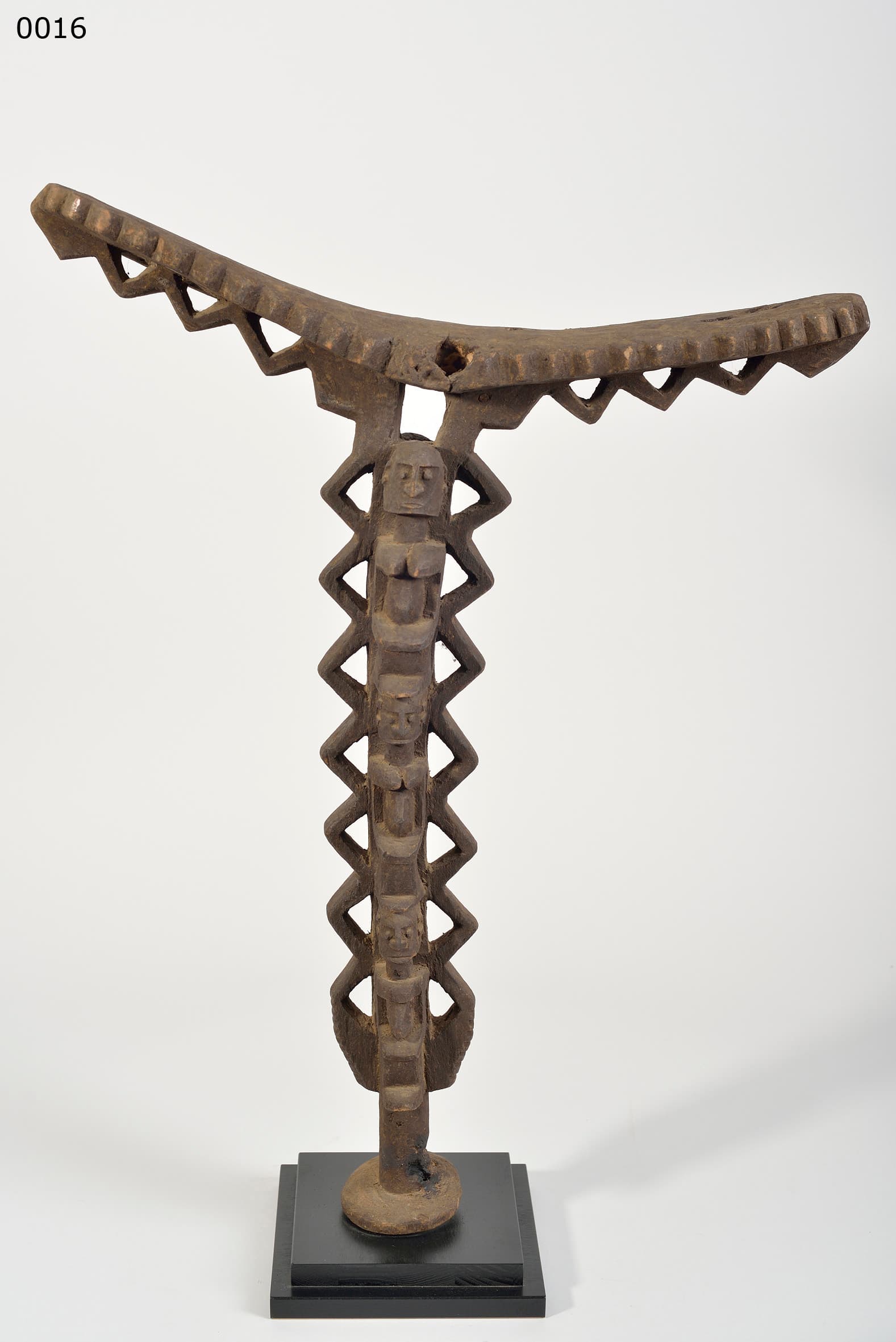
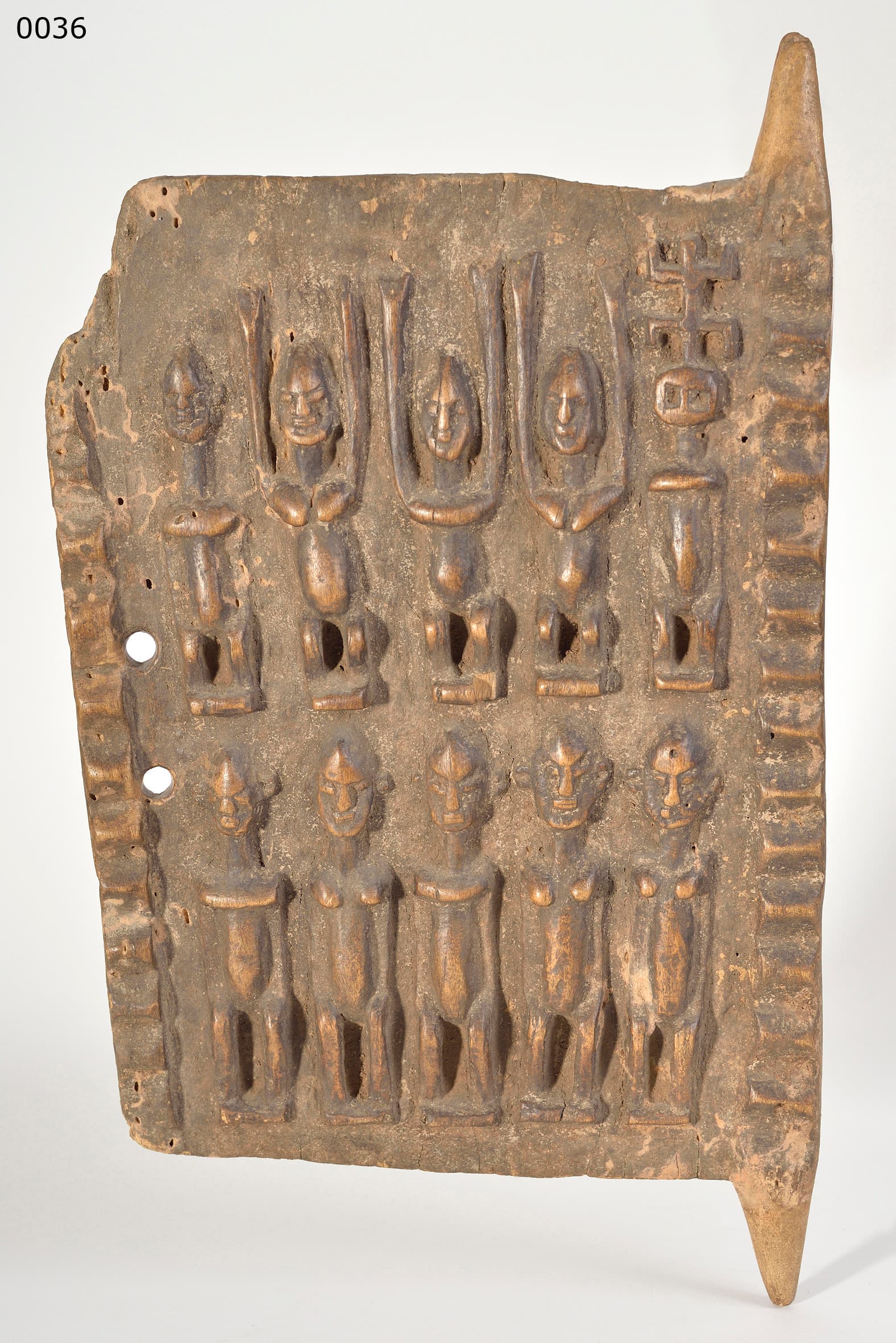
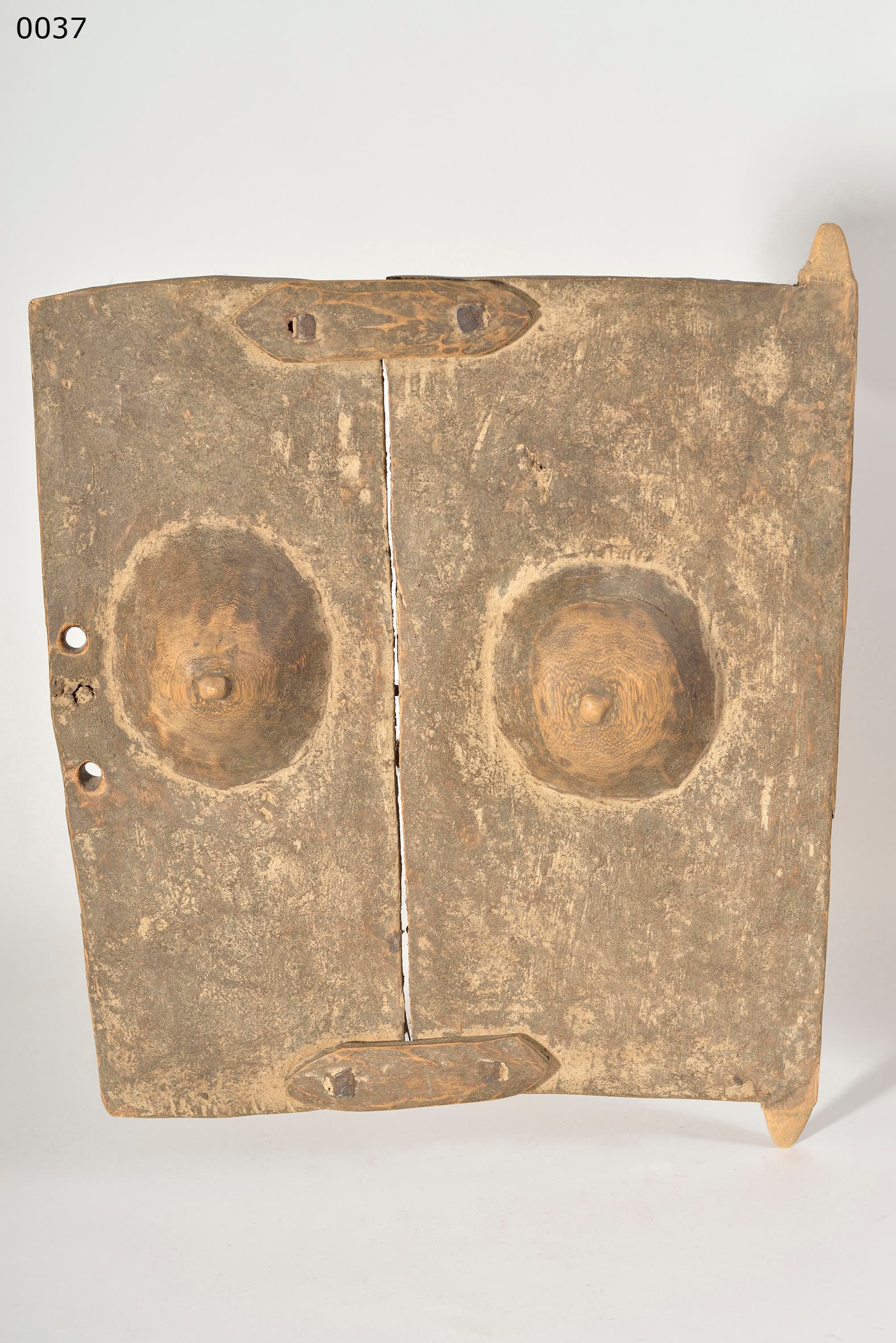
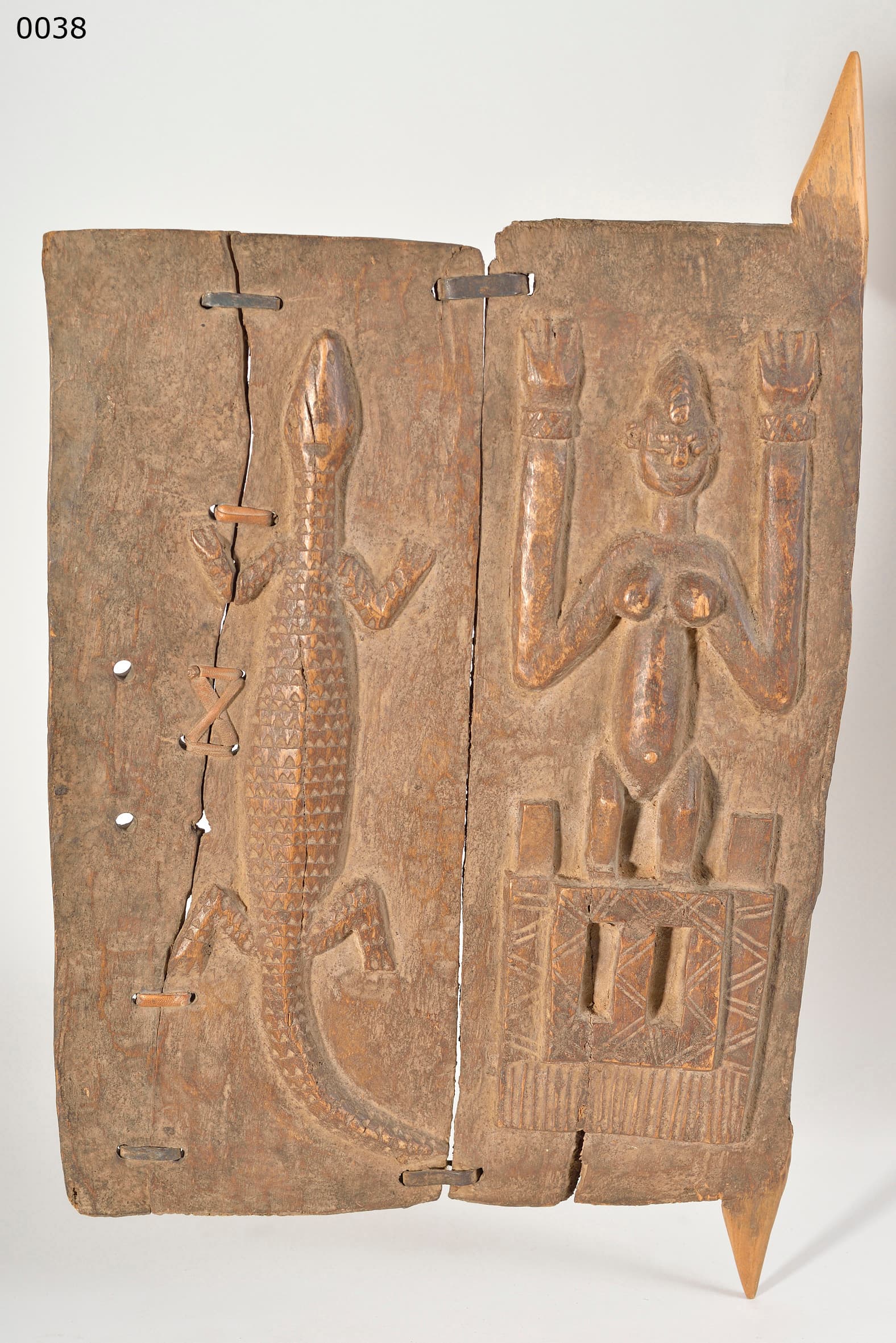
Ein rituelles Dogon-Messer (wohl 1. Hälfte 20. Jh., 18 cm) aus Mali - eine stark oxidierte, rostige Eisenklinge, die in einen dunklen Holzgriff eingelassen ist, der als stark abstrahierte, hockende, anthropomorphe Figur geschnitzt ist. Das Holz ist tief mit Ölen und organischem Material gesättigt.
1. Die Heilige Schmiede
Die Herstellung dieses Objekts steht für die entscheidende Synergie zwischen der Numu (Schmiedekaste) und den Holzschnitzern.
- Feuer verwandelt Erde: Der Dogon-Schmied verfügt durch seine Beherrschung von Feuer und Eisen über immense geistige Macht.
- Geladenes Instrument: Die Klinge ist schwer mit Nyama geladen; der geschnitzte Griff, der einen hockenden Urahn darstellt, erdet diese gefährliche Kraft und stellt sicher, dass das Werkzeug im Einklang mit dem Willen der Ahnen handelt.
2. Initiation und das Ablegen der Androgynität
Dieses Messer ist das zentrale Instrument der männlichen Initiationsriten.
- Mythische Trennung: Nach der Dogon-Kosmologie wird der Mensch im Wesentlichen androgyn geboren; die Beschneidung ist der geistige und körperliche Akt, der das männliche vom weiblichen Prinzip trennt.
- Statusveränderung: Das Messer ist nicht nur ein chirurgisches Werkzeug, sondern ein heiliges Mittel der permanenten Transformation - der Status des Eingeweihten innerhalb des Kosmos ändert sich in dem Moment, in dem die Klinge benutzt wird.
3. Blutpatina und extreme Oxidation
Die physischen Merkmale sprechen für einen rituellen Gebrauch im frühen 20. Jahrhundert.
- Abblätternde Klinge: Das Eisen hat eine starke abblätternde Oxidation erfahren, was ein hohes Alter nahelegt.
- Gesättigter Griff: Das Holz ist bis zum Kern mit einer dunklen, krustigen Patina aus Tierfett, Schweiß und wahrscheinlich dem Blut von Generationen von Eingeweihten gesättigt – eine tiefe organische Sättigung, die für eine langjährige Nutzung spricht.
Zusammenfassung
Dieses Beschneidungsmesser der Dogon gilt als Symbol für körperliche und spirituelle Transformation und als ein intensiv genutztes ethnografisches Werkzeug. Seine ausgeprägte rituelle Patina und seine rostige Klinge machen es zu einem eindrucksvollen Zeugnis malischer Initiationsgeschichte.
KI-unterstützt erstellt aus Sammlungsgutachten, Objektfotografie und eigener Recherche, redaktionell geprüft. Fehler sind möglich — Hinweise darauf sind uns willkommen. Zum Verfahren →