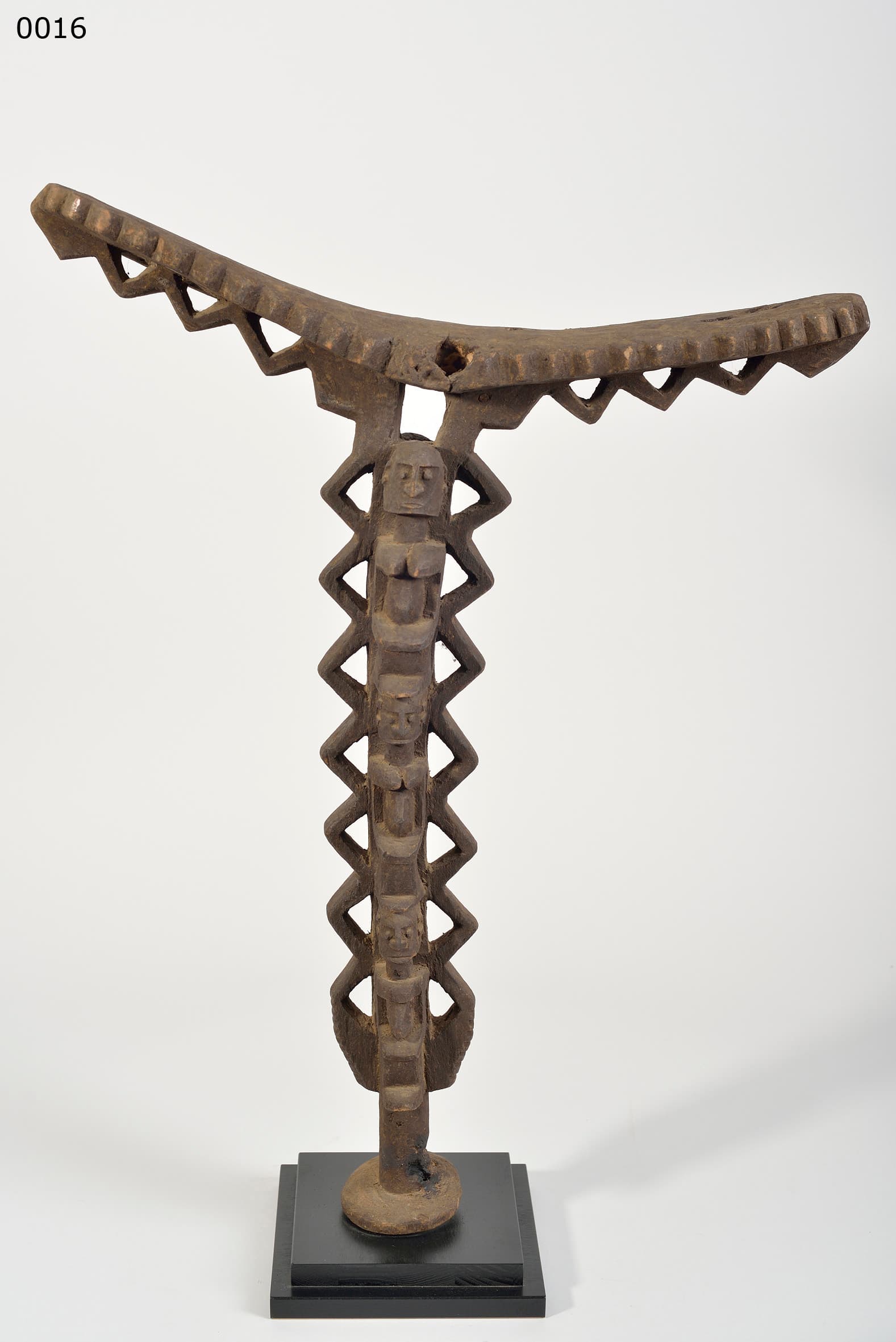
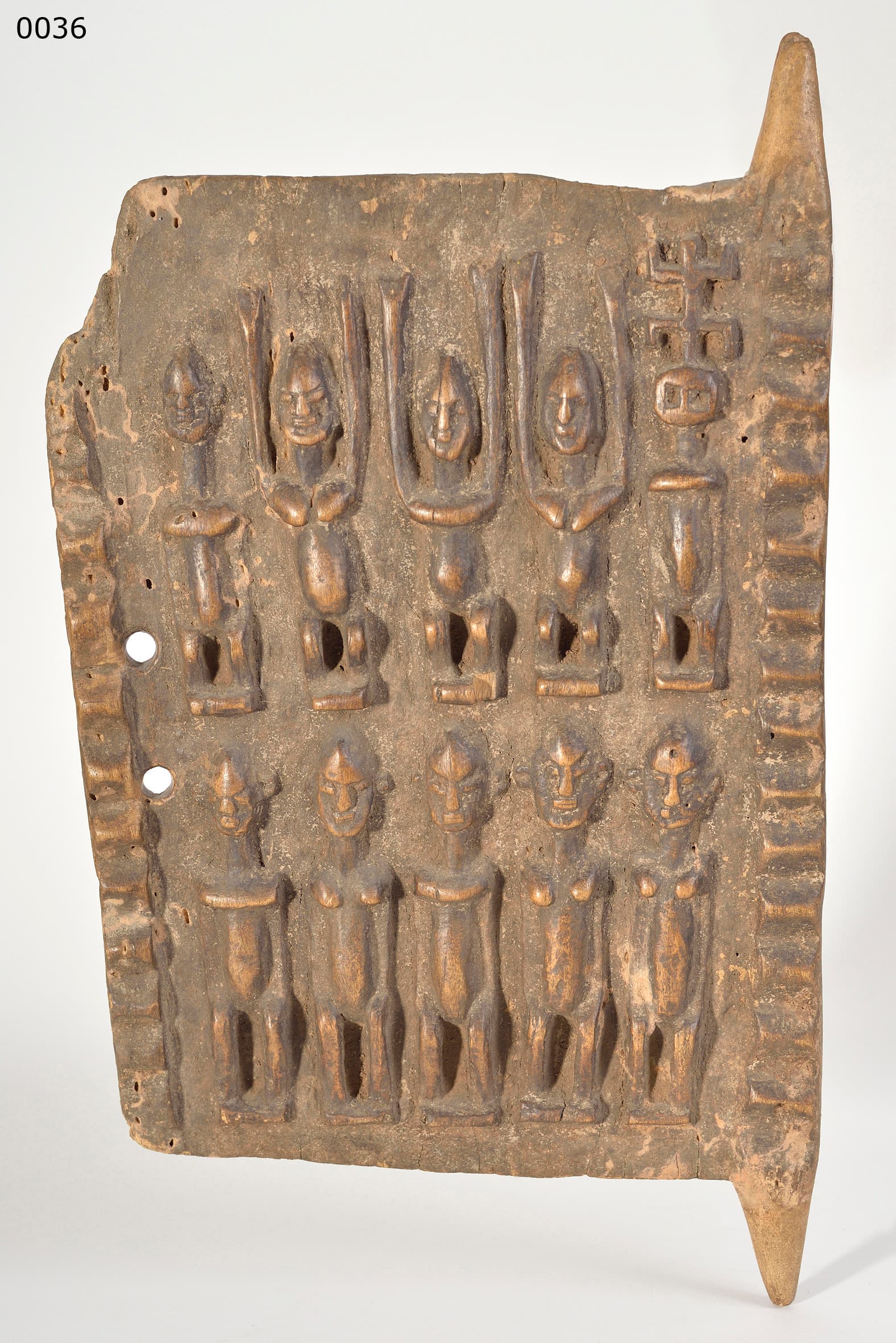
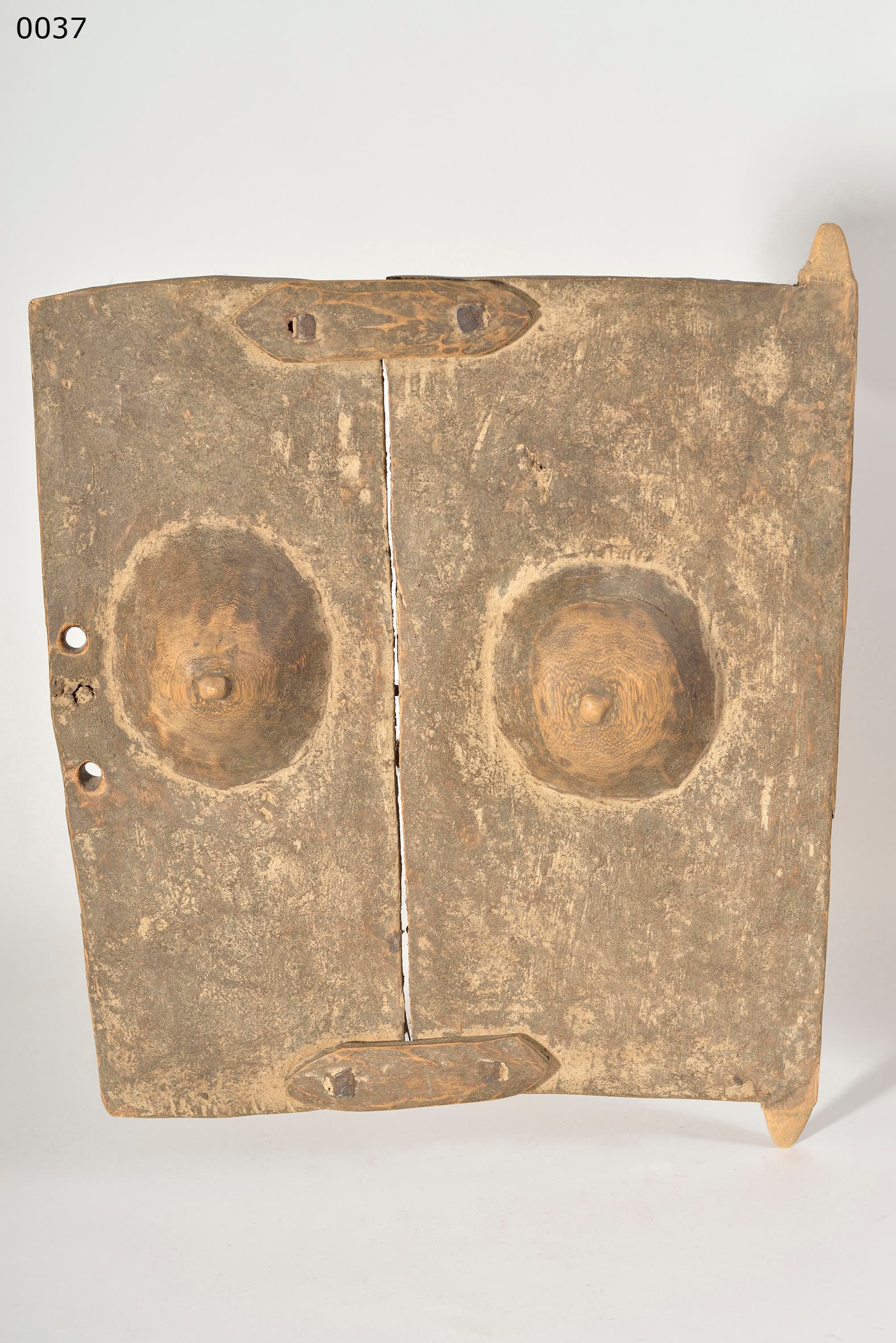
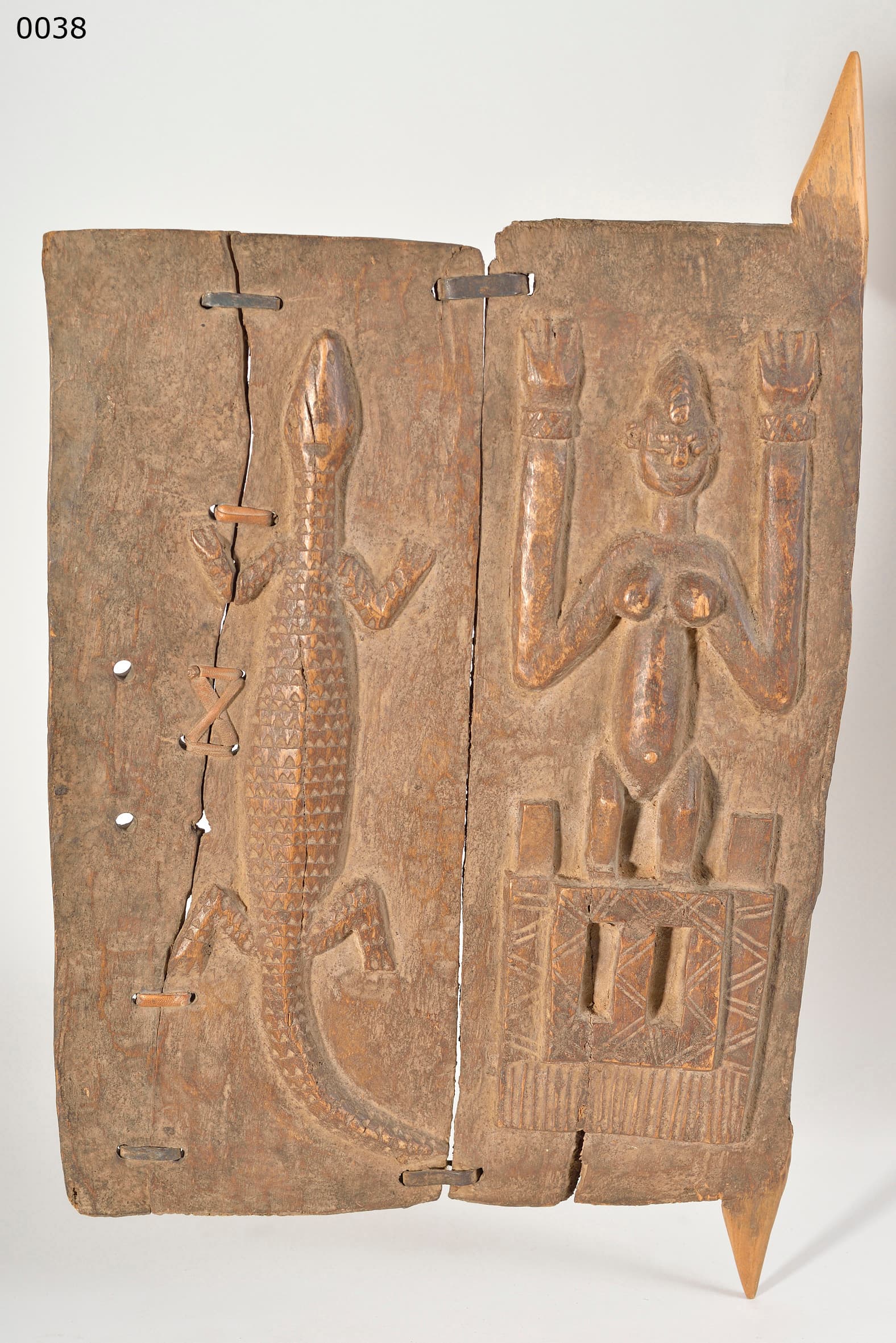
Eine hohe architektonische Dogon-Maske (1. Hälfte 20. Jh., 72 cm) aus Mali - eine rechteckige Gesichtsfläche mit tiefen, quadratischen Augenausschnitten, die von einem hoch aufragenden, schmucklosen, vertikalen Holzkamm überragt wird. Das extrem trockene, grobe Holz trägt eine tief oxidierte, graubraune Patina mit starken umweltbedingten Rissen.
1. Architektonische Vertikalität
Dieses Stück ist ein Beispiel für die extreme Vertikalität, die von den Dogon-Maskenschnitzern häufig angestrebt wird.
- Himmelswappen: Obwohl die komplizierten Querbalken einer Sirige-Maske fehlen, verbindet das hoch aufragende zentrale Wappen den Träger direkt mit dem Himmel.
- Kinetische Architektur: Das rechteckige, kastenförmige Gesicht mit tief ausgehöhlten geometrischen Augenausschnitten lässt jeglichen menschlichen Realismus vermissen - die Maske ist kein Gesicht, sondern ein Stück kinetischer Architektur, das dazu bestimmt ist, bei hochsportlichen Dogon-Darbietungen durch die Luft zu gleiten.
2. Die Dama und die Awa-Gesellschaft
Wie alle klassischen Dogon-Masken gehört auch dieses Objekt zur Awa (Maskengesellschaft) und wurde speziell für die Dama, den großen Begräbnisritus, geschnitzt.
- Amma-Ta-Tor: Das hoch aufragende Wappen kann das Amma-Ta (das Tor der Amma, des Schöpfergottes) darstellen oder einfach dazu dienen, die Präsenz des Tänzers zu verstärken.
- Dutzende von Masken überschwemmen während der Dama den Dorfplatz - ihre schiere Höhe und ihre energiegeladenen Bewegungen geleiten die Seelen der Verstorbenen sicher aus dem menschlichen Reich in die Welt der Ahnen.
3. Extreme sahelische Exsikkation
Der Zustand des Holzes spricht für eine Herkunft aus dem frühen 20. Jahrhundert.
- Aschenbraune Oxidation: Völlig ausgetrocknet durch die trockene Umgebung des Bandiagara Escarpment - die Oberfläche ist tief oxidiert zu einem blassen Aschenbraun, mit schweren Längsrissen, die den hoch aufragenden Kamm hinauflaufen.
- Geglätteter Innenraum: Das Innere der Gesichtsmaske zeigt geglättete, verdunkelte Reibungs- und Verschleißspuren, die eine tatsächliche Nutzung beim Tanz nahelegen, bevor sie in eine Klippenhöhle verbracht wurde.
Zusammenfassung
Diese Dogon-Maske ist ein imposantes Stück kinetischer Architektur, das die strenge, in den Himmel ragende Geometrie der Awa-Gesellschaft widerspiegelt. Ihre tiefgreifende strukturelle Austrocknung und die Gebrauchsspuren kennzeichnen sie als eine klassische malische Antiquität.
KI-unterstützt erstellt aus Sammlungsgutachten, Objektfotografie und eigener Recherche, redaktionell geprüft. Fehler sind möglich — Hinweise darauf sind uns willkommen. Zum Verfahren →