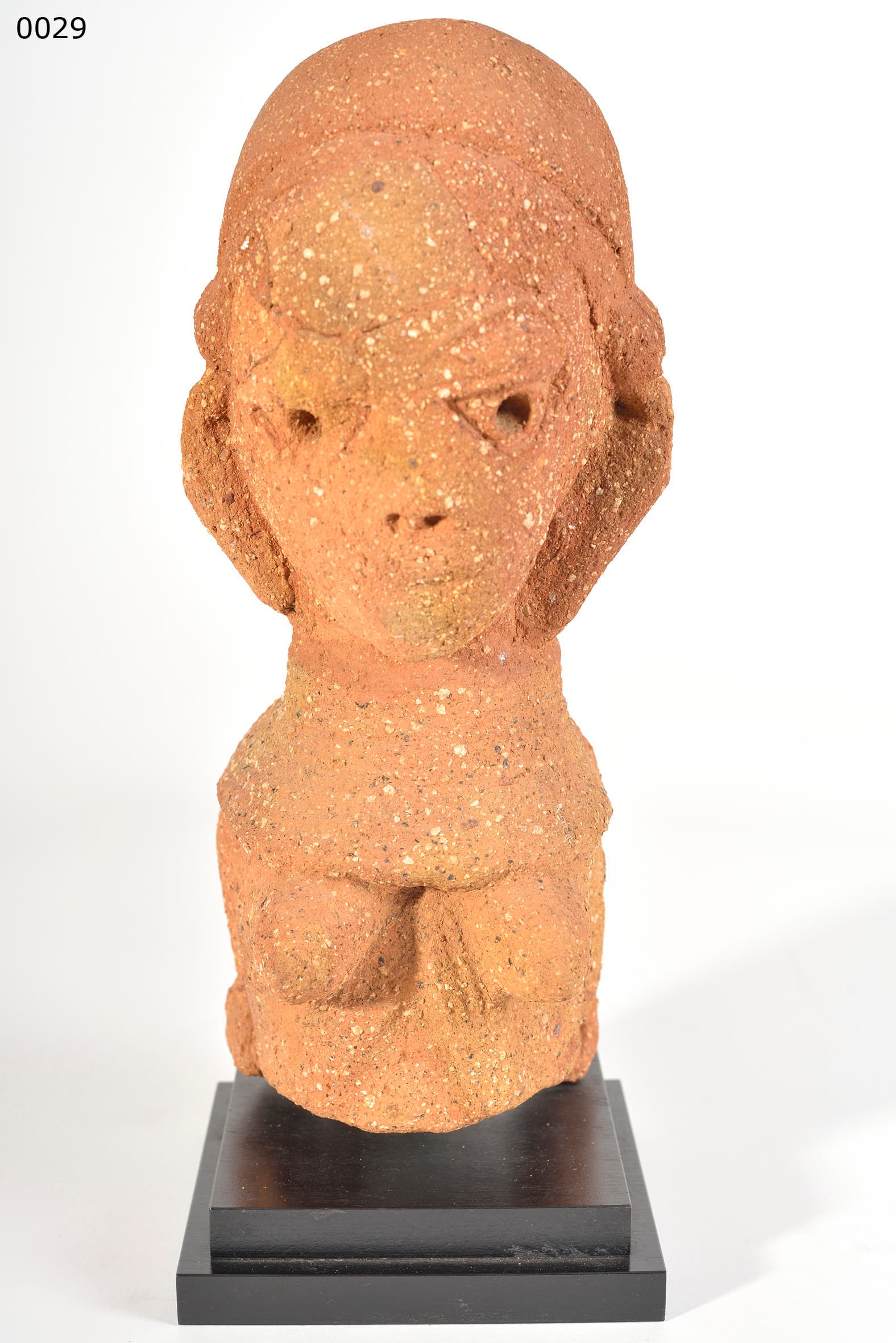
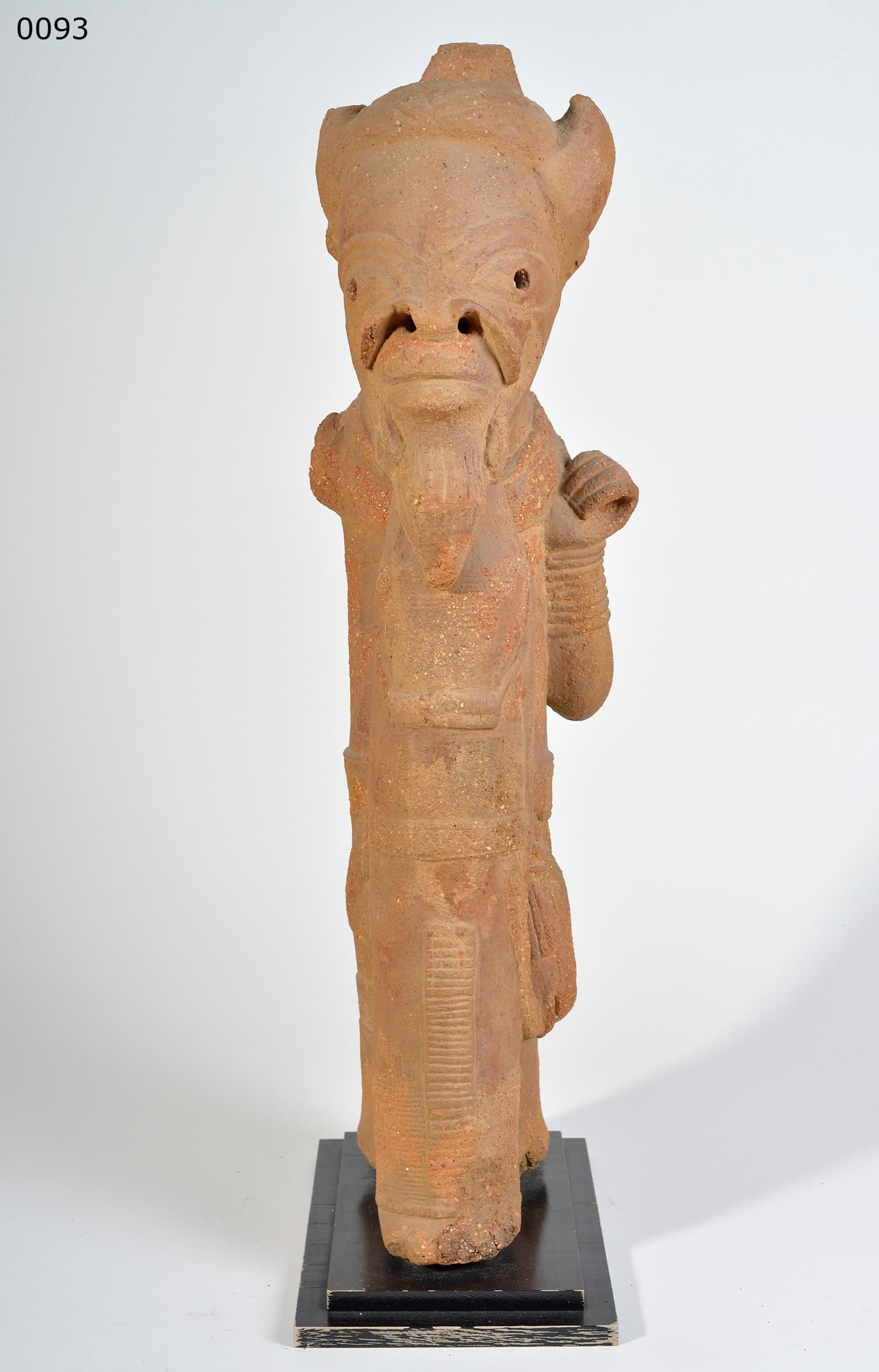
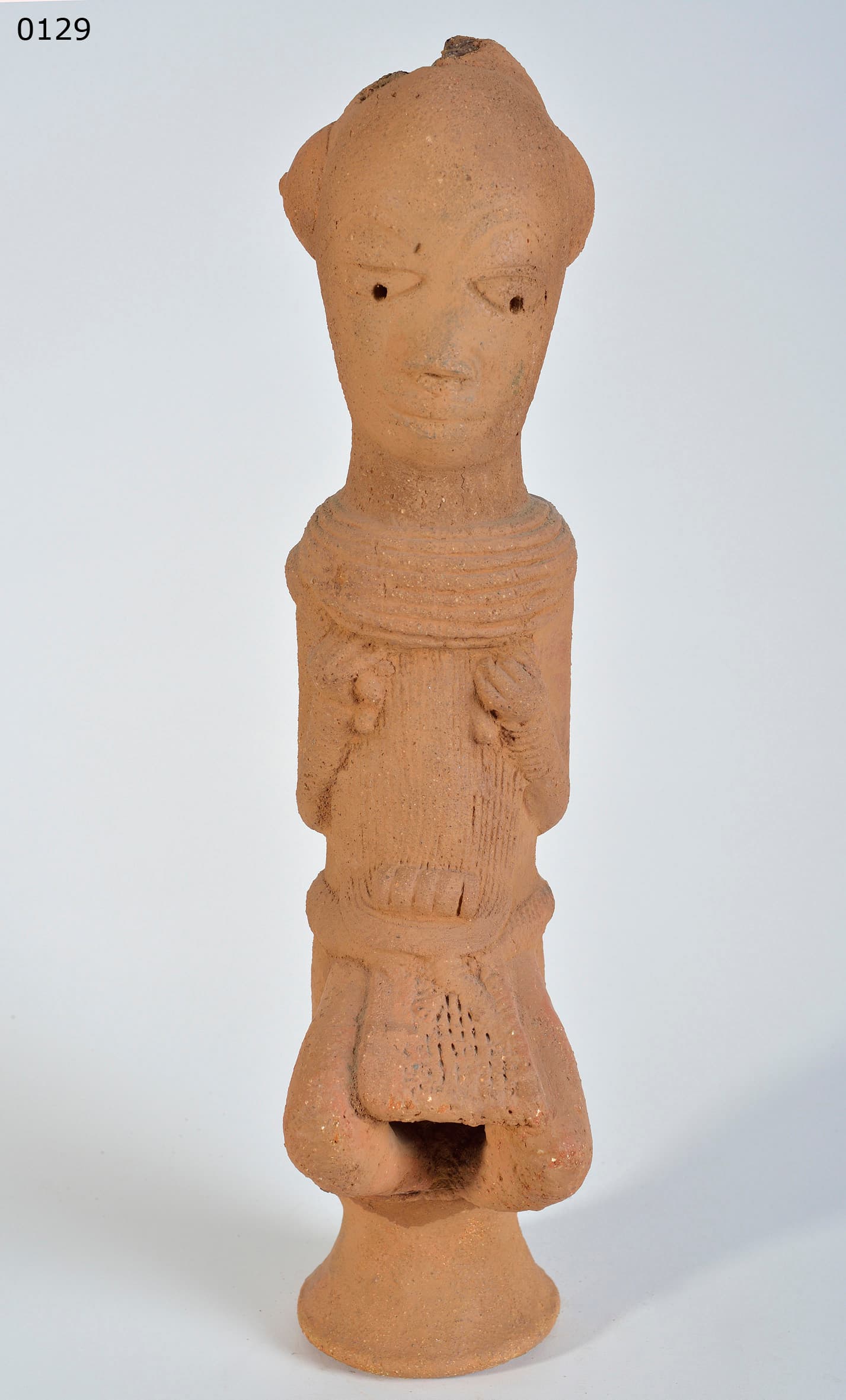
Ein klassischer Nok-Terrakottakopf (~2000 Jahre alt, 21 cm) aus Nigeria - charakteristisch sind die dreieckigen, durchbrochenen Augen, die aufgeweiteten Nasenlöcher und die geschwungene Frisur, die mit aufwändig geschnitzten Brötchendetails verziert ist. Der dicke sandig-orangefarbene Schlicker mit beträchtlicher Verkalkung und blassen Erdspuren spricht für einen antiken Bestattungskontext.
1. Herrschaft der Eisenzeit in Afrika südlich der Sahara
Die Nok-Kultur (1500 v. Chr. bis 500 n. Chr.), die den Grundstein für die Bildhauerei in Subsahara-Afrika legte, erreichte eine keramische Meisterschaft, die in der Literatur oft mit der klassischen Antike in Europa verglichen wird.
- Geometrische Abstraktion: Scharf umrissene, durchbohrte, dreieckige Augen und akribisch ausgearbeitete Haarelemente sind ein Beispiel für die Ästhetik der Nok.
- Rollen- und Grog-Technik: Die Künstler verwendeten eine fortschrittliche Rollenbauweise mit einem hohen Anteil an Grog (zerkleinertem gebranntem Ton), um zu verhindern, dass die massiven, dickwandigen Figuren beim Brennen zerbrechen.
2. Die rituelle Mechanik der antiken Heiligtümer
Archäologische Funde deuten darauf hin, dass große Nok-Figuren in komplexen landwirtschaftlichen oder Totenschrein-Ritualen verwendet wurden.
- Absichtliche Zersplitterung: Da die meisten Nok-Figuren zersplittert gefunden werden, gehen viele Wissenschaftler davon aus, dass sie während der Zeremonien absichtlich zerbrochen wurden, um die im Ton enthaltene spirituelle Energie freizusetzen.
- Lebensgroße Petition: Dieser Kopf saß wahrscheinlich auf einem kompletten lebensgroßen oder fast lebensgroßen Körper und diente einer Gottheit oder einem verehrten Vorfahren, der um Regen, Fruchtbarkeit oder Schutz vor Krankheiten bat.
3. Akkretionen und geologische Markierungen
Die Patina spricht für eine lang anhaltende Beisetzung.
- Kalkhaltige Anhaftungen: Tiefe kalkhaltige Bodenanhaftungen, Mikrorisse im Schlicker und schwache Wurzelätzungen sind charakteristisch für historisch gealterte Nok-Objekte.
- Katsina-Ala-Laterit: Die ausgeprägte Farbe und Textur des eingebetteten Lateritbodens sind vereinbar mit dem geologischen Profil der Regionen Katsina-Ala und Jos Plateau in Nigeria.
Zusammenfassung
Dieser Nok-Kopf zeigt charakteristische Merkmale der frühen westafrikanischen Bildhauerkunst und gilt als ein bedeutendes Zeugnis der alten nigerianischen Zivilisation. Seine differenzierte stilistische Ausführung und die Alterungsspuren der Patina machen ihn zu einem bemerkenswerten Beispiel dieser frühen Kunstform.
KI-unterstützt erstellt aus Sammlungsgutachten, Objektfotografie und eigener Recherche, redaktionell geprüft. Fehler sind möglich — Hinweise darauf sind uns willkommen. Zum Verfahren →