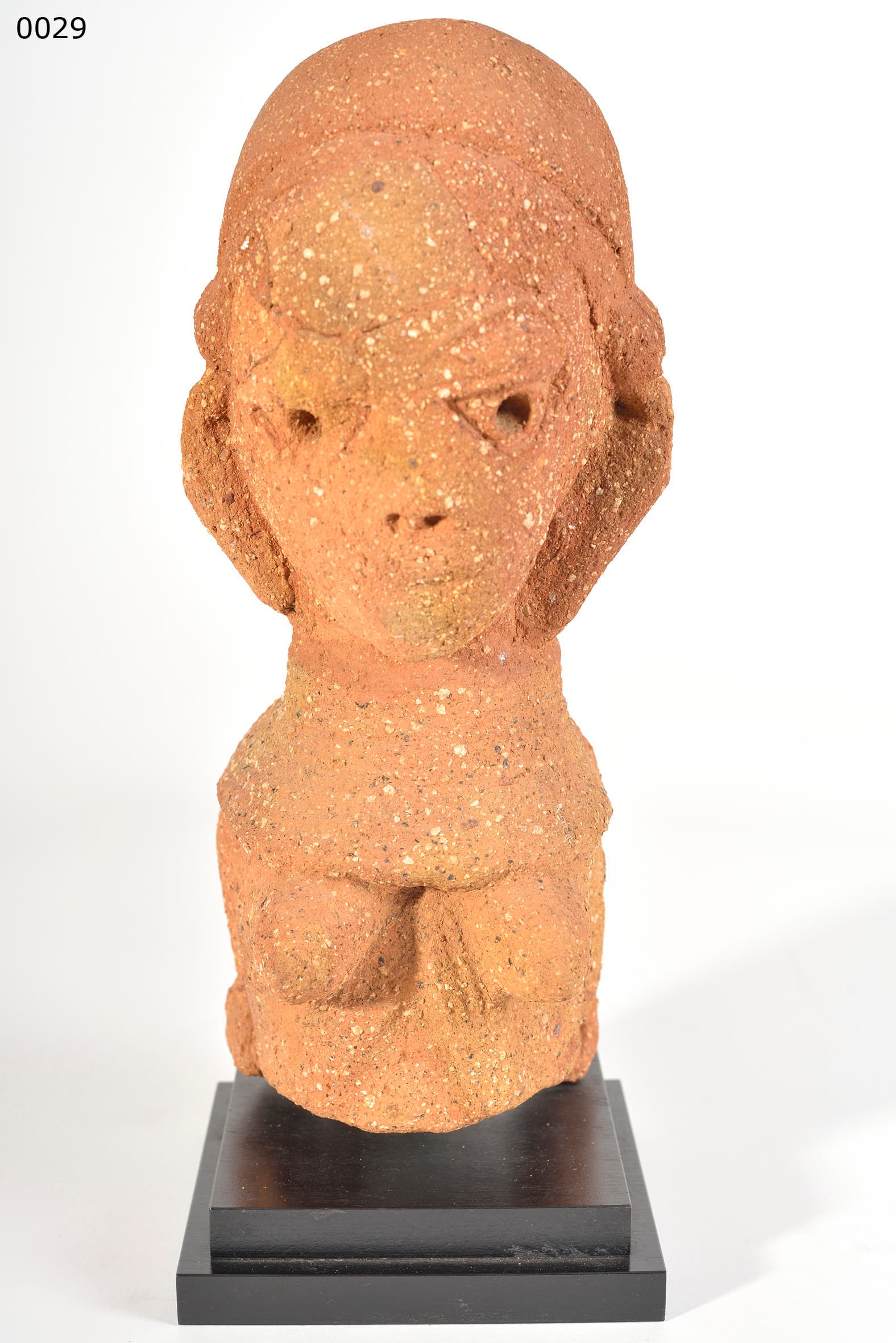
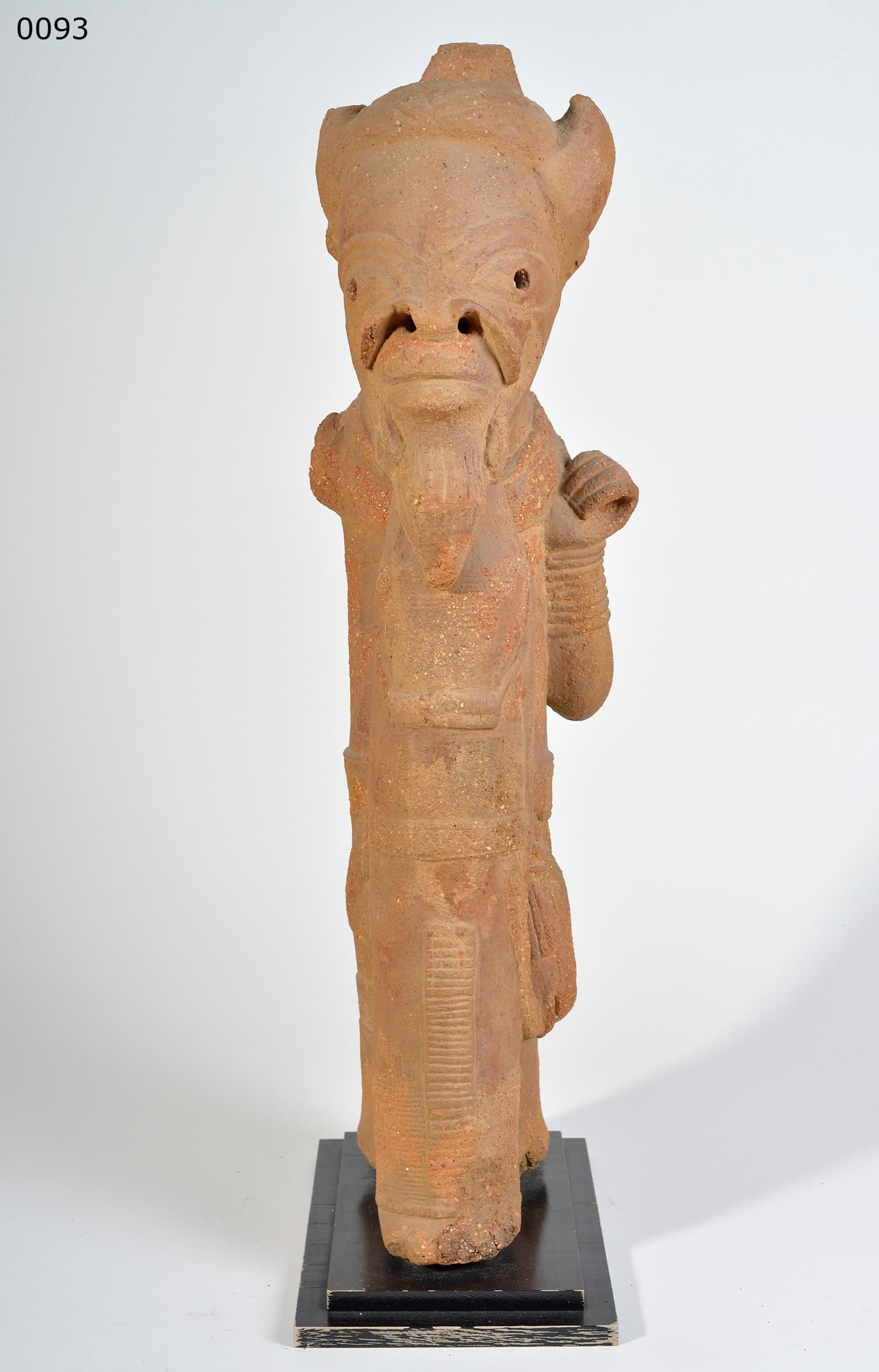
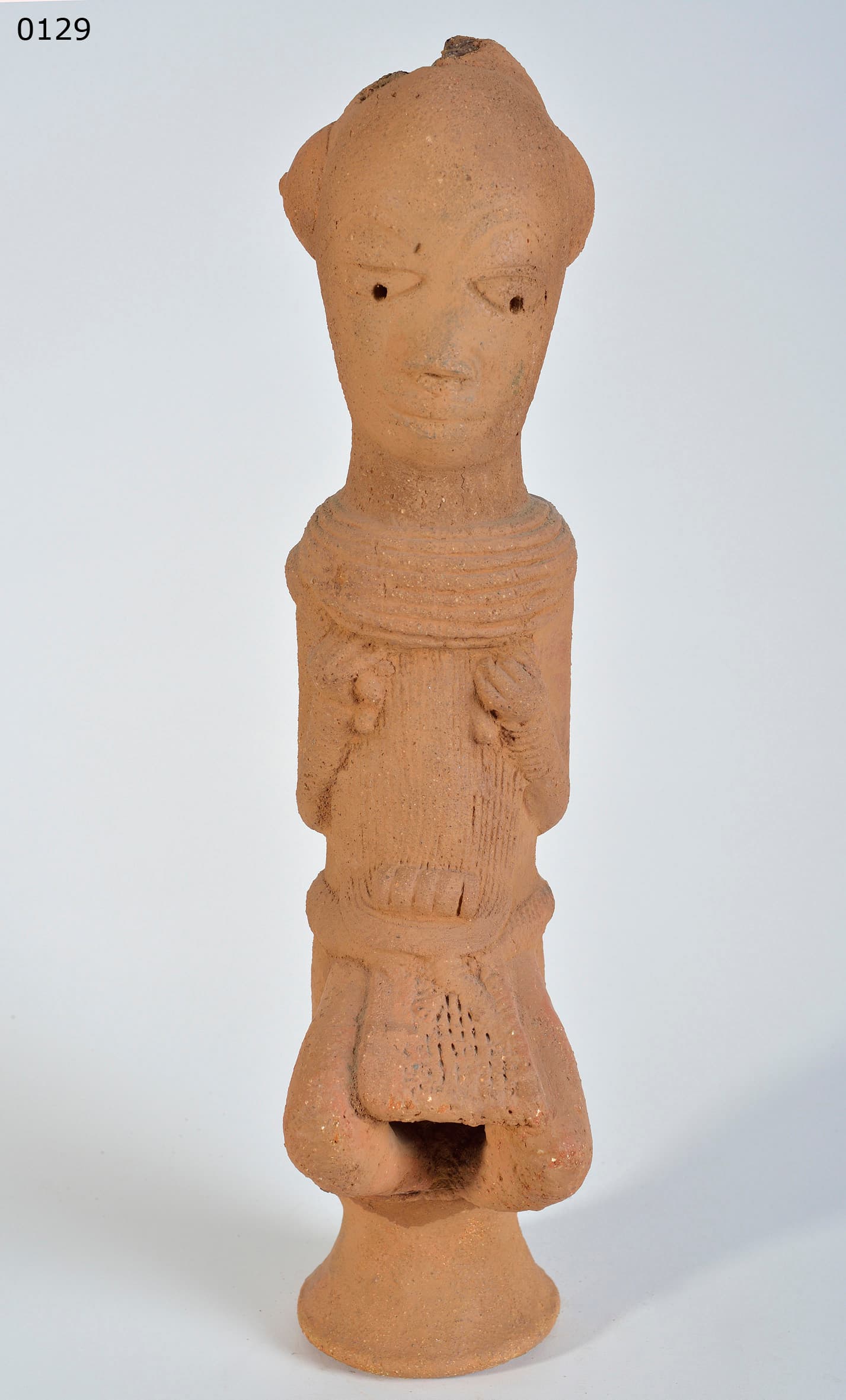
Eine ungewöhnliche Nok-Terrakotta (~2000 Jahre alt, 18 cm) aus Nigeria - eine stark texturierte, vorhängeschlossförmige Tonmasse mit oberem Schlaufengriff, die vollständig mit applizierten Knötchen bedeckt ist, wobei der grobe eisenzeitliche Ton eine dicke sandige, kalkhaltige Patina aufweist. Gepaart mit 0319.
1. Die Breite der Ästhetik der Nok-Eisenzeit
Die Nok-Kultur (1500 v. Chr. - 500 n. Chr.) ist zwar vor allem für ihre lebensgroßen, sehr naturalistischen menschlichen Köpfe bekannt, doch ihr ästhetisches Vokabular umfasste auch eine Vielzahl von abstrakten, symbolischen und Miniaturformen.
- Seltene abstrakte Typologie: Dieses Stück repräsentiert eine seltene rein abstrakte Typologie innerhalb des Nok-Korpus.
- Nodulare Interpretation: Die schwere knotige Oberfläche und der Schlaufengriff lassen vermuten, dass es sich um ein symbolisches Gewicht, ein stilisiertes landwirtschaftliches Gerät oder eine abstrakte Darstellung einer Krankheit (z. B. ein mit Pusteln übersäter Torso) gehandelt haben könnte.
2. Landwirtschaftliche Verehrung und das Ritualfragment
Die kontextuelle Funktion der verschiedenen Nok-Objekte war eng mit den frühen agrarischen Gemeinschaften verbunden, die zur Eisentechnologie übergingen.
- Medizinische oder regenbringende Verwendung: Hochgradig abstrakte Gegenstände wie dieser können in spezifischen medizinischen oder regenbringenden Riten verwendet worden sein.
- Seltenheit intakter Funde: Da sie oft rituell zerbrochen oder in aktiven landwirtschaftlichen Zonen vergraben wurden, ist der Fund einer relativ intakten, zusammenhängenden Form wie dieser eine seltene archäologische Entdeckung.
3. Quarz-Grog und 2000 Jahre alte Verkalkung
Die Materialzusammensetzung und Verwitterung weisen auf ein hohes Alter hin.
- Grobes Quarzgranulat: Die Töpfer von Nok haben ihren Ton mit grobem Quarzgranulat angelassen, das auf der erodierten Oberfläche dieses Stücks deutlich sichtbar ist.
- Slow Acidic Interaction: Die dicken weißen kalzifizierten Krusten und Wurzelspuren auf der Terrakotta sind das Ergebnis jahrhundertelanger Wechselwirkung mit dem sauren Boden des Jos-Plateaus – ein langsam wirkender chemischer Prozess, der für ein hohes Alter spricht.
Zusammenfassung
Dieses abstrakte Stück ist eine seltene nicht-figurale Variante innerhalb des Nok-Korpus und veranschaulicht neben klassischen Nok-Köpfen die typologische Vielfalt dieser Kultur. Der rohe, stark geriffelte Ton und die Bodenverkalkungen sprechen für ein hohes Alter und unterstreichen seine Bedeutung als archäologisches Zeugnis.
KI-unterstützt erstellt aus Sammlungsgutachten, Objektfotografie und eigener Recherche, redaktionell geprüft. Fehler sind möglich — Hinweise darauf sind uns willkommen. Zum Verfahren →