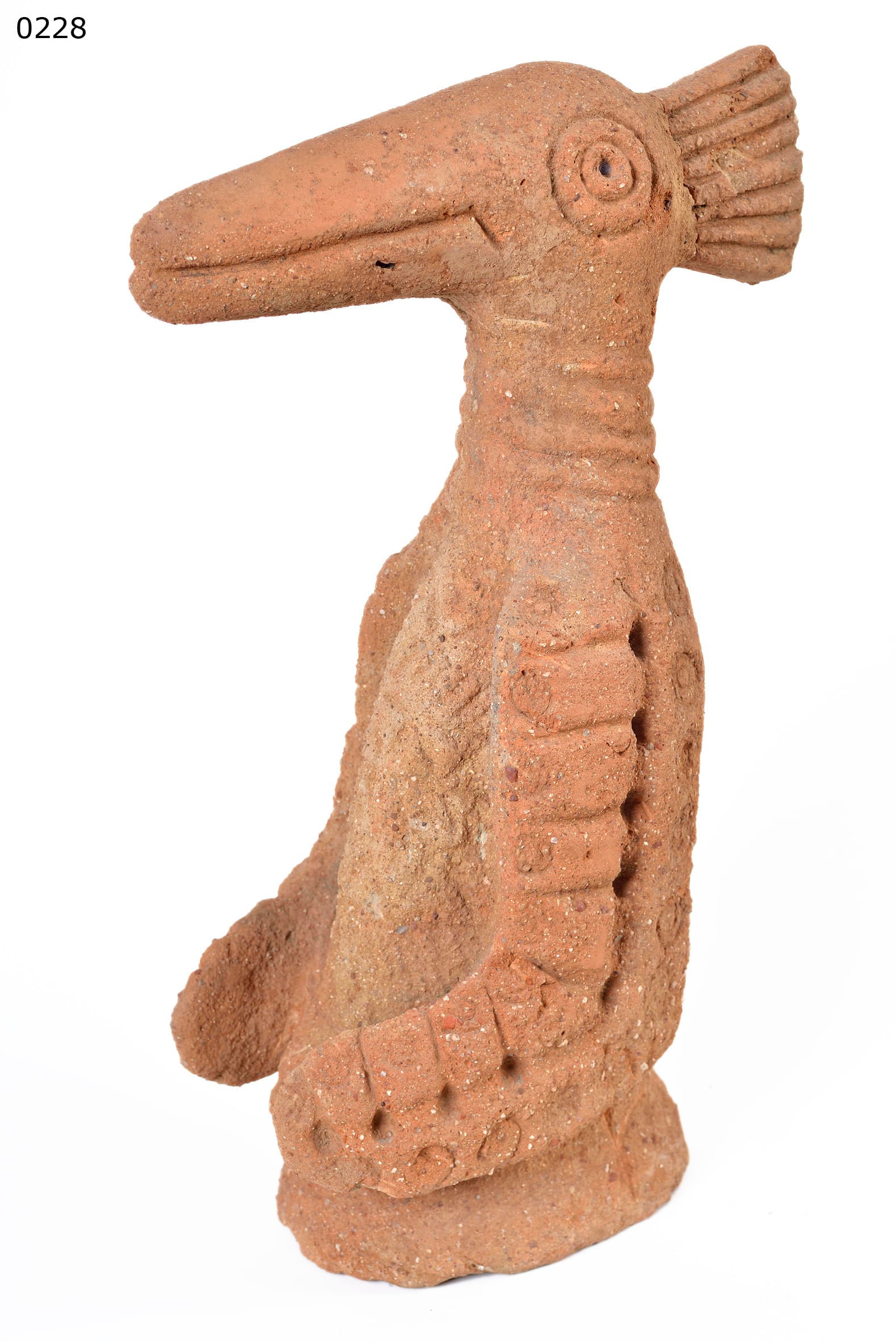
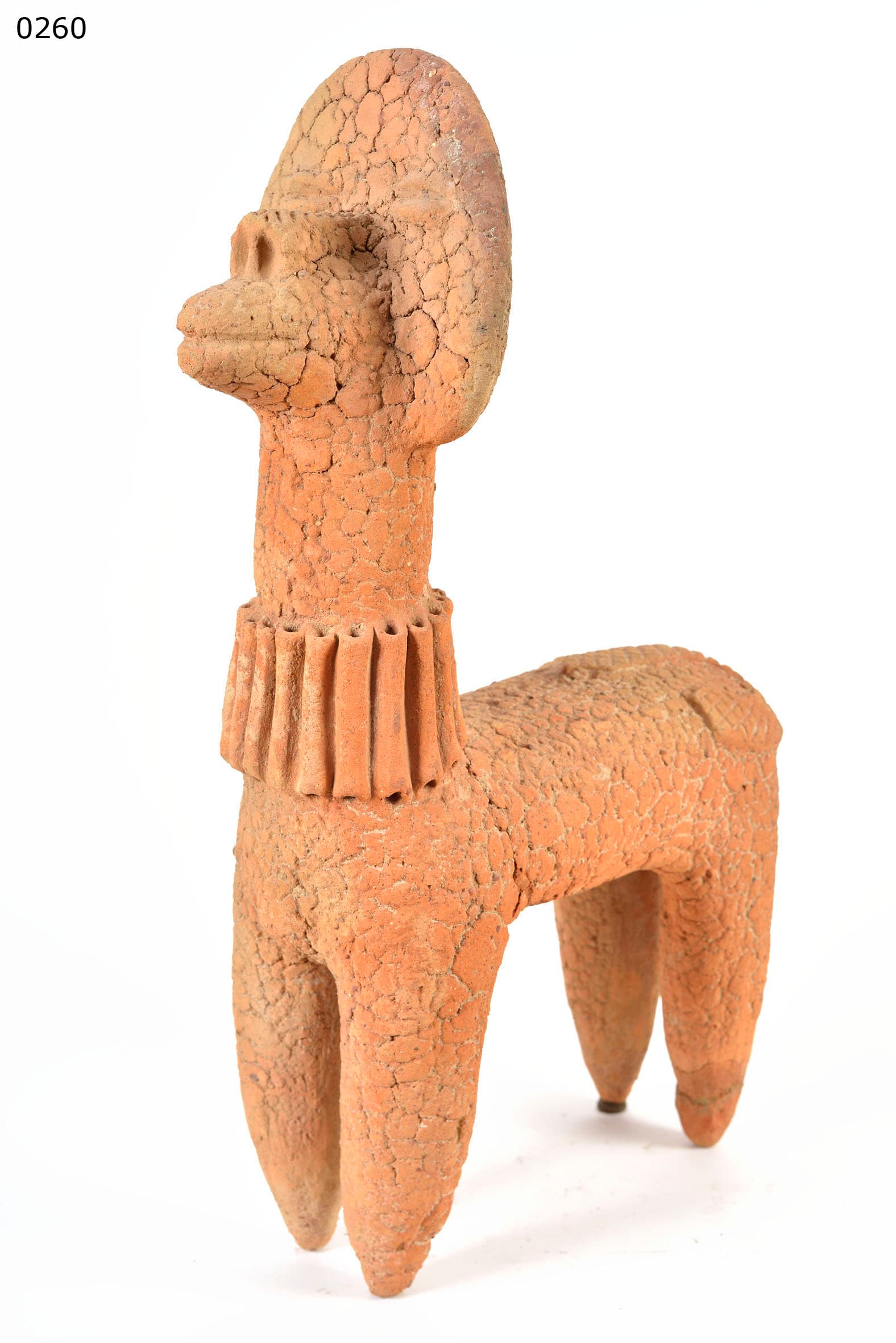
Eine monumentale Djenne-Mutterschafts-Terrakotta (12.-16. Jh., 39 cm) aus Mali - sie stellt eine Mutter dar, die Zwillinge stillt, mit außerordentlich komplizierten anatomischen und ornamentalen Details, mit länglichem Gesicht, wulstigen, parallel eingeschnittenen Augen und ausgeprägter Skarifikation, die Schwemmfläche ist stark verwittert. Gepaart mit 0314.
1. Die Djenne-Jeno-Mutterschaftstypologie
Die Mutterschaftsfiguren aus Djenne-Jeno und der weiteren Region des Nigerdeltas gehören zu den am meisten verehrten und komplexesten Formen der mittelalterlichen malischen Kunst - und dieses 39 cm große Monumentalstück veranschaulicht diese Tradition eindringlich.
- Seltenes Zwillingsstillmotiv: Die Darstellung einer Mutter, die aktiv zwei Kinder stillt, ist ein seltenes und sehr geschätztes Motiv - ein Symbol für außergewöhnlichen Ahnensegen und die Vermehrung der Abstammung.
- Extreme Applikationsdetails: Komplizierte Tonapplikationen konstruieren schwere Augenlider, Halsketten, Armbänder und Keloid-Narbenmuster - hier in detailreicher Ausführung.
2. Fruchtbarkeitsschreine und das Konzept der Nyama
Im kosmologischen Denken der Mande besaßen die Frauen eine bedeutende Nyama (spirituelle Lebenskraft), vor allem im Hinblick auf die gefährliche Schwelle der Geburt eines Kindes.
- Votivschrein-Objekte: Diese Figuren wurden in Fruchtbarkeitsschreinen aufgestellt oder in die Lehmziegelwände von Elitehäusern eingebaut.
- Zwillingssymbolik: Eine Zwillingsstillfigur verstärkt die Bitte - sie beschwört nicht nur eine erfolgreiche Schwangerschaft, sondern auch den außergewöhnlichen Segen der Doppelgeburt, den Wohlstand und das Fortbestehen der Dynastie in der rauen mittelalterlichen Sahelzone.
3. Alluviale Validierung
Die Patina ist typisch für Objekte, die im anaeroben, überschwemmungsgefährdeten Schlamm des Nigerdeltas begraben wurden.
- Komplexe Stratigraphie: Der Ton offenbart eine komplexe Stratigraphie aus verkalkten grauen Krusten, Flusssedimenten und antiken Trankopferabdrücken.
- Monumentales Überleben: Das Überleben der filigranen Applikationselemente in dieser monumentalen Größe von 39 cm deutet auf ein sorgfältiges, ungestörtes Vergraben im weichen malischen Schlamm hin.
Zusammenfassung
Diese Mutterschaftsfigur aus Djenne dokumentiert das Motiv der Zwillingsnahrung in monumentalem Maßstab und veranschaulicht die Technik der Keramikapplikation. Ihre seltene Ikonographie und der Erhaltungszustand machen sie zu einem bedeutenden Zeugnis der Kunstgeschichte des Nigerdeltas.
KI-unterstützt erstellt aus Sammlungsgutachten, Objektfotografie und eigener Recherche, redaktionell geprüft. Fehler sind möglich — Hinweise darauf sind uns willkommen. Zum Verfahren →