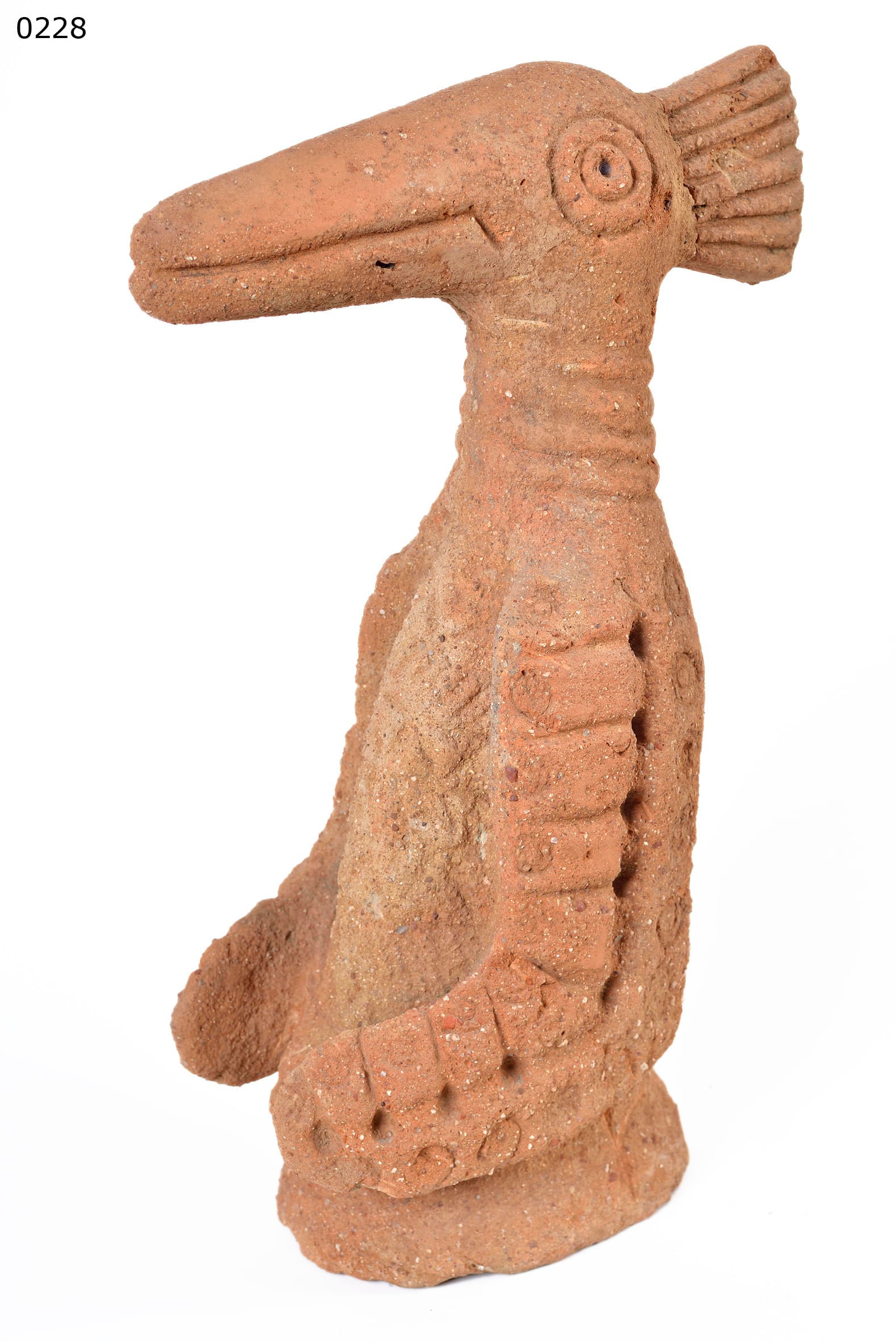
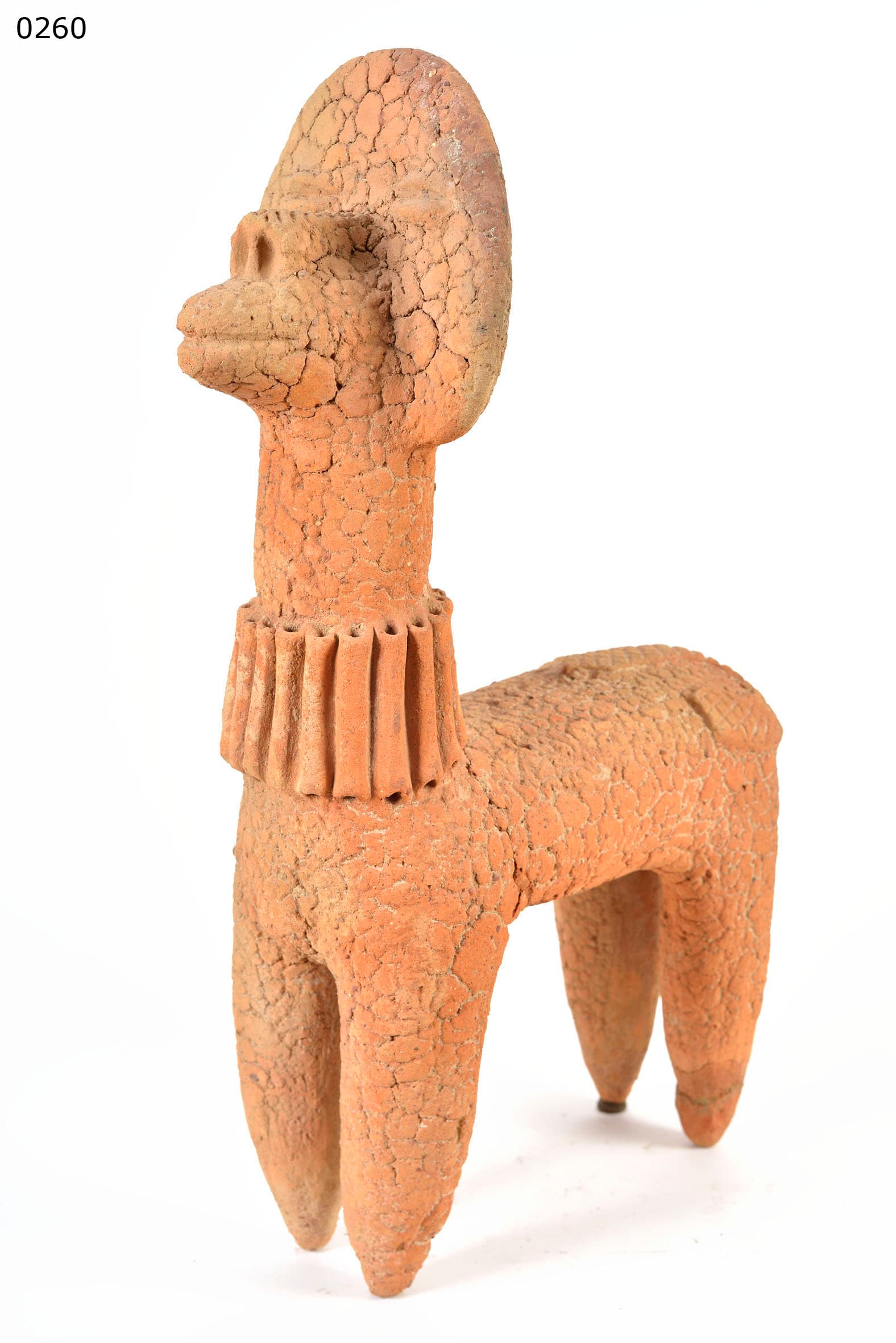
Eine dynamische Djenne-Reiter-Terrakotta (12.-18. Jh., 27 cm) aus Mali - ein Krieger zu Pferd, schwer beladen mit kriegerischen Ausrüstungsgegenständen, einschließlich eines auffälligen Köchers, der auf seinem Rücken befestigt ist. Die Figur zeigt meisterhafte Djenne-Applikationen auf dem Geschirr, dem Schmuck des Reiters und den Gesichtszügen, die durch einen warmen, blass-ockerfarbenen Anschwemmungsschlicker vereint werden.
1. Die kriegerische Ästhetik des Mali-Reiches
Im Gegensatz zum stark abstrahierten Koma-Reiter setzt der Djenne-Reiter auf einen detaillierten erzählerischen Realismus, um Macht zu demonstrieren.
- Historische Dokumentation: Kunsthandwerker aus dem Inland des Nigerdeltas haben die kriegerische Realität des mittelalterlichen Mali- und Songhai-Reiches akribisch dokumentiert.
- Kavallerieausrüstung mit Applikationen: Die aufwendige Applikation von Tonspiralen für das Zaumzeug des Pferdes, die Armbänder des Reiters und vor allem der große, stark detaillierte Pfeilköcher bieten einen detailreichen Einblick in die sahelische Kavallerieausrüstung des 12. bis 16.
2. Der Kult des Krieger-Helden
In der Djenne-Kultur stellen Reiterfiguren die Apotheose des fama (oberster Anführer oder Kriegsherr) dar.
- Heldengedenken: Wahrscheinlich werden sie zum Gedenken an legendäre Gründer, militärische Helden oder aristokratische Vorfahren in Auftrag gegeben.
- Ewiger kriegerischer Schutz: Durch die Platzierung einer so aufwendigen, schwer bewaffneten Figur in einem Schrein oder Grab sicherte sich das Geschlecht den ewigen Schutz durch einen kriegerischen Geist - die Betonung des Köchers deutet auf einen Meister der Jagd oder einen Veteranen der ausgedehnten Kavallerie-Feldzüge der damaligen Zeit hin.
3. Konservierung und alluviale Verkrustung
Der Erhaltungszustand ist angesichts seiner Komplexität bemerkenswert.
- Ungestörte weiche Bestattung: Das Überleben feiner applizierter Elemente - Zügel, Köcherdetails, hervorstehende Gliedmaßen - deutet auf eine sorgfältige, ungestörte Bestattung im weichen malischen Schlamm hin.
- Kalzifizierte, staubige Haut: Die Oberfläche ist mit einer trockenen, blassen, staubigen Patina überzogen, die für Terrakotta charakteristisch ist, die jahrhundertelang in den Überschwemmungsgebieten des Niger untergetaucht war und zu einer dichten, kalzifizierten Haut getrocknet ist, die für ein hohes Alter spricht.
Zusammenfassung
Dieser Reiter aus Djenne gilt als detailgetreues historisches Dokument der militärischen Macht der mittelalterlichen Sahelzone und als ein herausragendes Beispiel der Keramiktechnik und Erzählkunst. Mit seiner dynamischen Haltung und seiner charakteristischen Anschwemmung stellt er ein bedeutendes Zeugnis afrikanischer archäologischer Kunst dar.
KI-unterstützt erstellt aus Sammlungsgutachten, Objektfotografie und eigener Recherche, redaktionell geprüft. Fehler sind möglich — Hinweise darauf sind uns willkommen. Zum Verfahren →