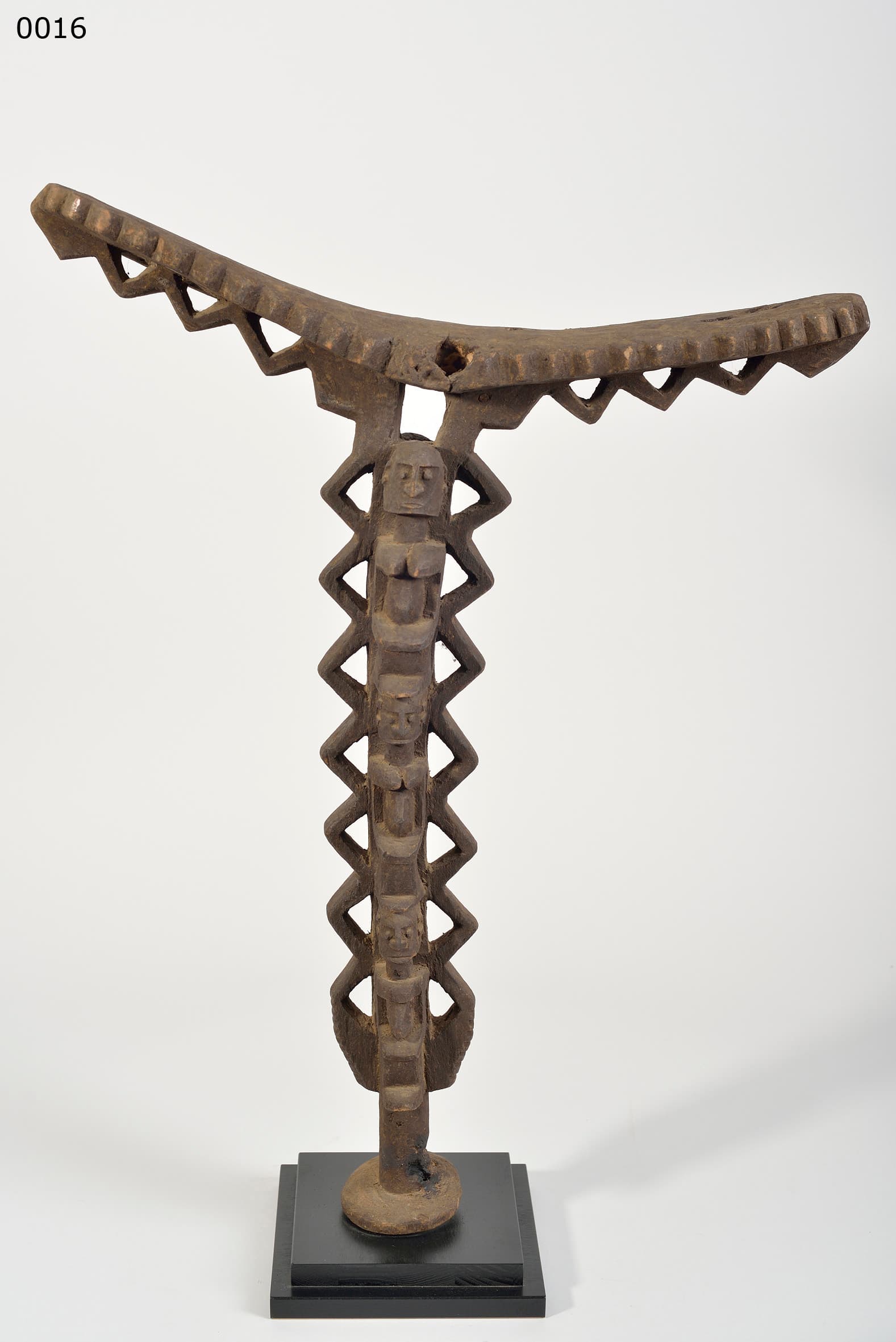
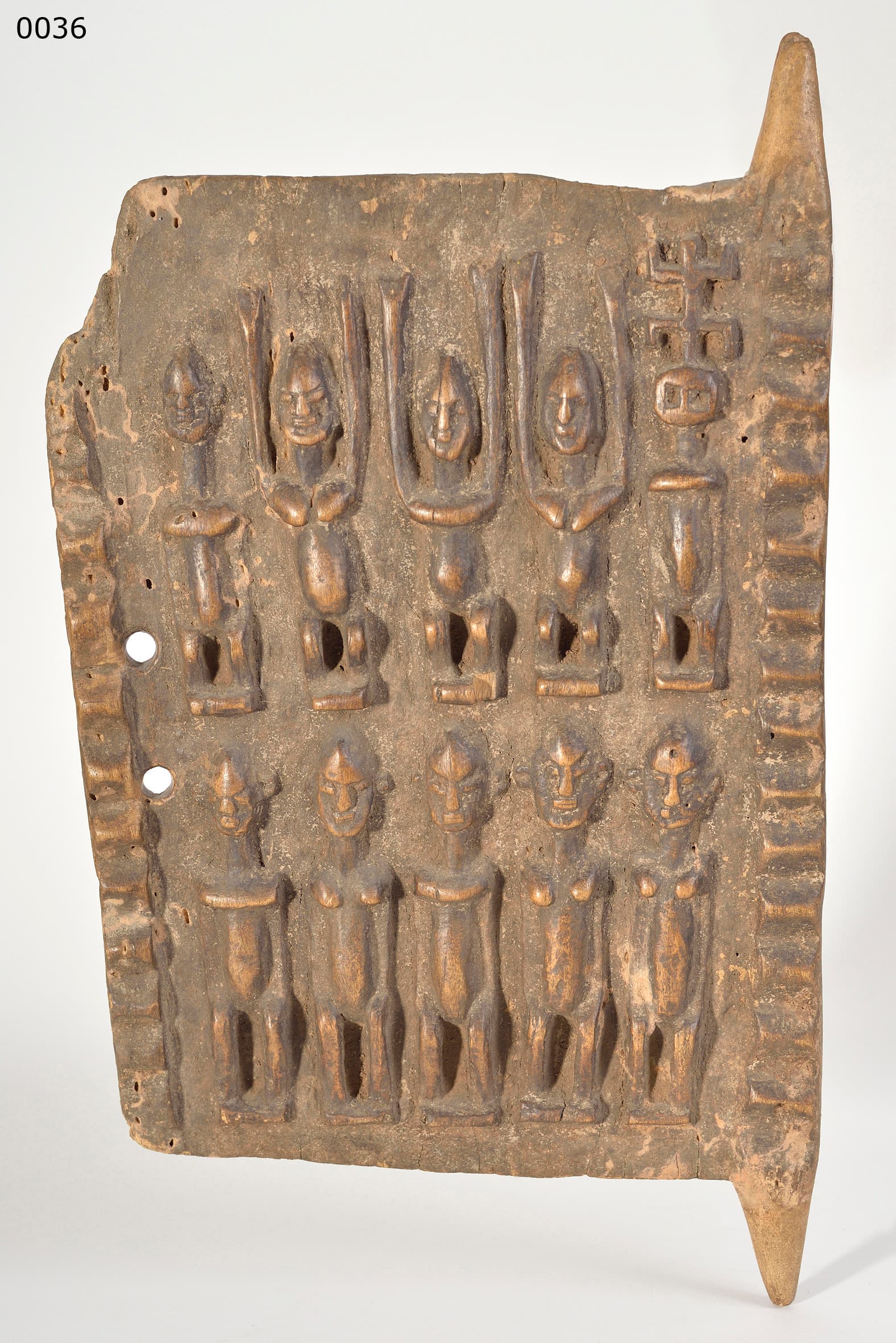
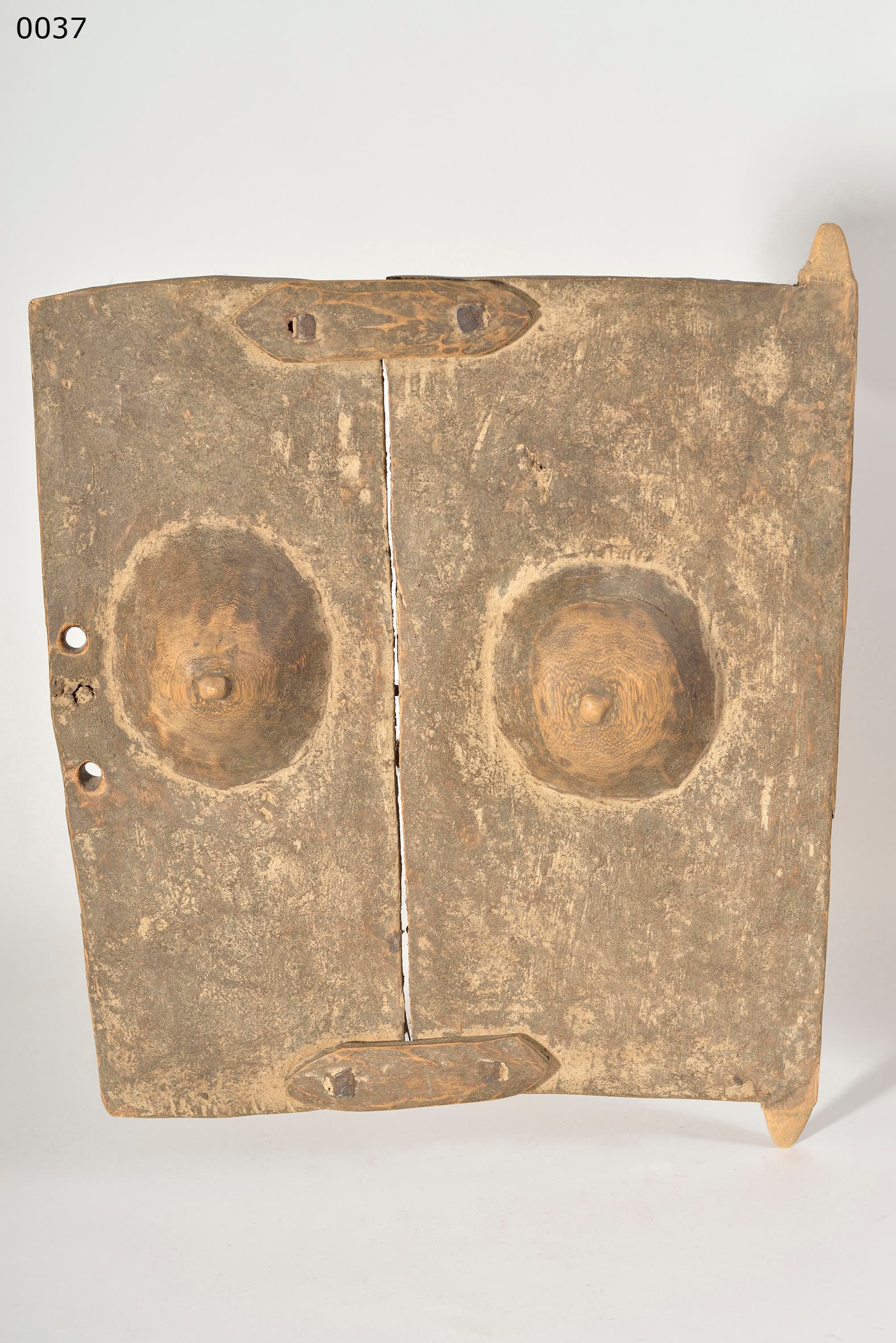
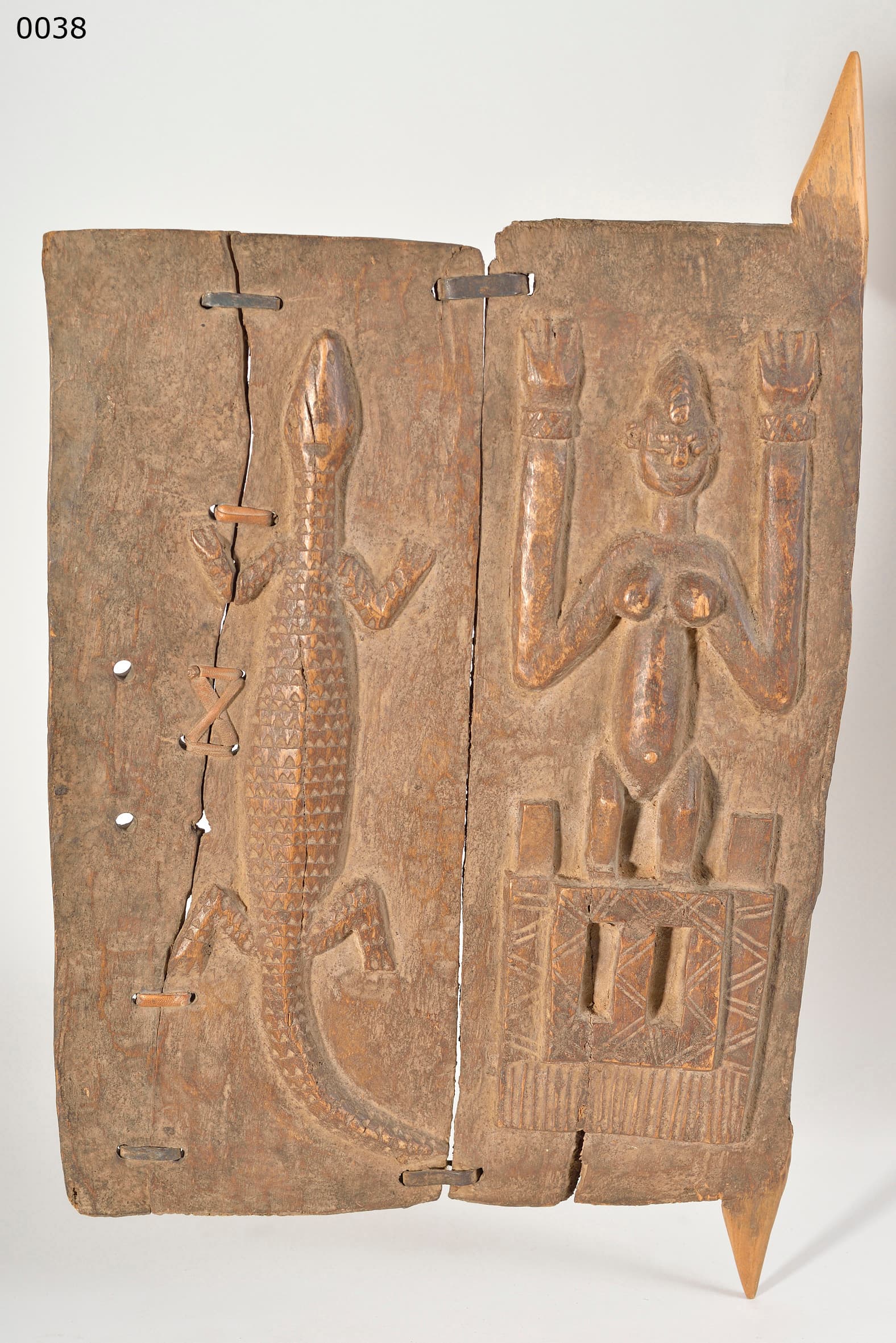
Ein schwerer zylindrischer hölzerner Ritualmörser, der wahrscheinlich von den Dogon oder Tellem in Mali stammt. Er ist mit einem durchgehenden Hochrelieffries aus stark stilisierten geometrischen anthropomorphen Figuren verziert, die Schulter an Schulter stehen, das Holz ist stark ausgetrocknet und weist tiefe strukturelle Altersrisse unter einer alten trockenen grau-braunen oxidierten Patina auf. Stamm, Land, Material, Größe und Alter sind in der Excel-Registrierung nicht enthalten; die Zuordnung wird anhand der visuellen Merkmale extrapoliert
1. Ästhetik des architektonischen Frieses
Das Objekt zeigt deutlich die visuellen Merkmale westafrikanischer Architektur- und Gebrauchsschnitzerei.
- Linienfries: Das durchgehende Band von Figuren - mit gebeugten Knien, blockartigen Köpfen und symmetrisch auf dem Bauch ruhenden Händen - ist ein klassisches Motiv, das die Abstammung, die Solidarität der Vorfahren und die ununterbrochene Kette menschlicher Generationen, die die Gemeinschaft stützen, darstellt.
- Dogon/Tellem-Geometrie: Die strenge geometrische Reduktion deutet eher auf die Traditionen des Bandiagara-Steilhangs (Dogon oder Tellem) hin als auf die weicheren Formen der westafrikanischen Küstengebiete.
2. Der Heilige Mörser
In vielen animistischen Gesellschaften Westafrikas ist der Mörser nicht nur ein nützliches Werkzeug zum Zerstoßen von Hirse - er ist ein tiefgründiges weibliches Symbol für Verwandlung, Fruchtbarkeit und Lebensunterhalt.
- Zeremonielle Reservierung: Stark verzierte Mörser dieses Kalibers waren streng dem zeremoniellen Gebrauch vorbehalten.
- Heilige Zubereitungen: Sie wurden verwendet, um heilige Speisen für hochrangige Feste zuzubereiten, um Heilkräuter für geheime Heilungen zu zerkleinern oder um bei Erntefesten als buchstäbliche Altäre zu dienen, die die spirituelle Kraft der Vorfahren mit der physischen Nahrung des Dorfes verbanden.
3. Austrocknung und physische Degradierung
Der physische Zustand deutet auf extremes Alter und langes Ausgesetztsein in einem trockenen, rauen Klima wie in den Sahel-Zonen von Mali hin.
- Vertikale Kernholzrisse: Tiefe, vertikal durch das Kernholz verlaufende Austrocknungsrisse in Verbindung mit stark erodierten weichen Kanten an den geschnitzten Figuren deuten eher auf jahrhundertelange Verwitterung durch die Umwelt als auf eine aktive Handhabung hin.
- Keine ölige Patina: Das Fehlen einer öligen Patina deutet darauf hin, dass der Mörser in einem Ahnenschrein oder Höhlenkomplex aufbewahrt wurde, wo er über Generationen langsam oxidierte.
Zusammenfassung
Trotz des Fehlens spezifischer Katalogdaten stellt dieses Artefakt ein tiefgreifendes Monument westafrikanischer ritueller Nützlichkeit dar. Seine schweren rhythmischen Schnitzereien und die intensive atmosphärische Verwitterung kennzeichnen es als ein altes und höchst bedeutendes Zeremonialgefäß.
KI-unterstützt erstellt aus Sammlungsgutachten, Objektfotografie und eigener Recherche, redaktionell geprüft. Fehler sind möglich — Hinweise darauf sind uns willkommen. Zum Verfahren →