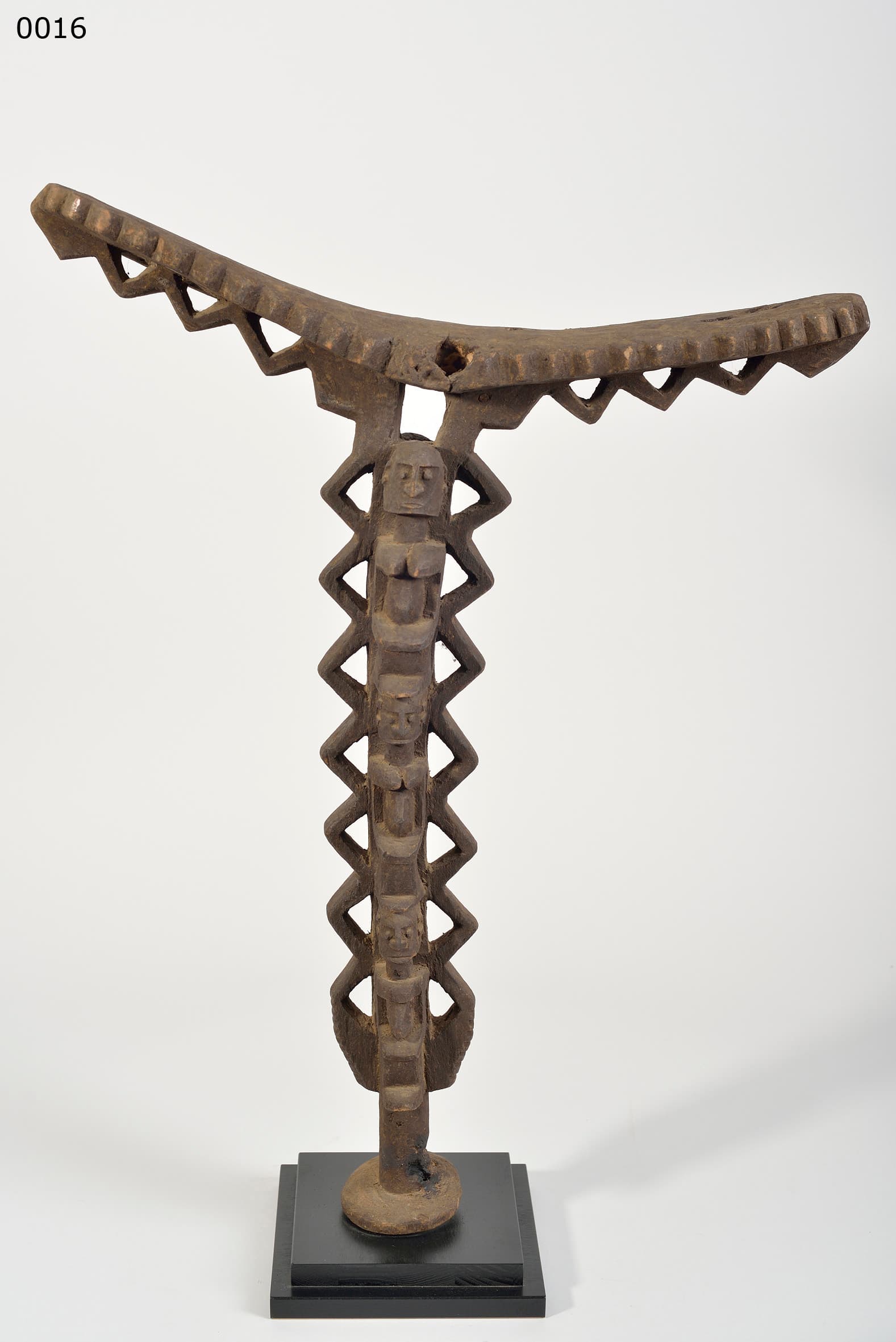
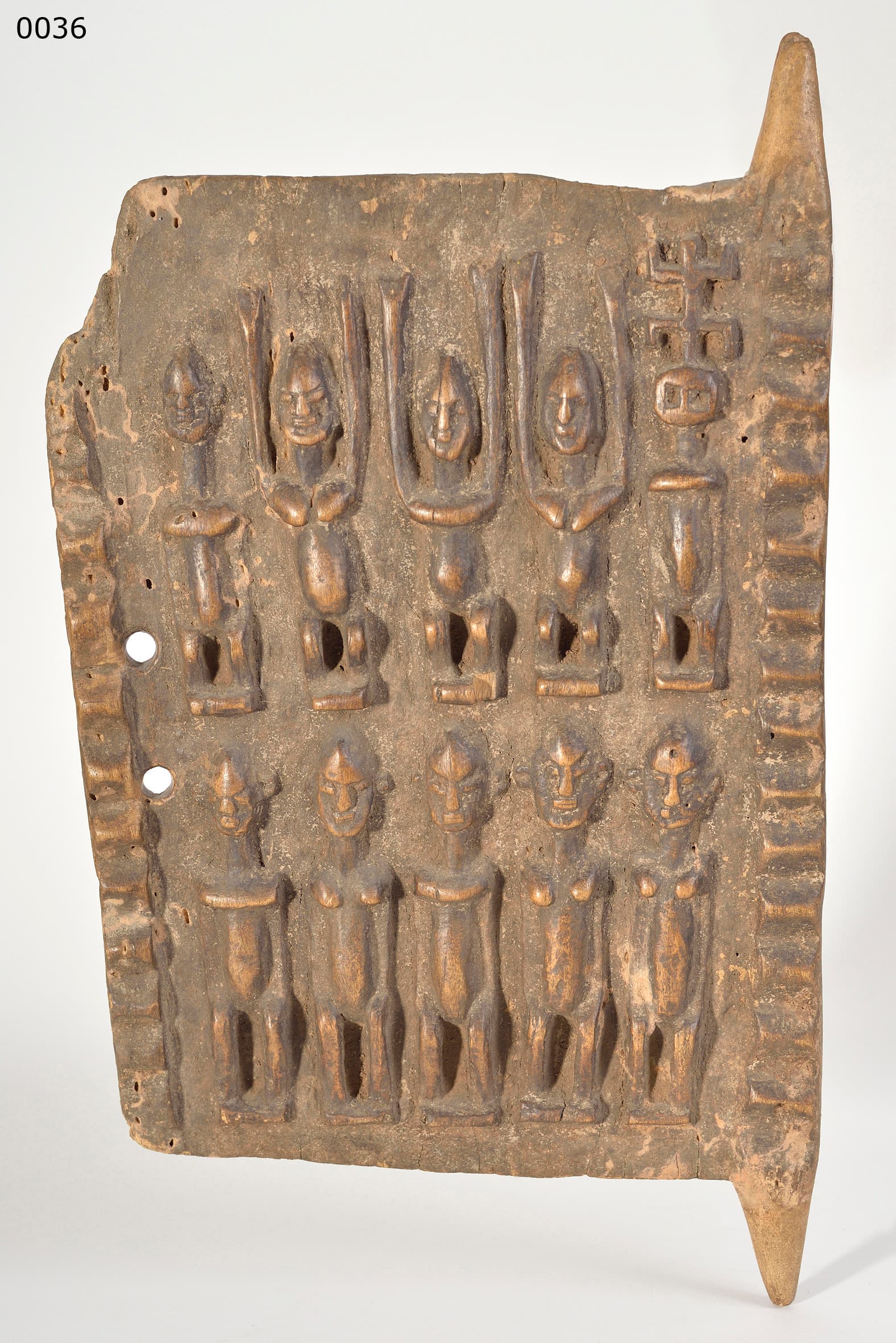
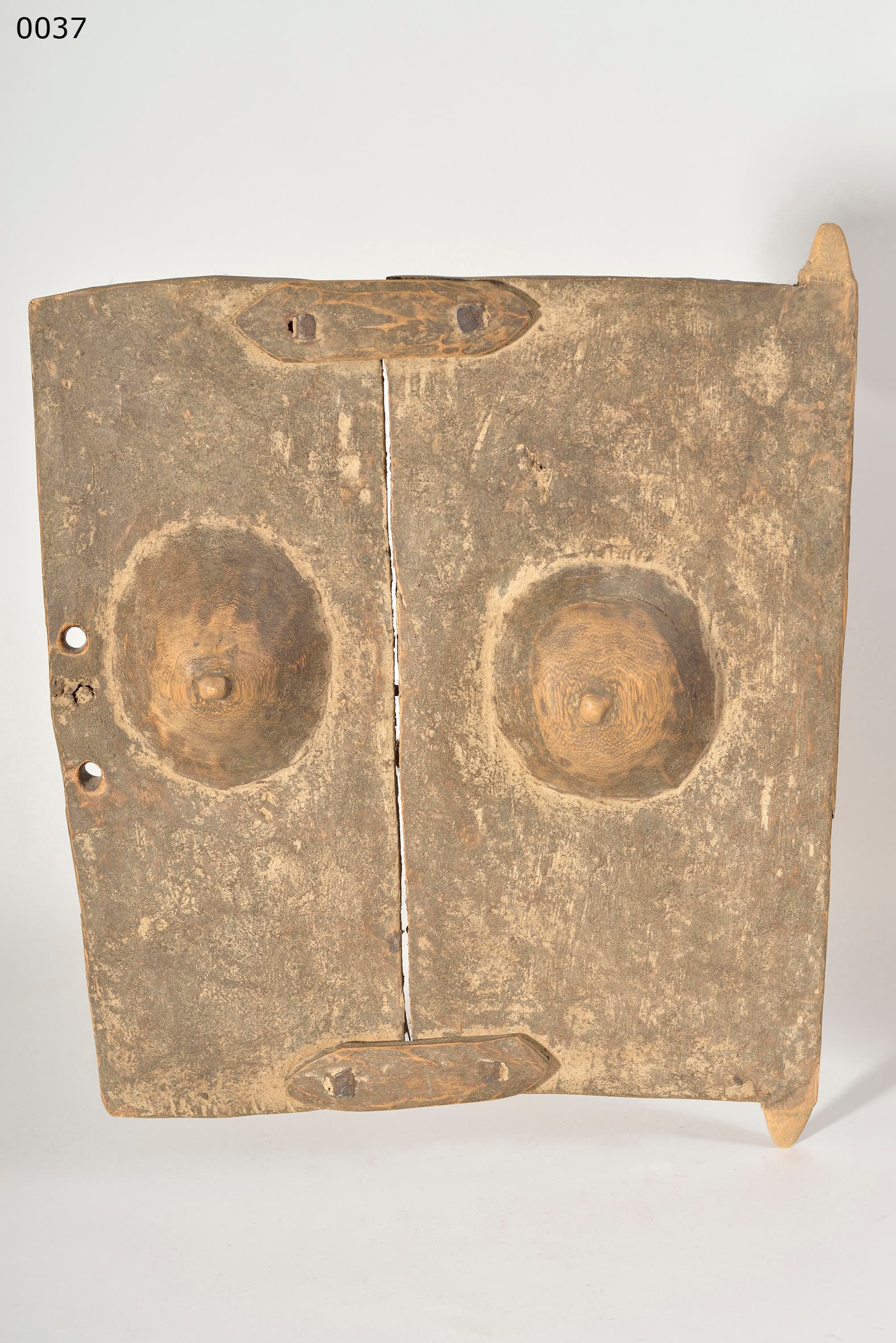
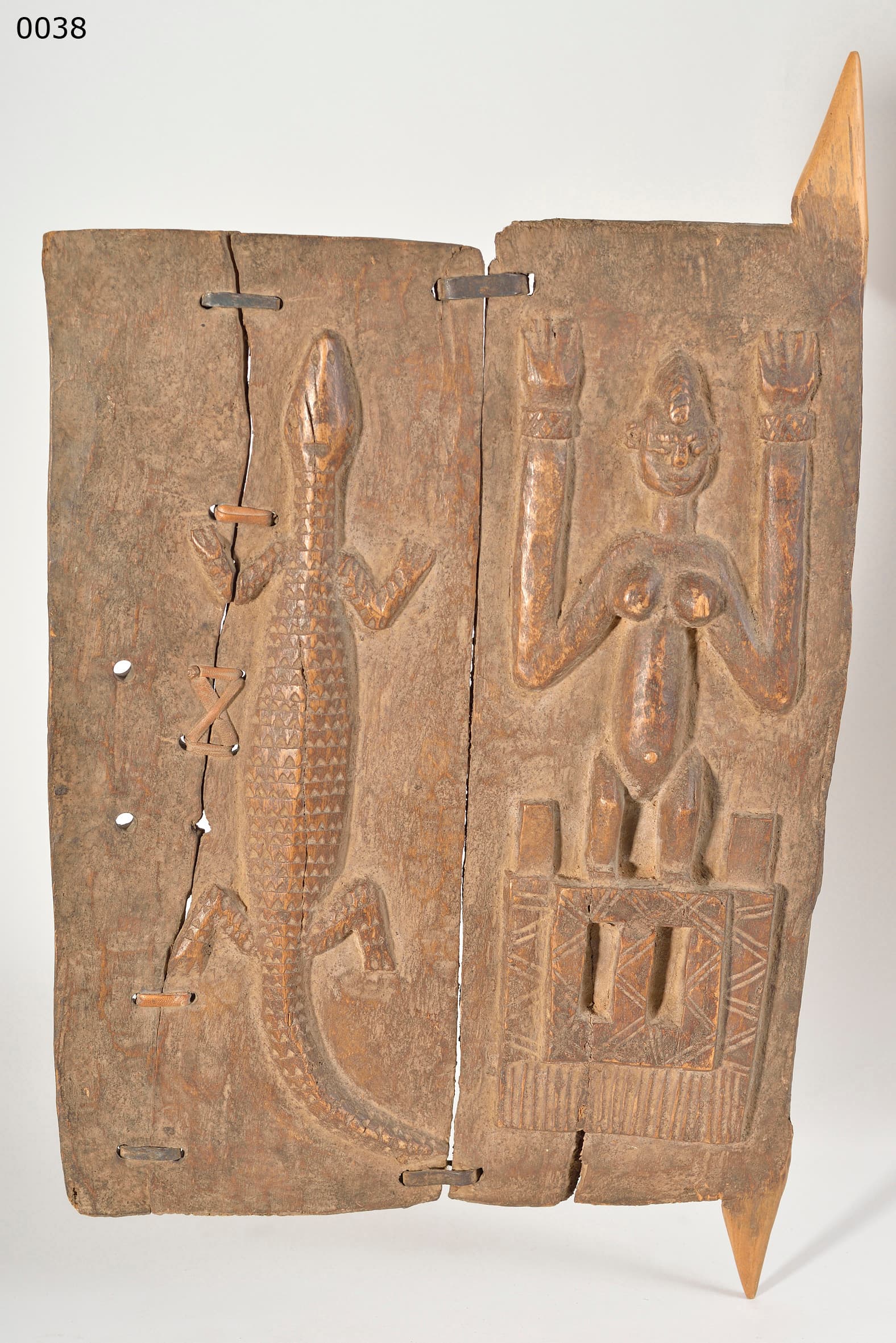
Ein Dogon-Urzeitpaar (dem 19. Jh. zugeschrieben, 48 cm) aus Mali - eine männliche und eine weibliche Figur, die aus einem einzigen Stück stark verwitterten Holzes geschnitzt sind und zusammen auf einem gemeinsamen Hocker sitzen. Sie zeigen die klassische kubistische Geometrie der Dogon mit helmartigen Köpfen, sagittalen Kämmen und starren röhrenförmigen Gliedmaßen, das Holz ist extrem trocken, erodiert und stark zerklüftet.
1. Dogon-Kubismus und ursprüngliche Geometrie
Dieses Stück gilt als ein anschauliches Beispiel für den architektonischen Schnitzstil der Dogon.
- Intersecting Volumes: Der Künstler stellt sich den menschlichen Körper als eine Reihe sich überschneidender geometrischer Volumen vor - Zylinder für Torsos und Gliedmaßen, Kugeln für Brüste und ausgeprägte helmartige Formen für Köpfe.
- Vorläufer der Moderne: Die starre Vertikalität und absolute Symmetrie vermitteln ein Gefühl von zeitloser Stille und struktureller Beständigkeit - dieser strenge Kubismus hat die westliche moderne Kunst des frühen 20. Jahrhunderts stark beeinflusst.
2. Der Nommo und der Mythos der Schöpfung
Diese Skulptur stellt das Urpaar, den Nommo, dar, das in der Schöpfungsmythologie der Dogon eine zentrale Rolle spielt.
- Ammas erste Wesen: Nach der Dogon-Kosmologie erschuf der Schöpfergott Amma die ersten androgynen Wesen, aus denen die unterschiedlichen männlichen und weiblichen Prinzipien hervorgingen, um die Erde zu bevölkern.
- Heiliger Schrein des Hogon: Auf einer gemeinsamen Plattform sitzend, symbolisiert das Paar die kosmische Dualität, das menschliche Gleichgewicht und die landwirtschaftliche Fruchtbarkeit - Figuren, die so heilig sind, wurden in den privaten Schreinen des Hogon (des obersten spirituellen und politischen Führers eines Dogon-Dorfes) aufbewahrt, um den Fortbestand des Lebens und der kosmischen Ordnung zu gewährleisten.
3. Austrocknung des Steilhangs und extremes Altertum
Die physischen Bedingungen sind untrennbar mit der Geographie des Dogon-Volkes verbunden.
- Bandiagara-Höhlentrocknung: Das Holz wurde in Schreinen aufbewahrt, die sich in den trockenen Höhlen des Bandiagara-Steilhangs befanden, und hat eine extrem langsame Austrocknung erfahren.
- Wind-erodierte Kanten: Tiefe vertikale Risse durch die Torsi, weiche wind-erodierte Kanten an den Gesichtszügen und das völlige Fehlen jeglicher klebriger oder öliger Patina sind klassische Merkmale, die für ein hohes Alter sprechen - das Holz wirkt durch den Einfluss der trockenen Saharawinde stark verwittert.
Zusammenfassung
Als tiefgründige Visualisierung der westafrikanischen Entstehungsmythologie zeigt dieses Dogon-Urzeitpaar eine eindrucksvolle geometrische Abstraktion. Die starke Trockenerosion spricht für eine Herkunft aus den Höhlen der Bandiagara-Klippen und stützt eine Datierung in das 19. Jahrhundert.
KI-unterstützt erstellt aus Sammlungsgutachten, Objektfotografie und eigener Recherche, redaktionell geprüft. Fehler sind möglich — Hinweise darauf sind uns willkommen. Zum Verfahren →