Eine Fon bocio-Assemblage (wohl 1. Hälfte 20. Jh., 50 cm) aus der Republik Benin - eine geschnitzte anthropomorphe Holzfigur, die eng in grobe Textilien eingewickelt ist und als Anker für ein Bündel schwerer geschmiedeter Eisengeräte dient, darunter konische Glocken und Hakenstäbe, die durch eine dichte dunkle, krustige Patina aus Opferblut, Palmöl und Erde vereint sind.
1. Die additive Ästhetik des Vodun
Die Kunst der Fon ist bekanntlich durch ihre "additive" Ästhetik definiert - die Holzschnitzerei ist lediglich der Ausgangspunkt.
- Bewaffnete Figur: Dieser Bocio bezieht seine visuelle und spirituelle Kraft aus der intensiven Anhäufung von externen Materialien - Eisenglocken (um Geister zu rufen) und Eisenstäbe (die Ogun / Gu, den Gott des Eisens und des Krieges, repräsentieren), die direkt am Oberkörper befestigt sind.
- Visuell chaotisch, zutiefst einschüchternd: Die Anhäufung schafft eine visuell chaotische, zutiefst einschüchternde Form, die Ehrfurcht und Angst hervorrufen soll.
2. Psychologische Kriegsführung und spiritueller Schutz
Im Rahmen des Vodun ist ein Bocio ein Ersatzkörper und eine magische Batterie, die von einem Fa-Wahrsager oder Priester durch geheime Beschwörungen und organische Opfergaben aktiviert wird.
- Aggressive Verteidigung: Diese spezielle Figur, schwer beladen mit Eisenwaffen und Glocken, wurde wahrscheinlich zum aggressiven Schutz oder zur spirituellen Vergeltung geschaffen.
- Schwellenwächter: Wird an der Schwelle eines Geländes oder in einem privaten Schrein aufgestellt, um Flüche abzufangen, Hexerei abzuwehren und bösartige Absichten, die sich gegen seinen Besitzer richten, physisch zu absorbieren.
3. Ausgeprägte Opferverkrustung
Die dichte Patina verweist auf den rituellen Gebrauch des Objekts.
- Wiederholte Trankopfer: Die dicke geschwärzte Kruste, die Holz, Textilien und Eisen überzieht, ist das Ergebnis wiederholter Trankopfer über einen längeren Zeitraum - Mischungen aus Tierblut, Hirsebrei, Palmöl und Ton, die über das Objekt gegossen wurden, um den aktivierenden Geist zu nähren.
- Charakteristische Alterungsspuren: Die Art und Weise, wie diese Kruste gehärtet, gerissen und auf den Eisenglocken oxidiert ist, spricht für eine natürliche Alterung und stützt die Zuschreibung an den traditionellen Vodun-Kult.
Zusammenfassung
Diese Bocio ist eine eindringliche Manifestation der Fon-Vodun-Theologie - sie nutzt Eisen und organische Ansammlungen, um rituelle Kraft zu projizieren. Sein komplexer Aufbau und seine ausgeprägte Opferkruste machen es zu einem bemerkenswerten Zeugnis westafrikanischer esoterischer Kunst.
KI-unterstützt erstellt aus Sammlungsgutachten, Objektfotografie und eigener Recherche, redaktionell geprüft. Fehler sind möglich — Hinweise darauf sind uns willkommen. Zum Verfahren →

Seltene Kraftfigur (verwendet in VOODOO-Zeremonien)
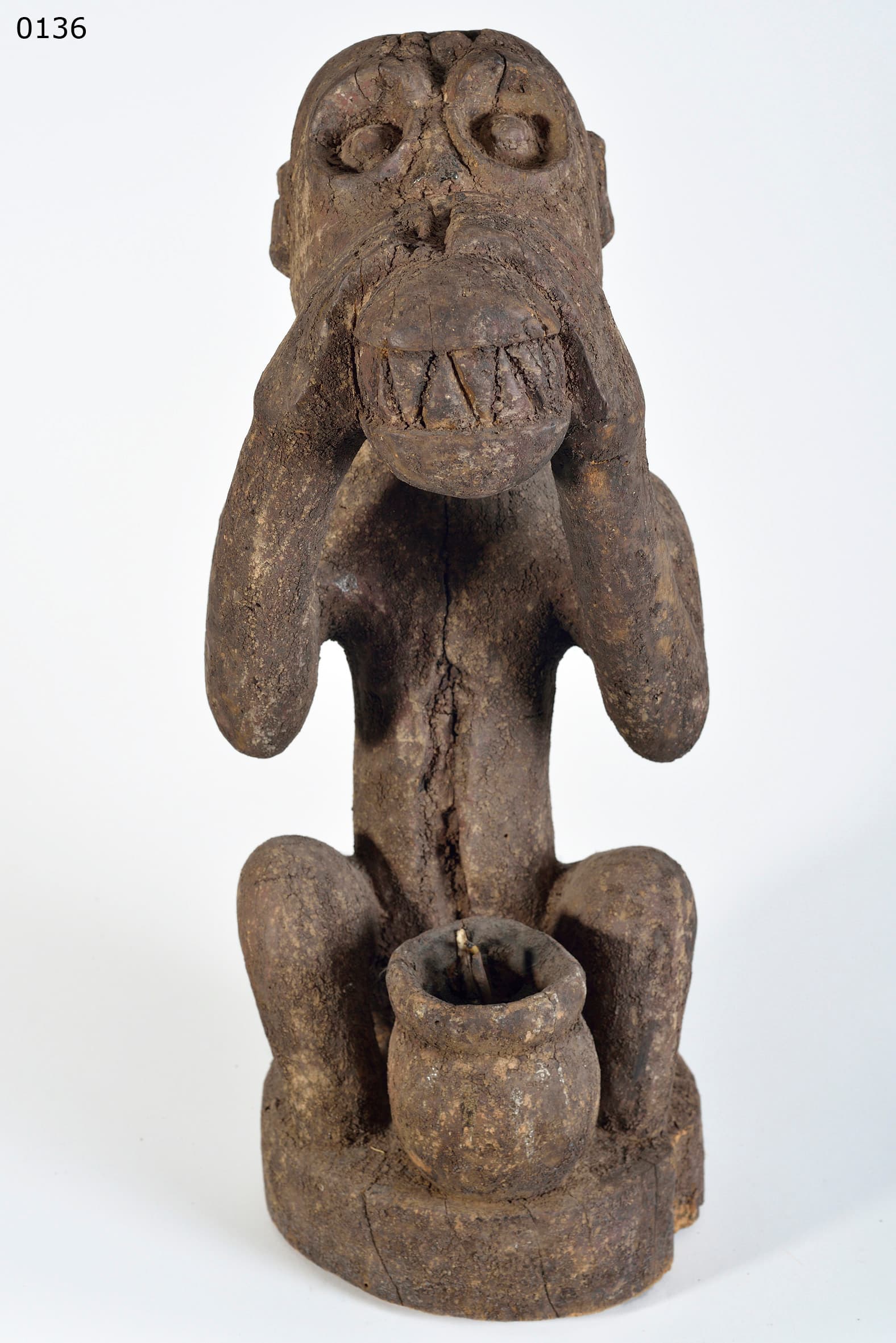
Affenschreinfigur
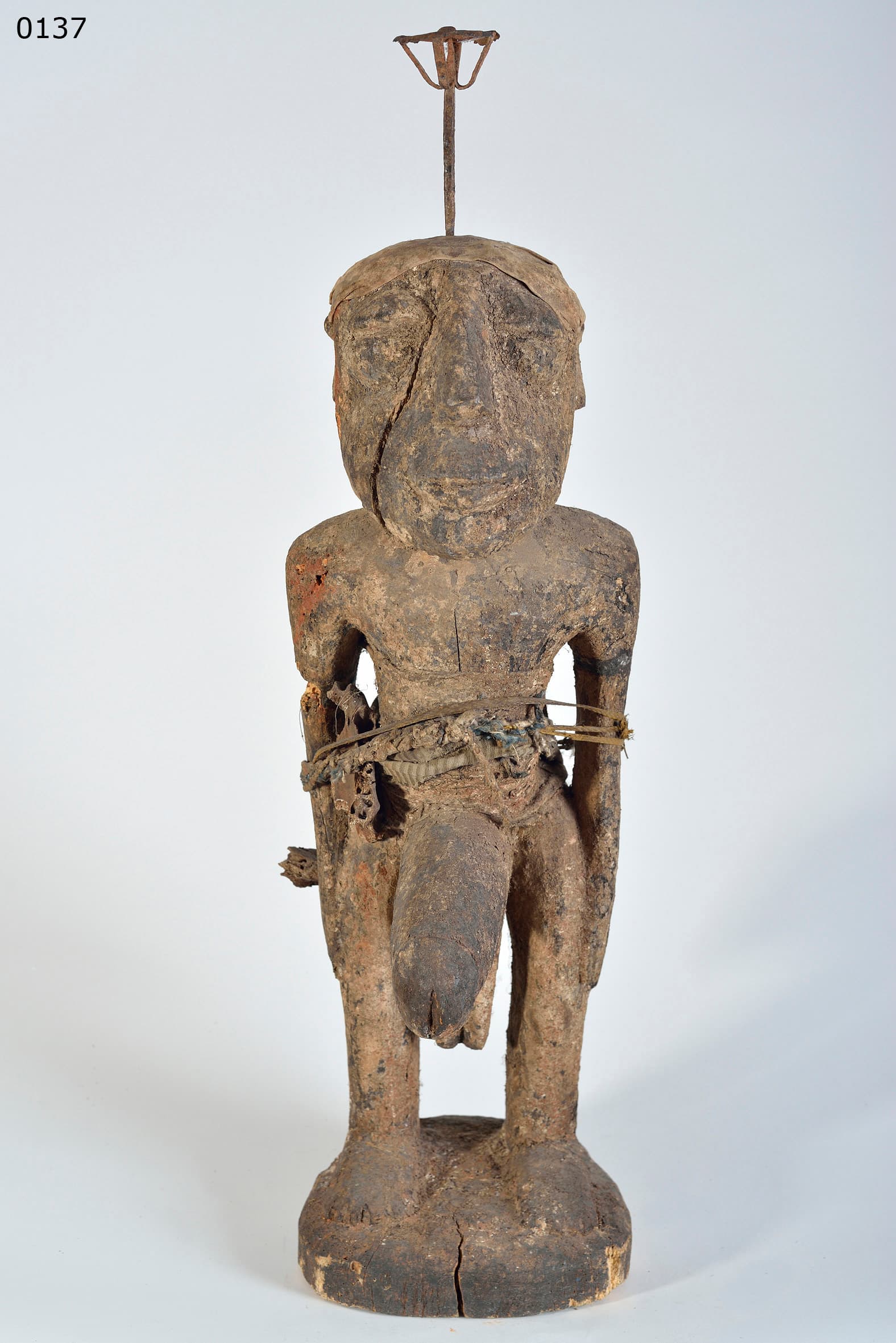
BOCIO-Statue (wird bei Voodoo-Zeremonien verwendet)
