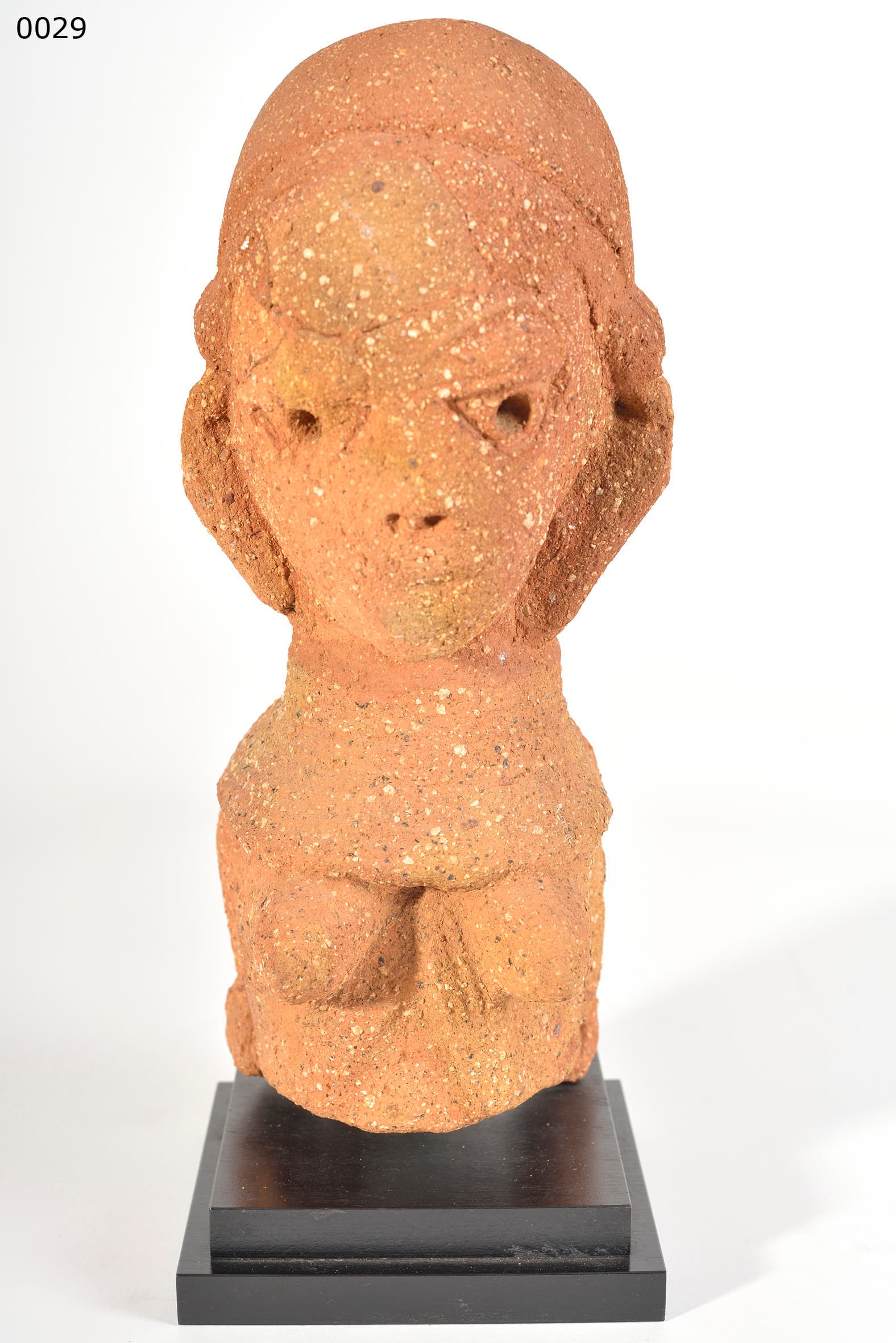
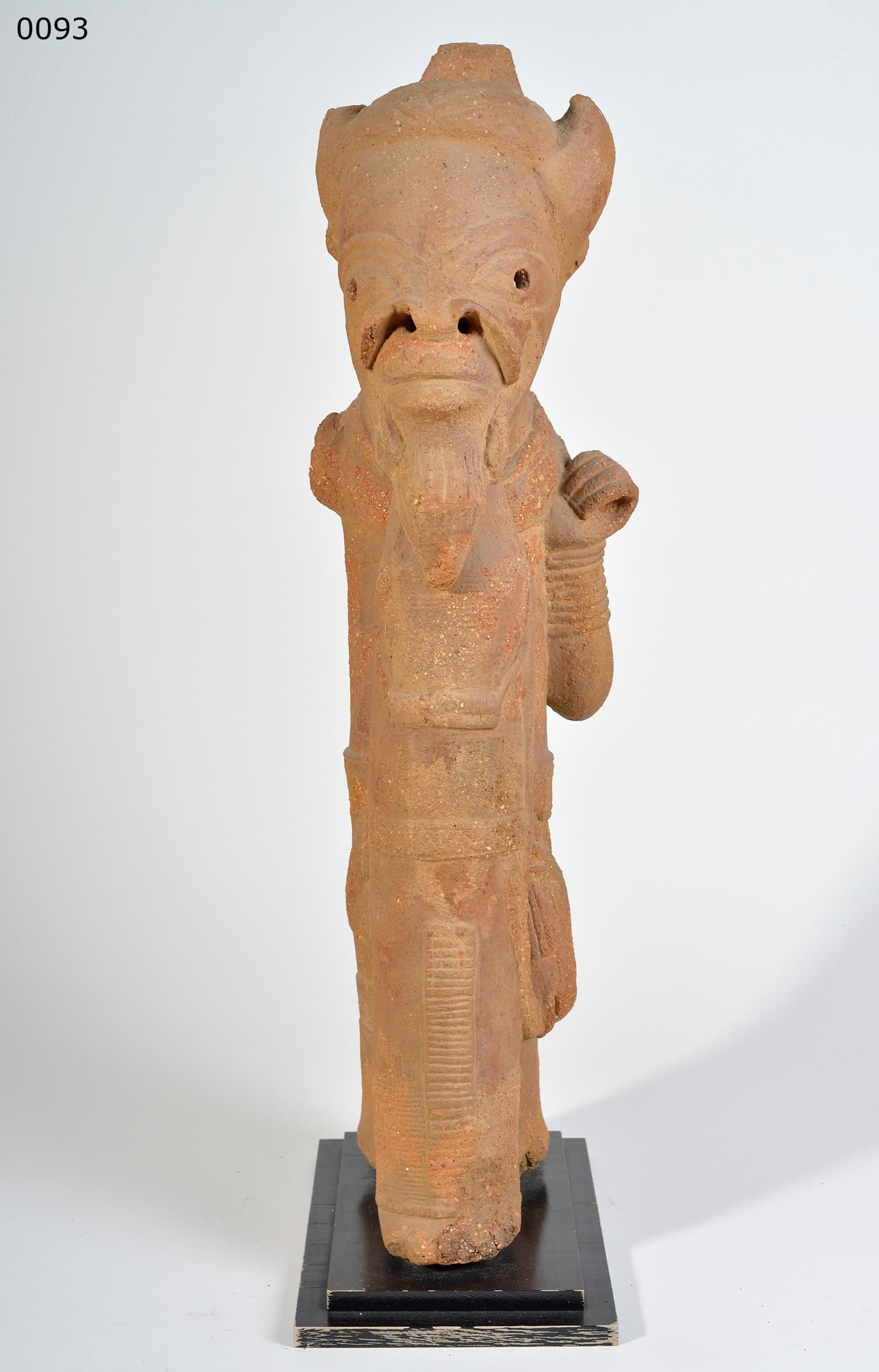
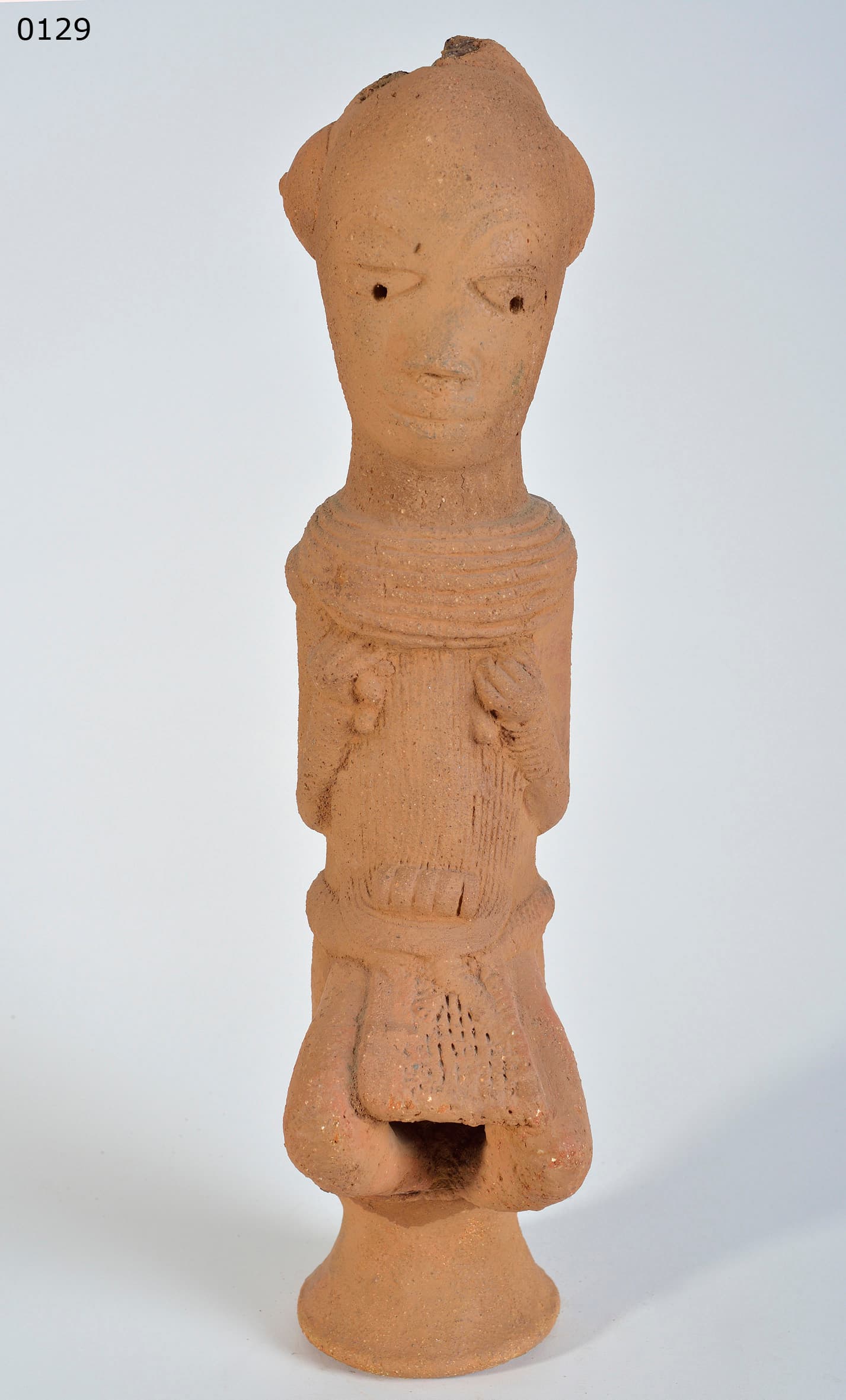
Ein massiver, konischer Nok-Terrakottakopf (~2000 Jahre alt, 28 cm) aus Nigeria - ein sehr längliches, spitz zulaufendes Profil mit ausgeprägten animalischen oder stilisierten menschlichen Ohren an der Spitze, das Gesicht minimal definiert durch tiefe, kreisförmig durchbrochene Augen, eine breite Nase und einen kleinen, horizontalen Mund, der grobe, blass-orangefarbene Ton ist tief verwittert mit ausgedehnten Kalkablagerungen und Erdverkrustungen.
1. Morphologische Variation in der Nok-Eisenzeit
Während der klassische Nok-Stil für seine dreieckigen durchbohrten Augen bekannt ist, umfasste der 2.000 Jahre alte Nok-Komplex (und die verwandten regionalen Varianten aus Katsina und Sokoto) ein breites Spektrum extremer Stilisierungen.
- Extraterrestrische Verlängerung: Dieser Kopf zeigt eine fast außerirdische Verlängerung - der Künstler hat den Schädel absichtlich zu einem aufsteigenden Kegel gestreckt und sich damit weit vom menschlichen Naturalismus entfernt und in eine tiefe stilisierte Abstraktion begeben.
- Technisch durchbrochene Pupillen: Die tief durchbrochenen, kreisförmigen Pupillen sind ein technisches Markenzeichen - sie dienen sowohl dem intensiven visuellen Ausdruck als auch dem Entweichen der Wärme aus dem dicken Ton während des Brennens.
2. Gottheiten, Krankheiten und landwirtschaftliche Heiligtümer
Köpfe dieser Größe und extremen Stilisierung waren keine Porträts gewöhnlicher Personen, sondern wahrscheinlich Darstellungen hochrangiger Gottheiten, legendärer Vorfahren oder Personifikationen von Naturgewalten.
- Platzierung in landwirtschaftlichen Heiligtümern: In den frühen eisenzeitlichen Gemeinden des Jos-Plateaus wurden solche massiven Figuren in zentralen landwirtschaftlichen Heiligtümern aufgestellt, um erfolgreiche Ernten zu garantieren.
- Wildnis-überbrückender Geist: Die fast zoomorphe Qualität der Ohren deutet auf ein geistiges Wesen hin, das die Kluft zwischen der menschlichen Gemeinschaft und der ungezähmten Wildnis überbrückt und sowohl das Wetter als auch die landwirtschaftliche Fruchtbarkeit beherrscht.
3. Unterirdische Verkalkung und Grog-Temperierung
Der geologische Zustand dieses Objekts spricht für ein hohes Alter.
- Sichtbares Quarzgranulat: Der Ton ist stark mit großen sichtbaren Partikeln von Quarzgranulat temperiert - eine wichtige technische Voraussetzung für die afrikanischen Töpfer, um zu verhindern, dass massive, dickwandige Skulpturen in offenen Bränden zerbrechen.
- Kristalline Verkalkung: Die Oberfläche ist stark degradiert, ihr ursprünglicher Schlicker fehlt und sie ist vollständig mit einer dicken weißen Kalkkruste aus Mineralablagerungen bedeckt - eine langsame chemische Reaktion, die über 2.000 Jahre lang in dem sauren nigerianischen Boden stattfand.
Zusammenfassung
Dieser monumentale Terrakottakopf veranschaulicht die ausgeprägte Abstraktion, die in der Nok-Kultur anzutreffen ist. Seine hoch aufragende konische Form und die ausgeprägte geologische Verkalkung, die auf ein hohes Alter hindeutet, machen ihn zu einem bemerkenswerten archäologischen Zeugnis.
KI-unterstützt erstellt aus Sammlungsgutachten, Objektfotografie und eigener Recherche, redaktionell geprüft. Fehler sind möglich — Hinweise darauf sind uns willkommen. Zum Verfahren →