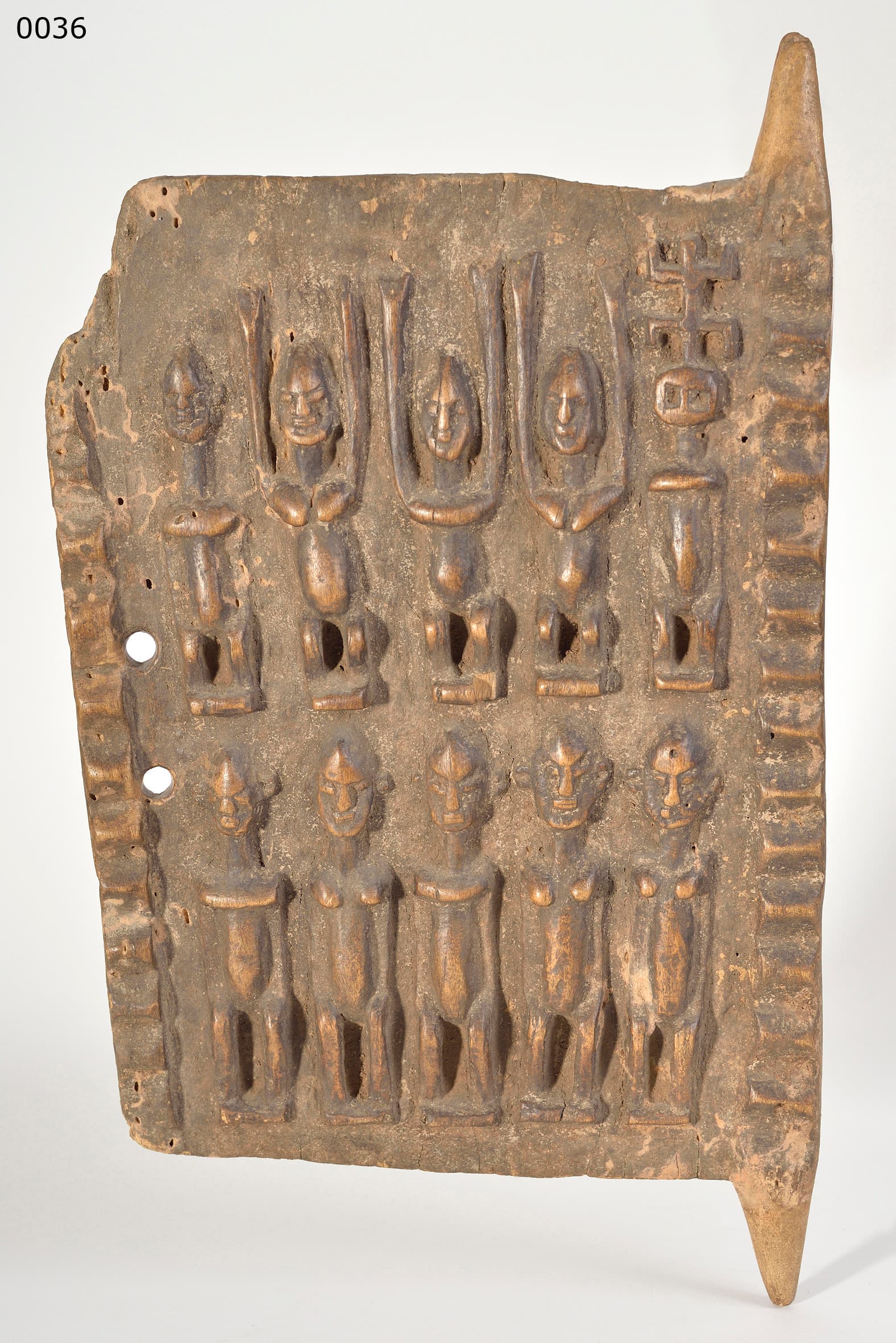
Ein massives Dogon Awele Spielbrett (1. Hälfte 20. Jh., 90 cm) aus Mali - ein langer, bootsförmiger Trog mit zwei Reihen halbkugelförmiger Spielbecher mit vorspringenden, geschnitzten menschlichen Köpfen an jedem Ende, die als Griffe dienen. Einzigartig ist der geschnitzte Deckel, der mit einem aufwendigen Hochrelieffries aus ineinandergreifenden, länglichen menschlichen Figuren verziert ist. Das Holz trägt eine tiefe, gesättigte, stark bearbeitete Patina.
1. Die Architektur von Prestige und Freizeit
Das Spiel Awele (Mancala) ist in ganz Westafrika allgegenwärtig - doch die Dogon erheben das Spielbrett zu einem Objekt von monumentalem architektonischem Prestige.
- Der Künstler hat das Spielbrett als Arche der Welt aus der Dogon-Mythologie konzipiert - mit imposanten, behelmten Ahnen am Bug und am Heck, die das Schiff lenken.
- Seltener passender Deckel: Das Vorhandenseist des originalen passenden geschnitzten Deckels - mit einem komplexen rhythmischen Fries aus ineinandergreifenden Nommo (Ur-Figuren) - gilt als äußerst selten und deutet darauf hin, dass dies ein sehr geschätzter herrschaftlicher oder älterer Besitz war.
2. Kosmogonie und die Aussaat von Saatgut
In der Dogon-Philosophie ist das Spiel Awele keine bloße Unterhaltung - es ist ein tiefgründiges kosmologisches Ritual.
- Brett als Erde: Das Brett stellt die Erde dar und die Gruben die landwirtschaftlichen Felder - die Spielfiguren symbolisieren die Aussaat der Feldfrüchte und die zyklische Natur des menschlichen Lebens, des Todes und der Wiedergeburt.
- Kosmologie der älteren Männer: Ausschließlich von Männern und Älteren gespielt - die taktische Bewegung der Samen über das Brett spiegelt die komplexen Bewegungen der Sterne und die Verteilung von Nyama (Lebenskraft) wider, die vom Schöpfergott Amma diktiert wird.
3. Sättigung und Reibungsverschleiß
Die physische Oberfläche dokumentiert anschaulich die Geschichte des Objekts.
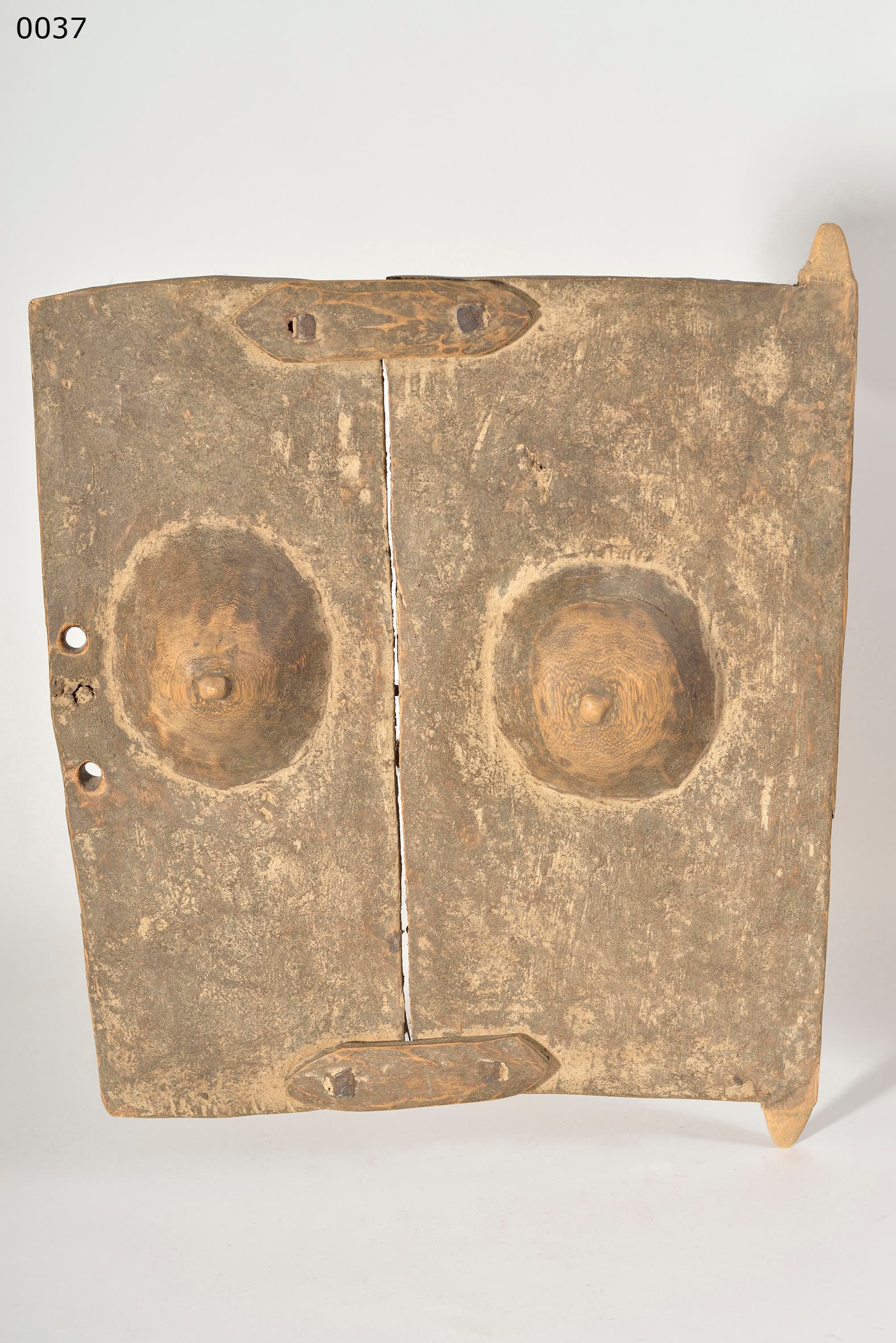
- Glasähnliche Innenseiten der Becher: Die Innenseiten der Spielbecher sind durch die jahrzehntelange Einwirkung von Samen und menschlichen Fingern stark geglättet und weisen eine glänzende Politur auf.
- Togu-Na-Gebrauchspatina: Kanten des Deckels und Gesichter der Griffe zeigen die schwere, ölige Gebrauchspatina, die durch ständige Nutzung im Schatten des Togu Na (Männer-Treffpunkt) während des frühen 20. Jahrhunderts entstanden sein dürfte.
Zusammenfassung
Diese Dogon Awele-Tafel ist eine außergewöhnliche Verschmelzung von elitärer Freizeitgestaltung, komplexer Reliefschnitzerei und landwirtschaftlicher Mythologie. Das Überleben seines komplizierten Deckels und der tiefe Reibungsverschleiß im Inneren seiner Schalen machen es zu einem bedeutenden ethnografischen Artefakt.
KI-unterstützt erstellt aus Sammlungsgutachten, Objektfotografie und eigener Recherche, redaktionell geprüft. Fehler sind möglich — Hinweise darauf sind uns willkommen. Zum Verfahren →