Eine auffallend schwere Dogon-Tanzweste (Mitte 20. Jh., 50 cm) aus Mali - dicht gewebte dunkle einheimische Fasern, die mit einem dichten geometrischen Muster aus Tausenden von weißen Kaurimuscheln überzogen sind, mit dicken, kaskadenartigen Fransen aus Kaurimuscheln und bunten Glasperlen, die von den unteren Kanten herabhängen.
1. Die Architektur des Reichtums und die Geometrie der Kaurimuscheln
In der Kunst der Dogon ist die Ästhetik der Anhäufung ebenso wichtig wie die Holzschnitzerei.
- Historischer Währungspanzer: Verwendet die Kaurimuschel (Cypraea moneta) - die historische Währung Westafrikas - um eine kontrastreiche visuelle Architektur zu schaffen.
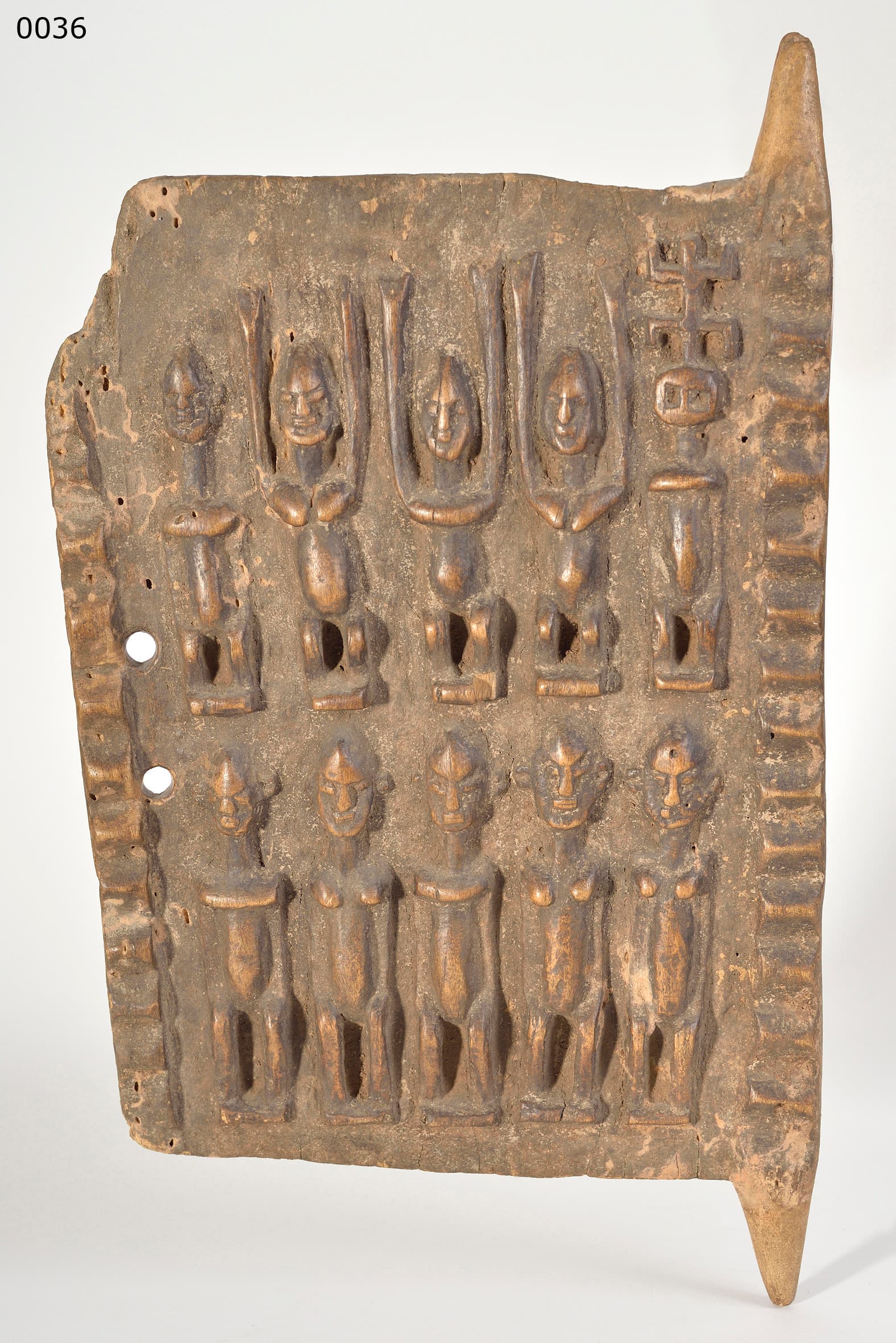
- Granary-Door Geometry: Die Muscheln werden sorgfältig in ineinandergreifenden Dreiecken, vertikalen Linien und dichten Clustern genäht, die die geometrischen Muster nachahmen, die man auf Dogon-Holzmasken und Getreidespeicher-Türen findet - und die das Kleidungsstück in eine schwere kinetische Rüstung von großem symbolischen Reichtum verwandeln.
2. Das Dama-Festival und die kinetische Maskerade
Diese elitäre Kleidung wurde von einem hochrangigen männlichen Tänzer während des Dama getragen - dem spektakulären, mehrtägigen Begräbnisfest der Dogon, bei dem die Seelen der Verstorbenen in das Reich der Ahnen geleitet werden.
- Gepaart mit Maske plus Klang: In Verbindung mit einer massiven Holzmaske (wie der Kanaga oder Sirige) getragen, fügte die Weste der Aufführung entscheidende akustische und kinetische Dimensionen hinzu.
- Schleudernde Perlenfransen: Bei wilden, athletischen Spinntänzen schleudern schwere Perlen- und Muschelfransen gegen den Körper des Tänzers - und erzeugen einen rhythmischen, klappernden Klang, der die furchterregende, majestätische Präsenz des Geistes ankündigt.
3. Erhaltung von Textilien und globale Handelsnetze
Die physische Integrität dieses Stücks aus der Mitte des 20. Jahrhunderts ist bemerkenswert.
- Seltenes Überleben von Textilien aus der Sahelzone: Textilien und Faserkunst sind in der Sahelzone sehr anfällig für Insektenschäden und Fäulnis, so dass überlebende Kleidungsstücke dieser Komplexität selten sind.
- Globale Handelskarte: Leuchtend farbige europäische Glasperlen gemischt mit Kaurimuscheln aus dem Indischen Ozean bieten eine greifbare Karte der globalen Handelsnetze, die den abgelegenen Bandiagara-Steilhang während der Kolonialzeit durchdrangen.
Zusammenfassung
Diese aufwendig gestaltete Kaurimuschelweste der Dogon ist ein eindrucksvolles Beispiel westafrikanischer Textil- und Assemblagekunst. Ihre gute Erhaltung und ihre Rolle in der Dama-Maskerade machen sie zu einem bedeutenden ethnografischen Objekt.
KI-unterstützt erstellt aus Sammlungsgutachten, Objektfotografie und eigener Recherche, redaktionell geprüft. Fehler sind möglich — Hinweise darauf sind uns willkommen. Zum Verfahren →