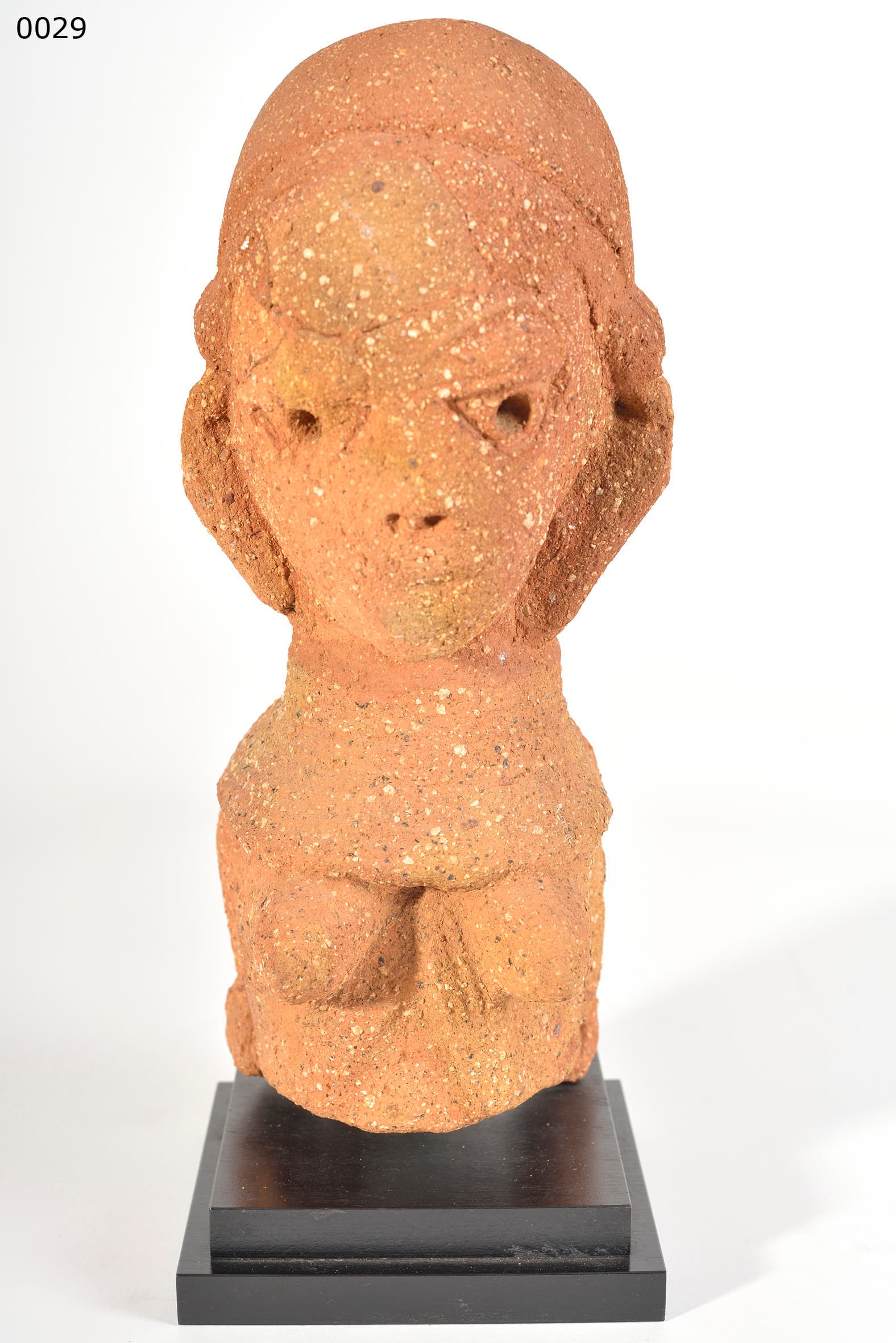
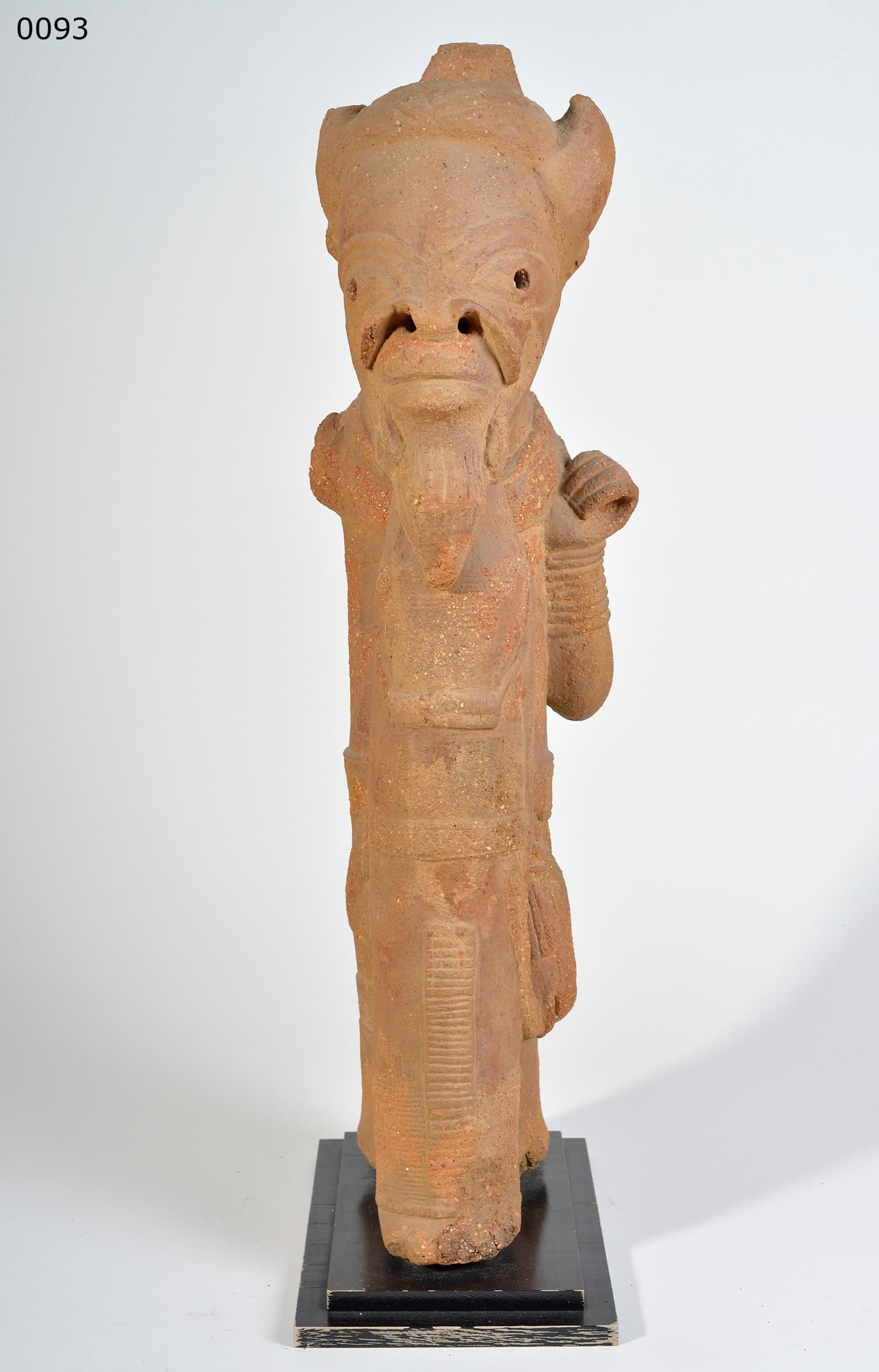
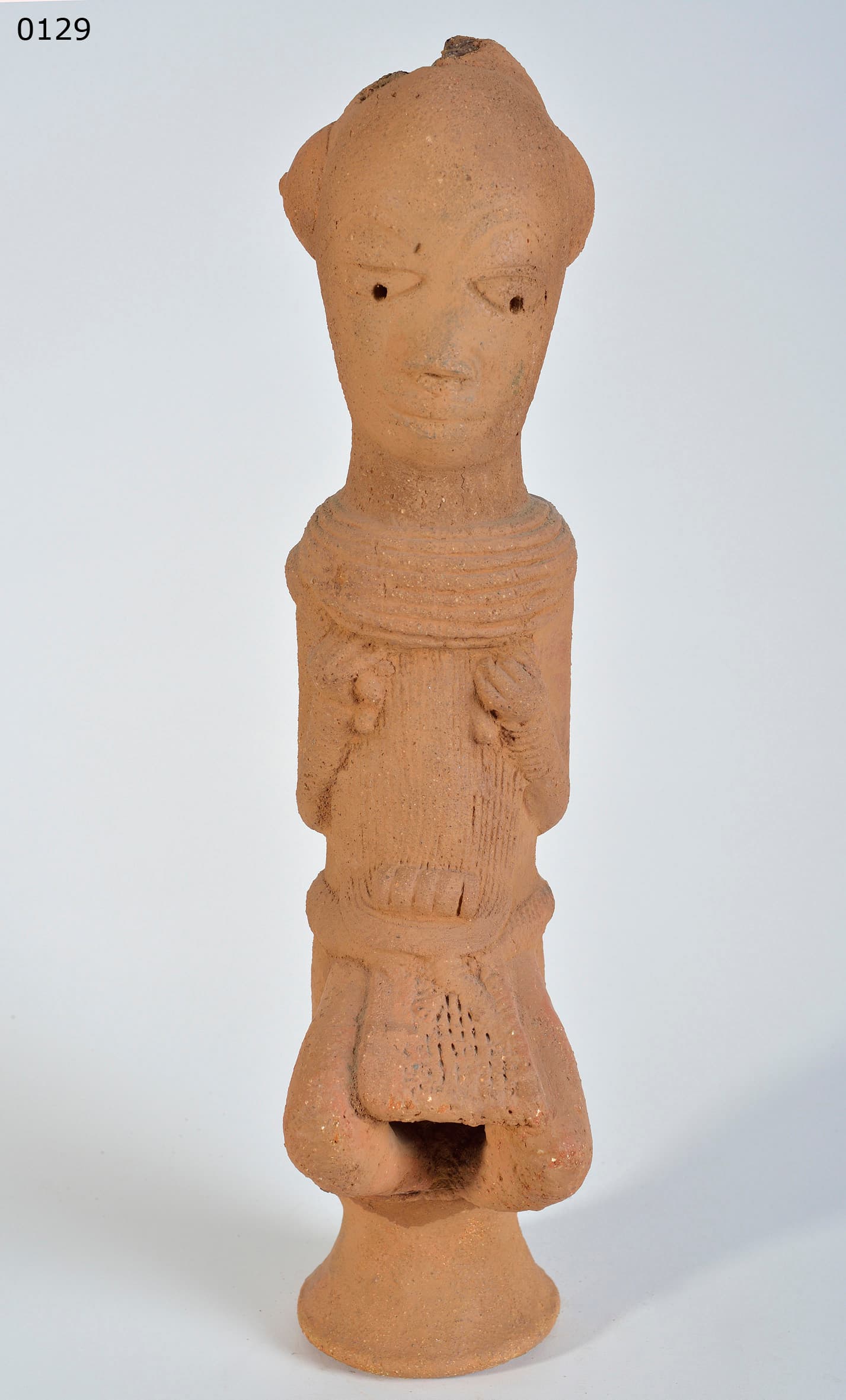
Diese monumentale Terrakottafigur stellt eine kniende Person mit einem massiven Kopf dar, die mit dicken, vielgliedrigen Halsketten und Körperbändern geschmückt ist und einen Gegenstand oder ein kleines Wesen hält. Der niedrig gebrannte, stark quarzvergütete rote Ton ist vollständig von einer dicken, alten, verkalkten archäologischen Kruste umgeben.
1. Ästhetischer Stil und regionale Eigenheiten
Dieses kolossale Stück repräsentiert den Höhepunkt der Nok-Zivilisation (500 v. Chr. - 200 n. Chr.), der ältesten bekannten figurativen Bildhauertradition im subsaharischen Afrika. Allein die Größe - 85 cm - stellt eine bemerkenswerte technische Leistung für antike, niedrig gebrannte Keramik dar. Die Figur zeigt die klassische Nok-Ikonographie: den aufwendigen, hochrangigen Körperschmuck (dargestellt durch die schweren Tonspulen) und die dreieckigen, durchbohrten Augen. Die Detailgenauigkeit des feuchten Tons deutet auf eine hochgradig geschichtete, komplexe antike Gesellschaft hin, die in der Lage war, Meisterhandwerker zu unterstützen.
2. Rituelle Funktion und religiöse Bedeutung
Statuen dieses Ausmaßes waren keine gewöhnlichen Grabbeigaben; sie waren zentrale Tempel- oder Heiligtumsidole. Die kniende Haltung der Figur ist ein universelles Zeichen des Flehens und der Verehrung. In einem Gemeinschaftsschrein platziert, war dieses hoch aufragende Bildnis der zentrale Punkt für große landwirtschaftliche Feste, Opfer und die Vermittlung kosmischer Kräfte. Wahrscheinlich handelt es sich um einen vergötterten Gründervater oder einen Fruchtbarkeitsgott, der das Überleben der eisenzeitlichen Siedlung gegen Dürre und Seuchen sichern sollte.
3. Physische Patina und Altersnachweis
Das hohe Alter dieses Monuments wird durch seine extreme physische Abnutzung nahegelegt. Die Terrakotta ist stark verglast, und der ursprüngliche glatte Schlicker ist erodiert, so dass der grobe Quarzsplitt zum Vorschein kommt, den die antiken Töpfer zur Stabilisierung der dicken Tonwände hinzugefügt haben. Die gesamte Oberfläche ist chemisch mit dicken, unbeweglichen Schichten aus verkalktem Lateritboden und Salzausblühungen verbunden – ein Befund, der für eine langfristige Lagerung in tiefen Bodenschichten spricht.
Zusammenfassung
Diese kolossale Nok-Statue bietet einen bemerkenswerten Einblick in die geistige Komplexität der frühen eisenzeitlichen Zivilisation Afrikas. Ihr schieres Ausmaß, ihre kunstvolle Verzierung und ihre ausgeprägte, alte Verkrustung machen sie zu einem bedeutenden Dokument der globalen Menschheitsgeschichte.
KI-unterstützt erstellt aus Sammlungsgutachten, Objektfotografie und eigener Recherche, redaktionell geprüft. Fehler sind möglich — Hinweise darauf sind uns willkommen. Zum Verfahren →